Commercial Pressure Washer Guide: Choosing the Right System for Your Business

Table of Contents
GPM is the metric that dictates your hourly revenue — not PSI. A 3,000 PSI machine at 4 GPM will outclean a 4,000 PSI machine at 2 GPM on every driveway, every time. If your surface cleaning jobs routinely stretch past your estimates, you're probably undersized on flow, not pressure. A commercial pressure washer built around the right GPM, drive system, and pump class pays for itself in labor savings. The wrong one costs you in rebuilds, overheating, and lost jobs.
What Separates a Commercial Pressure Washer from a Consumer Unit
It starts with the duty cycle. A commercial pressure washer is engineered for 20+ hours of weekly runtime with serviceable, rebuildable components — not disposable ones. The engine matters: Honda GX-series power plants deliver sustained torque without the thermal spikes that kill lesser engines. Frames are aircraft-grade aluminum or powder-coated steel, chosen for vibration dampening as much as strength. Fastener fatigue from engine vibration is a real failure mode on lighter frames, and it shows up as cracked welds and loose fittings after a few hundred hours.
The pump is the heart. Triplex pumps use three ceramic plungers to produce smooth, consistent flow. Ceramic is non-negotiable — it handles heat and friction that would score stainless steel alternatives in weeks. The manifold should be forged brass, not cast aluminum. Cast aluminum cracks under sustained hydraulic cycling; brass does not. These aren't premium upgrades. They're baseline requirements for equipment that runs daily.
GPM vs. PSI: Flow Wins Every Time
PSI strips. GPM rinses and moves debris. The practical comparison: a 4,000 PSI / 2 GPM machine produces 8,000 cleaning units. A 3,000 PSI / 4 GPM machine produces 12,000. The higher-flow machine clears the same driveway in roughly half the time. More importantly, higher GPM lets you run larger surface cleaners, which multiply your square-footage-per-hour. That's the direct link between flow rate and revenue.
Duty Cycles and Pump Longevity
Axial pumps are disposable. When they fail, the repair cost exceeds the pump's value. A triplex pump is fully rebuildable — expect five-plus years of daily use with routine oil changes and seal kits. Commercial-grade thermal relief valves and unloaders protect the pump during bypass by releasing heated water when the trigger closes, preventing the thermal buildup that kills seals.
Drive Systems: Belt, Direct, and Gear
This decision sets the machine's lifespan and maintenance calendar. Direct drive bolts the pump to the engine crankshaft — the pump spins at engine speed, typically 3,400–3,600 RPM. Compact and cost-effective, but built for intermittent use, not 8-hour shifts. Belt drive uses pulleys to drop pump speed to 900–1,400 RPM. That reduction cuts internal wear dramatically. Gear drive offers a middle ground: a gearbox interface that provides low RPM in a more compact package than belt systems.
Thermal Management
Engine heat transfers directly through the shaft in a direct-drive setup, cooking pump oil and seals. Belt drive isolates the pump with an air gap, blocking thermal conduction entirely. This is why belt-driven machines are the industry standard for daily full-shift operation. Gear drive units need their own maintenance attention — specific gear oil changes to protect the reduction gears. Belt systems need tension and alignment checks instead.
Vibration and Configuration
Gas engine vibration causes micro-cracking in ceramic plungers over time. Belt systems act as natural shock absorbers, dampening engine pulses before they reach the pump crankcase. Direct and gear drive units fit tighter truck or trailer configurations, but weigh that space savings against more frequent pump rebuilds. For contractors building custom skid mounts, belt drive is almost always the right call unless space physically won't allow it.
Hot Water vs. Cold Water: Matching the Machine to the Job
This isn't a preference — it's chemistry. Cold water handles organic growth: moss, algae, mildew on siding and roofs. Simpler machines, lower maintenance, no burner assembly to service. But cold water just pushes petroleum-based stains and animal fats around. You need thermal energy to break the molecular bonds of grease and oil.
Hot water units use a diesel-fired burner and schedule 80 steel heating coil to bring water up to temperature. Integrated thermostat controls let you dial temperatures by substrate — enough heat to emulsify grease without damaging sensitive surfaces. Higher initial cost, higher maintenance (burner descaling, coil cleaning), but the labor time reduction on grease-heavy jobs usually justifies the investment.
When Hot Water Is Mandatory
Commercial kitchen exhaust cleaning, parking garage remediation, gas station pads, restaurant drive-thrus — any job where solidified grease needs to be liquefied. Water temps above 180°F act as a catalyst for detergents, accelerating the chemical reactions that lift deep-seated oil from concrete. Pair a hot water pressure washer with high-temperature hoses and insulated trigger guns. Pressurized steam and scalding water are no-joke safety hazards.
Cold Water Versatility
Cold water units remain the backbone of residential maintenance and deck restoration. Lighter, more maneuverable, zero burner maintenance. A high-flow cold water unit paired with the right surface cleaner and downstream injector handles the majority of exterior cleaning contracts efficiently. For most operators starting or running a residential-focused business, a 4.0 GPM cold water machine is the workhorse.
Accessories That Actually Move the Needle
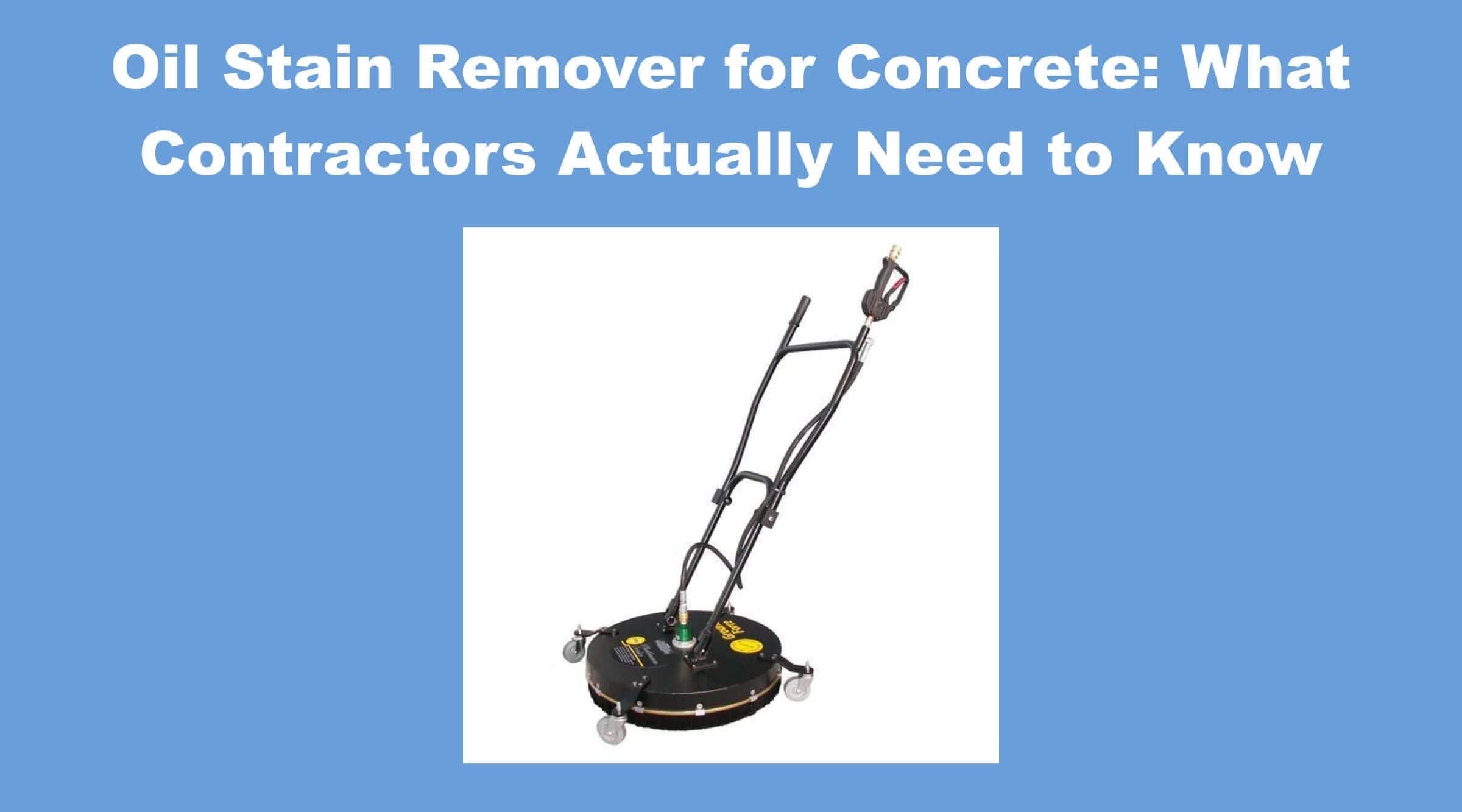
A commercial pressure washer is only as productive as the components on the business end. Using a standard wand for large-scale concrete is a bottleneck — a 20-inch surface cleaner does the work of four wands simultaneously with a uniform, streak-free result.
Sizing Surface Cleaners Correctly
The 4-inch-per-GPM rule: a 5 GPM machine pairs with a 20-inch cleaner. Oversize it and the rotation speed drops — cleaning power vanishes, and you get tiger striping. Regular swivel joint and spray bar maintenance keeps the assembly performing. The ProTool 18" Stainless Steel Surface Cleaner handles up to 4,000 PSI and fits the sweet spot for 4–4.5 GPM rigs.
Guns, Wands, and Quick Connects
Ergonomic trigger guns reduce operator fatigue on long shifts. Telescoping wands let you reach multi-story exteriors from the ground. For quick connects, stainless steel outperforms brass in corrosive environments — brass deforms and seizes under constant daily cycling. These are your most frequent failure points, so the material choice matters.
Nozzle selection protects your pump. Always match orifice size to your machine's GPM and PSI using a nozzle chart. Use downstream injectors for detergent — drawing chemicals after the pump keeps caustic soaps away from internal seals. Choose wire-braided hoses for general use or non-marking hoses for high-end residential where rubber scuffs are unacceptable.
Building a Complete System
A commercial pressure washer rig is an integrated system, not a standalone machine. Engine torque, pump flow rate, and unloader sensitivity all need to be calibrated together. A mismatched unloader causes seal failure or engine stalling — it's the single most common configuration mistake on custom builds.
Skids and Trailers vs. Cart Units
Cart units work for mobile operations across varied terrain. High-volume contractors migrate toward truck-mounted skids — larger water supply tanks, high-capacity hose reels, and room to integrate a dedicated soft wash system on the same platform. The ProTool Pressure Washer Mini Skid packages a 4 GPM / 3,600 PSI system into a compact, truck-ready footprint. For contractors running bigger crews, the ProTool Drone Pressure Washing Flatbed Skid scales to multi-operator, multi-service operations.
Parts Availability and Support
Reliability depends on parts availability. Thermal relief valves, pump seal kits, unloaders, and quick connects are the components that fail in the field. Having a supplier that stocks these items and understands how to spec them for your exact configuration is the difference between a one-day repair and a week of lost revenue. J.Racenstein maintains in-stock inventory on these critical parts and provides technical support for unloader calibration, bypass loop plumbing, and suction line sizing.
Products Mentioned
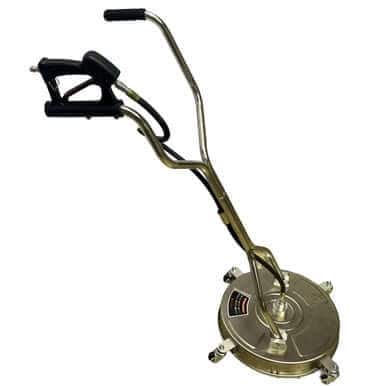 Surface Cleaner 18in Protool 4000psi SKU: 74-3795 | 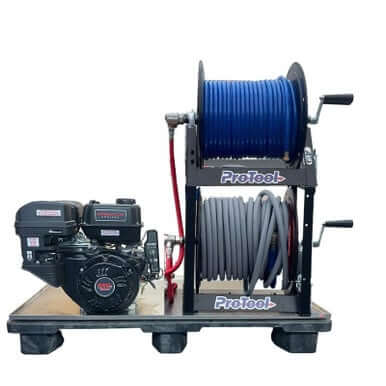 Pressure Washer Mini Skid 4g 3600p SKU: 150-0490 | 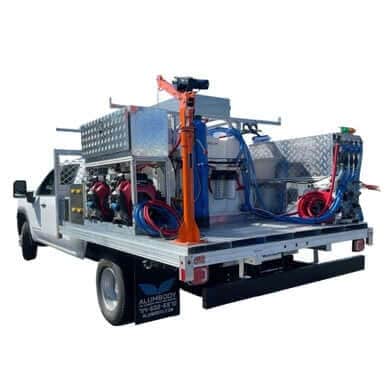 Drone Pressure Washing Flatbed Skid SKU: 180-5740 |