What Size Pressure Washer Do I Need? GPM and PSI Guide for Contractors

Table of Contents
High PSI looks impressive on a spec sheet, but it's the quickest way to strip the finish off a mahogany deck or blow a seal on a residential window. The real question — what size pressure washer do I need — comes down to understanding which metric actually drives revenue and which one just sounds good in a sales pitch.
Gallons Per Minute (GPM) is the 80% factor in your hourly output. PSI provides stripping force; GPM provides rinsing speed. Multiply PSI × GPM and you get Cleaning Units (CU), the actual measure of total cleaning power. Two machines with identical CU will perform differently — the one with higher GPM finishes faster because it flushes debris more effectively. That distinction determines whether you're billing for four jobs a day or five.
GPM vs. PSI: Which Metric Drives Revenue?
On a 1,000-square-foot driveway, an 8 GPM machine completes the task roughly 50% faster than a 4 GPM unit. Higher volume carries loosened dirt and organic growth away instantly. At 8 GPM you can run a 28-inch surface cleaner; at 4 GPM you're limited to a 16- or 20-inch model. More surface area per pass means more billable capacity per hour.
Most residential and commercial exterior cleaning sits between 2,500 and 3,500 PSI. That range handles concrete, brick, and stone without structural damage. Push beyond 4,000 PSI and you risk etching concrete or destroying the oxidation layer on vinyl siding. High pressure is a specialized tool reserved for roughly 5% of jobs — industrial paint prep, heavy grease on warehouse floors. For the other 95%, GPM does the heavy lifting while moderate PSI protects the substrate.
Sizing by Service Type
Residential Siding and Roof Cleaning
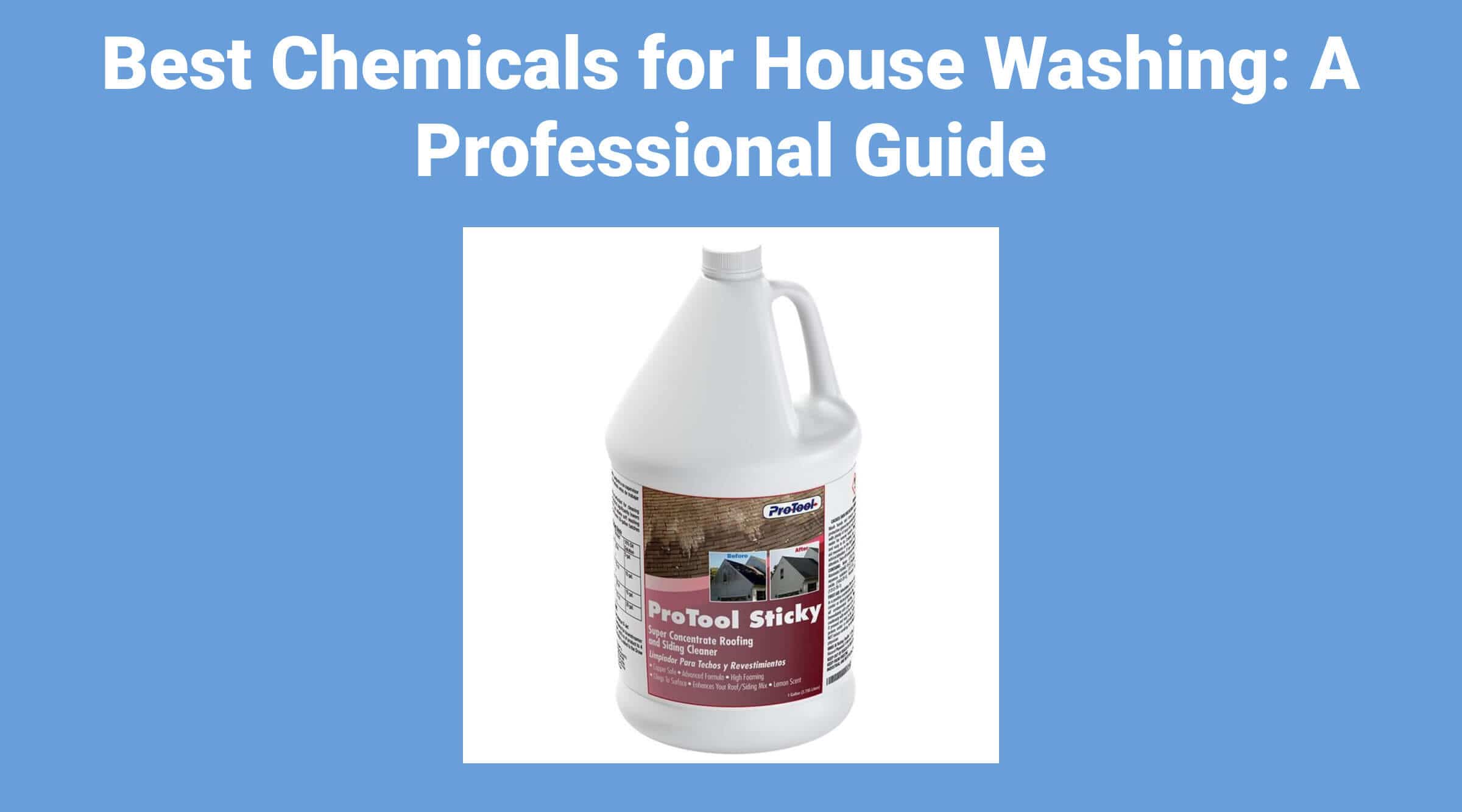
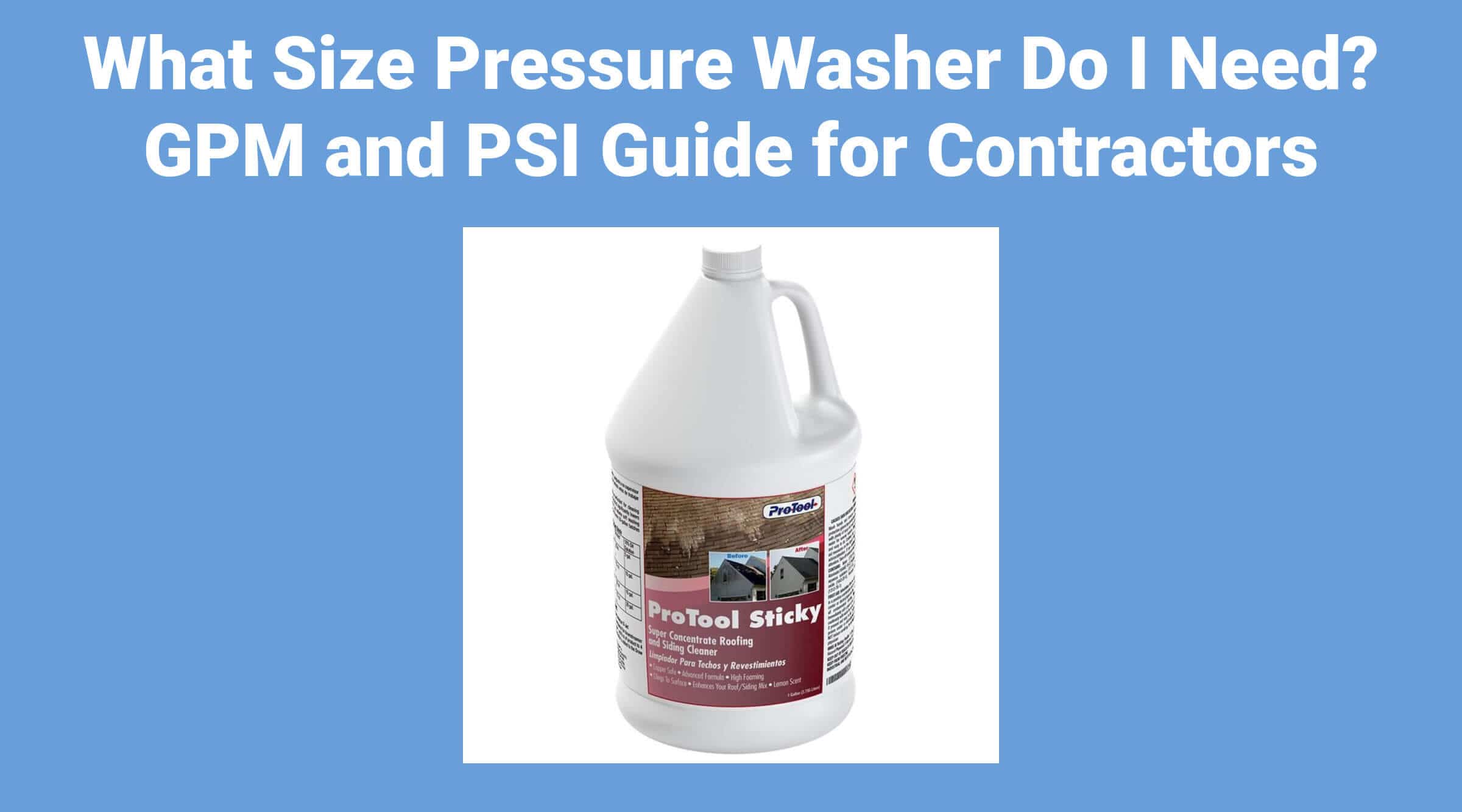
A 4 to 5.5 GPM machine is the professional standard for house washing. This flow rate handles downstream chemical application to a second story without a ladder. Sizing for these jobs focuses on chemical volume rather than impact force — soft washing at 100–300 PSI combined with surfactants like ProTool Sticky does the work, not raw pressure. A 5.5 GPM unit increases rinsing speed by about 35% over 4 GPM, making it the favorite for high-volume residential outfits.
Commercial Concrete and Large Surfaces
Commercial contracts for parking lots or gas stations need an 8 GPM machine. High flow is the only way to effectively operate a 28- or 30-inch surface cleaner. Without 8 GPM, you walk at a snail's pace and leave tiger stripes on the concrete. These setups always require a buffer tank — most residential plumbing delivers only 5–6 GPM, and running a high-flow pump directly from the tap starves the machine and destroys your seals within seconds.
Fleet Washing and Industrial Degreasing
Hot water units delivering 4–6 GPM at 3,000 PSI are the standard for truck fleets and heavy equipment. Heat at 200°F emulsifies grease and oil that cold water can't touch. Temperature often trumps GPM for degreasing — while 8 GPM is great for rinsing, the fuel cost to heat that much water is often prohibitive for mobile detailers. Balancing 5 GPM with a high-efficiency hot box provides the best ROI.
Pump and Drive Systems That Survive a 40-Hour Week
Consumer-grade pumps are engineered for 20–50 total hours of lifetime operation. Run one for 8 hours a day and the internal valves and seals warp or crack within two weeks. A failed pump doesn't just cost $400 for the part — it costs $800+ per day in lost labor and rescheduled contracts.
Professional rigs use ceramic plungers and forged brass manifolds to manage friction under constant operation. The drive system determines how long those components last before they need a rebuild.
Direct Drive vs. Belt Drive
Direct drive pumps bolt directly to the engine crankshaft. They're compact and cost less upfront, but spin at 3,400+ RPM — generating significant vibration and heat that degrade seals faster. They're a reasonable choice when space on a small truck or van is limited.
Belt drive pumps use a pulley system to slow the pump to roughly 1,400–1,700 RPM. They run cooler, vibrate less, and can pull water from a static supply tank — a necessity for trailer-based setups where a pressurized garden hose isn't always available. For daily commercial use, belt drive typically doubles the pump's service life between rebuilds.
Engine Selection
The Honda GX series is the undisputed industry standard for gas-powered rigs. The GX390 and GX690 are favored for consistent startup performance and near-universal parts availability. For indoor environments — food processing, hospitals — electric motors eliminate carbon monoxide exhaust, but often require 230V or 460V three-phase power to match the GPM output of gas engines.
System Compatibility: Accessories Must Match the Machine
Pair an 8 GPM pump with a 1/4-inch hose and you create a bottleneck. The restriction forces the pump to work harder, generates excessive heat, and kills actual output at the wand. You pay for 8 GPM but see 5 GPM at the surface. Every component — hoses, guns, nozzle tips — must be rated for the maximum PSI and GPM your machine produces.
Surface Cleaner Sizing
The industry rule of thumb: 4 inches of cleaner diameter per GPM. A 4 GPM machine pairs with a 16-inch surface cleaner. Try to run a 24-inch cleaner on 4 GPM and the spray bar won't rotate fast enough — you'll double your cleaning time on a large driveway. Match your nozzle sizes on the spray bar so total GPM equals your machine's output exactly.
Hose Diameter and Friction Loss
Standard 3/8-inch high-pressure hose works for most 4–5 GPM setups, but it isn't sufficient for 8 GPM systems over long distances. Running 100+ feet of 3/8-inch hose at high flow can cost you up to 500 PSI in friction loss. Moving to a 1/2-inch main supply line mitigates that drop and keeps pressure consistent at the gun.
Building for Growth: Custom Skids and Truck Mounts
Transitioning from a portable cart to a truck-mounted skid is the definitive step toward operational maturity. A permanent skid setup reduces setup and teardown time by roughly 25 minutes per job — enough to add a fifth job to a day that previously held four.
Custom builds integrate engine, pump, hose reels, and chemical tanks into a single footprint. That organization prevents transit damage and presents a professional image to commercial clients. Platforms like the ProTool Mega Skid combine pressure washing, soft washing, and pure water delivery on one frame — letting you switch from 3,500 PSI concrete work to low-pressure siding rinse without swapping machines.
Future-Proofing the Investment
Buy equipment for the business you want, not the one you currently have. If commercial contracts are 12 months away, investing in an 8 GPM unit today is more cost-effective than replacing a 4 GPM unit later. Professional triplex pumps are built for 2,000+ hours of service life — but only if you change pump oil every 50 hours and inspect unloader valves weekly.
Before finalizing your purchase, confirm these are covered:
- Water Supply: A buffer tank with at least a 1-inch non-collapsible suction hose.
- Chemical Delivery: A heavy-duty downstream injector for soap application.
- Hose Management: Professional reels holding 200 feet of 3/8-inch hose.
- Safety Gear: Professional PPE and fall protection for roof-related tasks.
Products Mentioned
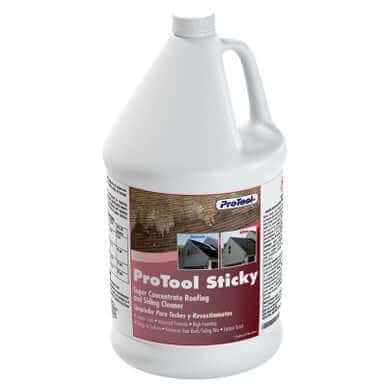 ProTool Sticky SKU: 83-07M | 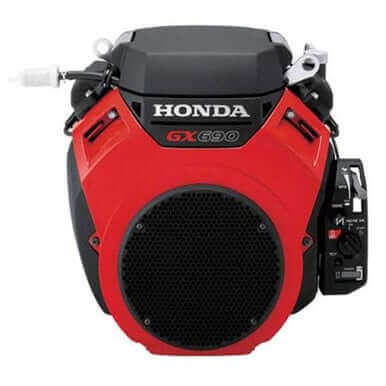 Honda Engine GX690 SKU: 74-7218 | 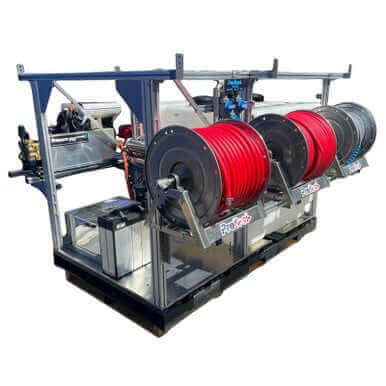 ProTool Mega Pressure Washing and Soft Washing Skid SKU: 150-0496 |