Downstream vs Upstream Pressure Washer Injectors: Which Setup Protects Your Pump
Table of Contents
Downstream vs upstream pressure washer injection is one of those rig decisions that separates contractors who rebuild pumps every season from those who don't. The choice controls where corrosive chemicals travel through your system — and that single variable dictates pump life, draw consistency, and how much maintenance you're signing up for on every job.
This guide covers the mechanics of each method, when upstream still makes sense, why downstream dominates professional exterior cleaning, and the hardware that keeps either system running. If you're building a skid, upgrading an existing rig, or troubleshooting a dead chemical draw, the answers are here.
How Chemical Injection Works: Upstream vs. Downstream
Every pressure washer rig has the same four stages: water inlet, high-pressure pump, unloader valve, and discharge. The only question is where you introduce detergent into that sequence.
Upstream places the injector at the water inlet — chemicals pass through the pump, unloader, hose, and gun. Downstream places it after the pump on the discharge side, so chemicals never contact pump internals. That distinction drives everything else: maintenance burden, chemical strength, and equipment longevity.
The pump is the most expensive single component on your rig. Protecting it from sodium hypochlorite and acidic cleaners is why downstream injection became the industry default.
Upstream Injection: Maximum Concentration, Maximum Risk
Upstream injection draws chemical into the pump's intake stroke. As the plunger retracts it creates vacuum, pulling water and detergent directly from a supply tank into the manifold. Because there's no venturi restriction limiting the draw, you can hit concentrations above 20% — far stronger than any downstream setup can deliver.
That strength comes at a cost. Sodium hypochlorite running through brass or stainless manifolds causes rapid oxidation and seal degradation. The bigger risk is cavitation: if chemical flow is restricted or air enters the line, vapor bubbles form and implode against plungers and manifold walls, pitting the surfaces. Over time you get:
- Pulsing or erratic pressure — damaged check valves from chemical exposure
- Milky oil in the crankcase — failed seals letting water and chemicals bypass the plungers
- Loss of prime — air leaks in a compromised chemical intake line
Every use demands a mandatory fresh-water flush to neutralize residual corrosives. Skip it once and you're shopping for a new pump assembly.
Upstream still has a role — industrial applications running non-corrosive soaps at maximum strength, where concentration matters more than pump rebuild costs. For most exterior cleaning contractors running SH daily, it's a losing trade.
Downstream Injection: The Professional Standard
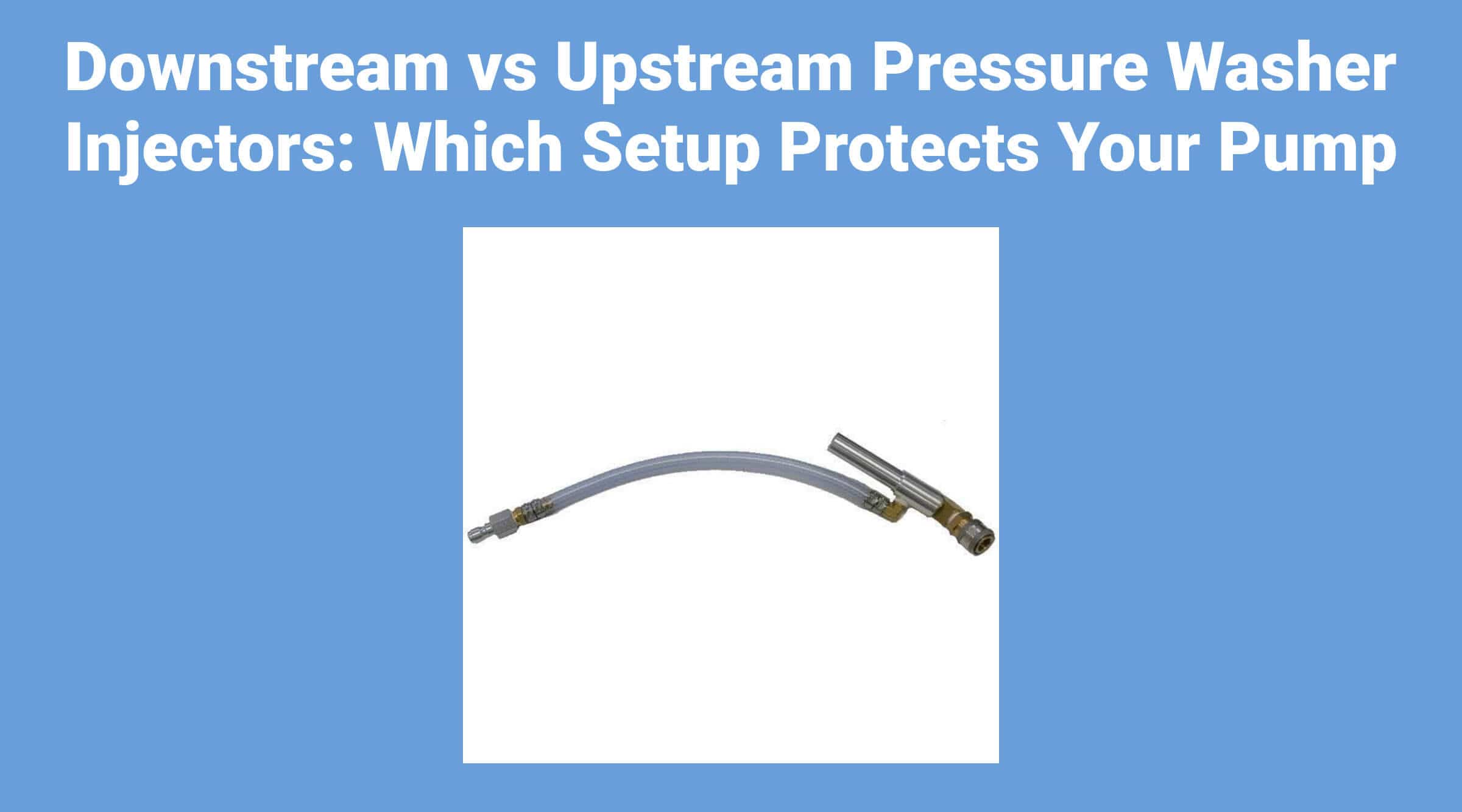
Downstream injection keeps every drop of chemical on the discharge side of the pump. Corrosive soaps and surfactants never touch seals, ceramic plungers, or the unloader valve. That alone makes it the default for any rig running sodium hypochlorite.
How the Venturi Effect Creates Chemical Draw
Inside a downstream injector, a tapered restriction accelerates water velocity and drops pressure. That low-pressure zone pulls chemical through a check valve and into the high-pressure hose. The draw depends on two variables:
- GPM through the injector — the injector must be matched to your machine's flow rate
- Backpressure at the wand — you need a large-orifice soap nozzle (the black tip) to drop pressure enough to engage the venturi
Use a nozzle that's too restrictive and the pressure differential disappears — no draw. This is the number-one reason contractors call in with "my injector stopped pulling soap."
Fixed vs. Adjustable Injectors
Fixed-rate injectors deliver a consistent ratio (typically 1:10 to 1:20). They're the workhorse for fleet washing and standard house washes where you want predictable chemical cost per job.
Adjustable injectors have a metering knob that lets you tune concentration on-site — useful when you're moving between vinyl siding and heavily stained masonry on the same job. The trade-off is one more thing to check and maintain.
For most rigs, a quality fixed-rate downstream chemical injector matched to your GPM is the right starting point. Adjustable units earn their place on mixed-surface commercial work.
Downstream Limitations
Most downstream injectors top out around a 10:1 to 7:1 draw ratio. That's fine for house washing (0.5–1.5% SH on the wall) but insufficient for roof cleaning or heavy mold remediation where you need 3–6% applied strength. When you hit that ceiling, you move to a dedicated soft wash system or an X-Jet.
Application Guide: Matching Injection Method to the Job
Residential House Washing
Downstream, every time. You need 0.5–1.5% SH on the surface, a standard injector delivers that easily, and your pump never sees a molecule of bleach. Pair it with a softwash WFP adapter for second-story work without ladders and you have a fast residential setup.
Roof Cleaning
Roofs demand 3–6% SH — well beyond what a downstream injector can pull. Two professional options:
- X-Jet: Attaches at the wand tip, draws chemical from a bucket at ground level, and delivers high-strength solution with impressive reach. No corrosive chemical in your hose or pump. The X-Jet M5 is the standard here — variable spray pattern, no pump exposure, no hose-length restrictions on draw strength.
- Dedicated soft wash pump: A 12V soft wash skid with a diaphragm pump (like the Comet P40) is purpose-built for high-concentration chemical delivery at low pressure. This is the production setup for high-volume roof work.
Commercial Concrete and Industrial Degreasing
Heavy oil and grease often require hot water plus specialized surfactants. Upstream can work here only if the degreasers are explicitly formulated for pump-through use — no SH, no acids. A good 4.0 GPM direct-drive washer paired with a properly rated downstream injector handles most commercial concrete. For the toughest degreasing, F9 Double Eagle downstream through a soap nozzle is a safer bet than running anything corrosive upstream.
Hose Length and Backpressure
Downstream injectors depend on a pressure differential. At 100 ft of hose, most rigs draw fine. At 200 ft, friction loss may kill the draw entirely. If you need long runs, either move the injector further downstream or switch to a high-draw injector rated for the additional backpressure.
Hardware Selection and Maintenance
Why Stainless Steel Matters
Brass injectors corrode fast when exposed to SH — even on the discharge side, residual chemical eats brass over a season. Stainless steel resists that degradation and maintains a consistent draw rate over hundreds of hours. Every injector on a professional rig should be stainless, with 3/8" quick-connect fittings on both ends so you can swap a failed unit in under a minute.
Injector Maintenance Checklist
- Internal inspection: Check the ceramic ball and spring periodically. A pitted ball or weak spring kills suction instantly.
- Thread sealing: Teflon tape applied clockwise on all threaded fittings. Air leaks at the injector are the silent killer of chemical draw.
- Winterization: Flush with fresh water, then run RV antifreeze or pump lubricant through the injector before storage.
- Carry a spare: A backup stainless downstream injector in the truck means a failed unit costs you two minutes, not a canceled job.
GPM Matching
Injectors are engineered for specific flow ranges. A 2–3 GPM injector on an 8 GPM machine creates massive restriction and backpressure. An oversized injector on a small machine won't generate enough vacuum to draw. Always match the injector to your machine's rated GPM — the spec is printed on the injector or in the product listing.
Custom Rig Integration
If you're building a custom skid, install a bypass loop so you can divert flow away from the injector when you don't need chemical. This reduces unnecessary backpressure and extends injector life. For operations that need both pressure washing and soft washing from one rig, a dual-user soft wash and pressure wash skid integrates both systems without compromise.
The Verdict
Downstream injection is the right choice for 95% of professional exterior cleaning work. It protects your pump, delivers consistent ratios for house washing and fleet work, and pairs with quick-connect hardware for fast field service. When you need concentrations beyond what downstream can deliver — roof cleaning, heavy mold, industrial applications — the X-Jet M5 or a dedicated soft wash system bridges the gap without exposing your pump to corrosives.
Upstream has its place in non-corrosive industrial applications. For any rig running sodium hypochlorite — which is most of them — keep the chemicals on the discharge side where they belong.
Products Mentioned
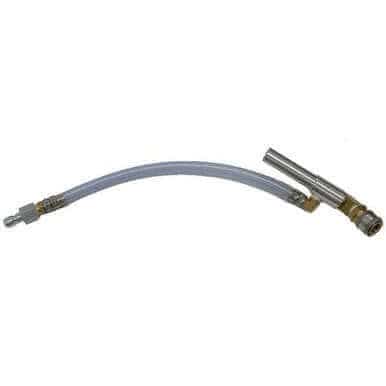 ProTool Softwash WFP Adapter SKU: 150-1001 | 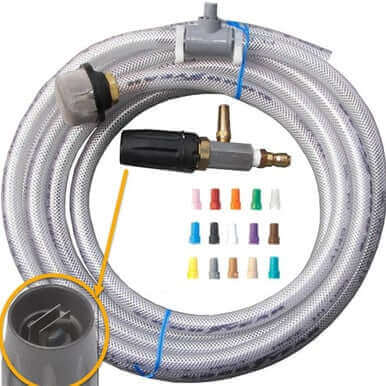 X-Jet M5 Variable Spray SKU: 74-53M | 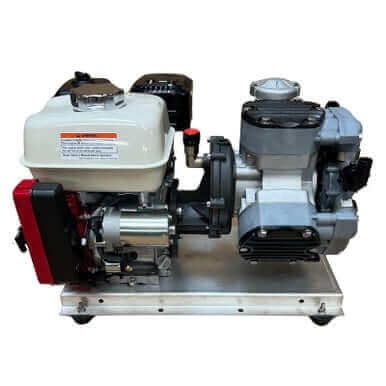 BPX25 - P40 Soft Wash Sprayer Skid SKU: 150-0432M |
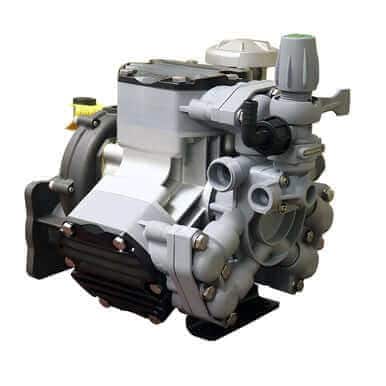 Comet P40 Diaphragm Pump SKU: 150-0428 | 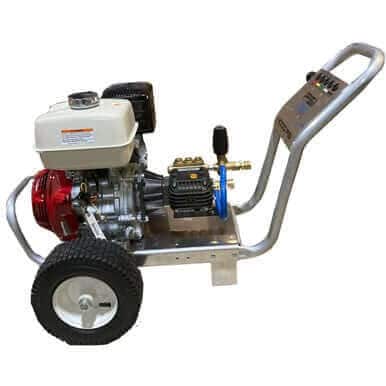 ProTool 4.0g 4000psi Cold Direct Drive Comet SKU: 74-11136 | 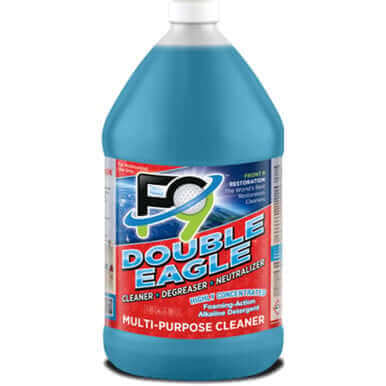 F9 Double Eagle Degreaser Gal SKU: 320-618 |
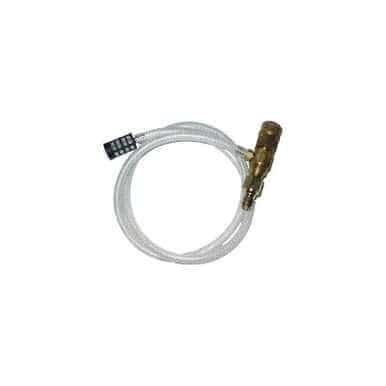 Chemical Injector Non-Acid Pressure Pro SKU: 74-5AMA | 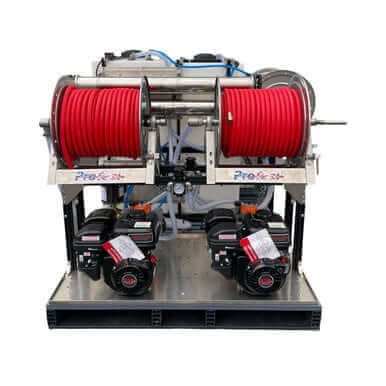 ProTool Dual User Pure Water and Soft Wash Skid BPX 25 SKU: 892-40100 |