Best Chemicals for House Washing: A Professional Guide

Table of Contents
A weak house wash mix turns a 60-minute job into a three-hour ordeal. Too strong, and you're replacing window seals and fielding damage claims. Choosing the best chemicals for house washing is the line between a profitable day and a liability event. This guide covers the chemistry that matters — SH handling, surfactant selection, substrate-specific mixing, and the safety protocols that keep your crew and your client's property intact.
Why Chemistry Outperforms Pressure
High-pressure blasting cracks vinyl, drives water behind the building envelope, and voids warranties from manufacturers like James Hardie and CertainTeed. Professional-grade chemicals do what pressure cannot: they sanitize. SH neutralizes mold, mildew, and Gloeocapsa magma at the cellular level, preventing rapid regrowth and extending service intervals by roughly 40% over water-only methods.
The ROI is straightforward. Chemical cleaning lets a technician complete more jobs per week — typically 25% more — because dwell time does the work instead of mechanical agitation. Concentrated professional formulas also cost less per active-ingredient gallon than retail products, and they're engineered to remain stable when mixed with SH. Dish soap isn't. Its additives break down bleach in the tank before it ever hits the wall, forcing higher concentrations and more waste.
Downstream vs. Direct Application
Your equipment dictates your chemistry. Downstream injectors dilute at roughly 10:1, so the best chemicals for house washing must be concentrated enough to remain effective after that cut. For heavy organic loads on masonry or roofing, dedicated 12V or air-diaphragm pumps apply 3–6% SH solutions directly. The standard professional workflow pairs the pump system with scent maskers, rinse aids, and surfactants tuned for the delivery method — not interchangeable across both.
The Four Components of a Professional House Wash Mix
Every professional mix is built from four components: sodium hypochlorite, a surfactant, a degreaser, and a masking agent. Each does a job the others cannot.
Sodium Hypochlorite
12.5% industrial SH is the standard. It allows higher dilution ratios and more efficient soft washing than 6% household bleach. But freshness matters more than most contractors realize — SH degrades immediately after production. At 85°F storage, a 12.5% batch can lose half its potency within 30–45 days. Above 90°F, decomposition roughly doubles for every 10-degree increase. Buy from high-turnover suppliers. If you're spraying product that's been sitting in a hot warehouse for two months, you're spraying expensive water.
Surfactants
Pure water has a surface tension of about 72 dynes/cm. A professional surfactant drops that below 30, allowing the mix to penetrate porous substrates like stucco and cedar instead of beading off. Without a surfactant, SH runs off vertical surfaces before it can work.
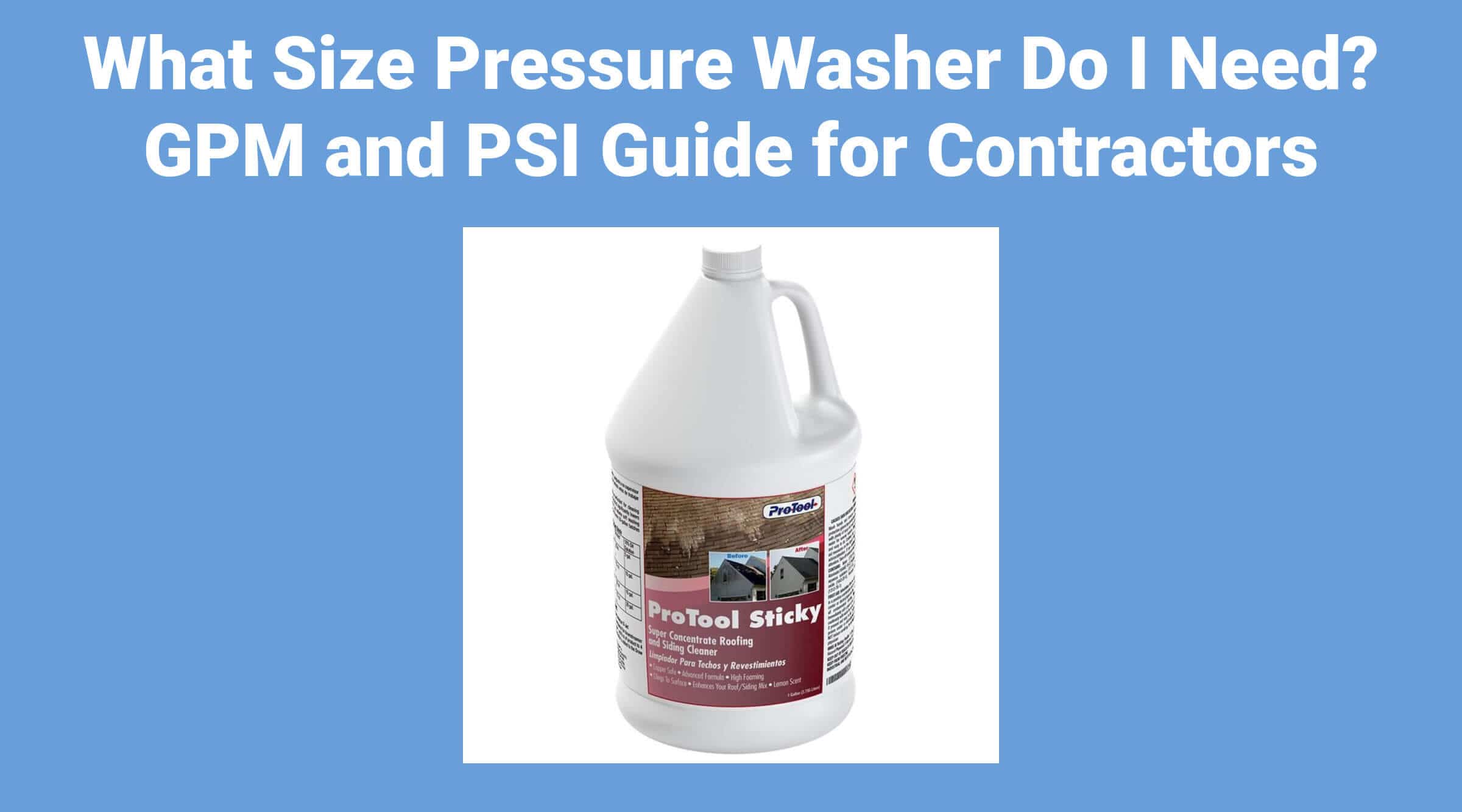
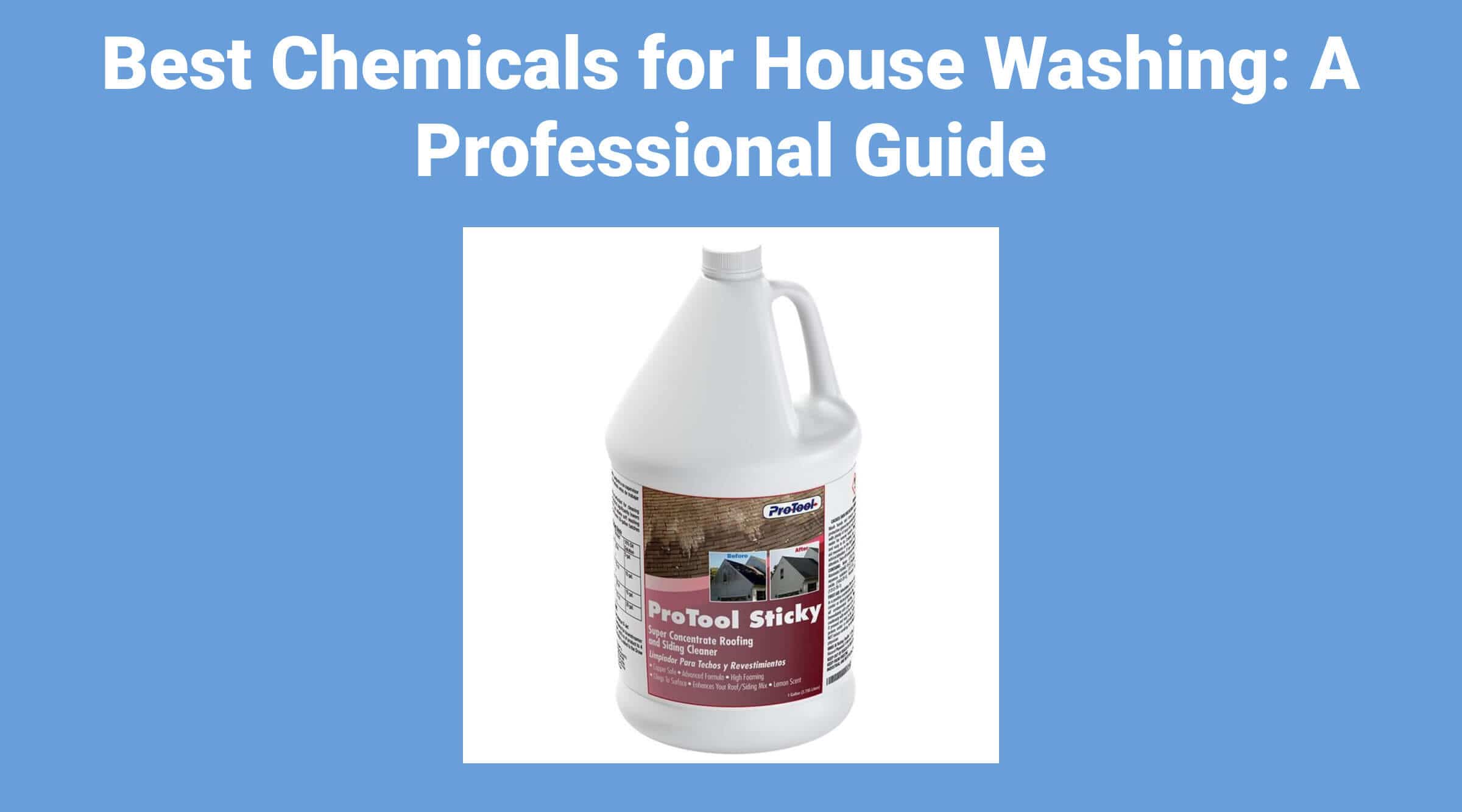
Non-ionic surfactants are the industry preference because they stay stable in high-strength SH. Ionic surfactants react with high alkalinity and "break" — the solution loses its thickness in the tank. ProTool Sticky is the benchmark here: bleach-stable, high-cling, and engineered to rinse clean without leaving film on glass.
What to evaluate in any surfactant:
- Bleach stability — non-bleach-stable soaps neutralize your SH and waste the entire batch.
- Rinse-ability — poor-quality surfactants leave white spotting on windows.
- Visibility — light foam shows the technician exactly where the chemical has been applied.
Degreasers
SH kills organics. It does nothing against soot, motor oil, or heavy oxidation on gutters — roughly 20% of the stains on a typical house. Degreasers break the molecular bond of inorganic pollutants where SH cannot. ProTool Oily Man handles grease and oil staining. For gutter oxidation, ProTool Gutter Bomb is purpose-built for tiger-stripe removal without damaging the finish.
Scent Masking Agents
ProTool Lemony neutralizes the harsh pool smell of SH and replaces it with a scent that signals a clean, professional environment to the homeowner. It's a small line item that noticeably improves the customer experience and repeat referral rate.
Matching Chemicals to Siding and Surface Types
Vinyl Siding
Vinyl accounts for roughly 75% of modern suburban exteriors. A standard house wash mix is 1–1.5% SH with a high-cling surfactant. This kills organic growth while the surfactant holds the solution on vertical surfaces long enough to work — typically 10–15 minutes of dwell time.
Stucco and EIFS (Dryvit)
High-porosity surfaces trap moisture and spores deep in textured layers. Run a hotter mix — 2–3% SH — and allow 10–15 minutes of dwell. Keep the surface wet the entire time. If a bleach-based solution dries on EIFS, it causes permanent salt crystallization that is extremely difficult to remediate.
Brick and Stone
Two separate problems here. Efflorescence — white, powdery salt deposits — requires an acidic cleaner, not SH. EBC Restorer handles efflorescence and calcium buildup on masonry. For lichen, which physically anchors into the stone, use 3% SH with a heavy surfactant load. Always pre-wet masonry before application to prevent chemicals from soaking too deep and causing flashing or uneven drying marks.
Painted Wood and Hardie Board
High-alkaline solutions chalk paint or strip finishes if left too long. Keep SH below 1% and incorporate ProTool Post Rinse during the final rinse to stabilize substrate pH.
Addressing Specific Contaminants
Gloeocapsa magma — the bacteria behind black streaks — feeds on calcium carbonate and requires consistent SH application to neutralize the colony. Artillery fungus is tougher: its sticky black spores are mechanically bonded to the siding and resist standard chemical mixes. Adding a specialized booster improves efficacy against the outer shell. For oxidation on faded vinyl, an acid-based restoration cleaner restores luster without high-pressure scrubbing.
The One-Size-Fits-All Mistake
A roof-strength mix (4–6% SH) on standard siding destroys window seals and flash-oxidizes aluminum trim. Adjust downstream injector ratios — typically between 10:1 and 8:1 — based on the specific organic load of the property. The best chemicals for house washing applied at the wrong concentration turn a routine job into a damage claim on sensitive surfaces like anodized aluminum or specialty wood stains.
Application and Site Safety
Pre-Wetting
Saturating surfaces with fresh water before chemical application is your primary defense for landscaping and porous substrates. Pre-saturation fills plant cells with clean water so they can't absorb SH. It also prevents cleaning solutions from soaking too deep into masonry.
Environmental Conditions
Wind above 10 mph creates drift risk — atomized SH landing on neighboring properties or vehicles. Temperatures above 85°F accelerate evaporation, causing flashing where chemicals dry and leave salt crystals or streaks. Work in sections to keep surfaces cool and wet.
PPE
Non-negotiable when handling 12.5% SH: chemical-resistant nitrile gloves, ANSI Z87.1+ wrap-around eye protection, and a respirator with organic vapor/acid gas cartridges. ProTool Nitrile Gloves and splash-proof goggles are the baseline. Waterproof boots and PVC aprons prevent skin contact during mixing.
Plant and Property Protection
After the final rinse, treat landscaping with ProTool Post Rinse to neutralize residual SH and restore soil pH. Seal exterior outlets, smart doorbells, and keyless entry systems with high-visibility tape before you start — water intrusion into 120V or low-voltage components causes immediate electronic failure.
Mixing and Handling
Mixing bleach with ammonia or certain masonry acids creates chloramine or chlorine gas — potentially fatal in enclosed areas. Every truck should carry a 5-gallon spill containment kit. All chemical tanks and transfer containers need GHS-compliant labeling and must be secured per DOT transport regulations. Conclude every project with a rinse-to-neutralize pass to ensure no active chemical remains on wood decks or aluminum fixtures after you leave.
Building Your House Wash Chemical Inventory
ProTool Sticky remains the anchor of any professional house wash setup — high cling on vertical surfaces, bleach-stable, and clean-rinsing. Pairing it with the right concentration of SH lets you run lower SH levels while getting better results, because the surfactant holds the chemical on the wall long enough to do its job.
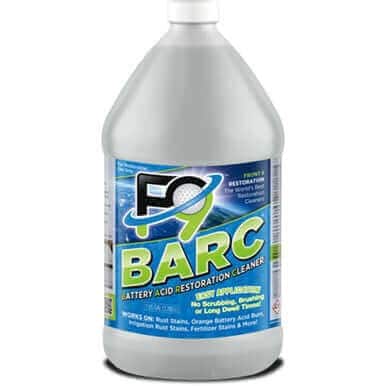
For contractors dealing with complex jobs, the ProTool line covers the specialty cases: F9 BARC for rust and metallic stains, EBC Restorer for efflorescence and calcium, ProTool Oily Man for heavy degreasing, and Gutter Bomb for oxidation. These boosters turn a standard house wash mix into a targeted solution for commercial or neglected residential properties.
Every product in the professional chemical inventory includes Technical Data Sheets and Safety Data Sheets — essential for OSHA compliance and for explaining your process to property managers who want documentation.
Products Mentioned
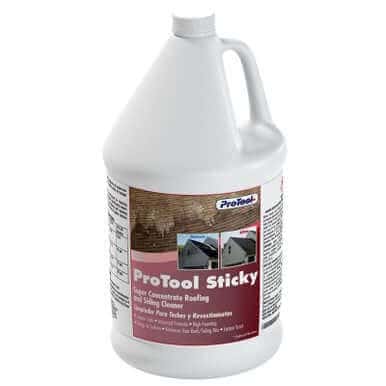 ProTool Sticky SKU: 83-07M | 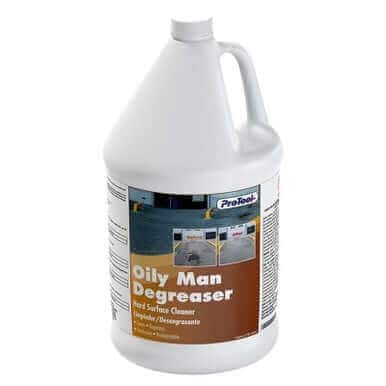 ProTool Oily Man SKU: 83-02M | 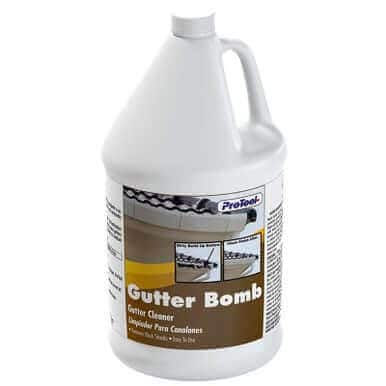 ProTool Gutter Bomb - Gutter Cleaner - Oxidation Remover SKU: 89-82M |
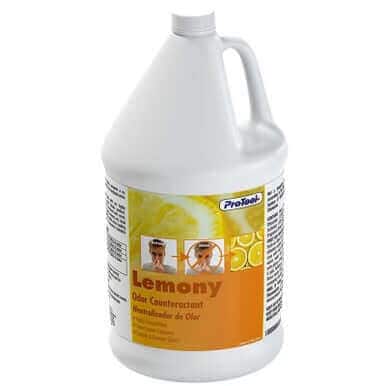 ProTool Lemony SKU: 83-05M | 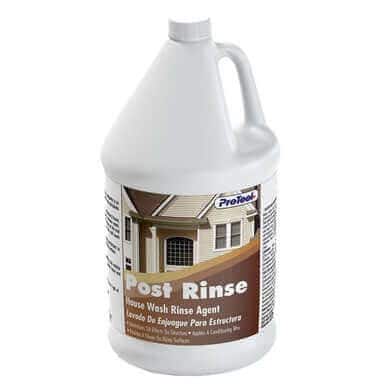 ProTool Post Rinse SKU: 83-03M | 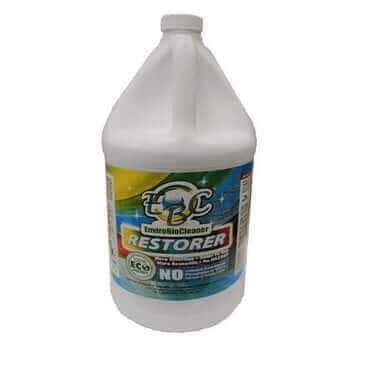 EBC Restorer SKU: 83-82M |
 Front9 Restoration Rust Remover F9 B.A.R.C. SKU: 320-61M | 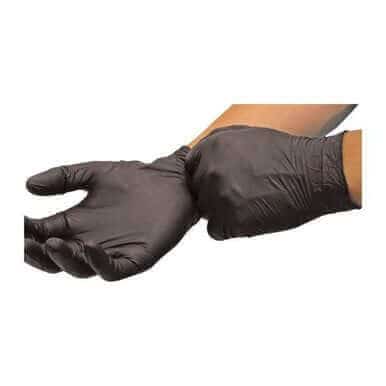 ProTool Gloves Nitrile 4Mil 50 pair 100 count Large Black SKU: 56-616 |  Goggles Splash Proof SKU: 58-75 |