
How to Clean Composite Decking with a Professional Soft Wash System

Table of Contents
Hit a composite deck with 3,500 PSI and you're not cleaning it — you're delaminating the cap, fuzzing the wood fibers, and handing the homeowner a warranty claim. Most contractors know better, but the fear of leaving organic growth behind still pushes people toward higher pressure than the substrate can handle. Learning how to clean composite decking through soft wash methods is the only approach that protects the material, keeps callbacks near zero, and holds a professional margin of $0.30–$0.40 per square foot.
This guide covers substrate identification, chemical selection, equipment specs, and a repeatable 5-step workflow for both modern capped PVC and older porous WPC boards — all while keeping you under the 1,500 PSI ceiling where composite manufacturers draw the line.
PVC vs. WPC: Why Substrate ID Comes First
Composite decking splits into two categories that respond very differently to chemistry and pressure. Wood-plastic composites (WPC) blend roughly 50/50 wood fiber and thermoplastic — polyethylene or polypropylene. Cellular PVC contains zero organic filler. If you skip this identification step, you'll either under-dose and leave mold behind, or over-concentrate and bleach the pigment out of a board that costs the homeowner $8–$12 per linear foot to replace.
Wood-Plastic Composites (WPC)
The wood fibers in WPC give mold spores a food source that pure PVC doesn't offer. First-generation uncapped WPC is the riskiest substrate: it has no protective shell, and excessive PSI pulls wood fibers to the surface in a permanent carpet-like "fuzz" that no amount of sanding will fix. SH kills the mold, but on older uncapped boards, oxygen-based bleach is often the safer call to avoid uneven pigment fade. Either way, mechanical force is the enemy — the chemistry has to do the work.
Capped PVC and Advanced Polymers
Capped boards wrap a high-density polyethylene or PVC shell around the core. That shell resists organic growth far better than WPC, but it's sensitive to solvents, high surface temperatures, and dried surfactant films. You can spot capped surfaces by their uniform grain pattern and distinct plastic feel compared to WPC's matte texture. Because these boards don't absorb water, dwell time matters more — if your surfactant dries on a sun-heated cap, you'll spend twice as long agitating the residue off. Check the manufacturer's chemical compatibility sheet before every new brand you encounter.
Why Soft Washing Beats Pressure on Every Composite Job
High-pressure streams — even under the 1,500 PSI threshold — etch composite surfaces, creating a rougher texture that traps dirt and organic growth faster than the original board. You solve one problem and create a worse one. Soft washing shifts the work from water-mechanical action to chemical-mechanical action: the detergent kills and lifts the growth, and the water is just the delivery and rinse vehicle.
A dedicated soft wash rig — 12V diaphragm pump or air-diaphragm system — applies solution at pressures comparable to a garden hose while maintaining the flow rates needed to cover 500+ square feet efficiently. That consistency is what lets you price the job, hit your margin, and move to the next one without callbacks.
What Should Be on Your Truck
- Medium-stiff nylon brushes — for agitating stubborn tannin or grease spots without scratching the polymer cap.
- High-flow, low-pressure nozzles — black or green tips that deliver volume without destructive PSI.
- Telescopic poles — for multi-story railings and facades without ladder exposure. A ProTool Oval Telescopic Pole gives you the reach to handle second-story railings from the ground.
Chemical Selection: SH, Surfactants, and the Tannin Problem
Sodium Hypochlorite is the industry-standard biocide for composite deck work. It oxidizes mold, mildew, and algae cells at the root so they don't bounce back in two weeks. But undiluted household bleach is a liability — high concentrations degrade the UV inhibitors in the polymer cap, causing premature fading and brittleness that shows up months after you've cashed the check.
Tannin staining is the other half of the equation. Tannins are natural oils in WPC wood fibers that bleed dark, blotchy spots to the surface — and SH won't touch them. An oxalic acid treatment after the organic clean neutralizes those metallic and wood-based stains. Skipping this second step on a WPC deck leaves an uneven finish that undercuts the quality of your SH application.
Mix Ratios
Light maintenance or annual cleans: 1%–1.5% SH solution. Heavy black mold or neglected north-facing decks: up to 3%. Always pre-wet the boards with fresh water before applying — filling the pores prevents the solution from soaking too deep and causing internal discoloration. A surfactant like ProTool Sticky breaks water's surface tension so the biocide clings to vertical railings and spindles instead of sheeting off. On residential jobs, a scented surfactant masks the SH smell — a small detail that matters for repeat bookings.
Working near landscaping? Pre-rinse the plants, apply a Plant Wash before you start, and neutralize runoff as you go. The five minutes this adds to setup prevents the callback that costs you an afternoon.
The 5-Step Professional Execution Workflow
This sequence is designed to be repeatable across crew members and deck sizes. Consistency here is what separates a one-off job from a commercial maintenance contract.
- Preparation and property protection. Tape exterior electrical outlets with 2-mil plastic and masking tape. Pre-rinse all surrounding vegetation. Note and photograph any pre-existing damage — loose fasteners, warped boards, failing joists — before you touch a trigger.
- Pre-wetting and debris removal. Clear loose organic matter with a high-flow nozzle. Saturate boards with fresh water to lower surface temperature. On summer days, composite surfaces can exceed 150°F — chemicals flash-dry at those temperatures, leaving salt residue that requires a second pass.
- Chemical application. Apply your soft wash mix with a 12V pump or downstream injector. Cover boards, railings, and spindles evenly. A ProTool 5 GPM 12V Pump delivers the flow consistency you need across large deck surfaces.
- Dwell and agitation. Let the chemistry work 10–15 minutes. The reaction is complete when organic growth shifts from dark green or black to light brown or translucent white. For stubborn grease or heavy tannin bleed, agitate lightly with a nylon brush — don't scrub hard enough to mark the cap.
- High-volume, low-pressure rinse. Flush from the top down — highest railings first, then floorboards. Target 5–8 GPM at under 800 PSI. Pay attention to gaps between boards where chemical pools; unrinsed pockets cause localized discoloration. If solution dripped through the gaps, flush the underside too.
If the deck exceeds 500 square feet, work in sections. Letting your mix dry on the surface is the single most common mistake — it leaves salt deposits and surfactant film that are harder to remove than the original mold.
Safety, Fall Protection, and Post-Clean Protocol
Wet composite covered in surfactant is one of the slipperiest surfaces you'll work on. High-traction, slip-resistant footwear is non-negotiable. For elevated decks and multi-story balconies, OSHA-compliant fall arrest is mandatory — a Fall Protection Kit covers the harness, lanyard, and anchor hardware you need for deck work above grade.
Full PPE for SH and oxalic acid handling means chemical-resistant gloves, eye protection, and splash-proof clothing. SH concentrate on skin is a burn; in your eyes it's an ER visit.
Post-Clean Inspection
Every job should end with a walk-through. Check for loose fasteners, warped boards, and failing joists that were hidden under organic growth. Documenting and reporting structural issues to the client positions you as a technical authority — and opens the door to referrals and recurring maintenance contracts rather than one-time gigs.
Maintenance Scheduling and Upsells
Semi-annual cleaning on commercial properties prevents the heavy mold colonization that forces higher SH concentrations. Lower concentrations mean less environmental impact and less polymer wear — both selling points for property managers who care about long-term asset value.
Deck restoration is also a natural entry point for add-on services. Older WPC benefits from UV inhibitor application to restore color. Glass railings get a spot-free finish with a ProTool Apex Carbon Fiber Pole and pure water rinse — no ladder required. For contractors building out a soft wash operation, a ProTool BPX25 Soft Wash Skid puts the pump, tank, reel, and metering in one mobile unit ready to run from day one.
Products Mentioned
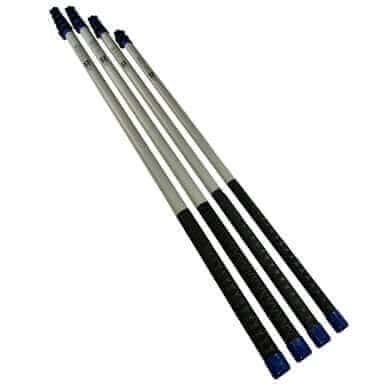 ProTool Telescopic Pole Oval SKU: 60-01M | 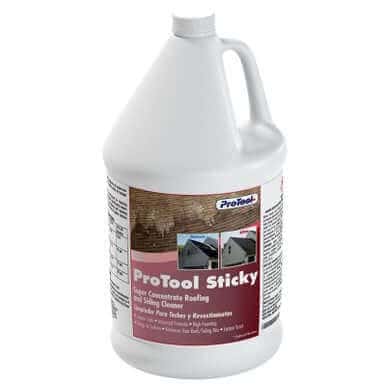 ProTool Sticky SKU: 83-07M | 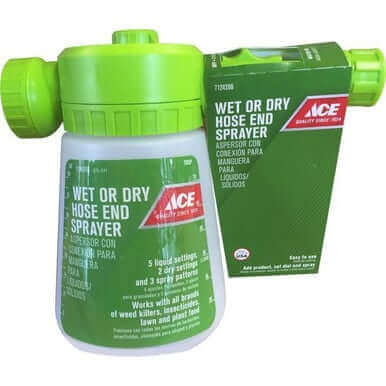 Hose End Sprayer Plant Wash SKU: 150-0761 |
 ProTool SoftWash System 5gpm PolyPro 12v Pump SKU: 150-0859 | 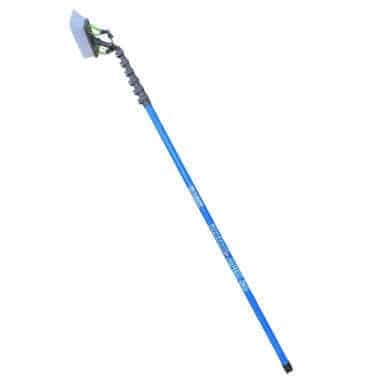 ProTool Apex Carbon Fiber Water Fed Pole SKU: 151-32M |  BPX25 - P40 Soft Wash Sprayer Skid SKU: 150-0432M |