High-Volume Pure Water Production: The HydroPanel & RODI System Guide

Table of Contents
Most contractors buy a pure water production system based on stage count or tank size, then discover on the first big job that neither number told them what they actually needed to know: how many gallons per minute the system delivers under real feed-water conditions, and how long the DI resin lasts before TDS creeps back up.
This guide breaks pure water production into the three measurements that matter — flow rate, water quality, and resin life — and maps each to the equipment that controls it. Whether you're running a compact cart for residential routes or a wall-mounted HydroPanel feeding two operators on commercial glass, the planning process is the same.
Batch Volume vs. Production Rate vs. Water Quality
These three numbers answer different questions, and confusing them is the most common equipment-sizing mistake in the trade.
- Batch volume — how much water you need for a task. A 12-pane storefront might use two gallons; a four-story office building might burn through 80.
- Production rate — how fast the system makes water, measured in gallons per minute (GPM) or gallons per hour. This is what determines whether you can clean continuously or have to wait for the tank to refill.
- Water quality — TDS reading at the outlet. For streak-free results on glass, you want 0–10 ppm. Above that, you're leaving mineral deposits.
A tank that holds four gallons tells you nothing about how long those four gallons took to produce. A system rated at 2 GPM with 400 ppm feed water will deliver a very different real-world flow than the same system on 50 ppm municipal water. Record all three numbers from your actual setup, under your actual conditions.
How RO and DI Work Together
Reverse osmosis pushes water through a semipermeable membrane, rejecting 95–99% of dissolved solids. Deionization uses ion-exchange resin to strip the remaining ions down to near-zero TDS. In most professional systems, RO does the heavy lifting and DI polishes what's left.
Why this matters for your wallet: DI resin is a consumable. The harder your feed water, the faster the resin exhausts. An RO stage upstream extends resin life dramatically — on 300 ppm feed water, a system with RO before DI can get 5–10× more gallons per resin fill than DI-only. Skip the RO and you're replacing resin constantly.
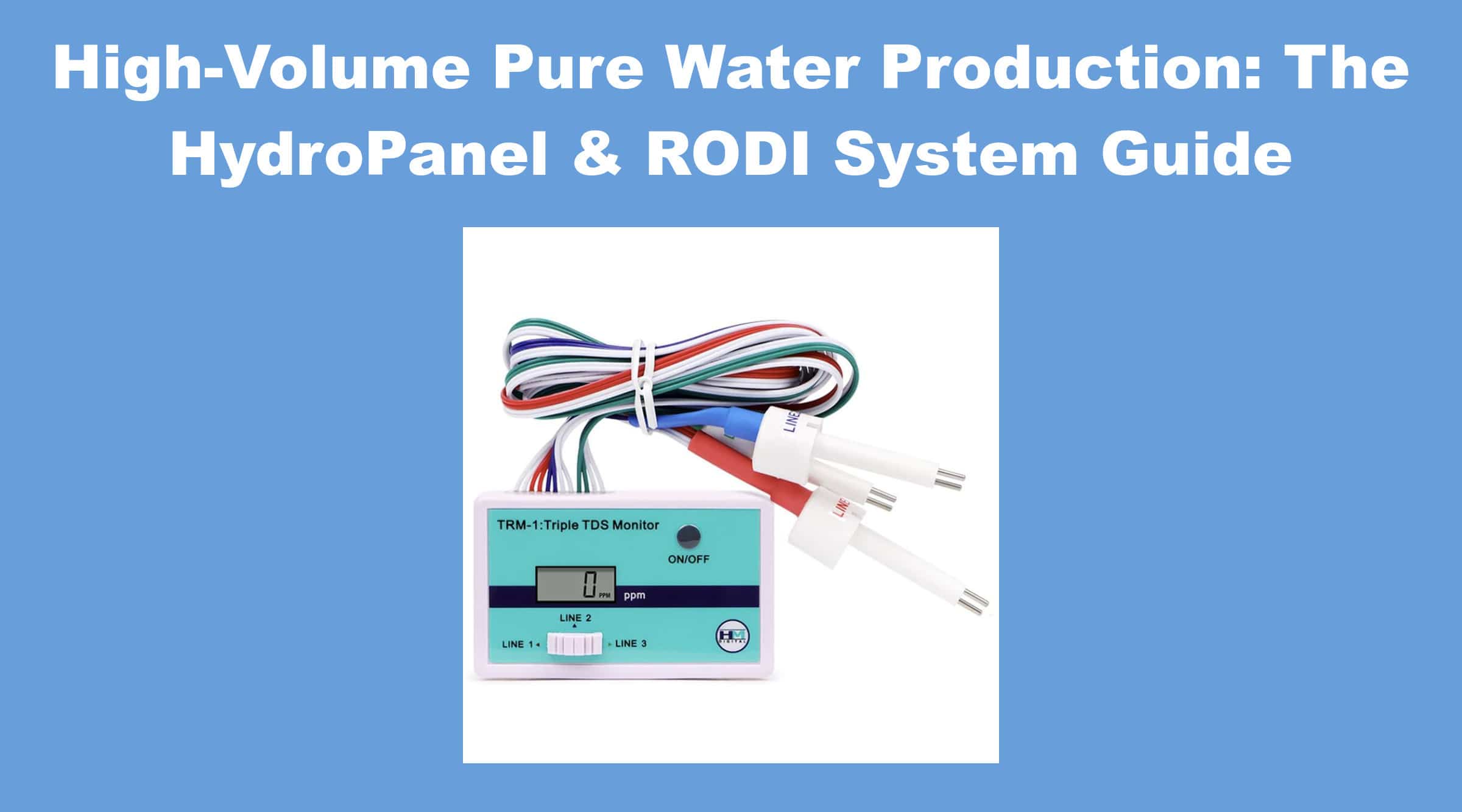
Use an inline TDS meter after each stage to monitor performance. When post-DI TDS starts climbing above 5 ppm, the resin needs replacement or refill. Tracking this over time gives you a reliable resin-change interval for your specific water source.
Matching Equipment to the Job
The right system depends on three things: how much water the job demands, how you get the system to the job, and your feed-water quality.
Residential routes and small commercial
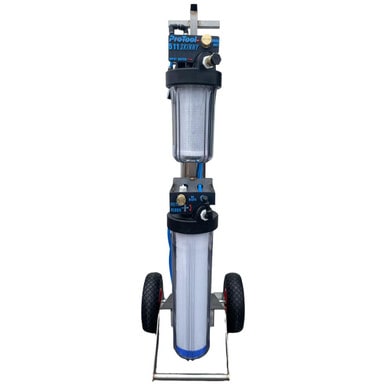
A solo operator doing 8–12 residential stops per day rarely needs more than a compact cart. The ProTool 511 Pure Water Cart is built for this — a four-stage RODI system on a stainless steel frame that fits in a van or truck bed. Fill from a garden hose, run your water fed hose to the pole, and work. For most municipal water sources, you'll get a full day of residential cleaning before the DI needs attention.
If you need more capacity without stepping up to a full skid, the ProTool HiFlo Pure Water Cart delivers higher flow rates with the same portable footprint. The HiFlo Ultra Cart adds 12V or 110V pump options for operators who need boosted pressure on taller buildings.
Multi-operator commercial and route work
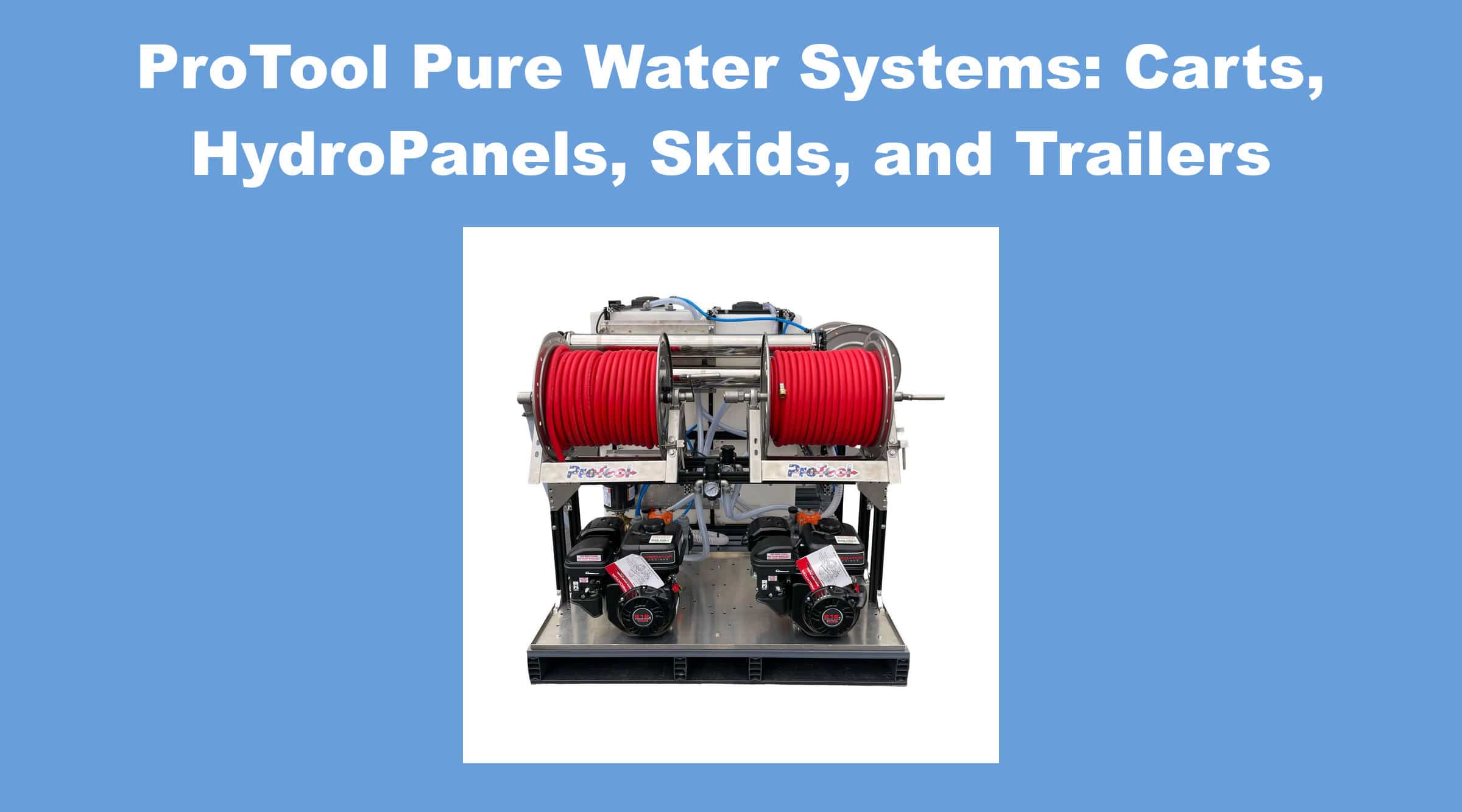
When two or more operators are pulling water simultaneously, a cart won't keep up. This is where the ProTool HydroPanel RODI Wall Mount earns its place — a permanent or semi-permanent installation that feeds a tank on your truck or van. The dual-RO configuration maintains higher production rates, and the wall-mount format keeps your vehicle payload free for poles and equipment.
For even higher throughput, the Dual RO - DI Wall Mount (Nandolorian) runs two RO membranes in parallel. On decent municipal water, this system can keep two operators running water fed poles continuously without waiting on production.
When you need pure water away from a tap
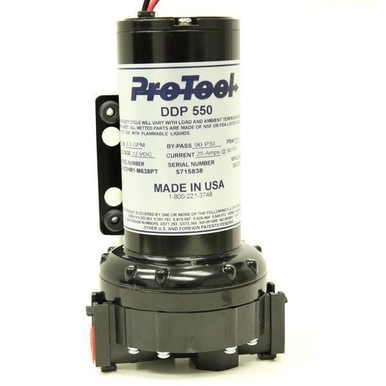
Tank-based setups — filling a storage tank at the shop with your wall mount, then driving to the job — solve the problem of sites without accessible water. Size the tank to the job: a 50-gallon low-profile tank covers most residential routes, while commercial glass routes may need 100+ gallons. Use a regulated delivery pump to push water from the tank to the pole at consistent pressure.
How to Measure Your System's Real Output
Manufacturer specs are tested under controlled conditions. Your conditions aren't controlled. Here's how to get a real number:
- Fill from your normal water source with the system fully assembled and primed.
- Collect output in a graduated container. Start a timer when water begins flowing; stop when you hit your target volume.
- Divide volume by elapsed time. Four gallons in 20 minutes = 0.2 GPM = 12 GPH.
- Record feed-water TDS (before the system) and product-water TDS (after the system) using an inline TDS meter.
- Note the date, system configuration, and any variables (water temperature, feed pressure).
Run this test when the system is new, then periodically as filters age. A drop in flow rate usually means the sediment or carbon pre-filters need replacement. A rise in product TDS means the DI resin is exhausting or the RO membrane is degrading.
Managing DI Resin and Filter Life
Resin is the biggest ongoing cost in any RODI system. Two things control how fast you burn through it: feed-water TDS hitting the resin, and total gallons processed.
An RO membrane upstream drops feed TDS by 95%+ before it reaches the resin. On 200 ppm tap water, the resin only sees ~10 ppm — a fraction of the ion load. Without RO, the resin absorbs the full 200 ppm and exhausts in a fraction of the time.
ProTool DI Filters come ready-to-use or as empty cartridges you can fill with bulk virgin resin. Refilling cartridges yourself cuts per-gallon resin cost significantly over buying pre-filled replacements.
Pre-filters matter too. A sediment pre-filter catches particulates before they foul the RO membrane, and a carbon filter removes chlorine that degrades RO membranes. Replace these on schedule — they're cheap insurance against premature membrane failure.
Putting It Together: Plan From the Job Backward
Start with the work, not the equipment brochure.
- Estimate daily water demand. Track actual usage across a few typical days. Most residential window cleaners use 1–3 gallons per house; commercial jobs vary widely.
- Determine feed-water quality. Test your shop tap and your most common job-site taps. High-TDS areas (200+ ppm) justify a dual-RO system; low-TDS areas (under 100 ppm) may let you run a simpler setup.
- Choose the format. Van-based route work points toward a cart or tank system. Shop-based production points toward a wall mount. Multi-operator crews need higher-flow configurations.
- Size the system. Match production rate to demand, not tank size to demand. A smaller tank with a high-flow system beats a large tank with a slow system every time.
Track your numbers over time. Feed-water quality changes seasonally in some areas, resin consumption varies with usage patterns, and your job mix will evolve. The contractors who spend the least per gallon of pure water are the ones who measure, record, and adjust.
Products Mentioned
 ProTool 511 Pure Water Cart SKU: 150-0515 | 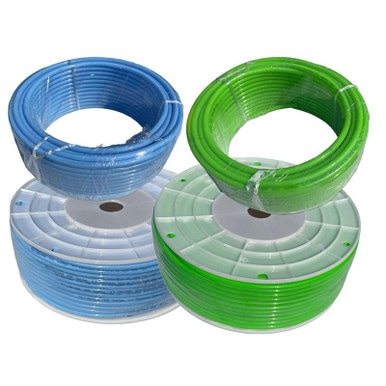 ProTool Water Fed Hose SKU: 151-02M | 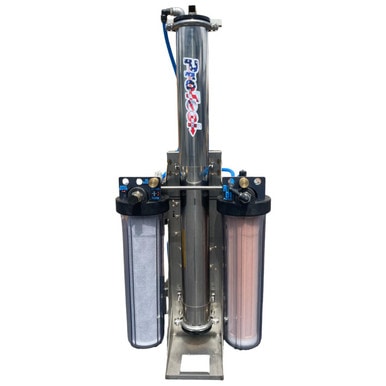 ProTool HiFlo Pure Water Cart Stainless Steel SKU: 150-0521 |
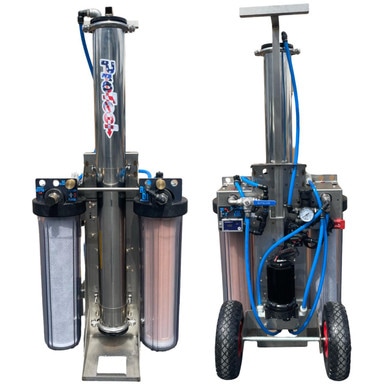 ProTool HiFlo Pure Water Ultra Cart SS 12V or 110V SKU: 150-0522 | 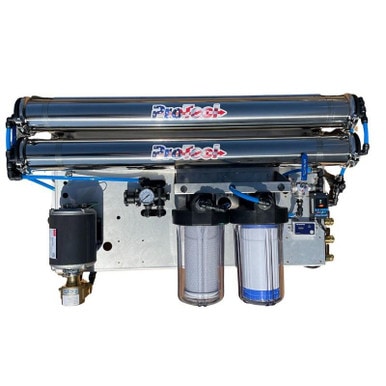 ProTool HydroPanel RODI Wall Mount SKU: 150-05346M | 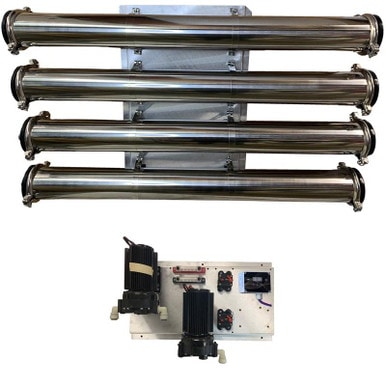 ProTool Dual RO - DI Wall Mount - NANDOLORIAN SKU: 150-0531M |
 ProTool Pump 90psi 5.0gpm Pump Regulated SKU: 150-0856 | 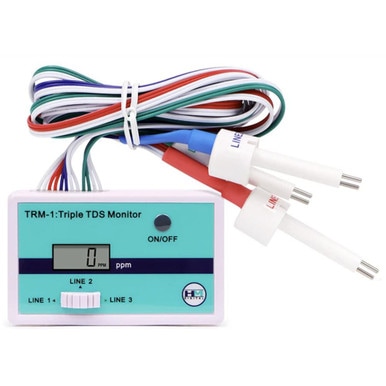 TDS Inline MeterTriple 1/4in Probes SKU: 150-017 | 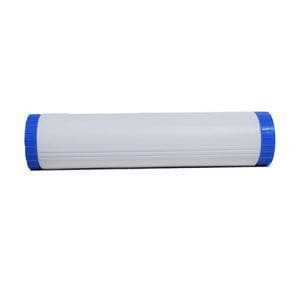 ProTool DI Filter 20in Blue/White RTU SKU: 150-012 |
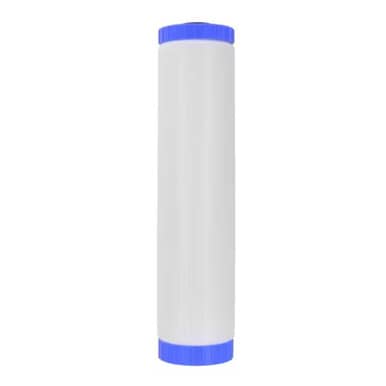 ProTool DI Cartridge Empty 4.5in x 20in SKU: 150-0571 | 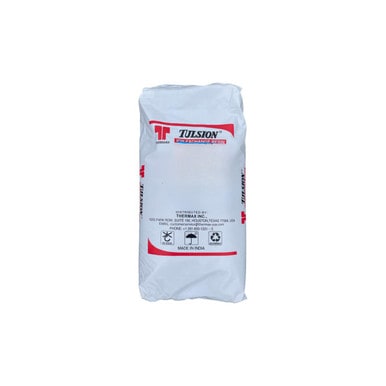 Resin DI Cubic foot - New Virgin Resin SKU: 150-040 | 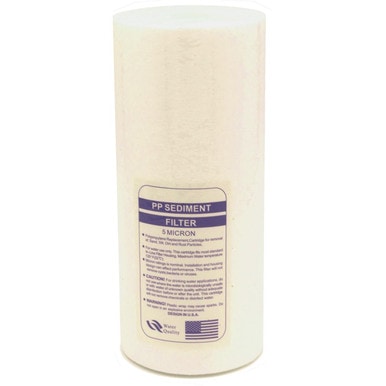 ProTool Sediment Filter 4.5in x 10in SKU: 150-005 |
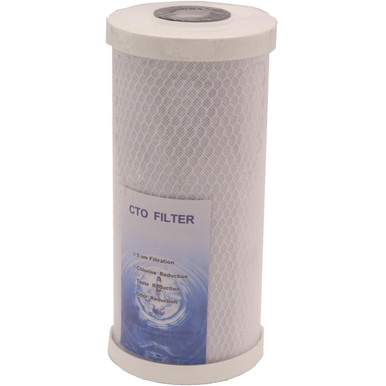 ProTool Carbon 4.5 inch x 10 inch Water Filter Cartridge SKU: 150-006 |