Scent Masking for Softwash Cleaning: Surfactant Strategy That Works

Table of Contents
Scent masking for softwash cleaning is one of those operational details that separates contractors who get callbacks from contractors who get referrals. Most exterior cleaners understand that sodium hypochlorite does the killing — but the smell it leaves behind can undo every bit of goodwill the clean itself earned. A property that reeks of pool chlorine for two days after service reads as harsh, not professional, regardless of how spotless the siding looks.
A bleach-stable lemon surfactant isn't a fragrance add-on. It's a functional chemical that modifies surface tension, improves dwell time, stabilizes SH, and overrides the chlorine odor profile in a single additive. Get the ratio wrong, though, and you're either fighting excess suds that cavitate your pump or running unmasked bleach that triggers neighbor complaints. This guide covers the chemistry, the ratios, the equipment considerations, and the field techniques that make scent masking for softwash cleaning consistent and repeatable.
Why Surfactants Matter More Than You Think
Raw sodium hypochlorite has high surface tension. On vinyl siding or metal roofing, it beads up and runs off before it can treat the organic growth underneath. Adding a surfactant drops that surface tension, converting beading droplets into a uniform film that stays where you spray it.
The visible foam a good surfactant produces isn't cosmetic — it's your application map. You can see exactly where you've sprayed and where you haven't, which prevents the twin sins of over-application and missed spots. On steep roof pitches, that cling is the difference between a chemical that treats the algae and one that's already in the gutter.
Masking vs. Neutralizing: Know the Difference
Most softwash surfactants are masking agents, not neutralizers. A masking agent uses a high-intensity fragrance — lemon is the industry standard — to override chlorine at the olfactory level. True neutralizers chemically break down the odor molecules, but they can also degrade SH potency, which defeats the purpose of your mix.
Lemon works because its sharp citrus notes are chemically resilient against high-alkalinity solutions. The result is a "citrus fresh" finish that homeowners associate with a thorough, professional clean rather than a chemical assault on their property.
The Business Argument
Odor complaints drive negative reviews and callbacks in residential work faster than almost anything else. A property that smells like a public pool for 48 hours reads as hazardous to the homeowner, even if the chemistry is perfectly safe. "Citrus-infused cleaning" in your quotes positions you as a premium operator — and premium operators charge premium rates. That positioning costs you a few ounces of surfactant per batch.
Bleach Stability: The Non-Negotiable Requirement
Not every soap plays well with SH. Consumer-grade dish soaps and low-quality surfactants can cause your batch to "gas out" — the SH breaks down, the solution turns cloudy or forms sludge, and you're left with a mix that won't clean and may clog your pump heads and nozzles.
Before committing a new surfactant to a full batch tank, run a five-gallon test. Mix your standard SH ratio with the surfactant and let it sit for 24 hours. If it stays clear and doesn't separate, it's bleach-stable. If it clouds or throws sediment, move on. ProTool Lemony is engineered for SH stability — it won't degrade your active ingredient or compromise your equipment.
Mixing Ratios and Equipment Setup
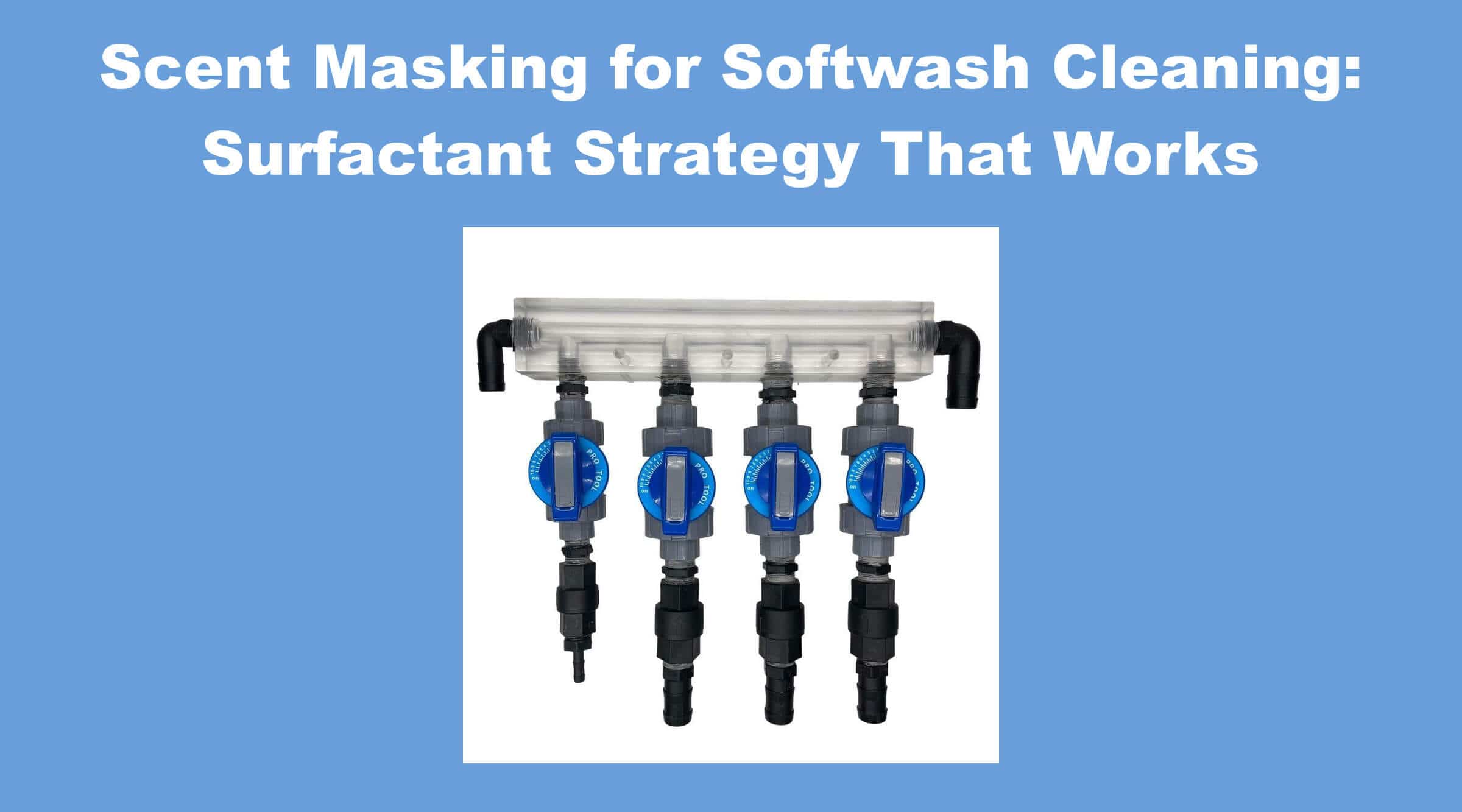
The right ratio depends on your delivery system. A surfactant that performs perfectly in a ProTool Soft Wash Metering Block may behave completely differently in a downstream injector, and the viscosity of the product determines which hardware can handle it reliably.
Downstream Injectors
Most downstream injectors run a fixed draw rate — 10:1 or 20:1. High-viscosity surfactants can restrict the orifice or fail to draw altogether, leaving unmasked bleach at the nozzle. If your injector struggles with a thick surfactant, check the suction line diameter. A 1/2-inch or 5/8-inch suction hose usually solves the draw problem.
Proportioner and Metering Systems
Proportioner manifolds give you precise percentage control on the surfactant line. Most contractors dial the surfactant to 1%–5% to hit the target cling without over-sudsing. A ProTool Soft Wash Metering Plate lets you set exact ratios for each chemical line, which removes the guesswork that causes inconsistent results job to job.
Batch Mixing for Roof Work
Roof cleaning runs higher SH concentrations than house washing, which means you need a stronger scent profile to keep the odor in check. For a standard house wash, the recommended ratio for ProTool Lemony is 4 ounces per 50-gallon batch. On steep-pitch roofs, bump the surfactant slightly to keep the solution on the shingles instead of in the gutters.
Watch the Suds
Over-sudsing causes pump cavitation — air trapped in foam inside the pump head produces erratic pressure and can damage internal diaphragms. Excessive foam also traps bleach against the surface longer than intended, which becomes a liability near sensitive vegetation. Dial back the surfactant before you add more.
Field Application Techniques
The Bottom-Up Scent Method
Apply your surfactant mix to ground-level surfaces and perimeter areas first. This creates a citrus scent barrier at nose height that intercepts the bleach odor drifting down from upper siding or roof work. On residential jobs where the homeowner is present, this technique keeps lemon as the dominant smell throughout the service — not chlorine.
Temperature and Timing
High ambient temperatures accelerate both the SH reaction and the evaporation of your fragrance profile. Applying to pre-cooled surfaces or during the cooler parts of the day extends scent longevity. Humidity helps — high humidity traps fragrance molecules closer to the ground, stretching the lemon aroma. Direct sun and low humidity dry the surfactant prematurely, which also risks spotting.
Wind Management
In dense neighborhoods, work with the wind at your back. This pushes both chemical mist and masking scent away from adjacent properties and reduces drift complaints. Simple, but often ignored until someone calls.
Plant Protection
Surfactants improve cling — which also means they improve cling to non-target vegetation. The reduced surface tension lets your cleaning solution penetrate leaf cuticles more easily than raw SH would. Pre-wetting all surrounding plants with clean water is non-negotiable. It fills the plant's vascular system so it can't absorb the surfactant-laden mix. ProTool Post Rinse applied after the cleaning phase neutralizes residual SH on landscaping and hardscape.
Post-Rinse Protocol
After the primary cleaning phase, rinse all runoff thoroughly and do a light final rinse of the perimeter. A subtle lingering citrus aroma after you've packed up reinforces the "clean" perception. It's a small detail that drives repeat business.
Equipping a Complete Softwash Setup
The surfactant is one piece of the system. Matching it to the right pump, manifold, and delivery hardware is what makes the chemistry perform consistently. A ProTool BPX25 Soft Wash Sprayer Skid pairs a Comet BPX25 diaphragm pump with a chemical-resistant delivery system built to handle SH and viscous surfactants without the corrosion or cavitation problems that plague improvised rigs.
For contractors running proportioner setups, the 6-Port Soft Wash Metering Manifold gives you independent control over each chemical line — SH, surfactant, water, and rinse agent — so every batch is mixed to spec. Pair it with a ProTool 5GPM PolyPro 12V Pump for a system that handles the corrosive chemistry without eating itself.
Safety gear matters when you're handling concentrated surfactants and SH. Nitrile gloves and splash-proof goggles are baseline PPE for measuring, mixing, and spraying. Concentrated citrus maskers are skin and eye irritants in raw form.
Products Mentioned
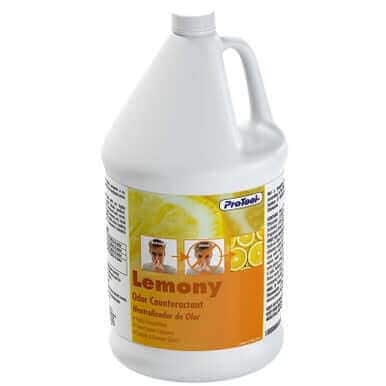 ProTool Lemony SKU: 83-05M | ProTool Lemony SKU: 83-05M | 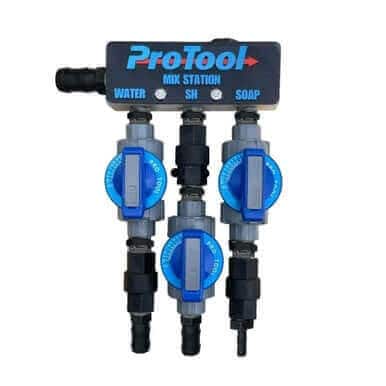 Soft Wash Metering Block SKU: 150-0454M |
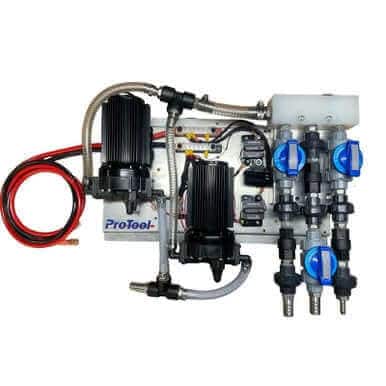 ProTool Soft Wash Metering Plates SKU: 150-045M | 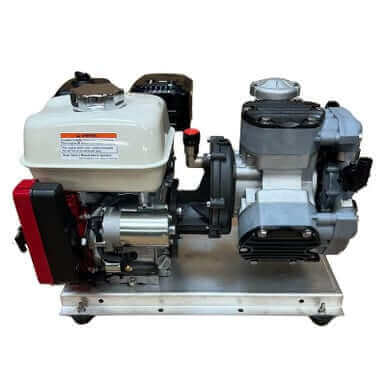 BPX25 - P40 Soft Wash Sprayer Skid SKU: 150-0432M | 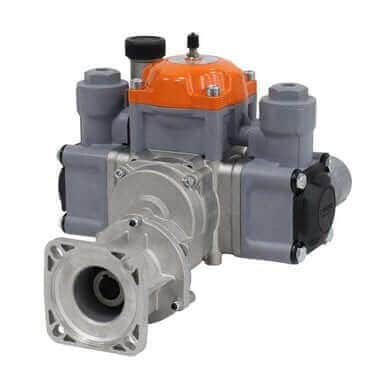 Comet BPX25 GR pump SKU: 150-0432 |
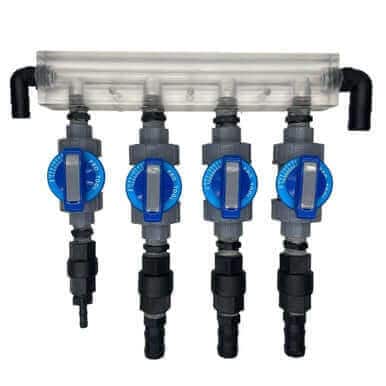 6 Port Soft Wash Metering Manifold Clear SKU: 150-0451 | 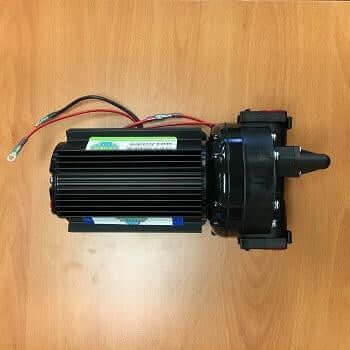 ProTool SoftWash System 5gpm PolyPro 12v Pump SKU: 150-0859 | 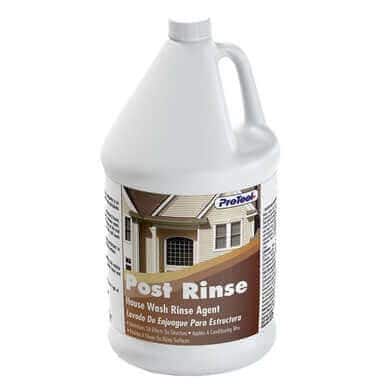 ProTool Post Rinse SKU: 83-03M |
 Goggles Splash Proof SKU: 58-75 |