Masonry Cleaner for Pressure Washing: What Pros Actually Need to Know

Table of Contents
More pressure doesn't solve a masonry cleaning problem — it usually makes it worse. The cleaner does the work. Pressure is just the rinse. Choosing a masonry cleaner for pressure washing starts with two questions: what is the surface, and what is on it? Brick, mortar, stone, and concrete each respond differently, and organic growth, atmospheric soil, and mineral deposits each demand different chemistry.
The wrong product or an aggressive rinse can etch brick faces, blow out mortar joints, or leave stains exactly where they were. This guide walks through how to match cleaner chemistry to the masonry and stain type, then use pressure as a controlled rinse — not a substitute for the right product.
Start With the Surface and Soil — Not the Machine
Cleaner selection is a chemistry decision. Equipment selection is a workflow decision. Keep them separate. The cleaner has to be chemically compatible with the substrate and effective against the specific deposit. The pressure washer delivers and rinses — it doesn't change whether the chemistry is right.
Inspect the masonry before you open a jug
Look at brick faces separately from mortar joints. Mortar is often softer, more porous, and more deteriorated than the brick around it. Concrete varies in texture, porosity, and finish. Natural stone is its own universe — limestone reacts to acid that granite shrugs off.
Before selecting a product, note the surface's age and condition, any visible coatings or sealers, previous repairs or tuckpointing, and areas that are cracked, loose, or unusually absorbent. A product safe for sound brick can destroy weathered mortar two inches away.
Identify the deposit, then narrow the chemistry
Green or dark patches usually indicate biological growth. Diffuse gray-brown grime near traffic or exhaust sources is atmospheric soil. White or crystalline deposits may be efflorescence — mineral salts migrating through the masonry — but appearance alone doesn't confirm it. Moisture patterns, surface deterioration, and prior treatments all complicate diagnosis.
If you suspect efflorescence, don't treat it like ordinary grime. Products like F9 Efflorescence & Calcium Remover are formulated specifically for mineral salt deposits and are worth investigating when the substrate matches the label's approved uses. For general organic growth on compatible masonry, sodium hypochlorite–based approaches are common — but only where the product directions and the masonry allow it.
Identifying the soil narrows the cleaner category. It doesn't establish a universal prescription. Read the product label for approved substrates, dilution, dwell time, rinsing instructions, and cautions. Then test.
How Masonry Cleaner Chemistry Works With Pressure Washing
A compatible cleaner loosens, dissolves, or emulsifies targeted soil so rinse water can carry it away. Chemistry acts on the deposit. Agitation helps release it where the surface and label allow. Rinse water removes what the chemistry freed. Each step has a different role, and the balance shifts with the masonry's condition and the soil type.
Increasing pressure is not a substitute for selecting a cleaner that matches the soil and masonry. If a 25-degree tip at 2,500 PSI isn't clearing the stain, the answer is rarely "try a 15-degree tip at 3,500 PSI." The answer is usually "wrong cleaner" or "insufficient dwell time."
Cleaner categories and where they apply
Acidic cleaners target mineral deposits — efflorescence, calcium, rust, hard water stains. They can damage acid-sensitive stone, deteriorated mortar, and coated surfaces if used without checking the label. Alkaline cleaners address organic and oily soils — grease, carbon deposits, atmospheric grime. Surfactants help water wet the surface and keep dispersed soil from redepositing during cleaning.
For concrete and masonry degreasing, products like EBC Degreaser handle oil and carbon deposits on compatible substrates. For rust and fertilizer stains on concrete, F9 BARC is purpose-built for that chemistry. For general concrete and masonry grime, F9 GroundsKeeper covers a broad range of atmospheric soil on hard surfaces.
Follow the manufacturer's instructions. Don't combine products or improvise dilutions. If the label doesn't clearly address your substrate or soil, seek product-specific guidance before proceeding.
Where pressure washing fits in the sequence
Pressure washing is the rinse step, not the cleaning step. A practical sequence:
- Inspect the masonry and identify the likely soil and vulnerable areas.
- Test the label-directed cleaner and method on a small, inconspicuous section.
- Apply the product as directed, allowing it to dwell only as specified.
- Rinse in a controlled manner, then reassess before treating more surface.
There is no universal pressure or nozzle setting for every masonry job. Surface condition, material, access, and equipment all affect the appropriate approach. Follow equipment instructions and adapt the rinse to protect the surface.
Choosing a Masonry Cleaner: Match the Product to the Job
Use this comparison to identify a cleaner category to investigate — not as a blanket prescription. Compatibility depends on the specific material, its condition, the suspected soil, and the product label.
| Substrate | Likely Soil | Cleaner Category to Investigate | Cautions |
|---|---|---|---|
| Brick | Organic growth, atmospheric grime, mineral deposits | Organic growth: SH-based cleaner labeled for brick. Mineral deposits: acid-category cleaner if label permits that specific brick type. | Brick type, porosity, mortar condition, coatings, and previous repairs all affect suitability. One cleaner won't cover all brick. |
| Mortar | Surface grime, biological growth | Category labeled for the specific mortar and soil. Compatibility may differ from adjacent brick. | Check for erosion, cracks, loose joints, repairs. Weathered mortar is more vulnerable to both chemistry and rinse pressure. |
| Concrete | General grime, organic growth, oil stains, mineral deposits | Alkaline degreaser (e.g., EBC), growth-control product, or mineral-deposit cleaner (e.g., F9 GroundsKeeper) depending on the identified soil. | Concrete varies in finish and porosity. Check for coatings, prior treatments, and wear. |
| Natural stone | Varies by material and exposure | Only a cleaner specifically labeled for that stone type and the suspected deposit. | Don't infer compatibility from results on brick, concrete, or a different stone species. |
How cleaner decisions differ across substrates
Porous, weathered, or previously repaired masonry can respond completely differently from sound, untreated material sitting six inches away. Inspect joints, coatings, patching, and surface wear before selecting a product. Test the label-directed process in a discreet area, then observe after rinsing. Stop if you see unwanted changes — color shift, texture roughening, joint erosion.
More force is never a reliable fix for an incompatible cleaner. If the chemistry is wrong, pressure just accelerates the damage.
When to investigate efflorescence or specialty concrete cleaners
White or crystalline deposits may be mineral salts rather than general grime, but appearance alone can't confirm it. Review the soil-identification guidance above before choosing a product. Efflorescence and calcium removers are formulated for specific mineral chemistry — they won't help with organic growth, and general degreasers won't touch efflorescence.
A Test-First Workflow for Pressure Washing Masonry
A repeatable workflow limits guesswork and catches surface changes before they spread across the wall. Inspect first, identify the soil, check product and equipment instructions, test, clean, rinse, reassess.
What to check before applying cleaner
Inspect the whole work area, not just the stained section. Note masonry condition, joints, coatings, previous repairs, nearby materials (windows, landscaping, vehicles), site drainage, and the path rinse water will take. These details affect product suitability, application method, and site management.
The seven-step masonry cleaning sequence
- Inspect. Record substrate type, surface condition, nearby materials, and runoff path. Flag vulnerable or repaired areas.
- Identify the soil. Distinguish organic growth, atmospheric grime, and mineral deposits. Note anything uncertain.
- Consult the label. Confirm the product covers the substrate and soil. Follow its preparation, dilution, safety, and rinsing directions exactly.
- Test. Apply the label-directed process to a small, inconspicuous area. Rinse as instructed and inspect for changes to color, texture, joints, or coatings.
- Apply. If the test is acceptable, follow the same method on the target area, adjusting for differences in condition and exposure across the wall.
- Rinse. Use equipment as directed. Keep the rinse controlled for the surface. Don't increase pressure to force a result.
- Reassess. Compare the cleaned area with the test. If soil remains or the surface has changed, pause and reconsider the product or method before continuing.
For repeat jobs, record the substrate, observed soil, product and dilution used, equipment approach, and test result. This gives the crew a practical reference for consistent work and troubleshooting.
Build a Masonry Pressure-Washing Setup Around the Job
Choose equipment around the work area and cleaning sequence, not just the machine's GPM rating. The setup needs to support the selected cleaner's application and rinsing instructions while giving the operator control around the masonry.
Equipment factors that affect the workflow
Map the job before selecting equipment. Consider access to the masonry, water supply and delivery, hose routing, operator control at the wall, and how rinsing will interact with nearby surfaces. For larger or more complex sites, evaluate whether the workflow supports consistent application and controlled rinsing across different sections and substrate types.
Nozzle and pressure decisions depend on the substrate, its condition, the task, and the equipment instructions. Settings that worked on poured concrete won't necessarily transfer to old brick with soft lime mortar.
For jobs where chemical dwell and low-pressure application matter more than raw PSI — organic growth on brick facades, for example — soft wash equipment may be the better match. For harder substrates with heavy atmospheric soil, a pressure washer with appropriate GPM and a downstream chemical injector keeps application and rinsing in one workflow.
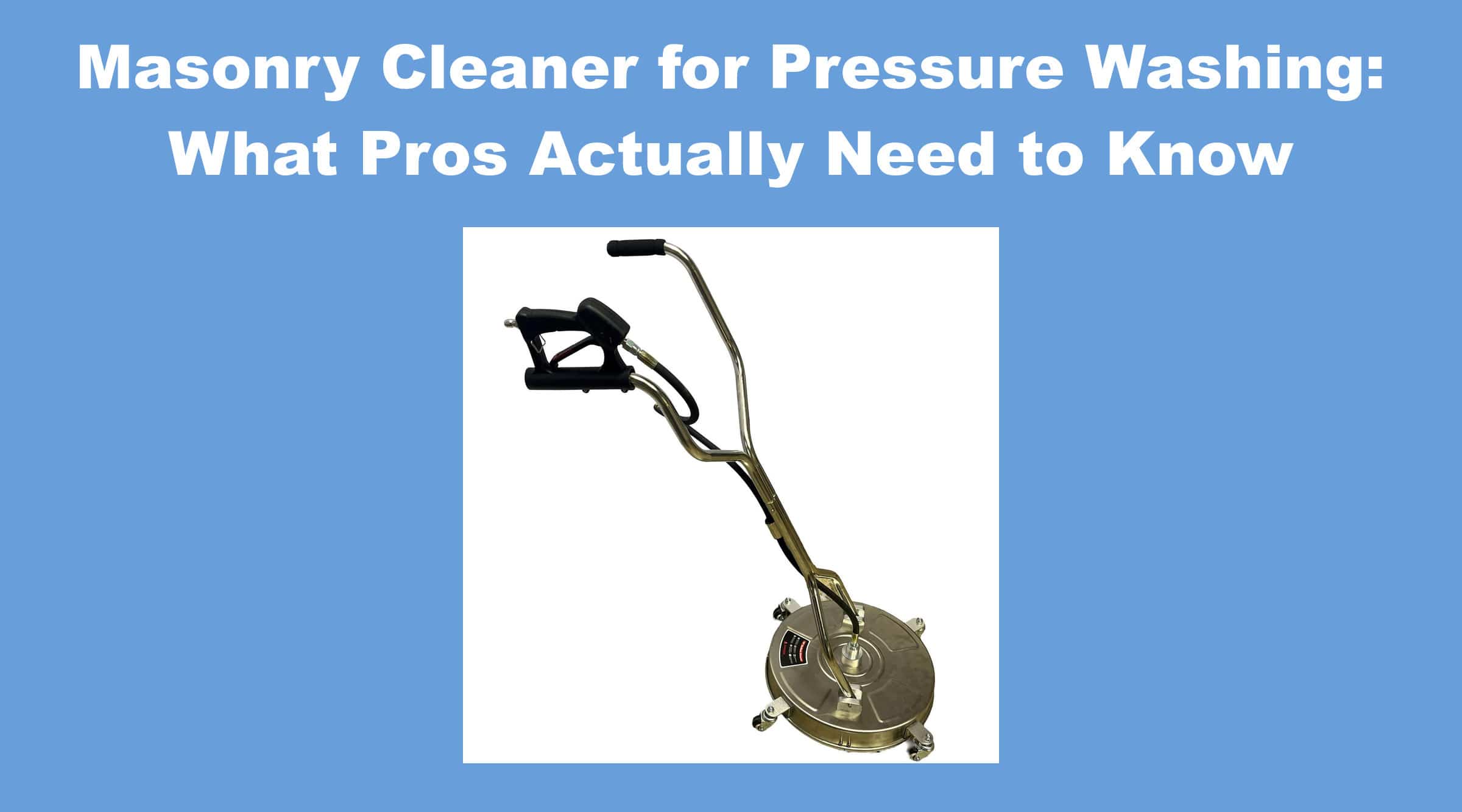
Surface cleaners like the ProTool 18" Surface Cleaner maintain consistent standoff distance on flat concrete — eliminating the zebra-stripe pattern that comes from hand-wanding large slabs.
Keep cleaner and equipment decisions related but distinct
Confirm cleaner compatibility first. Then choose equipment that supports the label-directed application and rinse process. A ProTool 12V Soft Wash Skid handles chemical application and low-pressure rinsing from a truck or trailer. For higher-pressure rinse work on concrete and hard masonry, a 4.0 GPM / 4,000 PSI cold water pressure washer provides the flow and force for controlled rinsing after chemical dwell.
Include appropriate safety equipment — PPE matched to the chemicals in use, eye protection, and site management for runoff — in every job plan.
Products Mentioned
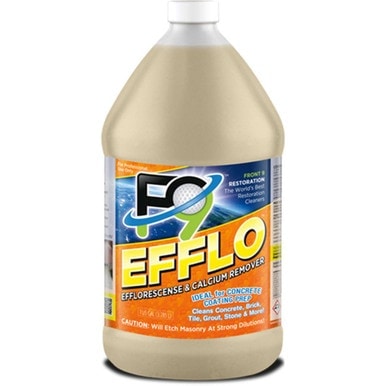 F9 Efflorescence/Calcium Remover Front9 Restoration SKU: 320-62M | 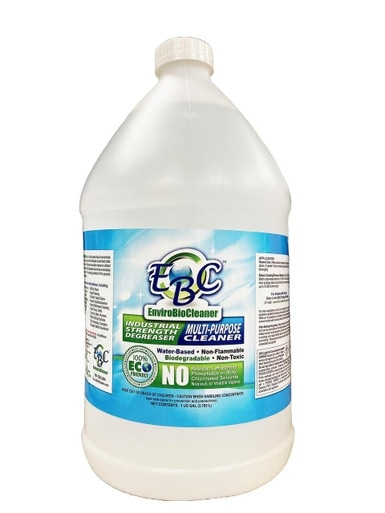 EBC Degreaser, Detergent SKU: 83-81M | 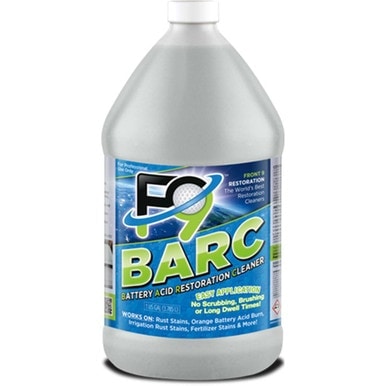 Front9 Restoration Rust Remover F9 B.A.R.C. SKU: 320-61M |
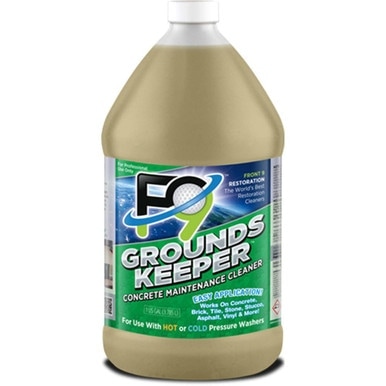 F9 GroundsKeeper Concrete Cleaner Gal SKU: 320-619 | 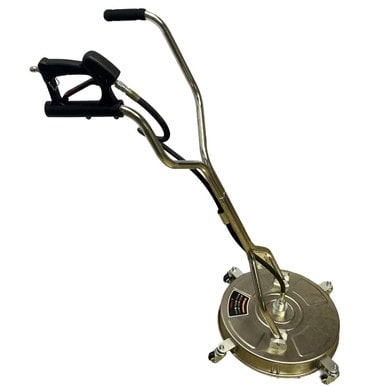 Surface Cleaner 18in Protool 4000psi SKU: 74-3795 | 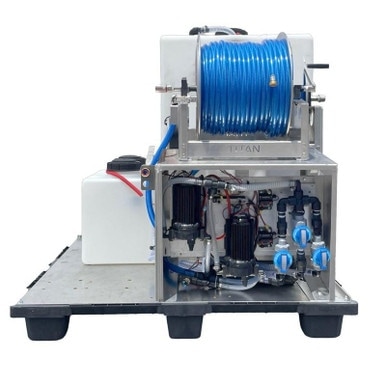 ProTool Soft Wash Skid 12V SKU: 150-047M |