Comet BPX25 Pump: Professional Softwash Setup Guide

Table of Contents
- Softwashing vs. Pressure Washing: Why Equipment Selection Diverges
- How the BPX25 Fits a Complete Softwash System
- Comparing Standalone Pump vs. Complete Skid
- When an Integrated Skid Is the Better Investment
- Planning Your Softwash Setup: A Field-First Checklist
- Maintenance Considerations for the BPX25
- Get the Right Setup from J.Racenstein
- Products Mentioned
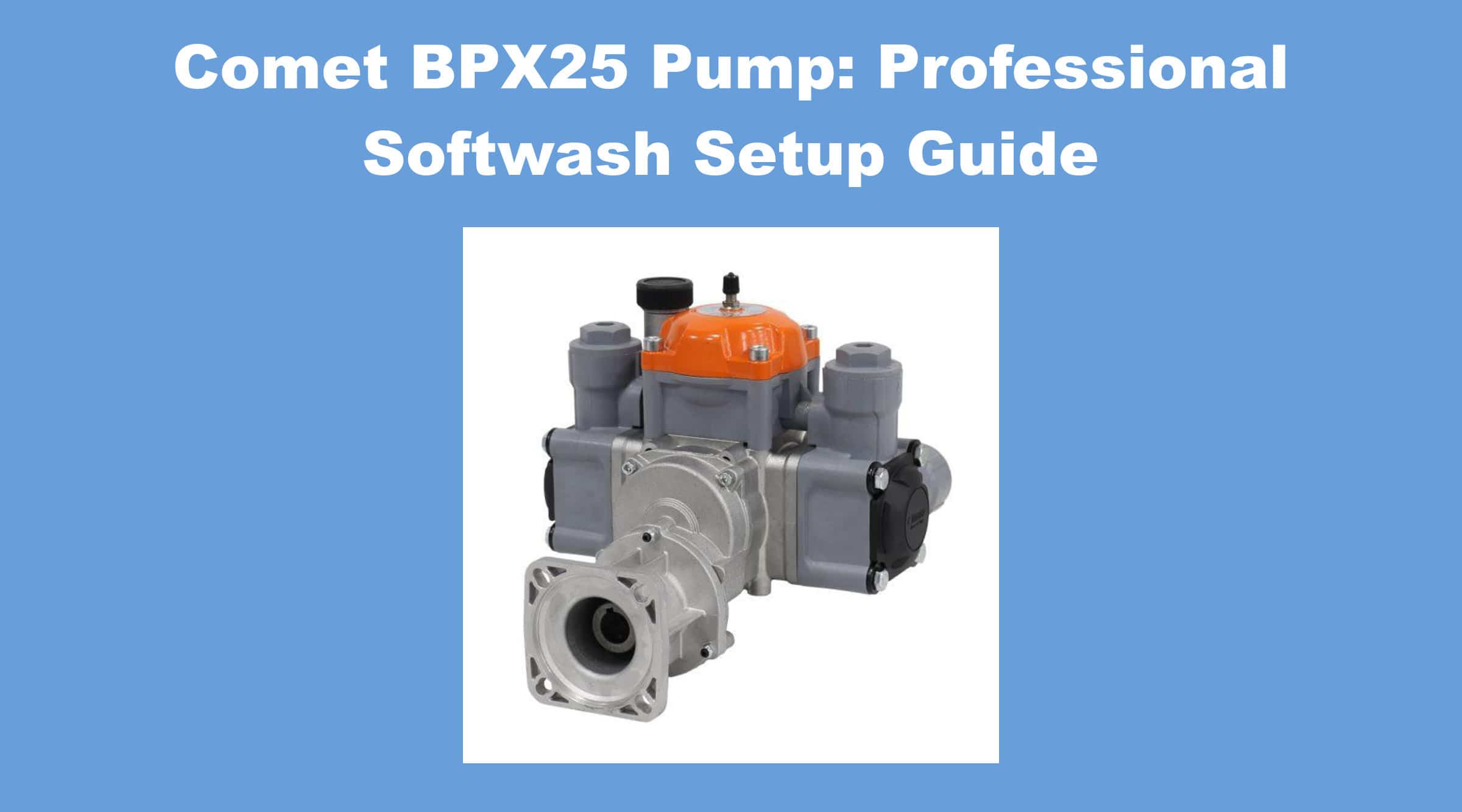
The Comet BPX25 pump shows up in a lot of softwash builds, but a pump is only as useful as the system around it. Choosing the BPX25 — or any diaphragm pump — without mapping it against your tank configuration, hose runs, metering setup, and application gear is how contractors end up with equipment that fights the workflow instead of supporting it.
This guide breaks down where the Comet BPX25 pump fits in a professional gas softwash system, how to evaluate it against your actual job mix, and when a complete skid makes more sense than a standalone pump purchase.
Softwashing vs. Pressure Washing: Why Equipment Selection Diverges
Pressure washing cleans with water velocity. Softwashing cleans with chemistry — the pump's job is to move solution at the right volume and pressure to reach the target surface without damaging it. That distinction drives every equipment decision downstream.
A Comet BPX25 diaphragm pump is chemical-resistant by design, purpose-built for the corrosive solutions softwash work demands. It is not a scaled-down pressure washer pump. Contractors who treat these categories as interchangeable end up with premature seal failures, inconsistent application, or both.
The practical question is always surface-first: vinyl siding, stucco, roof shingles, and painted wood each call for different dwell times, dilution ratios, and spray patterns. Define the surfaces you clean most, then work backward to the pump and system that support those jobs.
How the BPX25 Fits a Complete Softwash System
A softwash rig has four functional layers. Evaluating the BPX25 means understanding where it sits and what it depends on:
- Power source — A gas engine (Honda GX120/GX160 class) drives the pump. Gas gives you site independence; no generator, no extension cord limits.
- Pump — The Comet BPX25 moves chemical solution from the tank through hose and fittings to the application point. It is a diaphragm pump rated for chemical service.
- Supply — A batch tank (typically 50–100 gallons) pre-mixed with sodium hypochlorite solution, surfactant, and water. Tank material must be chemical-resistant. See ProTool tanks for sizing options.
- Application — Spray gun, wand or pole gun, hose, and softwash tips that control spray pattern and reach. Tip selection determines effective range and coverage rate.
The BPX25 connects these layers. It does not select your chemistry, it does not aim the spray, and it does not compensate for undersized hose or a poorly plumbed metering manifold. Every component upstream and downstream matters.
Where the BPX25 Excels
Diaphragm pumps like the BPX25 tolerate sodium hypochlorite, surfactants, and other corrosive softwash chemicals without the seal degradation you see in plunger-style pressure washer pumps. They deliver moderate flow at low pressure — exactly what softwash application requires. For a contractor running a gas-powered batch sprayer setup, the BPX25 is a proven workhorse.
When a Standalone Pump Purchase Makes Sense
If you already own a tank, reel, hose, and engine — and those components are compatible — buying the BPX25 pump as a standalone replacement or upgrade is straightforward. Map your existing plumbing: inlet and outlet port sizes, shaft diameter, mounting bolt pattern. Verify before you order.
If you are building from scratch, a standalone pump purchase means sourcing, fitting, and plumbing every other component yourself. That is viable for experienced builders, but it is slower and more error-prone than starting with an integrated skid.
Comparing Standalone Pump vs. Complete Skid
| Factor | Standalone BPX25 Pump | Complete Softwash Skid |
|---|---|---|
| Best for | Replacing a failed pump in an existing rig, or builders who want full control over component selection | New builds, crews adding softwash capability, operations that also pressure wash |
| Integration effort | High — you source engine, tank, plumbing, reel, hose, tips, and mounting | Low — pre-plumbed, pre-wired, tested as a unit |
| Warranty & support | Pump warranty only; integration issues are yours | System-level support from the skid builder |
| Workflow fit | Depends entirely on your build quality | Designed for field deployment; reels, tanks, and pumps positioned for operator access |
| Cost | Lower upfront pump cost, but total build cost can exceed a skid | Higher upfront, but typically lower total cost when you account for labor, fittings, and rework |
When an Integrated Skid Is the Better Investment
For contractors who pressure wash and softwash on the same jobs — house washes, commercial building maintenance, fleet cleaning — a skid that combines both functions eliminates the truck-space and workflow penalty of running two separate rigs.
The ProTool Dual User Pressure Washing Skid pairs two independent commercial pressure washers with a gas-powered softwash system on a single frame. Two operators can pressure wash simultaneously while a third runs the softwash side, or you can run any combination the job demands. That configuration addresses the most common scaling problem owner-operators face: adding softwash revenue without buying a second truck.
ProTool also builds dedicated softwash skids and batch sprayers for crews that do not need integrated pressure washing. The 12V softwash skids are a lighter-weight option for operations focused on residential roof and house washing.
Planning Your Softwash Setup: A Field-First Checklist
Skip the spec sheet until you have answered these questions about your actual operation:
- What surfaces do you clean? Roof shingles, vinyl siding, stucco, brick, painted wood — each drives chemistry and application decisions. List your top three revenue surfaces.
- What is your typical job scale? A 2,000 sq ft ranch house and a 40,000 sq ft commercial façade need different tank sizes, hose lengths, and pump output.
- Do you also pressure wash? If yes, a combined skid like the Dual User Pressure Washing Skid may consolidate two equipment purchases into one.
- What vehicle are you mounting to? Truck bed dimensions, payload capacity, and tie-down points determine skid size. Measure before you spec.
- What do you already own? Inventory your tanks, reels, hose, guns, and tips. A standalone pump makes sense only if the supporting components are compatible and in good condition.
Use those answers to compare configurations. A pump purchase is a component decision; a skid purchase is a system decision. Both are valid — the wrong choice is making either one without the job context.
Maintenance Considerations for the BPX25
Diaphragm pumps are lower-maintenance than plunger pumps in chemical service, but they are not zero-maintenance. Key points for the BPX25:
- Flush after every use. Run clean water through the pump and lines at the end of each day. Sodium hypochlorite left sitting in the pump overnight accelerates diaphragm and valve wear.
- Inspect diaphragms seasonally. Look for cracking, swelling, or loss of flexibility. Replace before failure — a blown diaphragm on site costs you the job and the repair.
- Check valves and O-rings. Chemical service degrades elastomers faster than water-only service. Keep a rebuild kit on the truck.
- Service the engine separately. The gas engine has its own oil, air filter, and spark plug schedule. Do not conflate pump maintenance with engine maintenance — they are independent systems.
Get the Right Setup from J.Racenstein
J.Racenstein has supplied professional exterior cleaning equipment since 1909. The softwash category includes the Comet BPX25 pump, complete softwash skids, soft wash pumps, metering manifolds, and every fitting, hose, and tip needed to build or maintain a rig. If you need help matching a pump or skid to your operation, call the equipment team — they spec systems for working contractors, not weekend warriors.
Free shipping on orders over $99. Two warehouses for coast-to-coast delivery.
Products Mentioned
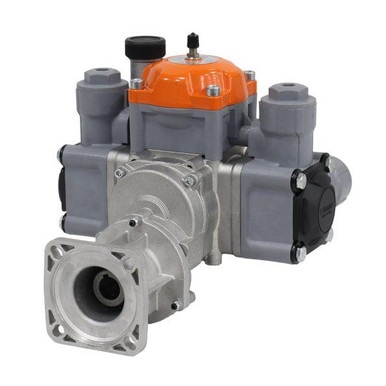 Comet BPX25 GR pump SKU: 150-0432 | 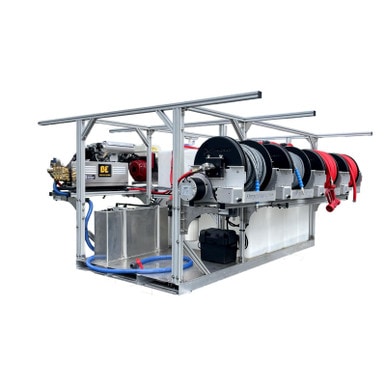 Dual User Pressure Washing Skid SKU: 180-3113 | 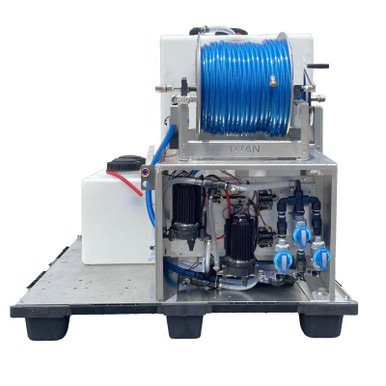 ProTool Soft Wash Skid 12V SKU: 150-047M |