Squeegee Replacement Rubber: What Pros Actually Need to Know

Table of Contents
Squeegee replacement rubber is the only part of your setup that touches the glass. The handle gives you leverage, the channel holds geometry — but the rubber determines whether you get a clean first pass or waste time detailing. A microscopic nick, a durometer mismatch with glass temperature, or the wrong profile for your channel turns a 30-second pane into a two-minute problem. Multiply that across a commercial route and the margin hit is real.
This guide covers what actually matters: durometer selection by glass temperature (not air temperature), profile compatibility across Ettore, Unger, Pulex, Monster, and Moerman channels, inspection protocol, and purchasing strategy for crews versus owner-operators.
Why Rubber Quality Decides Your Labor Cost
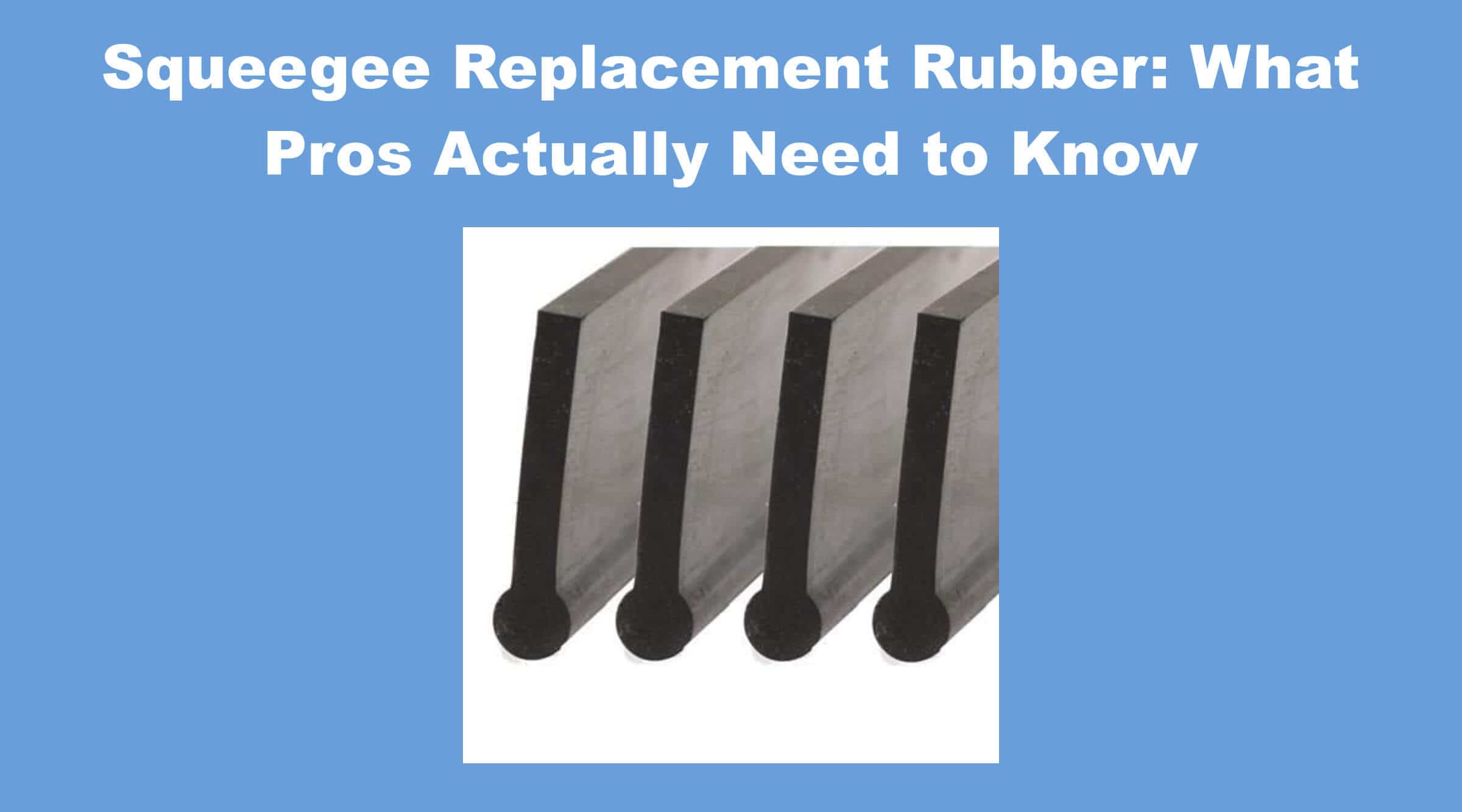
Professional-grade squeegee replacement rubber is precision-cut from vulcanized sheets, producing a square edge that shears water cleanly. Consumer-grade molded rubber comes out of the mold with slightly rounded corners — enough to break the hydraulic seal and leave trails on every stroke.
The edge geometry matters more than most pros give it credit for. The sharp corner creates a shearing action; the heel provides structural rigidity inside the channel. When the corner rounds — from grit, frame contact, or age — water escapes under the blade. That single failure point is responsible for nearly all streaking that isn't technique-related.
The economics are straightforward: rubber cost per window is a fraction of a cent. Labor cost per streak is not. A rounded edge forces towel detailing, second passes, or both. Quality rubber from manufacturers like Ettore, Unger, or Pulex eliminates those steps. The rubber pays for itself before lunch.
Hard vs. Soft Rubber: Match to Glass Temperature, Not Air Temperature
Hardness is measured on the Shore A durometer scale — higher number means harder rubber, more resistance to indentation. The critical insight most pros learn the hard way: you match durometer to glass temperature, not air temperature. Direct sunlight can push glass 30–40°F above ambient. A comfortable 60°F afternoon with south-facing glass baking at 100°F will destroy soft rubber performance.
Soft Rubber (Below ~50°F Glass Temperature)
More flexible, requires less downward pressure for a seal. Ideal for cold-weather work and pole work on older, uneven glass. The trade-off: it degrades fast in heat. Leave soft rubber in a hot van and it goes gummy before it ever touches a window. Store it cool or lose it.
Hard Rubber (Above ~70°F Glass Temperature)
Increased rigidity prevents the blade from collapsing on hot glass. Resists nicks from grit better than soft compounds, so it lasts longer in summer conditions.
Medium Rubber (50–70°F)
The compromise for temperate climates and transitional seasons. Enough rigidity to prevent drag, enough flex to handle minor surface irregularities. Most crews in moderate climates run medium year-round and only switch for extremes.
During spring and fall, morning glass can be cold enough for soft rubber while afternoon sun-baked glass needs hard. Keep both on the truck during transitional months — or accept streaks on half your route.
When to Replace: The 4-Point Inspection
Don't wait for visible failure. Performance degradation starts at the microscopic level. Inspect daily, especially after commercial jobs where frames and grit accelerate wear.
The Flipping Technique
Most channels let you pull the rubber, rotate 180°, and reinsert to use the second edge. This doubles the lifespan of every strip. Flip as soon as you notice "ghosting" — a thin moisture film that the primary edge can no longer shear. When both edges show rounding or nicks, the strip is done.
4-Point Check
- Light test: Hold the channel to a direct light source. Jaggedness or uneven light transmission along the edge means a nick that will streak.
- Tactile check: Run your thumb along the heel. Supple is good. Stiff or "crunchy" means the internal oils have evaporated — the rubber is toast.
- Ghost test: Pull a stroke on clean glass. A faint mist that evaporates slowly indicates a rounded edge.
- End inspection: Corners wear first from frame contact. Check them before the rest of the edge.
What Kills Rubber Besides Use
UV radiation breaks down vulcanized bonds and kills elasticity. Ozone causes dry rot — tiny cracks along the heel that make the rubber brittle. Certain soap formulations strip essential oils, accelerating stiffness. High-altitude and high-pollution environments compound all of these. Store rubber in protective cases away from heat, direct sun, and metal scrapers that can nick the edge before it ever hits glass.
Profile Compatibility: T-Shape, Round-Top, and Specialty
Squeegee replacement rubber is not universal. The profile — the cross-sectional shape of the top that seats into the channel — must match or the blade will slip, buckle, or wave during the pull.
| Brand / Channel | Rubber Profile | Notes |
|---|---|---|
| Ettore (Classic, Super Channel) | Round Top | Standard brass and SS channels. Most traditional channels use this profile. |
| Unger (ErgoTec) | Round-top | Engineered for Unger's ergonomic channel system. Not cross-compatible with T-shaped. |
| Pulex | Round Top | Follows standard round shaped configuration. |
| Monster | T-shaped | Compatible with Sorbo Cobra, Eliminator, Black Mamba channels. |
| Moerman (Liquidator) | Specialized | Proprietary profile for Liquidator channels with angled end clips. |
Forcing a round-top rubber into a T-shaped channel creates uneven tension and blade waves. The reverse is equally bad. Always verify profile before ordering.
Standard vs. Wide Body
Standard channels (brass, stainless) use thinner rubber held by end clips or center tension. Wide body channels — often aluminum or plastic, common at 24" and above — require rubber with a larger heel diameter. Too-thin rubber in a wide body channel will "roll" during the stroke, losing perpendicularity and leaving trails. Moerman's Wide Body Liquidator is a good example of a channel that demands its own matched rubber.
Overhang
The distance the rubber extends past the channel edge matters. Too much overhang collapses corners. Too little prevents you from getting into window seals for a clean finish. Most manufacturers spec this, but if you're cutting from a roll, measure against your channel before committing.
Bulk Buying vs. Pre-Cut Strips
Purchasing strategy depends on crew size and channel diversity.
Pre-cut strips (12", 14", 18", 22", 24") offer factory-square ends that seat perfectly with end clips. Zero waste, zero risk of a jagged manual cut affecting clip tension. Best for owner-operators and small crews running standardized channel lengths.
Gross packs (144 units) drop the per-unit cost significantly. For crews burning through rubber daily on commercial routes, the math is obvious. Browse the full rubber category for gross-pack options across Ettore, Pulex, and Professional Squeegees.
Bulk rolls are cheapest per linear inch and necessary if you run custom channel lengths. The catch: you need a clean cut. Use a dedicated rubber cutter or a fresh utility blade. A jagged end interferes with end-clip tension and causes uneven pressure across the pane.
Building a Seasonal Rubber Inventory
Running a single durometer year-round works in stable climates. Everywhere else, you need a split inventory. A practical starter set:
- Standard pre-cut lengths in your most-used sizes (soft and hard durometer)
- One bulk roll for custom sizes
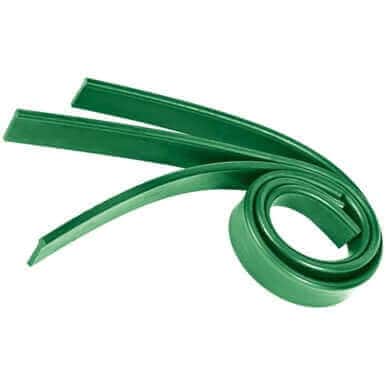
- Unger Power Rubber for dedicated summer use
- A soft-compound option for winter routes
Restock before the season shifts, not during. Waiting until your crew is dragging hard rubber across frozen glass costs more in callbacks than a preseason order ever will.
Products Mentioned
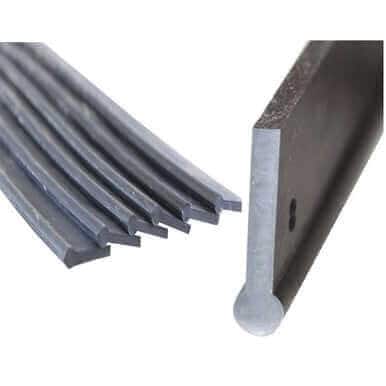 Ettore Rubber Master Replacement SKU: 03-1M | 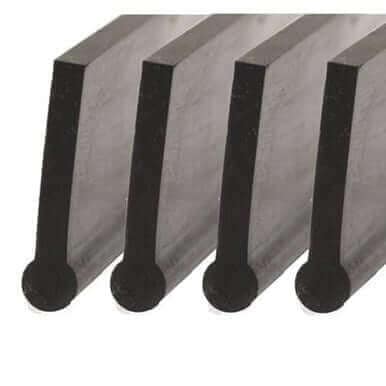 Unger ErgoTec Rubber SKU: 03-2M | 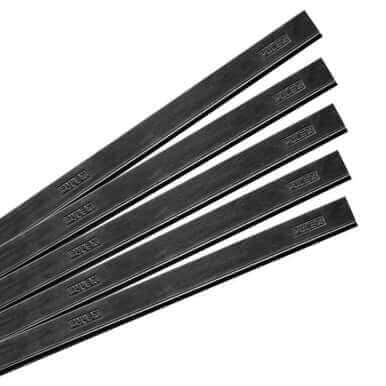 Pulex Rubber Replacement SKU: 03-3M |
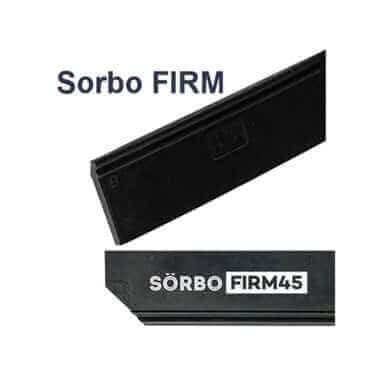 T Shaped Rubber Roll - Monster Products SKU: 03-9405 | 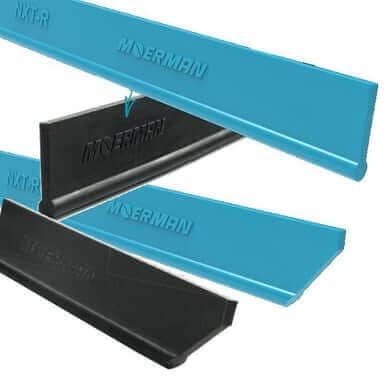 Moerman Rubber NXT Liquidator DuraFlex SKU: 03-8M | |
Power Rubber Green Unger SKU: 03-22M |