Hose Flow Loss: How Diameter, Length, and Pressure Cost You GPM

Table of Contents
Hose flow loss is the single biggest variable most contractors underestimate when spec'ing a rig. You can own a 8 GPM machine or a high-flow RODI system, but if the hose between the source and the tool is too narrow, too long, or both, you're leaving performance on the ground. This article breaks down the math so you can size hoses correctly for pressure washing, soft washing, and water fed pole delivery.
Why Hose Flow Loss Matters
Every foot of hose adds friction. Friction converts pressure into heat instead of flow. The result: your pump says 4 GPM, but the nozzle or brush only sees 2.5 GPM. That gap is flow loss, and it gets worse exponentially as hose ID shrinks or length grows.
Two levers control it: internal diameter and length. A third factor — elevation change — stacks on top. Every 2.31 feet of vertical rise costs roughly 1 PSI of static head, which further reduces available flow at the tool end.
High-Pressure Hose Flow Loss (Pressure Washing)
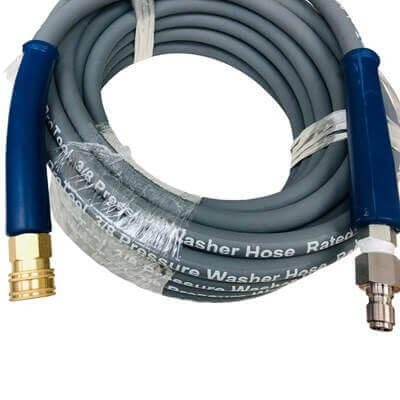
At 3,200 PSI the penalty for undersized hose is brutal. A 100 ft run of .29" ID hose delivers roughly 3 GPM — barely enough for a 4 GPM machine. Step up to .38" ID and you recover to about 5 GPM. A .500" ID hose over the same 100 ft delivers around 13 GPM.
This is why crews running 5.5+ GPM machines almost always pull 1/2" pressure hose. The weight penalty is real, but so is the alternative: starving the pump and killing performance at the nozzle.
For shorter whip connections between the reel and gun, a 3/8" whip hose keeps weight manageable without meaningful loss over 6–10 feet.
Low-Pressure Hose Flow Loss (Water Fed and Soft Wash Delivery)
At 50–75 PSI from a tap or booster pump, diameter matters just as much — the math is just quieter about it until you're 200 feet from the truck and wondering why your brush rinse looks anemic.
The reference tables below show GPM delivery at 50 PSI and 75 PSI across common hose IDs and lengths. Use them to match your hose run to your system's output.
Flow Rate at 50 PSI (GPM)
| Hose ID | 25 ft | 50 ft | 100 ft | 200 ft | 300 ft |
|---|---|---|---|---|---|
| 5/16" | 7.0 | 3.5 | 1.7 | 0.85 | 0.57 |
| 3/8" | 10.5 | 5.2 | 2.6 | 1.3 | 0.87 |
| 1/2" | 28.0 | 14.0 | 7.0 | 3.5 | 2.3 |
| 5/8" | 48.0 | 24.0 | 12.0 | 6.0 | 4.0 |
| 3/4" | 80.0 | 40.0 | 20.0 | 10.0 | 6.7 |
Flow Rate at 75 PSI (GPM)
| Hose ID | 25 ft | 50 ft | 100 ft | 200 ft | 300 ft |
|---|---|---|---|---|---|
| 5/16" | 8.5 | 4.3 | 2.1 | 1.03 | 0.70 |
| 3/8" | 12.8 | 6.3 | 3.2 | 1.56 | 1.05 |
| 1/2" | 34.2 | 17.1 | 8.5 | 4.3 | 2.85 |
| 5/8" | 58.5 | 29.3 | 14.6 | 7.3 | 4.87 |
| 3/4" | 97.5 | 48.8 | 24.4 | 12.2 | 8.12 |
A few things jump out of these tables. At 50 PSI, a 5/16" pole hose — the standard on most water fed poles — only delivers 1.7 GPM at 100 feet. That's fine for a single residential brush, but if you're splitting flow to two operators or running a high-flow rinse bar, you need a 3/8" delivery hose from the cart to the Y-split, then 5/16" for the individual pole runs.
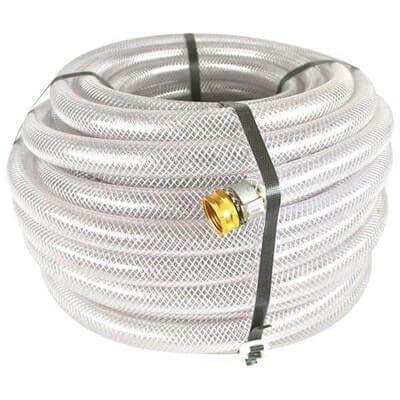
For soft wash rigs pulling from a tank through 200+ feet of 3/4" braided hose, the 75 PSI column shows 12.2 GPM — plenty for a BPX-25 pump drawing 5 GPM. Drop to 1/2" hose over that same distance and you're at 4.3 GPM, which could starve the pump under sustained demand.
Elevation and Routing: The Hidden Tax
Flat-ground numbers are best-case. Every story of building height adds roughly 5 PSI of loss (about 11.5 feet per story). A 3-story commercial facade with 200 feet of hose run can easily lose 15 PSI to elevation alone — on top of frictional loss. If you're running water fed poles on multi-story work, factor elevation into your pump selection and consider a 110V booster pump to compensate.
Routing matters too. Every sharp bend adds localized restriction equivalent to several feet of straight hose. Lay hose in sweeping curves, avoid kinks over edges, and use a rope/hose protector at parapet transitions to prevent crush points.
Practical Sizing Rules
- Pressure washing under 150 ft: 3/8" ID is standard for machines up to 4 GPM. Above 5.5 GPM or over 150 ft, move to 1/2" ID.
- Water fed pole delivery: 3/8" from cart to pole base; 5/16" up the pole. For dual-operator rigs, run 1/2" from the cart to the splitter.
- Soft wash suction lines: Always oversize. A 3/4" suction hose is minimum for diaphragm pumps drawing from a tank; 1" is better for runs over 10 feet.
- Garden hose feed to an RODI cart: 5/8" minimum, 3/4" preferred. A 150 ft heavy-duty garden hose keeps inlet pressure high enough for RO membranes to produce efficiently.
The Bottom Line
Hose flow loss is not a rounding error — it's the difference between a system that performs on paper and one that performs on the job. Measure your actual run lengths, account for elevation, and size the ID to the GPM your tool needs at the far end, not at the pump. The tables above give you the numbers. The rest is choosing the right hose for the application.
Products Mentioned
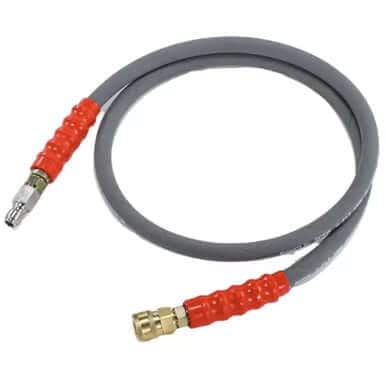 Hose PW 6ft Whip Connector 3/8in PW SKU: 74-3593 | 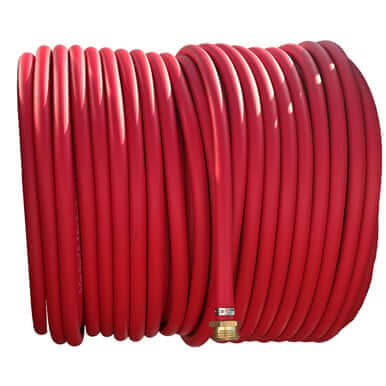 3/8in ID Water Hose Per Foot (No Hose Ends) ProTool Hybrid Red Ultra Light SKU: 150-0327 | 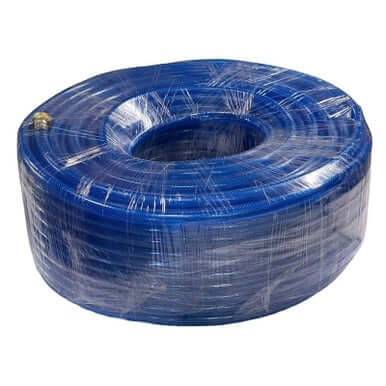 Hose 3/4in Braided By the Ft Blue SKU: 150-0318 |
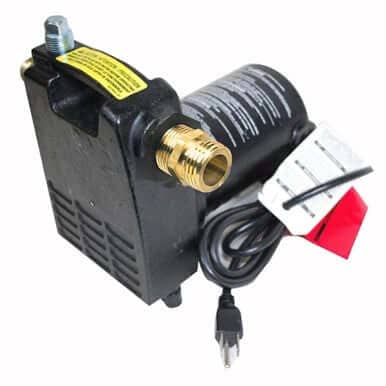 Pump 110v Boost Water Pressure add 40psi SKU: 150-0602 | 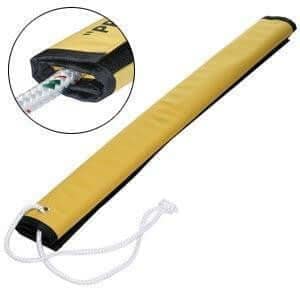 ProTool Rope Protector 23in SKU: 91-41 |  ProTool Hose 3/4in Suction Hose per ft SKU: 150-0359 |
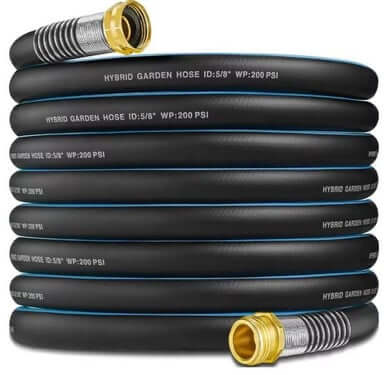 Garden Hose 150 ft x 5/8in Heavy Duty SKU: 150-0367 |