Water Fed Pole DI vs. RODI System

Table of Contents
- Key Takeaways
- Pure Water Fundamentals: The Science of Spot-Free Windows
- DI-Only Systems: The Entry-Level Powerhouse
- RODI Systems: The Professional High-Volume Solution
- DI vs. RODI: The Decision Matrix
- Maintaining Your Pure Water System for Longevity
- Maximize Your Efficiency with the Right Pure Water Setup
- Frequently Asked Questions
- Is RO better than DI for window cleaning?
- At what TDS level should I switch from DI to an RODI system?
- How long does deionization resin typically last?
- Does an RODI system require electricity to work?
- Can I use an RO system without a DI stage?
- How much waste water does an RODI system produce?
- What happens if my RO membrane freezes?
- How do I know when to change my carbon and sediment filters?
- FAQs
What if your "affordable" pure water setup is actually costing you 40% more in annual overhead than a professional-grade multi-stage unit? Many window cleaners start with a simple deionization tank because of the low initial investment, but they quickly realize that resin costs can eat a business alive in areas where TDS levels exceed 150ppm. Choosing between a DI vs RODI system isn't just about the upfront price. It's about understanding the chemistry and physics of your local water supply to protect your margins.
We agree that managing resin replacement and deciphering technical jargon like RO membranes and 0ppm readings shouldn't take time away from your field work. This guide provides the technical and financial clarity you need to choose the most profitable filtration setup for your specific route. You'll learn the exact break-even points for different equipment types and how to achieve professional-grade, spot-free results without overspending on consumables.
We'll analyze the portability of DI tanks against the long-term ROI of multi-stage systems to ensure you're equipped for maximum efficiency. For more on optimizing your gear, you can also explore our professional guides on pure water maintenance and system troubleshooting to keep your business running smoothly.
Key Takeaways
- Understand how to achieve a spot-free finish by mastering the science of Total Dissolved Solids (TDS) and maintaining a pure water output of 0-10 PPM.
- Evaluate the low upfront cost of DI-only systems against their higher long-term consumable expenses to see if they are the right fit for your soft-water region.
- Compare the technical performance of a water fed pole DI vs RODI system to see how multi-stage filtration can extend resin life by up to 10x in high-volume environments.
- Identify the critical 150 PPM threshold to determine exactly when upgrading to an RODI system becomes the more profitable choice for your business.
- Learn professional maintenance and flushing techniques to protect your RO membranes and ensure your pure water system delivers maximum longevity.
Pure Water Fundamentals: The Science of Spot-Free Windows
Pure water is water stripped of all mineral ions to ensure an evaporative spot-free finish. Professional window cleaners rely on this standard because tap water contains dissolved minerals like calcium, magnesium, and sodium. We measure these as Total Dissolved Solids (TDS) in parts per million (PPM). When you clean a window with tap water, the liquid evaporates but the minerals stay behind, leaving white spots or streaks. For a professional finish, you need water with a TDS reading between 0 and 10 PPM, though 0 PPM is the industry gold standard. Understanding Pure Water Fundamentals is the first step in deciding which setup fits your specific route.
To see these systems in a real-world setup, watch this breakdown of a professional grade unit:
Most professional window cleaners choose between two primary technologies to reach these low PPM levels. The choice between a DI vs RODI system depends on your local water hardness and daily volume. High TDS water requires more intensive filtration to prevent spotting and resin exhaustion. Both methods serve the same goal but use different physical processes to strip minerals from the water supply.
What is Deionization (DI)?
DI systems use tanks filled with ion-exchange resin beads. These beads act like a magnet, trapping mineral ions like calcium and magnesium as water passes through the tank. It's an instant process that provides pure water on demand without creating any wastewater. While DI is effective, the resin has a limited capacity. Once the beads are saturated with minerals, they're exhausted and must be replaced. In many professional setups, DI serves as the final polishing stage to ensure the water reaches a true 0 PPM.
What is Reverse Osmosis (RO)?
RO is a mechanical process that forces water through a semi-permeable membrane. This membrane acts as a physical barrier, removing 90% to 98% of total impurities before they reach the resin. The system separates the incoming flow into two distinct streams:
- Permeate: The purified water that continues to the DI tank or the pole.
- Brine: The wastewater that carries concentrated minerals away from the membrane.
Because the RO membrane does the heavy lifting, it protects the DI resin from burning out too quickly. Using an RO membrane is the most cost-effective way to handle high TDS water for a DI vs RODI system. It acts as a workhorse, leaving the DI stage to only handle the remaining trace minerals, which significantly lowers your long-term operating costs in regions where tap water exceeds 150 PPM.
DI-Only Systems: The Entry-Level Powerhouse
A Deionization (DI) system is the most straightforward method for producing pure water for window cleaning. It uses a pressurized vessel filled with ion-exchange resin to strip minerals from the tap water. For many professionals evaluating the water fed pole DI vs RODI system debate, the DI-only option represents the lowest barrier to entry. It requires no electricity and functions immediately upon connection to a standard garden hose. This simplicity makes it a favorite for those who need a reliable, plug-and-play solution without the complexity of membranes or pumps.
When DI-Only Makes Sense
Pure water cleaning relies on removing Total Dissolved Solids (TDS) to ensure a spot-free finish. DI-only systems are most effective in geographic regions where the municipal water supply is naturally soft. If your local water tests below 100 parts per million (PPM), a single DI tank can provide 400 to 600 gallons of pure water before the resin expires. This setup is ideal for residential cleaners or low-frequency users who prioritize speed and simplicity.
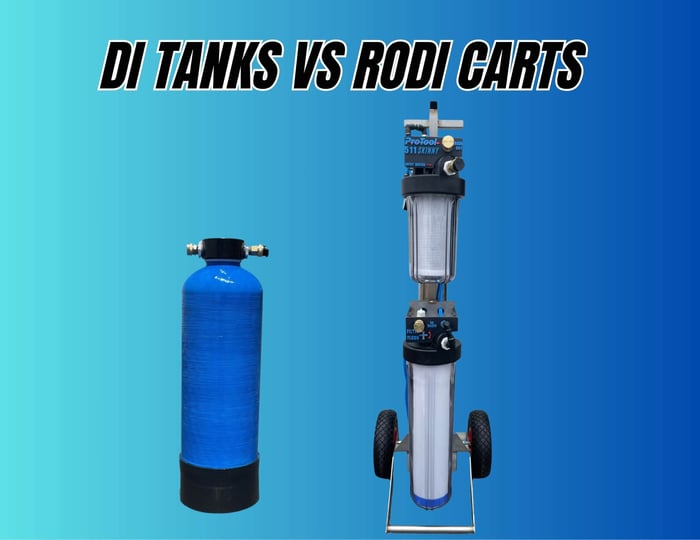
Portability is a major advantage for the mobile professional. A standard 1/2 cubic foot DI tank weighs under 35 pounds when dry. This allows you to carry the system through tight urban alleyways or navigate backyard gates where a heavy multi-stage cart would be impossible to maneuver. For those starting their journey, DI tank from ProTool offers DI starter options that fit easily in the back of a small work vehicle.
The "Resin Trap": Hidden Costs of DI
While the initial investment for a DI tank is lower than a multi-stage system, the long-term operating costs can be significant. Understanding The Science of Spot-Free Windows helps explain why resin is a finite consumable resource. DI resin has a specific capacity for ion exchange. In hard-water cities where TDS levels exceed 250 PPM, a DI tank might only last for 100 gallons of water before the resin is spent.
When comparing a DI vs RODI system, you must account for "resin dumping." This happens when the resin reaches its saturation point and begins releasing concentrated minerals back into the water stream. Your TDS meter can jump from 000 PPM to 040 PPM in minutes, potentially leaving spots on the glass you just cleaned. If you're working in a region with hard water, the cost of replacing resin every few days becomes a massive overhead expense. A professional cleaner in a 300 PPM zone could spend $2,000 more per year on resin than someone using an RO/DI system. This makes DI-only systems a specialized tool rather than a universal solution. If you need a more sustainable setup for hard water, consider browsing our professional pure water systems to find a multi-stage alternative.
RODI Systems: The Professional High-Volume Solution
For professionals managing high-volume routes or working in regions with high mineral content, the RO/DI system is the industry standard. This multi-stage setup is engineered to convert tap water into pure water with maximum efficiency and the lowest possible cost-per-gallon. When evaluating a DI vs RODI system, the decision usually comes down to frequency of use and local water hardness. While DI-only tanks serve well for light residential tasks, the RODI system is the workhorse for daily commercial operations.
The RO membrane acts as a shield for the DI resin, absorbing the bulk of the mineral load. By removing 90% to 98% of total dissolved solids (TDS) before the water ever touches the resin, this configuration extends resin life by 10x or more. For a high-production window cleaning business, this translates to hundreds of dollars saved in consumable costs every month. It's a pragmatic investment for those who demand reliable, professional-grade results on every job site.
The Multi-Stage Filtration Process
- Carbon and Sediment Filters: These initial stages protect the delicate RO membrane by removing chlorine, sediment, and large debris. Chlorine is particularly damaging to membrane layers, making these pre-filters essential for system longevity.
- The RO Membrane: This component is the heart of the system. It uses physical pressure to force water through a semi-permeable material, stripping away the vast majority of dissolved minerals.
- The DI Finish: The final Deionization stage acts as a polisher. It catches the tiny remaining fraction of minerals to ensure the final product reaches a true 000 PPM for a spot-free finish.
Pressure and Performance
RO systems aren't passive tools; they require specific environmental conditions to operate at peak performance. Most systems need a minimum tap pressure of 40 to 60 PSI to function efficiently. If source pressure is too low, the RO membrane cannot effectively separate pure water from concentrate, leading to increased waste and slower flow rates at the brush head.
When you're working on multi-story commercial buildings or in areas with weak municipal pressure, a booster pump becomes a necessity. These pumps maintain the required flow at height, ensuring your water fed pole DI vs RODI system performance doesn't drop off when you extend your pole. Monitoring your output is the only way to know your system is healthy. Reliable data is the difference between a spot-free window and a costly callback.
DI vs. RODI: The Decision Matrix
Selecting a DI vs RODI system requires a calculated look at your local water quality and daily volume. The most critical metric is the 150 Parts Per Million (PPM) threshold. If your local tap water tests above 150 PPM, a DI-only system will likely consume resin at an unsustainable rate. Professionals working in areas with 300 PPM water often find that a single resin refill lasts only a few hundred gallons. By contrast, an RO membrane removes 95% to 98% of total dissolved solids before the water ever touches the resin. This preserves the DI stage for final polishing and extends resin life by a factor of 10 or more.
Total Cost of Ownership (TCO) Analysis
The financial gap between these systems closes faster than many new business owners realize. While a DI-only tank has a lower upfront price, the monthly resin expense in hard water regions can exceed the cost of an RODI system within 12 to 18 months. Maintenance for an RODI system involves replacing sediment and carbon filters every 3 to 6 months and the RO membrane every 2 to 5 years. For a high-volume crew, the RO system pays for itself once you've processed approximately 5,000 to 7,000 gallons of water. This break-even point is reached quickly by full-time residential or commercial cleaners who work 40 hours a week.
Operational Differences in the Field
Efficiency isn't just about resin; it's about time on the job site. A DI system offers a 30-second setup. You simply connect the source hose and the pole hose. An RODI system requires about 5 minutes of additional management to handle the reject water line. You must ensure the waste water drains safely away from the customer's foundation or landscaping. You also need to manage the increased weight. A DI tank fits into the corner of a small van or even a car trunk. A professional RODI cart requires a dedicated footprint in a truck bed or van due to its larger size and components.
J. Racenstein specializes in a "Custom Build" philosophy that matches your specific vehicle and local water profile. We don't believe in a one-size-fits-all approach. Whether you need a compact portable cart or a high-flow skid mount, the goal is maximizing your hourly profit. Our team analyzes your regional TDS levels to ensure you aren't overspending on resin or carrying more equipment than necessary for your crew size.
Ready to optimize your setup? Explore our professional pure water systems to find the right fit for your business.
Maintaining Your Pure Water System for Longevity
Your choice between a water fed pole DI vs RODI system depends on your local water quality, but both require a strict maintenance schedule to protect your investment. Professionals who ignore routine upkeep face expensive membrane failures and premature resin exhaustion. Follow these checklists to keep your system running at peak performance.
- Daily: Flush the RO membrane for 5 minutes before and after every job to clear concentrated minerals. Check your TDS levels for both the RO output and the final DI output.
- Monthly: Inspect all fittings and housings for hairline cracks or leaks. Lubricate O-rings with silicone grease to prevent seal failure.
- Seasonal: Replace carbon and sediment pre-filters every 3 to 6 months or after approximately 20,000 gallons of use.
Winterization is critical for any professional setup. If temperatures drop below 40 degrees Fahrenheit, store the unit in a climate-controlled space. Frozen water expands and will shatter the internal components of any RO or DI housing. If you must store the system in an unheated area, you'll need to pump food-grade propylene glycol through the lines to prevent internal icing.
Membrane Care and Troubleshooting
A failing RO membrane shows clear warning signs. If your TDS rejection rate drops below 92% or your flow rate decreases by 15% under standard pressure, scaling has likely occurred. You must never let a membrane dry out once it's been wetted. If air hits the membrane surface, it loses its semi-permeable properties permanently. Always keep the housings filled with water or a dedicated storage solution. Replacing pre-filters is the best way to extend membrane life. Chlorine in city water will "burn" an RO membrane within hours if the carbon filter is exhausted.
Resin Management Tips
Effective resin management starts with a reliable TDS meter. Always measure the water entering the DI tank after it leaves the RO membrane. This tells you exactly how hard your resin is working. For high-volume operations, bulk resin is 25% more cost-effective than individual cartridge refills. Professionals who process over 500 gallons a week should transition to bulk media to lower their cost per gallon. When deciding on your initial setup, buy the best system your budget allows. It's cheaper to invest in a high-capacity RODI unit now than to pay for frequent resin swaps on a smaller system. This avoids the "buying twice" trap that many new window cleaners fall into during their first year of business.
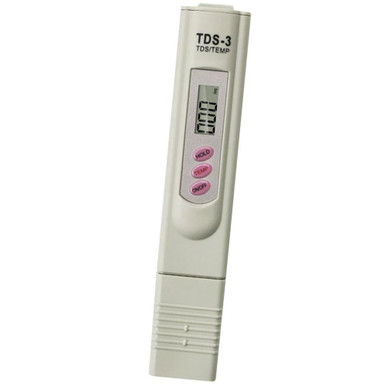
TDS Meter Handheld TDS-3
$11.15
TDS-3 Handheld TDS Meter Product Description: The TDS-3 Handheld TDS Water Analyzer is the perfect tool for measuring water quality and hardness. With its advanced...… read more
Maximize Your Efficiency with the Right Pure Water Setup
Choosing between a DI vs RODI system comes down to two primary variables: your local Total Dissolved Solids (TDS) levels and your weekly water volume. If your source water consistently tests below 100 ppm, a DI-only system provides a portable, straightforward entry point for low-frequency jobs. For professionals tackling high-volume residential or commercial contracts where water hardness exceeds 150 ppm, an RODI system is the industry standard for reducing resin consumption. Regular maintenance, such as replacing carbon pre-filters every 3 to 6 months, protects your RO membrane and ensures spot-free results. We carry professional-grade equipment from industry-leading brands like ProTool and Gardiner. Our seasoned pros offer expert technical support and provide custom builds for unique water profiles. Consult our internal resource library for technical specs on each configuration. Whether you're just starting or scaling a large fleet, the right setup minimizes downtime and increases your hourly profit. You've got the skills to deliver a perfect finish; we've got the tools to help you get there faster.
Shop Professional Pure Water Systems at J Racenstein
FAQs
Is RO better than DI for window cleaning?
RO isn't inherently better than DI, but it's the standard for high-volume professionals working in hard water areas. DI systems are lightweight and perfect for soft water regions under 100 ppm. However, RO membranes remove 95% of total dissolved solids before the water reaches the resin, making it the most cost-effective choice for daily use. Most experts recommend a multi-stage system for maximum professional versatility.
How long does deionization resin typically last?
Resin longevity depends on water hardness, but a standard 1/2 cubic foot bag usually processes 500 to 800 gallons of water at 100 ppm TDS. In a water fed pole DI vs RODI system comparison, the RO stage protects the resin by removing the bulk of minerals first. This configuration extends resin life by 10 times compared to a DI-only setup. Replace resin when your TDS meter reads 010 ppm.
Can I use an RO system without a DI stage?
You can use RO alone, but it's unlikely to produce the 000 ppm water needed for a spot-free finish. A high-quality RO membrane typically leaves 2% to 5% of minerals in the water, which causes visible spotting on glass as it dries. The DI stage acts as a final polisher to strip remaining ions. Our product catalog features several multi-stage solutions that guarantee professional-grade 0 ppm results.
How much waste water does an RODI system produce?
A professional RODI system produces a 1:1 or 2:1 ratio of waste water to pure water depending on input pressure and temperature. This concentrate flow is necessary because it flushes minerals away from the membrane surface to prevent clogging. Cold water below 50 degrees Fahrenheit increases waste production, while higher pressure reduces it. This balance is a standard trade-off for the efficiency of the RO process.
How do I know when to change my carbon and sediment filters?
Replace your sediment and carbon filters every 2,000 to 5,000 gallons or at a minimum of every 6 months. Carbon filters are the most critical because they neutralize chlorine, which can ruin an RO membrane in less than 48 hours of exposure. Consult our maintenance blog for a detailed schedule to ensure your professional-grade system continues to operate at peak performance levels throughout the season.