Water Powered Solar Panel Brush: Dual-Brush Systems for Professional Cleaning
Table of Contents
A single rotary brush on a pitched roof generates constant side-pull torque — lateral drift that wears you down over an 8-hour shift and creates real safety risk on steep arrays. Counter-rotating dual-brush systems cancel that force entirely. Two heads spinning in opposite directions neutralize each other, producing a stable, "hovering" feel on the glass. The operator guides instead of fights. That distinction matters when NREL data shows dirty panels lose up to 25% of energy output — thorough, consistent cleaning directly protects system ROI.
This guide covers the mechanics behind water powered solar panel brush systems, the PSI and GPM thresholds that keep turbines spinning without damaging solar glass, pole selection for high-reach work, and the maintenance protocols that prevent mid-job stalls. If you're evaluating equipment to move into commercial solar maintenance — or scaling an existing operation — this is the operational detail that matters.
Why Dual-Brush Technology Is the Professional Standard
The Single-Brush Problem
Single-head rotary brushes pull to one side constantly. On flat ground-mounts, that's manageable. On a 20-degree commercial roof at the end of a 40-foot pole, it's dangerous. The brush "walks" across frames, skips off glass, and forces the operator into a torque fight that compounds fatigue hour after hour. Shoulders and lower back take the worst of it — and fatigued technicians make mistakes at height.
What Counter-Rotation Changes
Dual-brush systems solve this with physics, not strength. Two heads spinning opposite directions cancel lateral force, letting the tool track straight with minimal operator input. The ProTool DualForce 25 uses this principle with a 25-inch cleaning path — wide enough for serious throughput, light enough for standard carbon fiber poles. A trained operator can clean up to 200 panels per hour, a rate that's simply not reachable with manual poles or single-brush setups.
- Reduced fatigue: Counter-rotation creates a neutral balance — guide the brush instead of wrestling it.
- Higher throughput: 25-inch path means fewer passes per row, fewer walks up and down the array.
- Safer on pitch: Predictable movement eliminates the sudden drift that causes falls and frame damage.
When 15–25% of array output is lost to soiling, cleaning speed and consistency aren't nice-to-haves. They're the economics of the job.
How Water-Powered Rotation Works
Water powered solar panel brush systems convert hydraulic energy into mechanical torque. Water from a pressure washer enters the brush manifold, passes through internal geared turbines, and those gears translate fluid velocity into brush-head rotation. No batteries, no motors, no electrical cables on a wet roof.
- Zero electrical hazard — nothing to short in a wet environment.
- Lower pole weight — no motor or battery pack at the business end.
- No charging logistics — the pressure washer is your power source all day.
- Equipment synergy — uses the same skid or portable unit already on your truck.
Torque Cancellation at Extension
At 30–40 feet of pole extension, even moderate lateral force becomes unmanageable. Counter-rotating heads eliminate that force at the source. The brush stays square to the panel, tracks straight, and doesn't bounce or skip at frame edges. This is the mechanical reason dual-brush systems dominate commercial solar work — not marketing, physics.
Water Distribution and Spot-Free Results
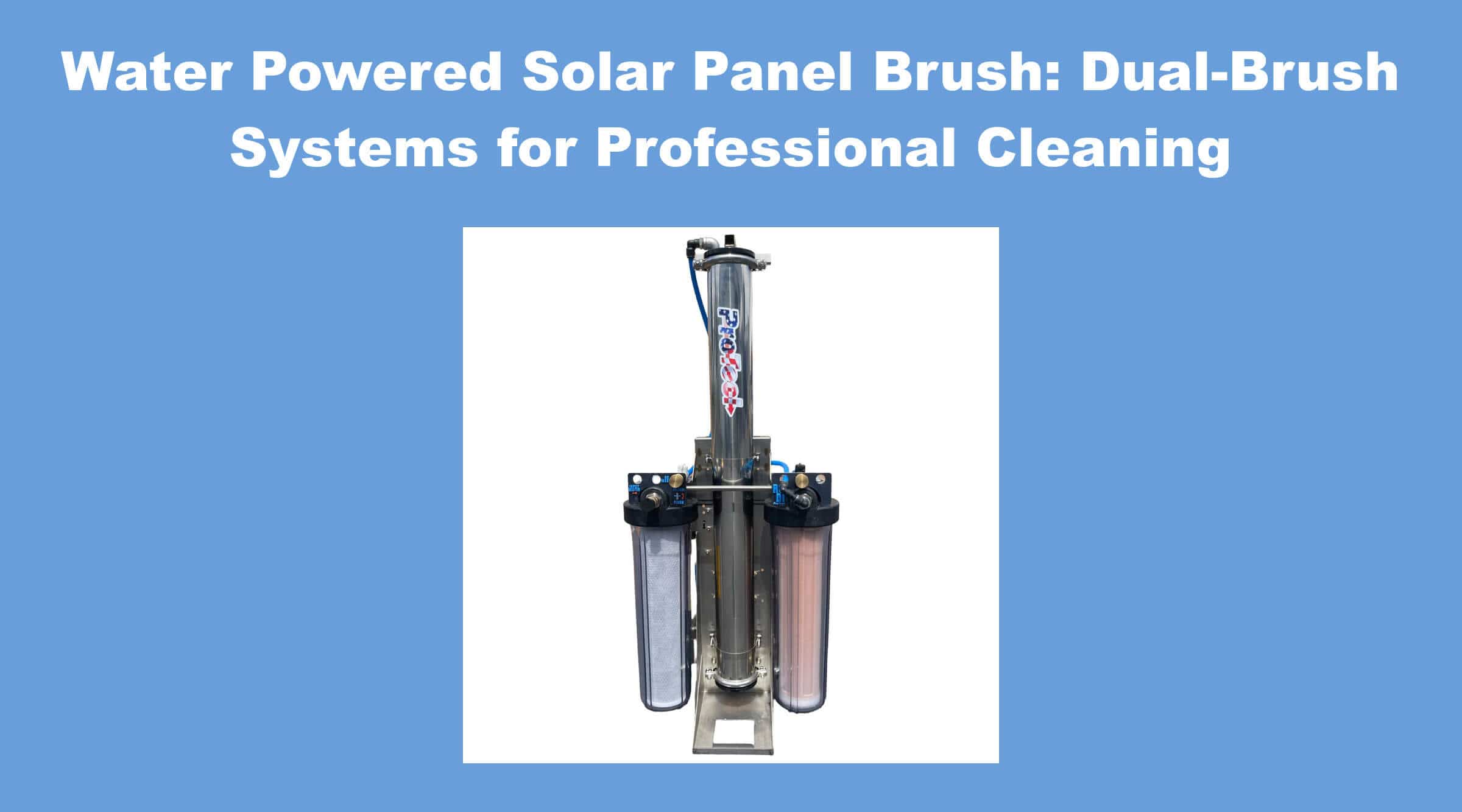
Water flows directly through the bristle blocks, providing simultaneous scrubbing and rinsing. The constant flush carries abrasive particulates away before they can scratch coatings. But the water quality matters as much as the volume — tap water leaves mineral deposits that reduce panel output over time. You need deionized or reverse osmosis water for a professional finish. Pair your brush with a ProTool HiFlo Pure Water Cart or a ProTool HydroPanel Wall Mount to produce spot-free rinse water on site.
Dual-Brush vs. Single Rotary: The Real Differences
Single brushes weigh less on the spec sheet but demand more from the operator. The continuous one-direction pull means you're spending energy on control instead of cleaning. Dual-brush units are physically heavier, but the counter-rotating balance makes them feel lighter in use — because you're not burning effort to prevent drift.
The learning curve is different too. A new operator on a single brush has to master the torque fight immediately or risk damaging frames and losing control at height. A dual-brush operator learns path management and flow control — skills that build quickly because the tool cooperates instead of resisting.
Edge Stability and Panel Protection
Single brushes tend to jump when they hit a frame edge — rotational energy with nowhere to go kicks the head up. Dual brushes remain stable at edges, cleaning right up to the bezel without skipping. In tight row spacing on commercial arrays, this predictability prevents accidental contact with neighboring panels.
Cost-Benefit Reality
Dual-brush equipment costs more upfront. At 200 panels per hour versus the 50–80 realistic with manual poles, the payback is fast. A two-person crew completing a 1,000-panel commercial array in a single day changes the math on every bid you submit. The equipment pays for itself through reduced labor hours and the ability to take contracts that manual operations can't service profitably.
Operational Requirements: PSI, GPM, and Pole Selection
Pressure and Flow Specs
Water powered solar panel brush turbines are tuned to a specific operating window. For the ProTool DualForce 25, optimal performance is 600–700 PSI at 2.5–3.0 GPM. Exceeding 725 PSI accelerates gear wear and can void warranties. Dropping below 2.5 GPM causes stalls under load — the brushes stop spinning when they meet resistance, and you're back to manual scrubbing.
GPM is the more critical metric. Pressure gets the water to the turbine; flow is what actually generates rotational speed. A residential-grade washer that delivers high PSI but low volume won't work. You need a professional skid or high-output portable unit.
Pressure Washer Integration
Use an unloader valve or bypass system to manage pressure spikes when the trigger is released — hydraulic shock damages turbine gears. Lightweight 1/4-inch high-pressure hose reduces tangle risk and total operator load at height. A purpose-built setup like the ProTool Solar Brush Pressure Washer delivers the right PSI/GPM range out of the box with the correct fittings for immediate deployment.
Pole Selection
Standard window cleaning poles flex too much under a water-filled dual-head system. You need high-modulus carbon fiber for rigid control beyond 30 feet. The ProTool Apex Hi-Mod Carbon Fiber Pole is built for this — anti-spin clamps prevent section twist, keeping the 25-inch head square to the array. Sectional poles give maximum rigidity on ground-mounts; telescopic poles offer faster deployment for rooftop work.
- Rigidity: High-modulus carbon minimizes deflection at extension.
- Anti-spin: Clamps prevent pole twist that misaligns the cleaning head.
- Clean water supply: Turbines need filtered water — grit in the manifold jams gears.
Maintenance and Maximizing Equipment Life
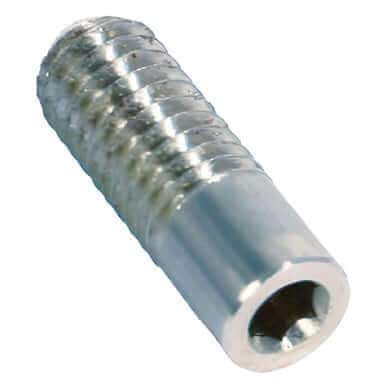
Daily inspection is non-negotiable. Check water jets for mineral buildup, verify turbine gears spin freely, and confirm all seals are seated before the first panel of the day. Small particulates that bypass filtration cause mechanical resistance in the gear assembly — catching this early prevents mid-job stalls and expensive repairs.
- Bristle storage: Never rest the brush on its bristles. Permanent deformation causes uneven cleaning and glass skipping.
- Seal check: Inspect manifold seals daily. A poorly seated seal lets grit into the turbine.
- Wear parts on hand: Stock replacement bristles and replacement jets to avoid downtime. Replace brushes when tips show significant splaying or loss of rigidity.
Building a Solar Maintenance Operation
The equipment decisions you make now determine which contracts you can bid on. Manual poles limit you to small residential arrays. A water powered solar panel brush system — paired with proper pure water filtration and a high-mod pole — opens commercial solar maintenance: 1,000+ panel arrays, O&M contracts, recurring revenue.
The ProTool DualForce 25 is the centerpiece, but the system around it matters just as much: a pressure washer in the 600–700 PSI / 2.5–3.0 GPM window, RODI filtration for spot-free results, and a rigid carbon fiber pole that keeps the head square at 40 feet. Complete packages like the Solar Skid + Rotary Brush Kit bundle the brush, skid, hose, and fittings into a single deployment-ready system.
For a walkthrough of the DualForce 25 in action, including turbine maintenance and pressure washer integration, watch the J.Racenstein solar brush overview on YouTube.
Products Mentioned
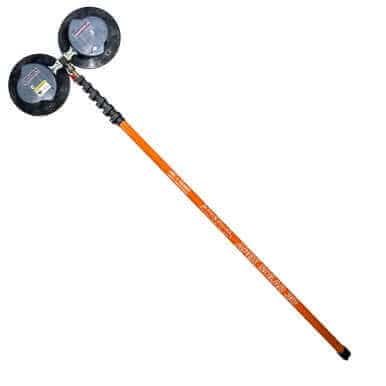 ProTool DualForce 25 Solar Brush SKU: 159-206 | 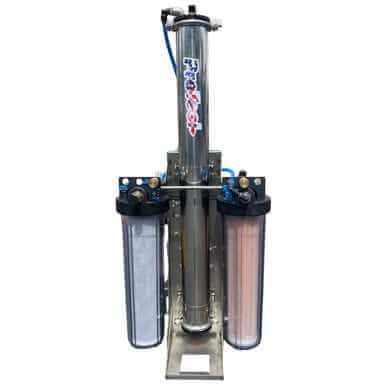 ProTool HiFlo Pure Water Cart Stainless Steel SKU: 150-0521 | 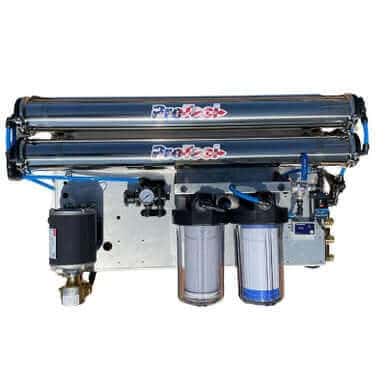 ProTool HydroPanel RODI Wall Mount SKU: 150-05346M |
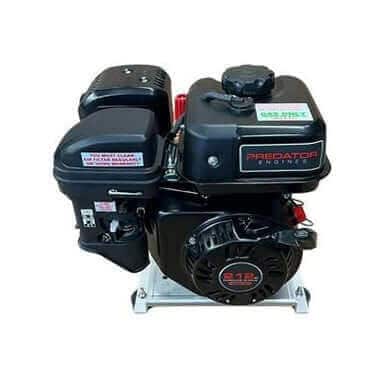 ProTool Solar Brush Pressure Washer 3gpm 3200 PSI SKU: 74-725m | 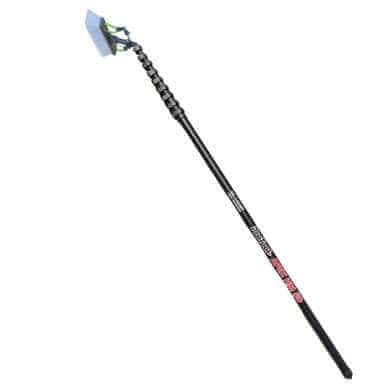 ProTool Apex Hi-Mod Carbon Fiber Pole SKU: 151-3502 | 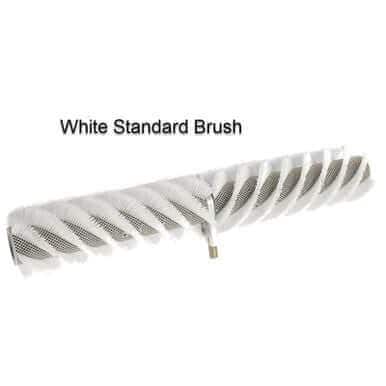 Bristles Standard, White Rotary Brush SKU: 159-149M |
 Nozzle Tip Stainless Steel 06 Size M4 SKU: 159-191 | 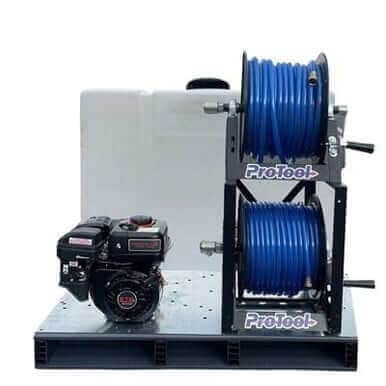 Solar Skid + Rotary Brush Water Powered SKU: 159-601 |