DI Resin for Pure Water Systems: Setup, Monitoring, and Replacement

Table of Contents
- What DI Resin Actually Does in a Pure Water System
- Where DI Resin Sits in Your Filtration Train
- Choosing the Right DI Resin
- Loading DI Resin: The Procedure That Matters
- Monitoring Resin Performance with TDS Readings
- Extending Resin Life
- Build Your Pure Water System Around Reliable Resin Supply
- Products Mentioned
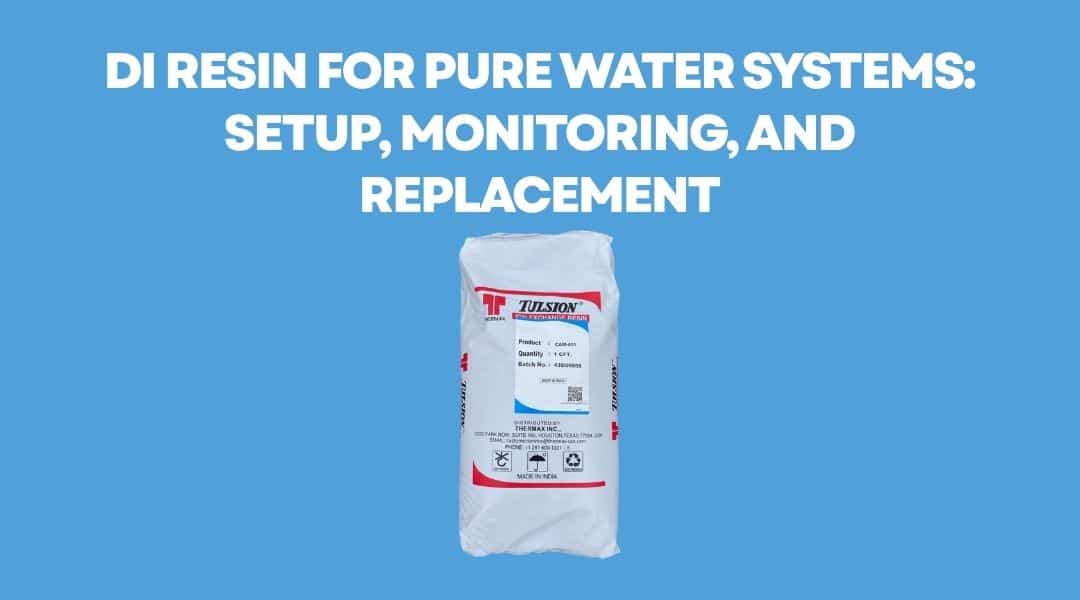
DI resin is the consumable that makes or breaks your pure water output — and most crews treat it as an afterthought until their TDS spikes mid-job. The resin itself is straightforward: mixed-bed ion-exchange media that strips dissolved minerals so water dries spot-free on glass, solar panels, and facades. What matters is how you match it to your system, how you monitor it, and when you swap it out.
What DI Resin Actually Does in a Pure Water System
Mixed-bed DI resin combines cation- and anion-exchange beads in the same vessel. Cation beads trade dissolved positive ions (calcium, magnesium, sodium) for hydrogen ions. Anion beads trade negative ions (chloride, sulfate, bicarbonate) for hydroxide ions. The hydrogen and hydroxide combine to form water. What's left is water with nearly zero dissolved solids — the stuff that dries invisible on glass.
This is not the same as water-softener resin. Softener resin is cation-only, designed to swap calcium and magnesium for sodium. It does not deionize. The beads look similar, the bags weigh the same, and crews have made this mistake. Don't.
| Resin Type | Function | Use Case |
|---|---|---|
| Mixed-bed DI resin | Removes cations and anions via ion exchange | Pure water production for WFP and solar cleaning |
| Cation softener resin | Removes hardness minerals only | Water softening — not a substitute for DI |
Where DI Resin Sits in Your Filtration Train
In most professional setups, DI resin is the final polishing stage after reverse osmosis. The RODI cart sequence typically runs: sediment pre-filter → carbon filter → RO membrane → DI vessel. The RO membrane does the heavy lifting, rejecting 90–98% of dissolved solids. The DI resin catches what slips through — usually dropping output TDS from single digits to zero.
Some crews run DI-only systems without RO. That works in areas with low-TDS tap water (under ~100 ppm), but resin consumption climbs fast. A DI-only setup treating 300 ppm tap water will burn through resin at roughly 10× the rate of one polishing post-RO water at 10 ppm. If your feedwater TDS is above 150, an RODI cart like the ProTool HiFlo will pay for itself in resin savings within a few months.
The practical takeaway: know where DI fits in your system before you buy resin. A cubic foot of ProTool DI resin polishing post-RO water will last dramatically longer than the same cubic foot treating raw tap.
Choosing the Right DI Resin
Resin selection is less about brand preference and more about matching media to vessel. Every cartridge or tank has a specified fill volume and resin type. The ProTool 20in DI Filter RTU ships ready to use with resin already loaded — ideal if you want zero handling. For refillable cartridges like the ProTool 4.5×20 empty cartridge, you load bulk resin yourself.
Key decisions before ordering:
- Vessel type: Match resin to the cartridge or tank your system uses. A 4.5×10 housing takes a different fill volume than a 4.5×20.
- Resin format: RTU (ready to use) cartridges are convenient but cost more per refill. Bulk virgin resin by the cubic foot is the most economical for crews running multiple carts or high volume.
- System position: Post-RO polishing resin and DI-only resin are the same media — the difference is how fast you'll use it.
Labels like "premium" or "commercial grade" are marketing. What matters is that you're loading nuclear-grade or equivalent mixed-bed resin rated for deionization, not softening. The ProTool DI Resin Cubic Foot is virgin mixed-bed media designed for professional pure water systems.
Loading DI Resin: The Procedure That Matters
Loading resin is simple if you follow the sequence. Skipping steps creates problems that show up on the jobsite.
- Depressurize the system. Shut off water supply, open a downstream valve to bleed pressure, then disconnect or open the housing. Never crack a housing under pressure.
- Remove spent resin. Dump the old media. Inspect the housing for cracks, damaged O-rings, or sediment buildup. Replace O-rings if they're flat or cracked.
- Fill to specification. Add the amount your vessel calls for — not more, not less. Overfilling restricts flow and causes channeling. Underfilling lets water bypass the bed.
- Reseal and flush. Close the housing per its instructions. Run water through the system and discard the first few minutes of output — new resin sheds fines that can cloud water initially.
- Check output TDS. Use a ProTool inline TDS meter or handheld TDS meter to confirm the system is producing 0–2 ppm water before you load up for jobs.
Keep your workspace clean during loading. Resin beads are small, slippery, and will find every crack in your truck bed. A funnel and a clean bucket make the job faster and less wasteful.
Monitoring Resin Performance with TDS Readings
A TDS meter is not optional equipment — it's how you know whether your system is producing usable water. An inline TDS meter installed after the DI stage gives you a continuous reading. A handheld meter works for spot checks but requires you to actually use it.
What the readings tell you:
- 0–2 ppm: Resin is performing. Carry on.
- 3–10 ppm: Resin is nearing exhaustion. Plan a swap soon — you may finish the day but don't start another without fresh media.
- 10+ ppm: Resin is spent. You're washing with tap water characteristics and will get spots. Stop and replace.
A spike doesn't always mean the resin is done. Before you dump the cartridge, check:
- Is the RO membrane performing? Check TDS between the RO and DI stages. If post-RO TDS has climbed, the membrane may need replacing — the resin is just getting overwhelmed.
- Did feedwater quality change? Municipal water quality fluctuates seasonally. A sudden TDS increase in feedwater cascades through every stage.
- Is the meter calibrated? Handheld meters drift. Verify with a known calibration solution.
Log your readings. Date, feedwater TDS, post-RO TDS, post-DI TDS, gallons produced if your system tracks it. This data turns resin replacement from guesswork into planning.
Extending Resin Life
You can't regenerate mixed-bed DI resin in the field — once it's exhausted, it's done. But you can get more out of every fill:
- Maintain your RO membrane. A healthy membrane delivering 5 ppm post-RO water puts far less load on the DI stage than a degraded membrane passing 20 ppm. Replace RO membranes on schedule.
- Change pre-filters. Clogged sediment filters and carbon filters reduce RO efficiency, which dumps more ions onto the resin.
- Don't leave water sitting in the DI vessel. Stagnant water can breed bacteria in the resin bed. If the system will sit unused for more than a few days, drain the vessel.
- Match resin volume to workload. A crew doing 15 residential jobs a week needs a different resin inventory than one doing 3 commercial facades a month. Track your consumption and order accordingly.
Build Your Pure Water System Around Reliable Resin Supply
Resin is the recurring cost in any pure water operation. The system itself — cart, wall mount, or skid — is a one-time investment. Resin is ongoing. Build your purchasing around actual consumption data, not estimates.
For most crews running ProTool RODI systems, buying DI resin by the cubic foot and refilling empty cartridges is the most cost-effective approach. Keep at least one spare loaded cartridge on the truck so a mid-day TDS spike doesn't shut down the job.
Pair your resin plan with a reliable inline TDS meter and a maintenance log. The combination of good media, proper monitoring, and upstream filter maintenance is what separates a crew that produces consistent pure water from one that's guessing.
Products Mentioned
 Resin DI Cubic foot - New Virgin Resin SKU: 150-040 | Resin DI Cubic foot - New Virgin Resin SKU: 150-040 | Resin DI Cubic foot - New Virgin Resin SKU: 150-040 |
 ProTool HiFlo Pure Water Cart Stainless Steel SKU: 150-0521 | 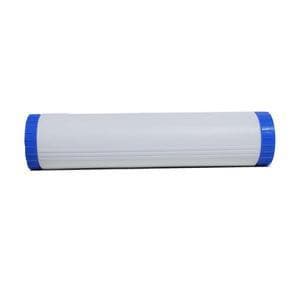 ProTool DI Filter 20in Blue/White RTU SKU: 150-012 | 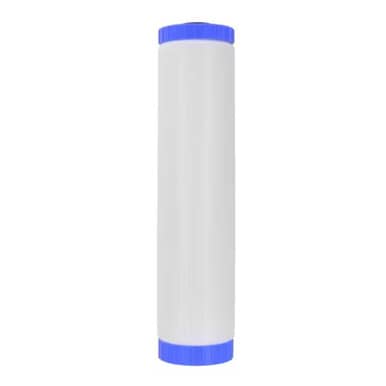 ProTool DI Cartridge Empty 4.5in x 20in SKU: 150-0571 |
 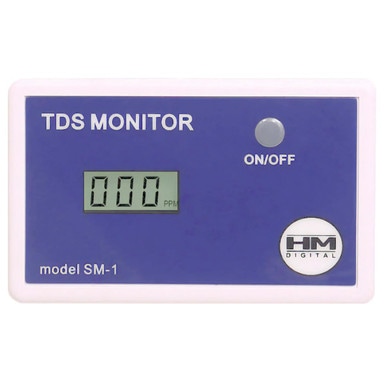 TDS Inline Meter - includes a 1/4 Tee SKU: 150-019 | TDS Inline Meter - includes a 1/4 Tee SKU: 150-019 |
TDS Inline Meter - includes a 1/4 Tee SKU: 150-019 | 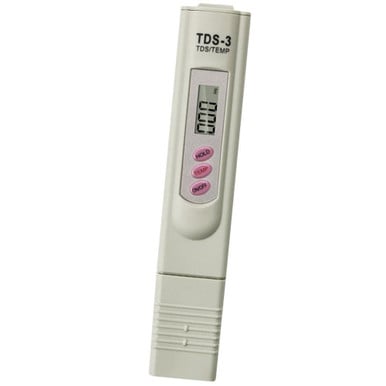 TDS Meter Handheld TDS-3 SKU: 150-0199 | 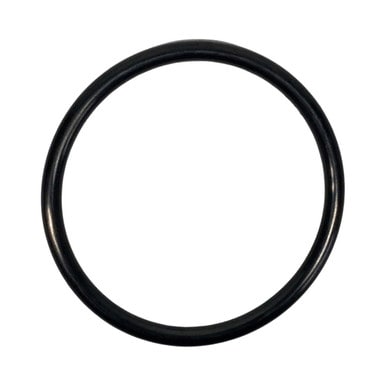 ProTool ORing for SS Housings 7mm SKU: 150-0568 |
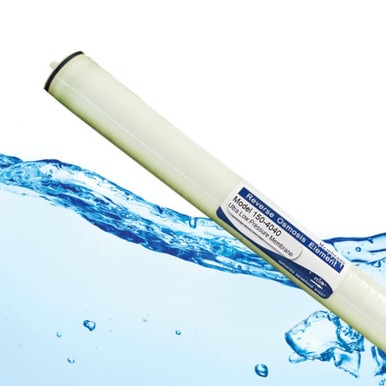 ProTool RO Membrane 4040 Ultra Low Pressure SKU: 150-4040 | 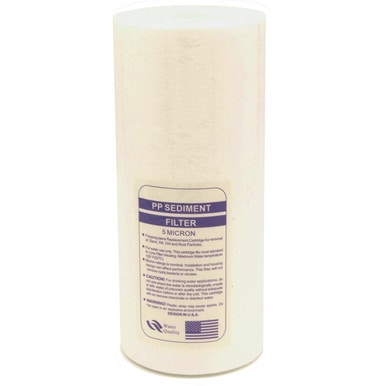 ProTool Sediment Filter 4.5in x 10in SKU: 150-005 | 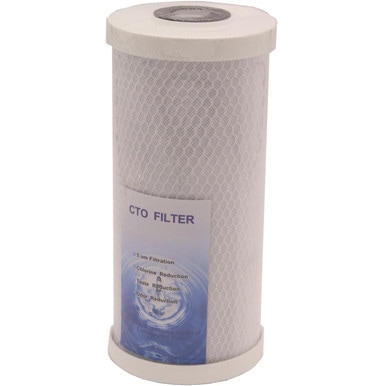 ProTool Carbon 4.5 inch x 10 inch Water Filter Cartridge SKU: 150-006 |
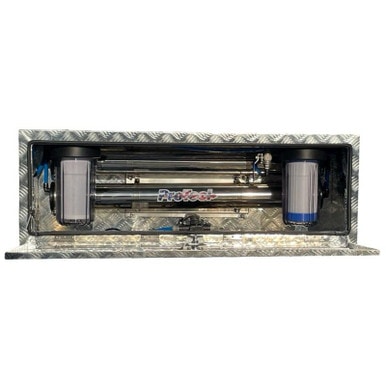 ProTool Hydro Vault RO DI System SKU: 150-058M | 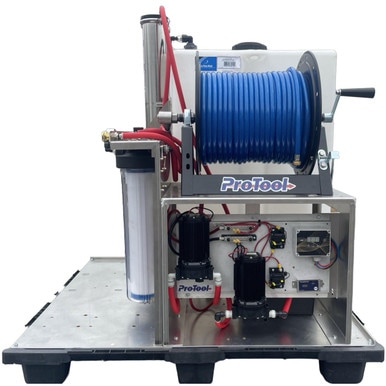 ProTool Pure Water Skid Single User with 1 Reel SKU: 150-0461 |