How to Winterize your RODI Equipment

Table of Contents
How to Winterize your RODI Equipment
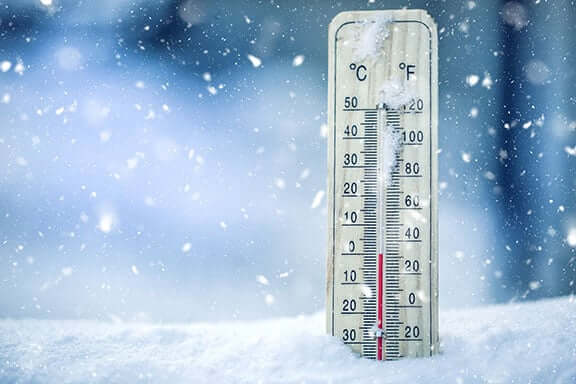
In this blog, we're going to teach you how to winterize your RODI equipment. Reverse Osmosis (RO) systems are too important of an investment to ignore during cold temperatures. If you let them freeze, your fittings may crack or leak, or the most expensive part – the RO membrane – can be damaged. If the RO membrane freezes, it can become dry and cracked, which means water will get through the membrane without removing the TDS and will have to be replaced.
If your system freezes, move it into a warmer location and let it thaw out. You’ll know it’s thawed when water starts dripping out. At this point, take off the housing and empty out the rest of the water.
Next, pull out and examine the RO membrane for visible cracks, then let it drain into a bucket. Put the unit back together, hook it up to a water source, and watch for leaks, which will indicate it’s damaged. Also, check the TDS to make sure the membrane is working correctly. If not, you’ll have to replace.
When testing and RO membrane, allow at least 5 gallons to pass through the membrane (or 5 to 7 minutes of flow) before measuring the TDS against the tap water. RO Membranes do not filter well in the first 5 minutes and need to settle.
If the membrane is working correctly, the numbers on your TDS meters should be in the lower double digits, or 80-90% less than your water source’s reading. For example, 280 ppm at the source should read around 28 ppm after the RO membrane.
If you are going to store your RO system for the winter, here’s what to do.
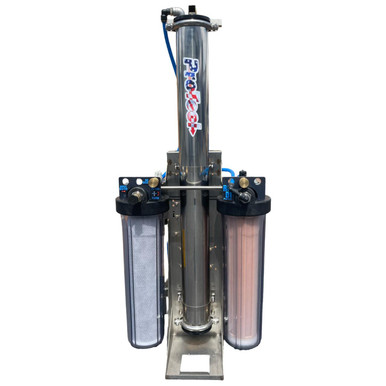
ProTool HiFlo Pure Water Cart Stainless Steel
$2,267.00
ProTool Cart Stainless Steel Tap Water Pressure Overview: ProTool Cart SS – the epitome of durability and efficiency in pure water systems. Crafted with pride...… read more
For the DI Side:
- Remove the both your carbon and DI filters.
- You can let your carbon filter dry out and then place in a plastic bag for storage. (We recommend replacing the carbon filter of the cart at the beginning of season, which means you can just throw this one out if you’re storing for the winter.)
- The DI resin cartridge needs to be sealed in an air-tight bag because it will go stale (like bread).
- Disconnect the plumbing tubes from the bottom and drain the water.
- Replace the caps and pins so you don’t lose them.
For the RO Side
- If you are storing somewhere above freezing, start by filling up a 5-gallon bucket with water. You won’t need that much, but it’s important to have it on hand, ready to go. Remember, your RO membrane likes to stay wet.
- If you’re storing somewhere below freezing, have RV antifreeze ready to go.
- Drain the water from the cartridge.
- Add a full package of RO Protect (if you are going to store for at least 6 weeks) to protect against mold. Otherwise, you should run your system once every 2 to 3 weeks.
- Reseal the bottom, then pour in your pure water (if you’re storing somewhere above freezing) or RV antifreeze (if you’re storing somewhere it could freeze).
- Once the water or antifreeze is at the top of the cartridge, reseal.
- Avoid storing in direct sunlight to help prevent bio buildup.
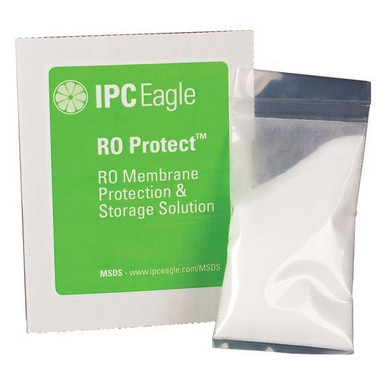
RO Protect IPC Eagle
$28.75
For RO Membrane Protection and Storage. RO Protect™ is the perfect storage solution for all of IPC Eagles Ultra Pure systems. RO Protect was designed...… read more
Why is RO Protect Needed?
While your RO system is sitting still for the winter, bacteria can grow in the standing water and cause fouling. This can help prolong the life of your filter system. If you choose not to use RO Protect during the winter, you’ll want to run your system at least once a week to help prevent bacteria growth.
FAQs
Why do I need to winterize my RODI system?
Freezing temperatures can damage fittings, crack housings, and ruin the most expensive part of your system—the RO membrane. Proper winterization ensures your system is protected and ready for use when warmer weather returns.
What happens if my RO membrane freezes?
A frozen membrane can dry out, crack, and stop filtering properly. This means high TDS water will pass through untreated, forcing you to replace the membrane.
How do I know if my system is damaged after freezing?
After thawing, reassemble and hook up your system. Look for leaks around fittings and housings, then test the TDS. If TDS levels are not 80–90% lower than your tap water reading, your membrane may need replacing.
How often should I replace my carbon filter?
We recommend replacing the carbon filter at the start of each season. If you’re winterizing, you can discard the used filter and start fresh in spring.