Best Practices for Fleet Washing: Equipment, Chemistry, and Compliance

Table of Contents
If you're still hand-brushing road film off trailers, you're burning labor hours and wearing through finishes for no reason. The best practices for fleet washing in 2026 center on chemical pH-polarity and high-volume water delivery — not mechanical agitation. A two-step touchless process, matched to the right pump and delivery system, will outpace a brush crew every time and leave a cleaner result.
This guide covers the chemistry, the hardware specs that actually matter, the regulatory framework you can't afford to ignore, and the equipment decisions that separate a profitable fleet operation from one that's constantly chasing breakdowns and fines.
Why Fleet Washing Is a Maintenance Line Item, Not a Cosmetic One
Non-fuel operating costs on Class 8 trucks now sit above $1.75 per mile. Annual maintenance runs $8,000–$20,000 per unit. Road salts, magnesium chloride, and industrial fallout attack frame rails, electrical connectors, and brake components. A consistent wash schedule is corrosion prevention — the same category as greasing bearings or replacing coolant.
The resale argument is just as concrete. A truck with documented wash history and clean undercarriage photos commands noticeably more at auction than one caked in oxidized road film. And for fleets running under customer-facing brands, a filthy trailer rolling through a metro area is a rolling negative ad.
The Two-Step Chemical Process
Two-step washing exploits pH polarity to break the electrostatic bond holding road film to painted surfaces. Each step targets a different class of contaminant. Done correctly, no brush touches the truck.
Step 1: Low-pH Pre-Soak (Acid Side)
The acid targets inorganic minerals — calcium, magnesium, road salt residue. Apply it to a dry surface. Pre-rinsing dilutes the acid before it can penetrate the mineral layer, which defeats the purpose. Start from the bottom and work up to prevent streaking. Your downstream injector needs to maintain a consistent draw ratio so the acid is effective without being aggressive enough to etch clear coat.
Products like F9 Efflorescence/Calcium Remover handle heavy mineral buildup on fleet surfaces, though dedicated fleet-specific acids are the norm for daily production work. The principle is the same: dissolve the inorganic layer first.
Step 2: High-pH Alkaline Detergent (Base Side)
Apply the alkaline detergent directly over the acid layer. The neutralization reaction lifts organic contaminants — grease, diesel soot, carbon deposits. Surfactants in the alkaline step encapsulate the loosened grime and prevent the vertical streaking ("tiger stripes") that plagues box trailers.
Judge the result at the rinse. A clean break — water sheeting off evenly without beading or breaking around residue pockets — confirms the static bond is gone. If you see beading, the chemistry didn't do its job and you need to adjust concentration or dwell time, not reach for a brush.
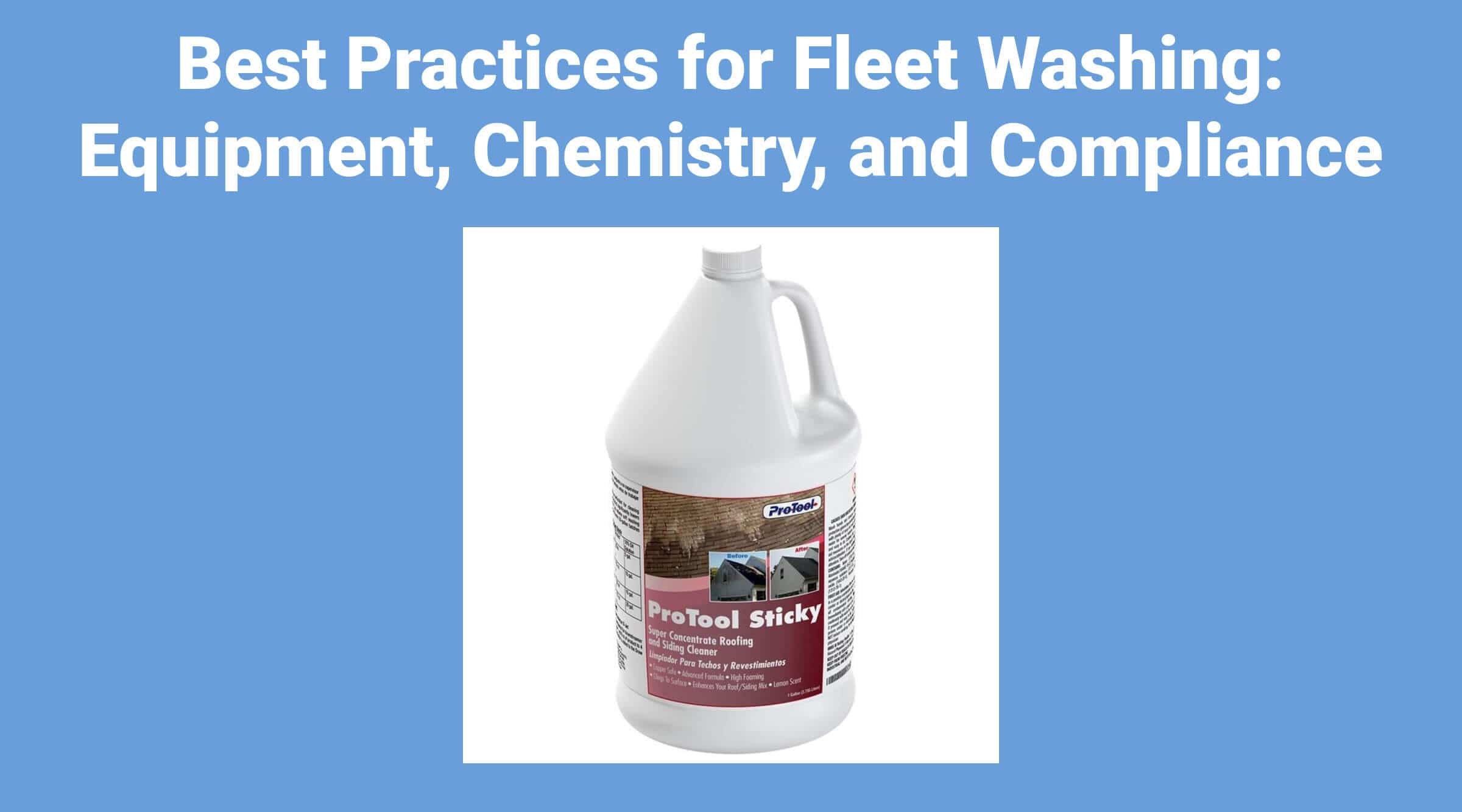
For the alkaline stage on fleet work, a strong surfactant-based detergent is essential. ProTool Sticky serves well as a high-dwell surfactant additive when you need extended contact time on vertical surfaces, and EBC Degreaser handles heavy organic loading on engine bays and fifth wheels.
Hardware: GPM Over PSI
Consumer pressure washer marketing obsesses over PSI. Fleet washing professionals think in GPM. High pressure strips paint and damages decals. High volume flushes the chemically loosened film off a 53-foot trailer in minutes instead of a quarter hour.
Target 5–8 GPM minimum for production fleet accounts. At that flow rate, you rinse large surfaces fast enough that chemicals never dry on the paint — which is how you get permanent streaks and callback complaints.
Temperature
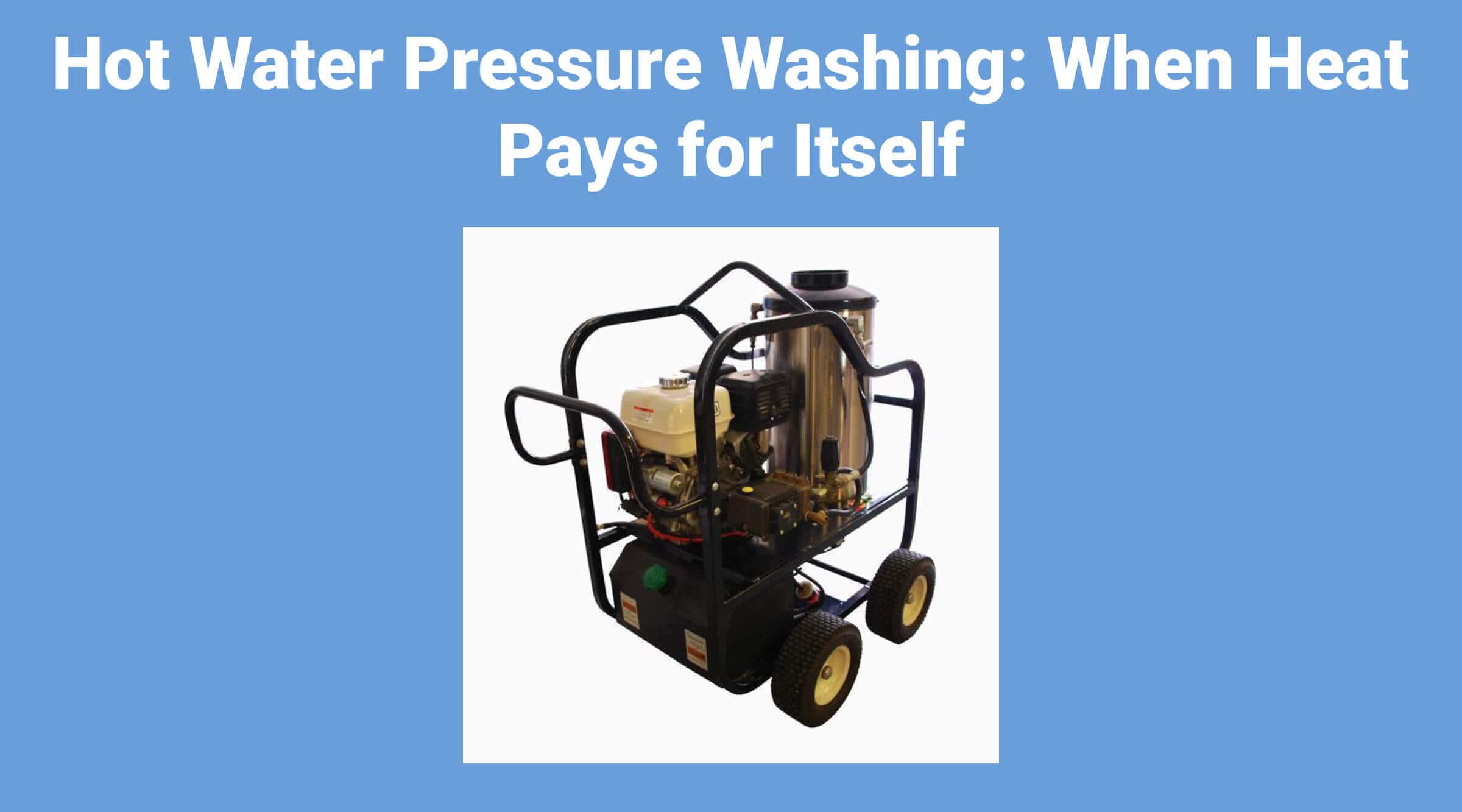
Cold water handles most fleet exterior surfaces. Hot water — 180°F or above — is non-negotiable for fifth wheels, engine bays, and any surface carrying heavy petroleum contamination. Heat drops oil viscosity and lets your surfactants work an order of magnitude faster. If you're bidding fleet accounts that include tractor degreasing, you need a hot water unit or a hot box add-on for your existing cold rig.
Pumps and Drive Systems
Belt-drive pumps are the production standard for fleet work. They turn at lower RPM than direct-drive pumps, run cooler, transmit less vibration to seals, and last significantly longer under continuous duty cycles. Inspect your unloader valve regularly and change pump oil every 500 hours — these two habits prevent most catastrophic pump failures.
For a high-output fleet rig, the 8.5 GPM 3500 PSI Cold Water Pressure Washer delivers the volume needed for rapid trailer rinsing. Pair it with a Comet P40 Diaphragm Pump for your chemical delivery side — the P40 handles sodium hypochlorite and acidic solutions without corroding internals.
Nozzles and Delivery
Match nozzle orifice to your pump's GPM output. An undersized orifice forces the unloader to bypass water, overheating the pump. A 40° tip covers trailer sides efficiently; drop to 25° or 15° for wheels and undercarriage work. Dual-lance wands let you switch between soap and rinse without walking back to the rig — that saves several minutes per truck across a 30-unit account.
Downstream injectors remain the standard over foam cannons for production fleet work. They support longer hose runs and maintain consistent chemical draw rates. The X-Jet M5 is useful for specific applications where you need to apply chemical from distance, but for two-step fleet washing at volume, a quality downstream setup with metered proportioner tips wins on speed and consistency.
Compliance and Environmental Controls
The EPA Clean Water Act's NPDES program regulates wash water discharge. "Biodegradable" chemicals do not exempt you. Effluent from a fleet wash contains suspended solids, heavy metals, and hydrocarbons stripped from vehicle surfaces. Discharging that into a storm drain can trigger federal fines exceeding $10,000 per violation per day.
Best practices for fleet washing require a zero-discharge model on mobile jobs: capture every drop, treat or haul it.
Site Assessment
Before you unload equipment, identify every drain on site. Storm drains run to waterways — never discharge into them. Sanitary sewers run to treatment plants and may accept wash water with a local industrial discharge permit and pre-treatment. Cover storm drains with magnetic seals or weighted mats. Lay containment berms to create a collection basin under and around the wash area.
Water Recovery
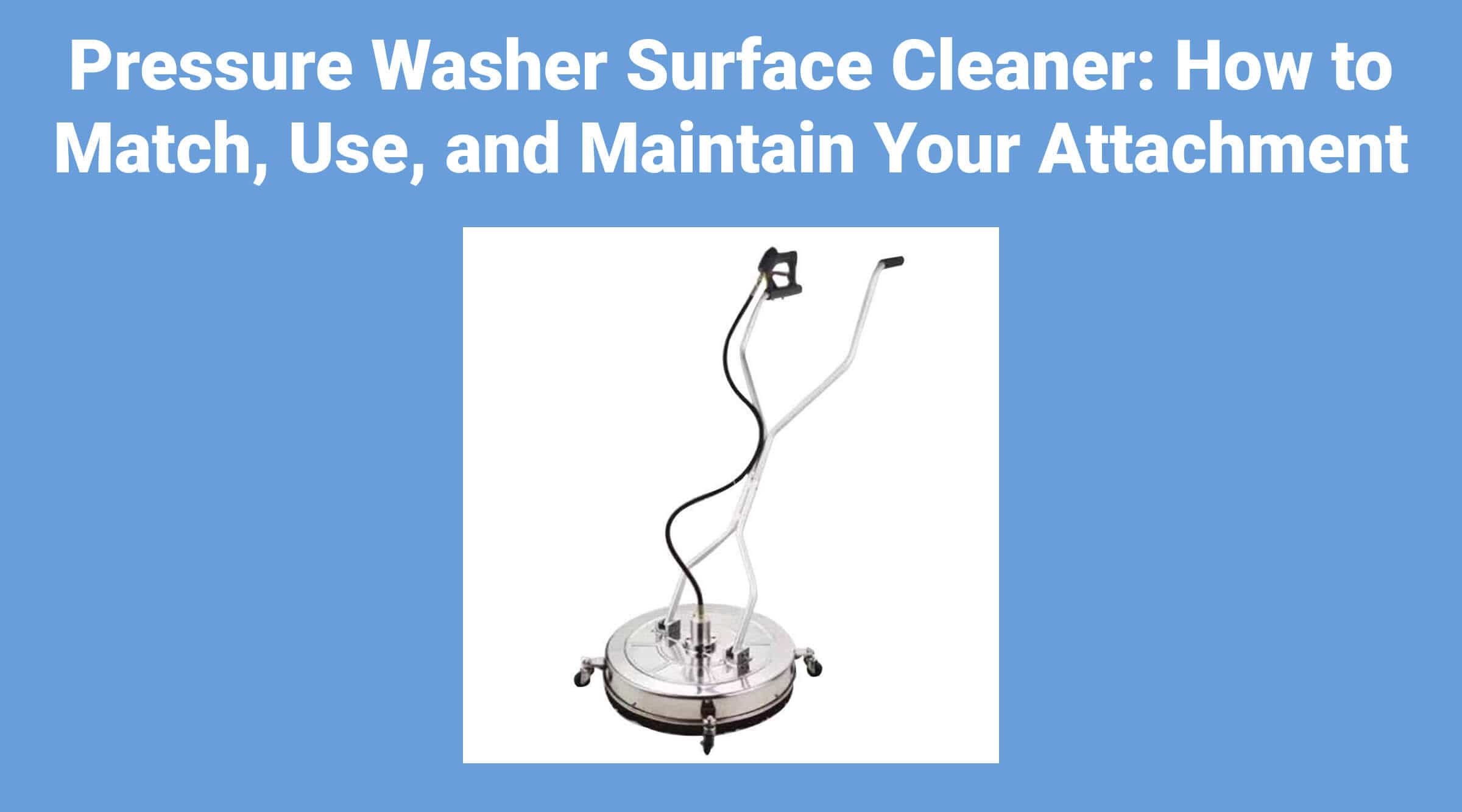
Vacuum recovery systems pull wastewater from containment mats into holding tanks on your rig. Basic filtration — removing large solids and free-floating oils before transport — reduces waste weight and prevents sludge buildup in your tanks. The ProTool Venturi Extractor 21" Surface Cleaner integrates vacuum recovery directly into your surface cleaning workflow, which simplifies compliance on flat-surface jobs like yard tractors and straight trucks.
Crew Safety
Concentrated acids and alkalines demand chemical-resistant gloves, face shields, and respirators during mixing and application. A 4,000 PSI stream can penetrate skin and drive bacteria deep into tissue — injection injuries are surgical emergencies. And cleaning tanker tops or trailer roofs requires proper fall protection.
Stock your crew with appropriate fall protection equipment — harnesses, lanyards, and anchor systems — before anyone climbs above deck level. A 50ft Safety Kit covers most fleet washing fall scenarios and keeps you on the right side of OSHA.
Building and Scaling a Fleet Wash Rig
Scaling from a single mobile unit to multiple rigs demands equipment that survives constant duty cycles without frequent downtime. The rig itself is your primary production asset — every hour it's down costs you revenue.
A purpose-built fleet skid integrates your high-flow pump, chemical tanks, hose reels, and recovery system into a single footprint. The ProTool Mega Pressure Washing and Soft Washing Skid consolidates these systems on an aluminum frame with an 8 GPM pump, dedicated SH and surfactant tanks, and dual delivery reels. For operators who also service glass-heavy fleets or want spot-free finishes without hand-drying, it includes an RO/DI pure water system — a legitimate differentiator when bidding premium accounts.
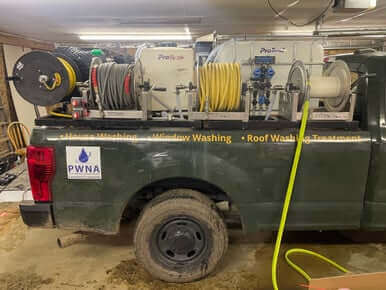
For a more focused fleet-only build, the 8ft Pressure and Soft Washing Skid with RODI provides a compact dual-mode platform that fits standard truck beds.
Parts and Uptime
Stock spare O-rings, nozzle orifices in your working sizes, and pump oil on every rig. These are the items that fail at 6 AM on a Monday when you have 40 trucks waiting. Downstream injector rebuild kits, unloader valve kits, and hose fittings should live in your shop inventory.
Browse the full range of pressure washing equipment and replacement parts to build out your maintenance inventory before you need it, not after a breakdown costs you a contract.
Products Mentioned
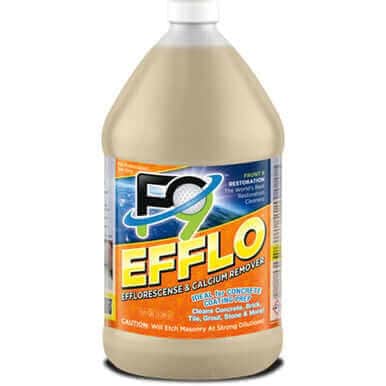 F9 Efflorescence/Calcium Remover Front9 Restoration SKU: 320-62M | 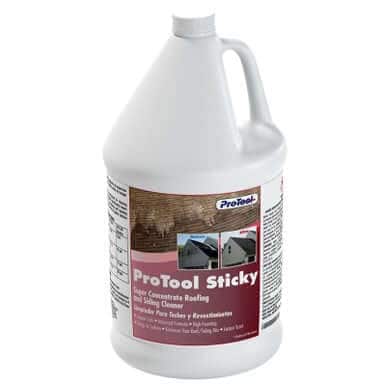 ProTool Sticky SKU: 83-07M | 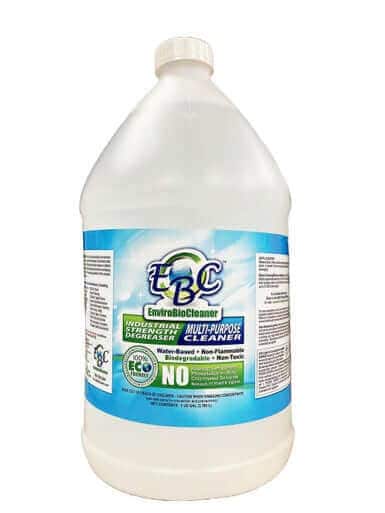 EBC Degreaser, Detergent SKU: 83-81M |
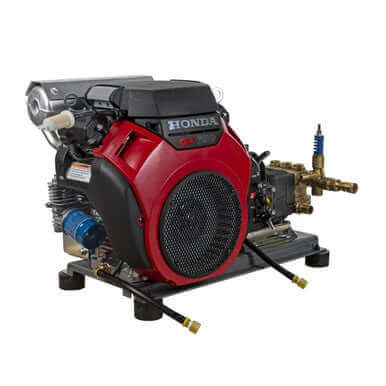 8.5 GPM 3500 PSI 8GPM Cold Water Gas Pressure Washer SKU: 74-1181 | 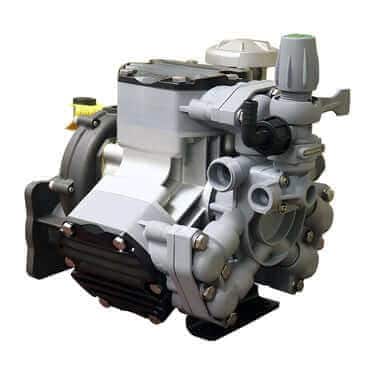 Comet P40 Diaphragm Pump SKU: 150-0428 | 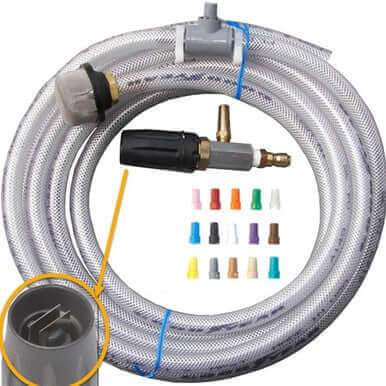 X-Jet M5 Variable Spray SKU: 74-53M |
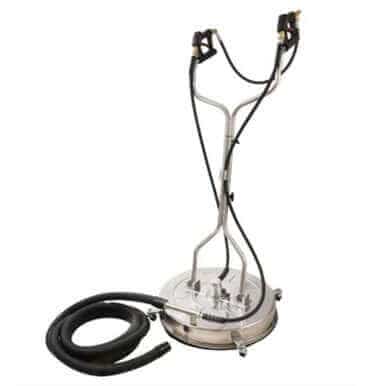 Recovery Surface Cleaner Venturi Extractor 21in Size SKU: 74-2520 | 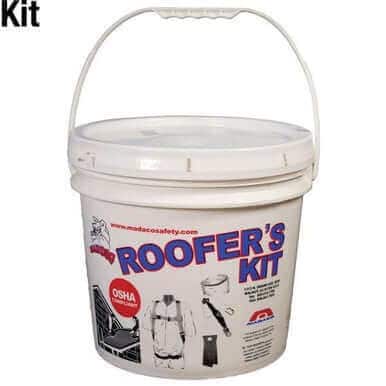 Roof Cleaning Safety 50ft Kit SKU: 12-655 | 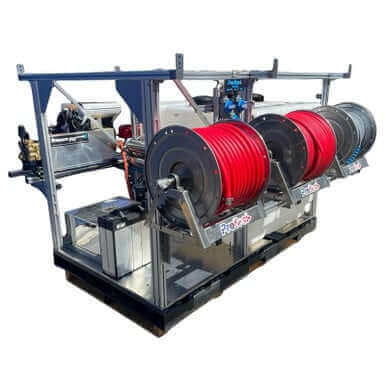 ProTool Mega Pressure Washing and Soft Washing Skid SKU: 150-0496 |
 8ft Pressure, Soft Washing Skid with RODI SKU: 892-00180 |