Pressure Washer Surface Cleaner: How to Match, Use, and Maintain Your Attachment

Table of Contents
Large flatwork jobs — driveways, parking garages, pool decks — are where a pressure washing business makes real money or bleeds it. Cleaning those surfaces with a wand is slow, physically brutal, and almost guaranteed to leave zebra stripes that cost you a callback. A properly matched pressure washer surface cleaner attachment cuts job time by more than half, eliminates striping, and delivers the kind of uniform result that gets you referrals instead of complaints.
The catch: the attachment only performs if it's sized to your machine. An undersized pump behind an oversized cleaner head is the single most common setup mistake in the trade, and it produces worse results than a wand. This guide covers the specs that matter, how to match them to your rig, the field techniques that separate clean concrete from striped concrete, and the maintenance that keeps a $500+ tool earning instead of leaking.
How a Surface Cleaner Eliminates Striping
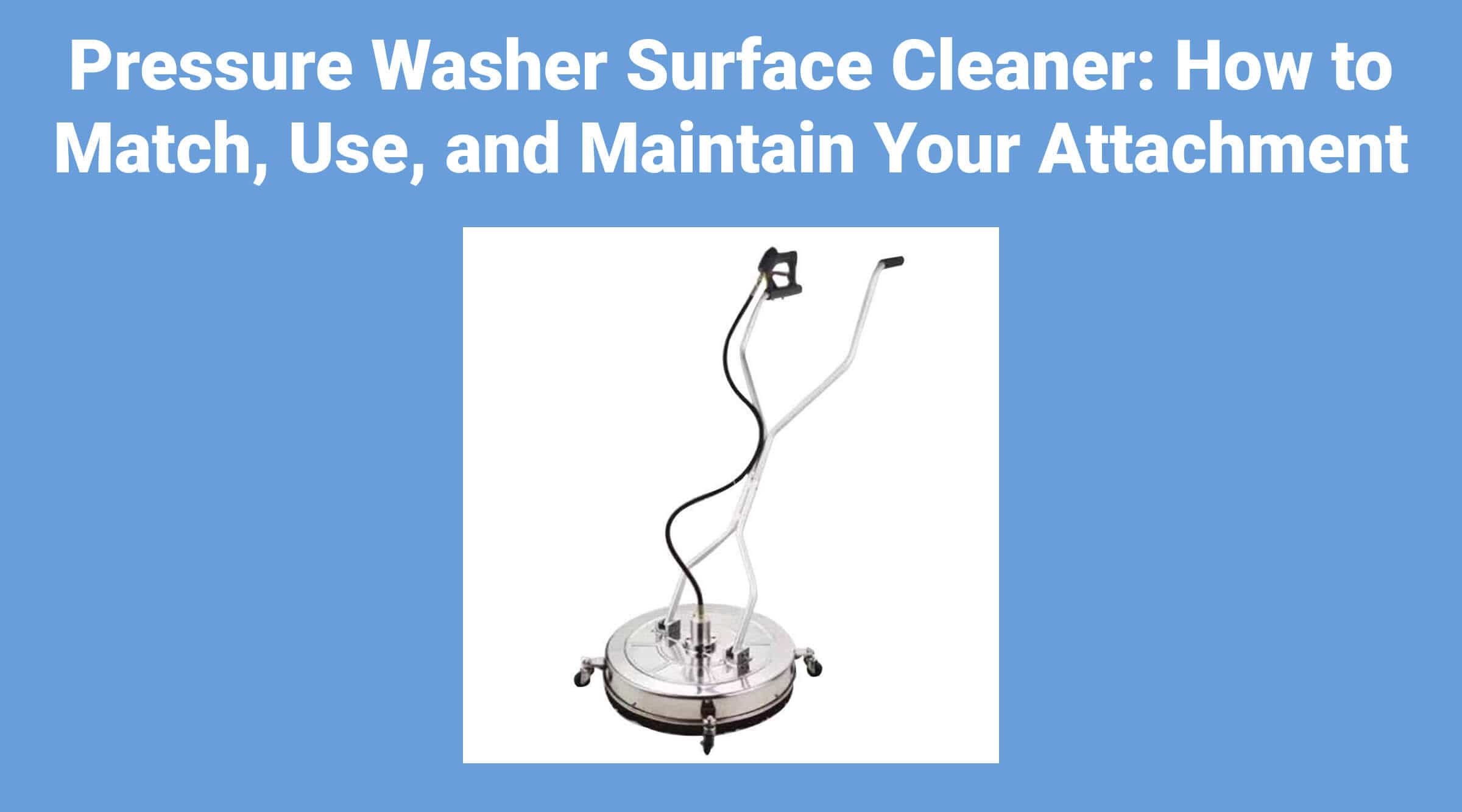
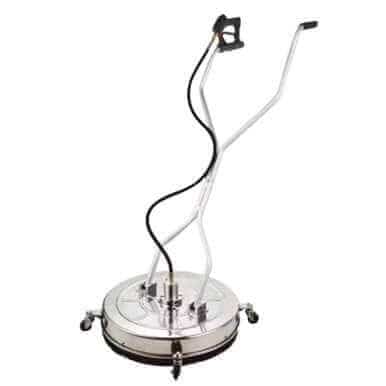
A surface cleaner is a sealed housing with a spinning spray bar inside. Two or more precision-angled nozzles on that bar rotate at high RPM, creating a wide, even cleaning path on every pass. Three things make it outperform a wand:
- Fixed nozzle distance. The housing holds the nozzles at a constant standoff from the surface. A wand operator's distance drifts as fatigue sets in — that drift is what causes stripes.
- Containment. The deck captures overspray, protecting adjacent landscaping, walls, and vehicles. It also contains runoff, which matters for environmental compliance.
- Speed. A driveway that takes four hours with a wand routinely finishes in under one hour with a correctly sized surface cleaner. That's the difference between a profitable job and a break-even one.
Key Specs: What Separates Pro-Grade from Big-Box
Housing Material
Stainless steel decks survive drops, debris impacts, and daily loading/unloading. ABS plastic housings crack — sometimes on the first job site. For daily commercial use, stainless steel is the only defensible choice. The ProTool 24" Stainless Steel Surface Cleaner and the ProTool 30" model are built for exactly this kind of abuse.
Diameter
Bigger covers more ground but demands more water. The rule of thumb: 4 GPM per 10 inches of diameter, minimum. Here's how that breaks down:
- 18–21 inches: Residential driveways, patios, pool decks. Works well with 4–5.5 GPM machines. The ProTool 18" Surface Cleaner and the Whisper Wash 19" Ultra Clean are strong options in this range.
- 24–30 inches: Parking garages, warehouses, large commercial flatwork. Requires 8+ GPM. The Whisper Wash 28" Big Guy and the Whisper Wash 36" MAX are purpose-built for high-production work.
Casters, Splash Guards, and Handles
Non-marking casters reduce operator fatigue dramatically on long pours of concrete. A floating (caster-less) cleaner feels fine for the first 500 square feet; by 5,000 square feet your back and shoulders are done. A brush skirt or splash guard contains debris and runoff. Ergonomic handles with a comfortable grip angle and integrated wand holder keep the tool manageable over a full day.
Sizing Your Surface Cleaner to Your Pressure Washer
Mismatching is the #1 cause of poor surface cleaner performance. If the spray bar spins slowly, you get stripes. If the nozzles are too small for your pump, you build backpressure that shortens pump life. Get this right first.
GPM Is the Deciding Factor
PSI gets the attention; GPM does the work. A surface cleaner's bar needs enough volume to spin at full speed and flush debris out from under the housing. Minimum GPM by diameter:
- 12–16 inch: 4 GPM
- 18–20 inch: 8 GPM
- 24–30 inch: 10+ GPM
Running a 20-inch cleaner on a 4 GPM machine is a common rookie mistake. The bar barely turns, the cleaning path is uneven, and the job takes longer than it would have with a wand.
Nozzle Selection
The surface cleaner doesn't create pressure — the nozzles do. Cross-reference your machine's GPM and target PSI on a nozzle chart to find the correct orifice size. Install the wrong nozzles and you'll either starve the bar or overload the pump. Replace nozzles as a matched set; a worn nozzle paired with a new one creates an imbalanced spray pattern that shows up as a pinwheel on the concrete.
Hot Water vs. Cold Water
If you run a hot water rig, the surface cleaner must be rated for it. Hot water units use high-temperature swivels and seals rated to 212°F or above. A cold-water-only cleaner on a hot machine will destroy its seals within days. For grease, oil, or automotive stains, hot water is the only way to break the bond effectively. Check the Surface Cleaners & Wands category to filter by hot water compatibility.
Field Technique: Streak-Free Every Time
Pre-Treat Before You Touch the Surface Cleaner
Organic growth — algae, mold, mildew — needs to be killed at the root before you clean it off. Apply an SH-based pre-treatment (ProTool Sticky works well as a surfactant to extend dwell time), let it sit, then clean. The chemical does the killing; the surface cleaner does the removal. This approach lets you run lower pressure, which protects the surface and extends equipment life.
Movement and Overlap
Walk slowly. Overlap each pass by 2–3 inches. Work in straight, parallel lines — either all vertical or all horizontal — across the entire surface before changing direction. The most common cause of callbacks on flatwork is moving too fast. Let the cleaner do the work.
Use a wand with a fan tip for edges, corners, and areas the cleaner can't reach. A 25- or 40-degree quick-connect tip handles this cleanly.
Rinse From High to Low
The surface cleaner lifts dirt; it doesn't remove it from the site. After cleaning, switch to a low-pressure rinse nozzle and push all loosened debris and chemical residue from the highest point to the lowest. Skip this step and you leave a film the customer will notice within 24 hours.
Maintenance and Troubleshooting
A surface cleaner is a simple machine with few failure points. Most failures trace back to neglected maintenance — specifically, clogged nozzles and dry swivels.
Routine Checklist
- After every use: Rinse the housing interior. Inspect the brush skirt for tears.
- Weekly: Pull and inspect nozzles for clogs or wear. A partially blocked nozzle is the most common cause of uneven cleaning.
- Monthly: Grease the swivel (if your model has a grease fitting). A dry swivel creates resistance that slows the bar and accelerates bearing wear.
- Ongoing: Check hoses, fittings, and the trigger gun for leaks, cracks, or wear.
Two Problems You'll See in the Field
Bar won't spin or spins slowly. Check nozzles first — clogs are the usual culprit. If they're clear, verify that the orifice size matches your machine's GPM. Undersized nozzles restrict flow; oversized nozzles drop pressure. Either condition starves the bar of the thrust it needs to rotate.
Pinwheel or donut pattern on the surface. You're moving too fast. Slow down and overlap. If the pattern persists at a walking pace, one or both nozzles are worn unevenly — replace them as a set. Replacement nozzles, swivels, and spray bars are available in the Surface Cleaners section and in Surface Cleaner Parts.
Products Mentioned
 ProTool 24" Stainless Steel Surface Cleaner SKU: 74-3785 | 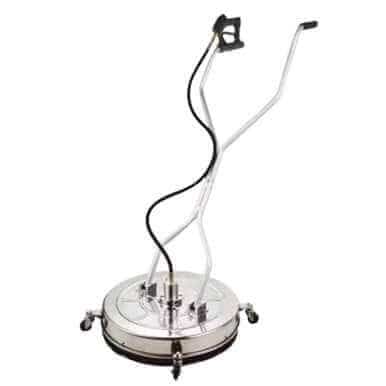 ProTool 30" Stainless Steel Surface Cleaner SKU: 74-3790 | 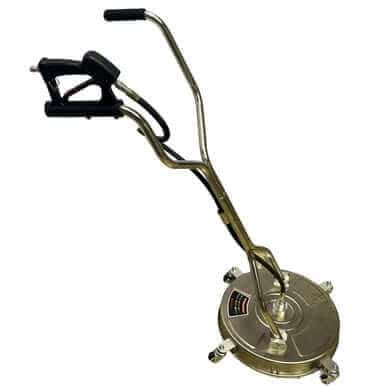 Surface Cleaner 18in Protool 4000psi SKU: 74-3795 |
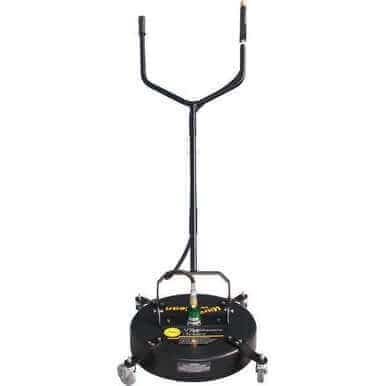 Whisper Wash 19in Ultra Clean w/wheels SKU: 74-3808 | 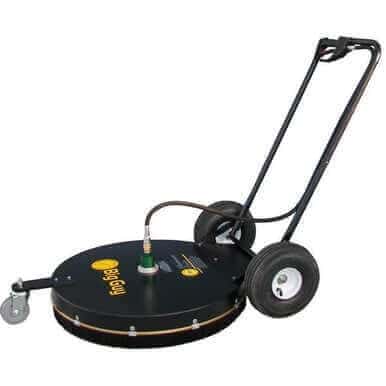 Whisper Wash 28in Big Guy 4 Nozzle w/whe SKU: 74-3812 | 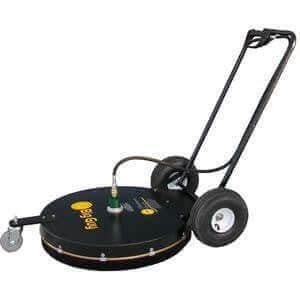 Whisper Wash 36in MAX 4 Nozzle SKU: 74-3814 |
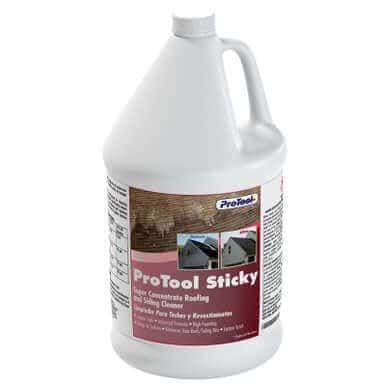 ProTool Sticky SKU: 83-07M | 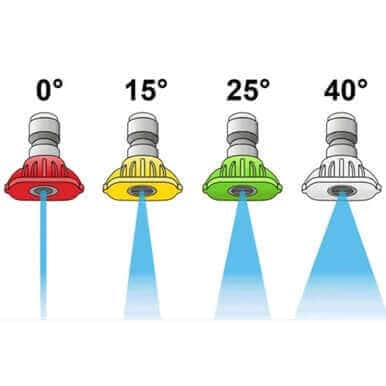 Nozzle Tip Quick Connect Pressure Washer 1/4in Plug SKU: 74-50M |