Hot Water Pressure Washer: Uses, Benefits & ROI for Contractors

Table of Contents
Grease, oil, and caked-on grime slow your jobs and cut into margins. If you're relying on cold water and extra chemicals to handle the toughest cleaning work, you're spending more time and money than you need to. A professional-grade hot water pressure washer changes the equation — heat does the work that cold water and degreasers can't, cutting job times and chemical costs simultaneously.
This guide covers when heated water is a real upgrade over cold, how it affects your bottom line, and what to look for when you're ready to invest.
Why Heat Matters: The Science Behind Hot Water Cleaning
Pressure alone is half the equation. Cold water dislodges loose dirt and debris, but heat fundamentally changes how water interacts with grease, oil, and bonded contaminants. Think about washing a greasy pan — cold water pushes grease around, hot water melts and lifts it.
Two things happen when you add heat. First, higher temperatures lower water's surface tension, letting it penetrate microscopic pores where grime is trapped. Second, thermal energy breaks the molecular bonds of hydrocarbons — the building blocks of grease, oil, and diesel soot. Instead of pushing contamination across the surface, heat liquefies it so pressure can flush it away. At temperatures around 200°F, you also get meaningful sanitizing and disinfecting benefits, killing mold, algae, and bacteria on contact.
Hot Water vs. Cold Water: When Each Makes Sense
Cold water handles surface-level cleaning — loose dirt, mud, general grime — efficiently and affordably. Hot water becomes essential when you're dealing with bonded contaminants that cold water leaves behind.
| Contaminant | Cold Water | Hot Water |
|---|---|---|
| General Dirt & Mud | Excellent | Excellent |
| Oil & Grease | Poor | Excellent — breaks molecular bonds |
| Chewing Gum | Ineffective | Excellent — melts for removal |
| Algae & Mold | Good with chemicals | Excellent — sanitizes the surface |
| Caked-on Grime | Fair | Excellent |
The Chemical Cost Impact
Heat acts as a catalyst, boosting detergent performance so you use less product per job. In many cases, the cleaning power of a hot water pressure washer eliminates the need for harsh degreasers altogether. That means lower chemical spend and a more environmentally responsible process — a dual benefit that matters to facility managers evaluating your bids.
Anatomy of a Hot Water Pressure Washer
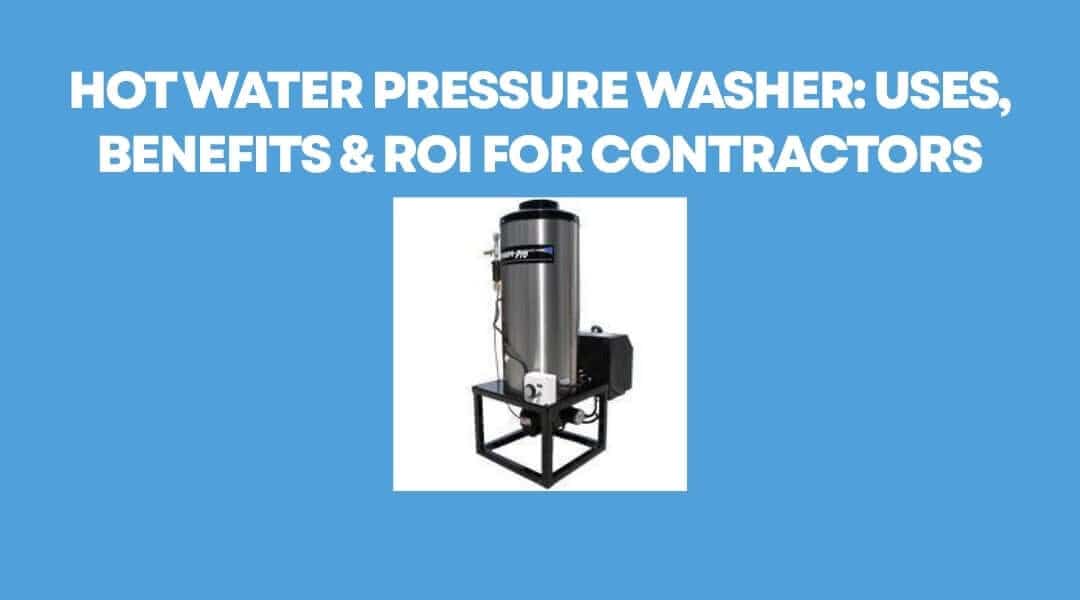
A hot water unit is a professional-grade cold water pressure washer integrated with a high-efficiency heating system. The pump remains a key component, but the addition of a burner transforms cleaning capability. Pumps are typically direct-drive (compact, coupled directly to the engine) or belt-drive (uses pulleys and belts to run at lower RPM for reduced heat and wear during prolonged use).
The Burner and Heating Coil
The burner — typically fueled by diesel or kerosene — ignites to heat a high-pressure steel coil. Pressurized water passes through this superheated coil and can reach 200°F or more in seconds. Temperature limit switches prevent overheating, and flow sensors ensure the burner fires only when water is moving, protecting both operator and equipment.
Power Source: Gas, Diesel, or Electric?
- Gas/Diesel Engines: Maximum power and complete portability. The standard choice for remote locations or properties without adequate electrical supply.
- Electric Motors: Zero emissions, significantly quieter, and lower maintenance. The right call for indoor work, food processing facilities, or noise-sensitive environments.
Skids vs. Wheeled Carts
- Skid-Mounted Units: The foundation of a professional cleaning rig. Designed for truck or trailer mounting, they integrate with water tanks and hose reels for a self-contained, high-efficiency mobile setup.
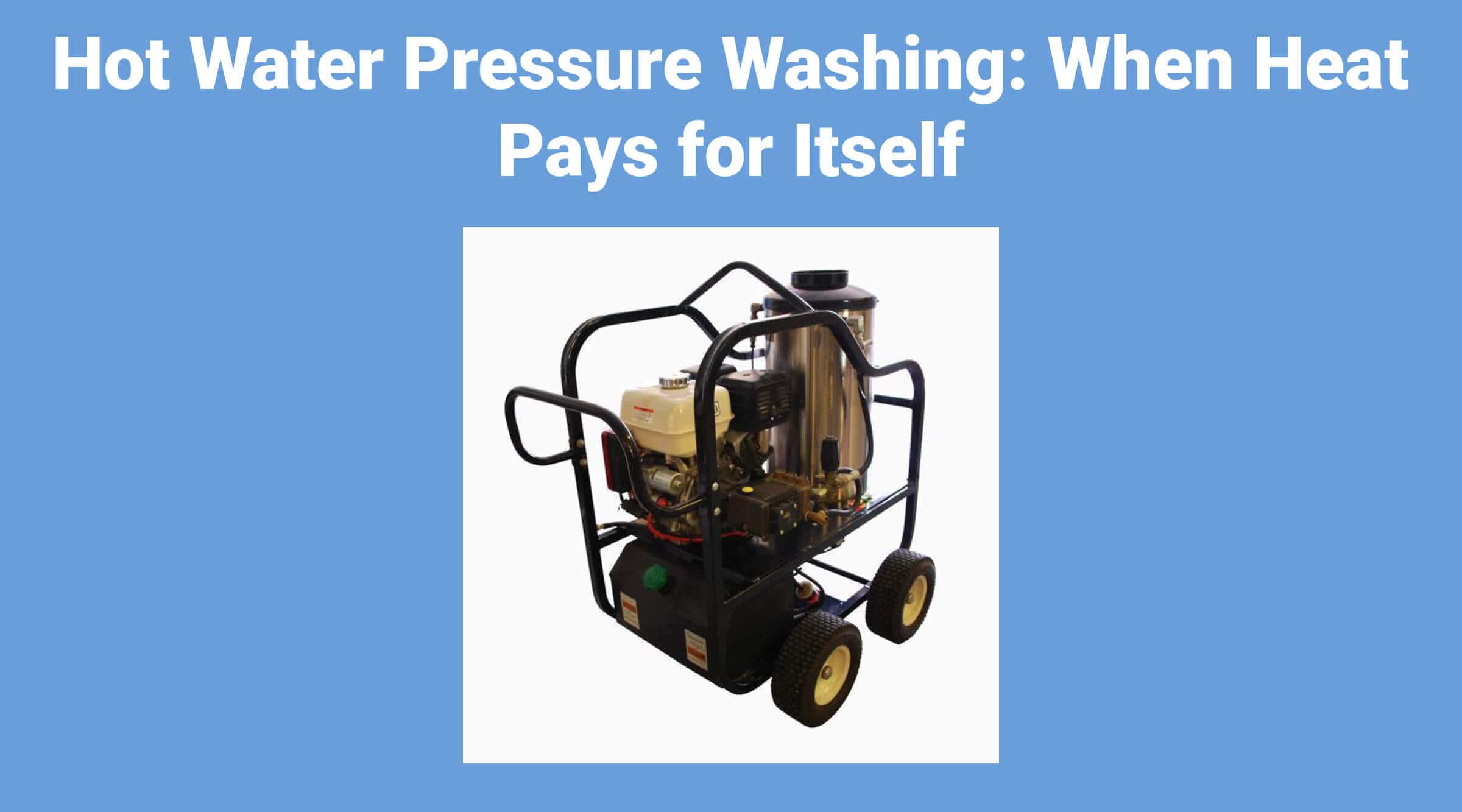
- Portable Carts: Offer on-site mobility with heavy-duty frames and wheels. A strong option for contractors who need to move equipment around large facilities or transport between local jobs without a dedicated vehicle rig.
Top Commercial Applications for Hot Water
These applications represent high-value, recurring revenue streams where cold water simply can't deliver the required results efficiently.
Fleet and Heavy Equipment Washing
Commercial fleets and heavy machinery accumulate road grime, diesel soot, and hydraulic fluid. Cold water pushes this greasy mess around. A hot water unit melts through caked-on lubricants on engines and undercarriages, restoring appearance and making maintenance inspections faster and more accurate.
Restaurant and Commercial Kitchen Cleaning
Hot water is non-negotiable for greasy dumpster pads, kitchen exhaust hoods, and floors. It emulsifies cooking oils, animal fats, and food waste that cold water leaves behind. Proper sanitation passes health inspections and prevents slip-and-fall hazards — making this a high-demand, recurring service.
Concrete and Flatwork: Gas Stations & Parking Garages
High-traffic flatwork collects oil stains, spilled liquids, and chewing gum. Heat softens gum for removal and breaks down hydrocarbon stains from within concrete's pores. Landing a cleaning contract for a gas station or parking garage provides significant, repeatable revenue.
Industrial and Manufacturing Facilities
Manufacturing environments coat machinery and floors in tough industrial lubricants, cutting fluids, and heavy-duty residues. A professional-grade hot water pressure washer provides the thermal power needed to degrease equipment for maintenance or clean floors to meet safety protocols. In regulated settings like food processing plants, this level of sanitation is mandatory.
Other high-value applications that demand heated water:
- Graffiti Removal: Heat breaks down spray paint without excessive pressure. Pair with a quality graffiti remover for best results.
- Agricultural Sanitation: Cleaning and disinfecting barns, stables, and equipment to remove greasy buildup and kill bacteria.
- Property Restoration: Removing soot and smoke damage from building exteriors after a fire.
Calculating the ROI
The initial investment for a professional hot water unit runs higher than a cold water machine. But treating it as a simple expense misses the point. A hot water pressure washer is a revenue-generating asset whose ROI shows up in three places.
Time Savings
Hot water emulsifies grease and grime, cutting cleaning time substantially. A commercial flatwork job that takes four hours with cold water can often be completed in two and a half with hot. That extra hour and a half per job lets you add clients or complete more work each week. Over a month, the increased capacity translates directly to additional revenue.
Reduced Chemical Costs
Thermal cleaning power replaces much of what expensive degreasers and specialty detergents would otherwise handle. A conservative estimate — saving $200 per month on chemicals — adds up to $2,400 per year, offsetting a substantial portion of equipment cost.
Access to Higher-Paying Work
Many high-value commercial contracts are impossible without hot water. Restaurant exhaust systems, gas station pads, dumpster areas, heavy equipment degreasing — these jobs command premium pricing. Landing a few of these contracts can pay for the entire machine.
Key Specifications for Choosing the Right Unit
Matching the right specs to your primary applications is critical. Consumer-grade models aren't built for daily professional demands.
GPM and PSI
GPM (Gallons Per Minute) is rinsing power — how quickly you move dirt away. PSI (Pounds per Square Inch) is blasting power for dislodging stubborn grime. For fleet washing or large concrete areas, higher GPM (5–8) matters most for speed. For stripping paint or removing deeply embedded stains, prioritize higher PSI (3,000+).
Burner Fuel Type
- Diesel/Kerosene: Standard for mobile cleaning skids. Fuel is readily available and the units are fully portable.
- Natural Gas/Propane: Best for stationary wash bays with a utility line, often providing lower long-term fuel costs.
An efficient, reliable burner from a reputable manufacturer is non-negotiable. It consumes less fuel per hour, directly protecting profit margins on every job.
Build Quality and Serviceability
Insist on a heavy-duty, powder-coated steel frame. Beyond toughness, look for easy access to the engine, pump, and burner for routine maintenance. A unit that's difficult to service leads to costly downtime. Prioritize brands known for readily available replacement parts — machines built with Comet or similar proven pump platforms keep your investment running for years.
Matching the Machine to Your Operation
If you're building a truck-mounted rig, a skid-mounted system that integrates your pressure washer, water tank, and hose reels into one self-contained setup is the most efficient path. For contractors who need portability between facilities, a heavy-duty cart unit with pneumatic tires offers the right balance.
When you're ready to spec a system, browse hot water pressure washers purpose-built for professional cleaning operations.
Hot Water Pressure Washing, Built Into a Complete System
For contractors taking on demanding commercial cleaning work, a hot water pressure washer is often just one part of the equipment needed. Water storage, burner capacity, hose management, equipment accessibility, and overall skid layout all contribute to how efficiently a crew can operate.
ProTool, J. Racenstein's equipment manufacturing brand, designs and builds complete pressure washing skids and trailers that integrate these components into professional cleaning platforms. Hot water configurations can combine high-flow pressure washing equipment, diesel-fired heating systems, onboard water storage, and organized hose reels into a single purpose-built rig.
Explore ProTool's commercial hot water pressure washing equipment to see how heated pressure washing can be incorporated into a complete mobile cleaning system.