Hot Water Pressure Washing: When Heat Pays for Itself
Table of Contents
- Why Heat Works: The Physics Contractors Actually Care About
- Professional Components That Actually Matter
- Where Hot Water Pays Back — and Where It Doesn't
- ROI: When the Numbers Work
- Selecting the Right Rig
- Maintenance That Protects Your Investment
- Safety Considerations
- Beyond the Burner: Engineering a Complete Hot Water Cleaning Rig
- Products Mentioned
- FAQs
Hot water pressure washing solves problems cold water cannot touch. Grease, animal fats, heavy oils, bio-film — cold water displaces these contaminants. Heat emulsifies them. That distinction is the entire business case for a hot water rig: faster job completion, lower chemical spend, and access to commercial contracts that demand thermal cleaning as a baseline requirement.
The trade-off is real cost — diesel fuel, burner maintenance, and a higher equipment price tag. This article breaks down where that investment pays back and where it doesn't, what to look for in professional-grade components, and how to spec a rig that matches your operation.
Why Heat Works: The Physics Contractors Actually Care About
PSI provides mechanical force. GPM provides rinsing volume. Heat provides a chemical-physical change that neither can replicate. At 180°F, water molecules carry enough kinetic energy to reduce surface tension dramatically — meaning the stream penetrates porous concrete and brick instead of beading on top. More importantly, heat lowers the viscosity of oils. A thick petroleum sludge at 50°F becomes thin and mobile at 200°F, letting the stream flush it out of substrate pores completely.
Cold water cleaning is displacement — you push dirt from one spot to another. Hot water creates emulsification: fats, waxes, and hydrocarbons break down and suspend in the water stream. The grease leaves with the runoff instead of redepositing two feet away. This is why hot water units dominate industrial and food-service cleaning. They solve the problems cold water physically cannot.
Heat also amplifies your detergents. Professional surfactants react more aggressively at elevated temperatures, so you can run lower dilution ratios and still get a deeper clean. On most grease jobs, contractors report cutting chemical volume by roughly 50% compared to cold water applications. That matters on your chemical line item and it simplifies wastewater compliance by reducing the chemical load in your runoff.
Professional Components That Actually Matter
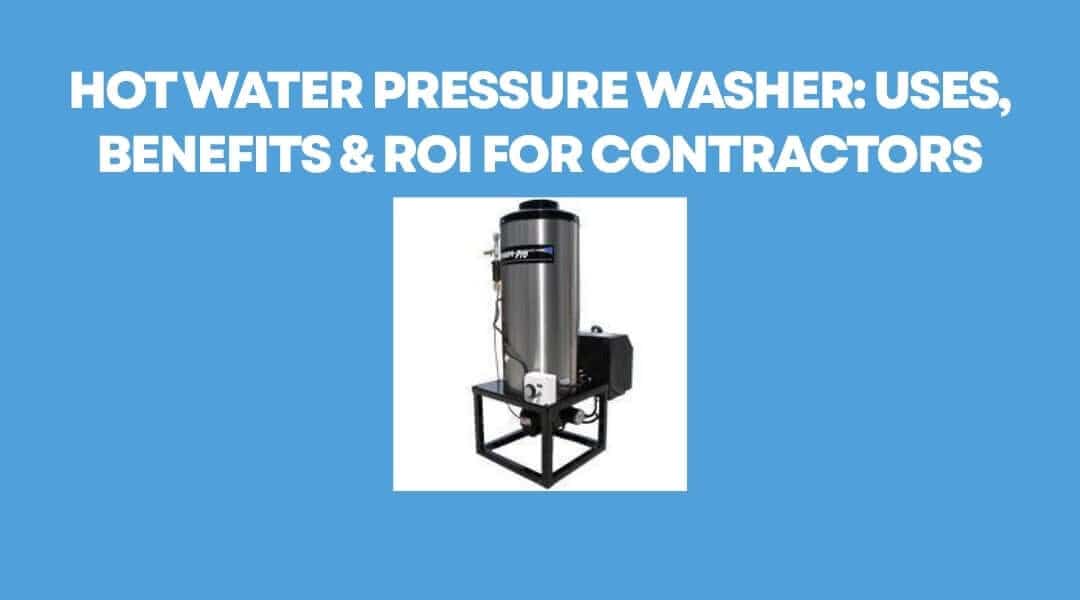
A hot water rig is a thermal exchange system. The burner and coil must work in sync, and BTU rating is the metric that determines whether your rig keeps up on large sites. A 330,000 BTU burner heats water significantly faster than a 200,000 BTU model — which translates directly to cleaning speed at higher flow rates. If temperature drops every time you squeeze the trigger, your BTU rating is too low for your GPM.
Burner Systems
Most mobile contractors run diesel-fired burners for raw heat output. Electric heating elements work for stationary indoor applications where exhaust is a problem, but diesel remains the field standard. Modern burners prioritize precise air-to-fuel ratios to prevent sooting — carbon buildup that insulates the coil and kills heat transfer. Maintenance is straightforward: inspect burner electrodes and fuel filters every 500 hours or annually, whichever comes first. Skip it and you lose temperature reliability on every call.
Coil Construction
Schedule 80 steel coils handle constant thermal cycling — expansion and contraction — better than thinner Schedule 40 alternatives. Coil length and pipe diameter determine your heat rise capability. Longer coils give the burner more surface area to transfer energy to the water stream. PressurePro's hot water units use Schedule 80 coils with insulated wraps designed for sustained industrial output.
Safety Components
Flow switches and thermostats are non-negotiable. The flow switch prevents the burner from firing without water moving through the coil — preventing a catastrophic meltdown. The thermostat lets you dial in specific temperatures for sensitive substrates so you don't damage coatings or pump seals. If your system isn't reaching target temperatures, the issue is usually a scaled-up coil or a failing fuel nozzle, not the pump.
Where Hot Water Pays Back — and Where It Doesn't
Hot water is not universally better. It can warp vinyl siding, damage delicate wood fibers, and cause thermal shock on certain glass. For dust removal, residential soft washing, or standard house washes, cold water is more appropriate and more cost-effective. Reserve your hot water rig for the jobs that justify the fuel and maintenance overhead:
- Kitchen exhaust hoods and dumpster pads — organic fats and oils that harbor pathogens require 180°F+ for health code compliance.
- Parking garages and gas station aprons — hot water emulsifies hydrocarbons so oil-water separators function as designed, instead of clogging from cold-water-pushed solids.
- Heavy equipment degreasing — fleet maintenance yards, agricultural equipment, construction machinery.
- Chewing gum and graffiti removal — heat softens the contaminant at the molecular level, allowing removal at lower PSI. Cold water forces higher pressures that etch concrete.
- Bio-film removal in food processing — mold, algae, and bacteria create protective layers that resist cold rinsing. High temperatures kill on contact and prevent regrowth.
These niches command a 20–40% premium over standard cold-water rates. A contractor charging $0.08–$0.30 per square foot for cold work can justify significantly higher pricing when thermal cleaning is a contract requirement rather than an upsell.
ROI: When the Numbers Work
Consider a 5,000 sq ft greasy warehouse floor. Cold water: roughly 10 hours with mediocre results. A professional hot water unit: approximately 6 hours with complete emulsification. Diesel cost for the burner is real but negligible against 4 hours of saved labor for a two-person crew. For most active contractors, the break-even point on a hot water rig lands within the first six months — the point where cumulative labor savings and chemical reductions exceed the monthly equipment cost.
Drying time matters too. Hot water raises substrate temperature, accelerating evaporation. For indoor warehouse jobs or high-traffic commercial entries, faster drying reduces slip-and-fall liability windows and gets your client back to normal operations sooner. Facility managers care about that, and it makes your service more competitive against cold-water-only competitors.
Selecting the Right Rig
The choice comes down to mobility versus thermal output, and your vehicle configuration drives the decision.
Portable Units
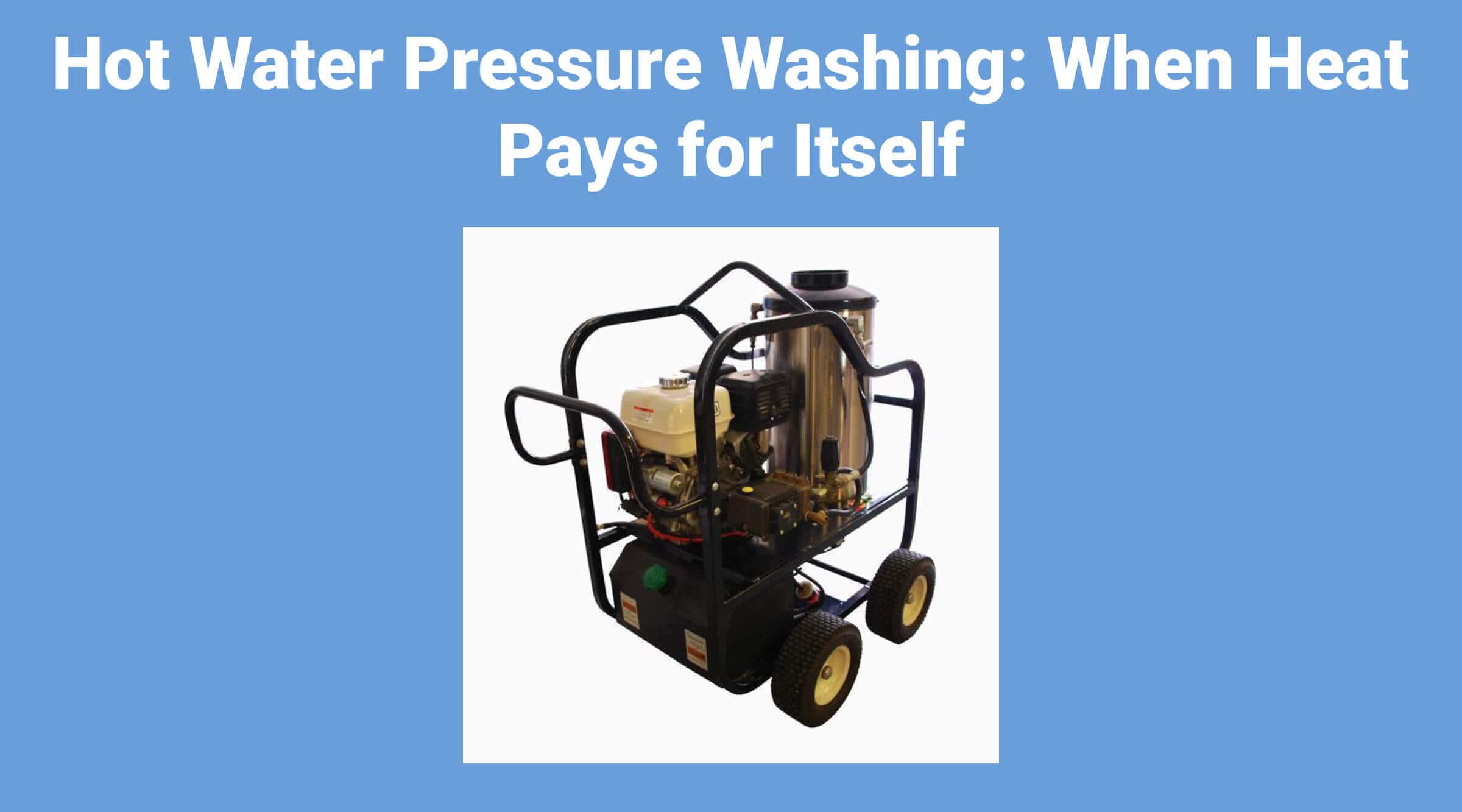
Cart-mounted hot water units like the PressurePro 4.0g 4000psi Hot Portable PW work for contractors navigating tight residential or light commercial spaces — multi-story parking structures, restaurant patios, and small fleet yards. They trade tank capacity for agility.
Skid-Mounted Systems
For high-volume industrial work, skid or trailer setups are the professional standard. Larger water tanks and more robust heating systems maintain 180°F+ throughout long shifts. The PressurePro 8.0g 3500psi Hot Skid delivers the flow rate and temperature consistency that full-day degreasing contracts demand.
Hot Box Add-Ons
Already own a cold water rig? A hot box heats water after it leaves the pump, converting a cold unit into a hot water system. The PressurePro 4.0g 4000psi Hot Box is a common entry point for contractors testing the hot water market before committing to a dedicated unit. You must use a hot box or a dedicated hot water unit — running heated water through a standard cold water pump destroys seals, O-rings, and valves almost immediately.
Custom Builds
Established operations with specific truck-bed dimensions, dual-operator needs, or specialized pump configurations should look at ProTool custom-built skids. A rig built for your exact workflow eliminates compromises that cost time on every job.
Key Specs to Match
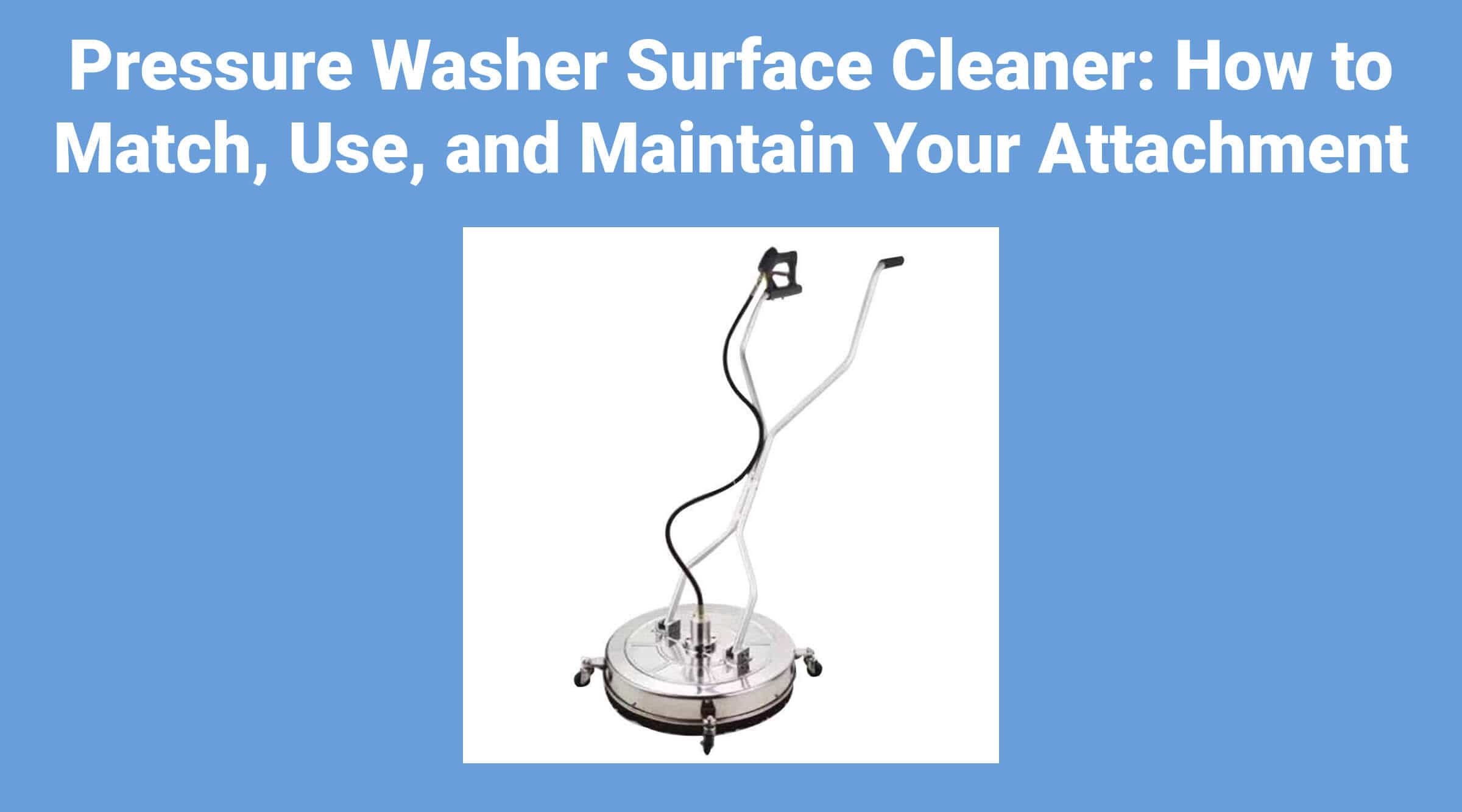
GPM is the critical thermal metric — high flow rates move more heat to the surface. A 4 GPM minimum is standard for commercial work; 8 GPM rigs handle large-scale industrial. Match your burner BTU to your GPM so temperature doesn't drop under load. Gas engines with diesel-fired burners offer the most mobility; all-electric units suit indoor food processing where exhaust is prohibited. Pair any hot water unit with a professional surface cleaner for streak-free results on large flatwork.
Maintenance That Protects Your Investment
Hot water rigs have more failure points than cold units. Staying on top of three areas keeps your rig earning:
- Burner service every 500 hours — inspect electrodes for carbon buildup, replace the fuel filter, clean the fuel nozzle. Sooting is the most common cause of lost temperature.
- Coil inspection — scale buildup inside the coil insulates against heat transfer the same way carbon buildup does outside. Flush annually or when temperature output drops with fuel consumption unchanged.
- Hose and seal integrity — heated water expands, stressing hoses and fittings. Use wire-braided hoses rated for both high pressure and high temperature. Replace O-rings and pump seals on the manufacturer's schedule, not after they fail.
J.Racenstein stocks replacement pumps and pump parts, engine parts, and heating coil components for immediate dispatch. Downtime is lost revenue — having the right parts on hand or one order away matters more than saving a few dollars on off-brand replacements.
Safety Considerations
Water exiting the nozzle at 200°F causes third-degree burns on contact. Heat-resistant gloves and full-coverage protective gear are mandatory, not optional. The expanded volume of heated water also increases stress on the hose line — a burst at 200°F under 4,000 PSI is a medical emergency, not just an equipment failure. Ensure every hose in your system is rated for both the pressure and temperature you're running. Standard cold-water hoses will fail under thermal load.
Beyond the Burner: Engineering a Complete Hot Water Cleaning Rig
A hot water pressure washer is only as effective as the system supporting it. Burner capacity, water storage, plumbing, hose management, and component accessibility all influence how reliably a commercial cleaning rig performs in the field.
ProTool, J. Racenstein's equipment manufacturing brand, takes a complete-system approach to skid and trailer design. Rather than treating each component as a standalone piece of equipment, ProTool focuses on how everything works together, from equipment placement and plumbing to electrical integration, testing, and long-term serviceability.
For a closer look at this approach, explore Beyond the Build: What Makes a ProTool Pressure Washing Skid Different and learn what goes into designing a professional cleaning system.
Products Mentioned
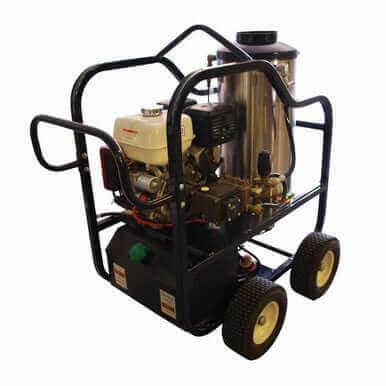 4.0g 4000psi Hot Portable PW SKU: 74-1501 | 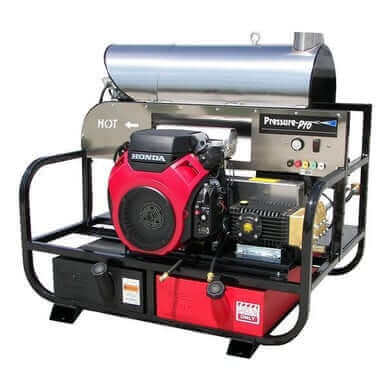 8.0g 3500psi Hot - Tank Draw, 12v SKU: 74-1619 | 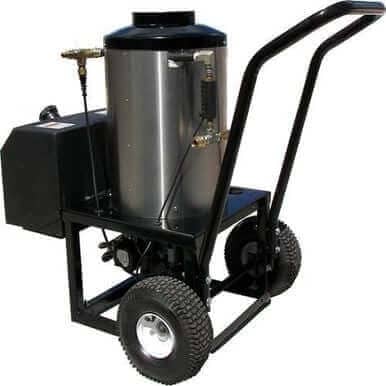 4.0g 4000psi Hot Box 115v 2 wheel SKU: 74-1404 |