Best RODI Purification Cart for Water Fed Pole Cleaning

Table of Contents
- Why an RODI Cart Beats DI-Only for Professional Use
- The 4-Stage Filtration Chain
- Filter Sizing: Why Oversized Components Pay for Themselves
- Frame Construction and Field Serviceability
- Monitoring: TDS Meters and Pressure Gauges
- Maintenance That Extends Equipment Life
- Choosing the Right ProTool RODI Cart
- Products Mentioned
- FAQs
A 0 TDS reading isn't a performance goal — it's the minimum standard. If you've ever finished a route only to watch mineral spotting appear as the glass dries, the problem isn't technique. It's your water. Inconsistent purity means callbacks, and callbacks destroy margins. The right RODI purification cart eliminates that variable entirely.
But "right" depends on your water hardness, daily volume, and how much you want to spend on resin every month. This guide breaks down what actually separates a professional-grade RODI cart from the entry-level units that cost you more in the long run — from filter sizing and membrane protection to frame construction and field serviceability.
Why an RODI Cart Beats DI-Only for Professional Use
The choice between DI-only and a full RODI system comes down to one number: your inlet TDS. If your tap water runs above 100 ppm — and most municipal supplies do — a DI-only tank burns through resin at a rate that makes the math brutal. A bag of virgin resin isn't cheap, and you'll be swapping it constantly.
An RODI cart changes the economics. The RO membrane strips roughly 98% of dissolved solids before the water ever touches the DI stage. The resin only handles the remaining 2% — a polishing job instead of heavy lifting. In hard-water areas, that extends resin life by a factor of ten or more.
The practical payoff goes beyond consumable costs. With 0 TDS water flowing through a water fed pole, you clean windows, solar panels, and building facades from the ground. No ladders. No squeegees on most residential work. Faster completions, lower liability, and a finish that dries spotless without touch-up.
The 4-Stage Filtration Chain
Every stage in a professional RODI cart protects the one downstream. Skip maintenance on any single stage and the most expensive component — the RO membrane — pays the price.
Stage 1: Sediment Pre-Filter
A 5-micron sediment filter catches rust, silt, and particulates before they reach the carbon block or membrane. It's a mechanical barrier — cheap to replace, expensive to skip.
Stage 2: Carbon Block
Municipal water supplies dose chlorine and chloramines to keep the distribution system clean. Those chemicals destroy Thin-Film Composite (TFC) membranes on contact. The carbon block neutralizes them completely before the water moves downstream. If chlorine gets past this stage, you'll be buying a new membrane.
Stage 3: RO Membrane
This is the workhorse. A 4040 RO membrane uses pressure to force water through a semi-permeable barrier, rejecting up to 98% of dissolved solids. The reject water — the concentrate — flushes away carrying the minerals the membrane stripped out. That waste stream is functional, not a flaw.
Stage 4: DI Resin Polish
The final stage uses ion-exchange virgin DI resin to capture whatever the membrane let through. In a properly functioning RODI system, the resin handles a fraction of the original mineral load. Monitor your outlet with an inline TDS meter — when readings consistently climb above 10 ppm, swap the resin.
Filter Sizing: Why Oversized Components Pay for Themselves
Most entry-level carts ship with 2.5" diameter filters. Professional carts use 4.5" x 10" or 4.5" x 20" housings. The difference matters more than the spec sheet suggests.
A 4.5" x 10" housing holds nearly three times the filter media of a 2.5" cartridge. More media means more capacity before saturation, lower pressure drop across the system, and longer intervals between changes. When pressure stays consistent, the RO membrane operates at peak rejection — producing cleaner water with less waste.
The operational difference: fewer filter swaps per season, less time under the van diagnosing pressure drops, and more time on the glass. For high-volume commercial work, step up to 4.5" x 20" housings — the capacity increase is significant enough to run multi-pole crews all day without a mid-shift cartridge change.
Frame Construction and Field Serviceability
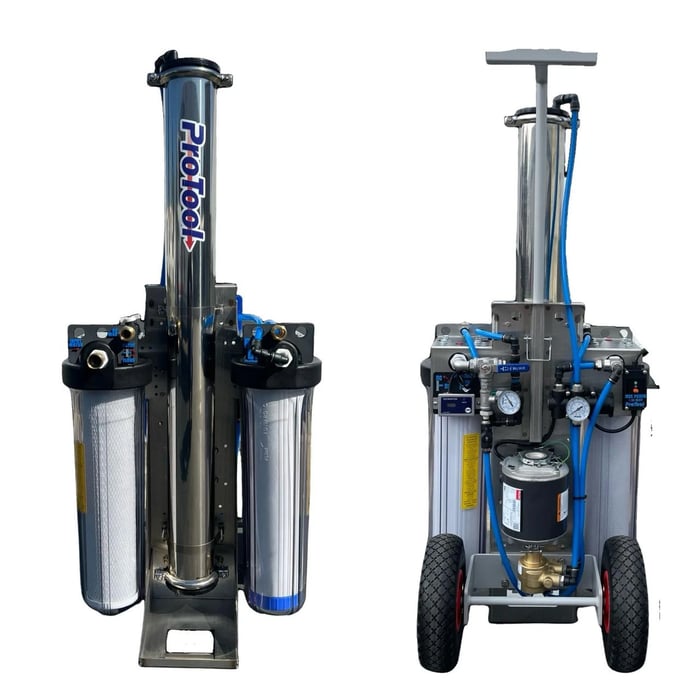
A cart that leaks after three months of bouncing around in a van isn't a bargain at any price. Professional RODI carts use powder-coated stainless steel frames that resist corrosion from constant water exposure and the inevitable jobsite impacts. The frame should hold the filtration housings rigidly — internal plumbing that shifts during transport is the most common cause of fittings working loose and leaking.
Large flat-free wheels matter. You're pulling this cart across gravel driveways, up curbs, and over construction debris. A 10" pneumatic tire picks up nails. A solid flat-free wheel doesn't. Check that the cart's layout puts the center of gravity low and balanced — a top-heavy cart tips, and tipped carts crack housings.
Field serviceability means you can swap a filter or replace an O-ring on-site without special tools. ProTool HiFlo carts use clear-sump housings so you can see the filter condition at a glance, and standard push-fit connectors throughout so a field repair takes minutes, not hours.
Monitoring: TDS Meters and Pressure Gauges
You cannot manage what you don't measure. Two instruments are non-negotiable on a professional RODI cart:
Inline TDS meter. A triple-probe inline TDS meter reads water quality at multiple points in the system — after the RO membrane and after the DI stage. That dual reading tells you whether a rising TDS is a membrane issue or a resin issue. Without it, you're guessing.
Pressure gauges. A pressure gauge on the inlet side tells you whether you have enough pressure to drive the membrane (minimum 50 PSI). A drop in pressure usually means the sediment filter is clogging. A spike can indicate a membrane problem. Either way, the gauge catches it before you notice a quality issue on the glass.
Maintenance That Extends Equipment Life
RO Membrane Flushing
Flush the membrane for several minutes before and after every workday. The flush clears concentrated minerals from the membrane surface and prevents scaling — the leading cause of reduced flow and premature failure. In high-TDS areas, add a mid-day flush.
Pre-Filter Replacement
Sediment and carbon pre-filters are sacrificial. Replace them every 2–3 months or after roughly 5,000 gallons. Verify the carbon stage with chlorine test strips — if any chlorine gets through, the carbon is spent and the membrane is at risk. Don't wait for a schedule; test and replace.
Long-Term Storage
If the cart sits idle for more than two weeks, "pickle" the membrane with a preservative solution to prevent biological growth. Bacteria colonize stagnant membranes quickly, causing permanent fouling and odor.
Winterization
Water expands when it freezes — enough to crack steel pressure vessels and shatter filter housings. Before the first freeze, drain all housings, lines, and the membrane vessel completely. If stored in an unheated space, pump non-toxic RV antifreeze through the entire system. There is no shortcut here.
Choosing the Right ProTool RODI Cart
ProTool builds every cart in the line for field durability first. The choice comes down to your volume requirements and crew size.
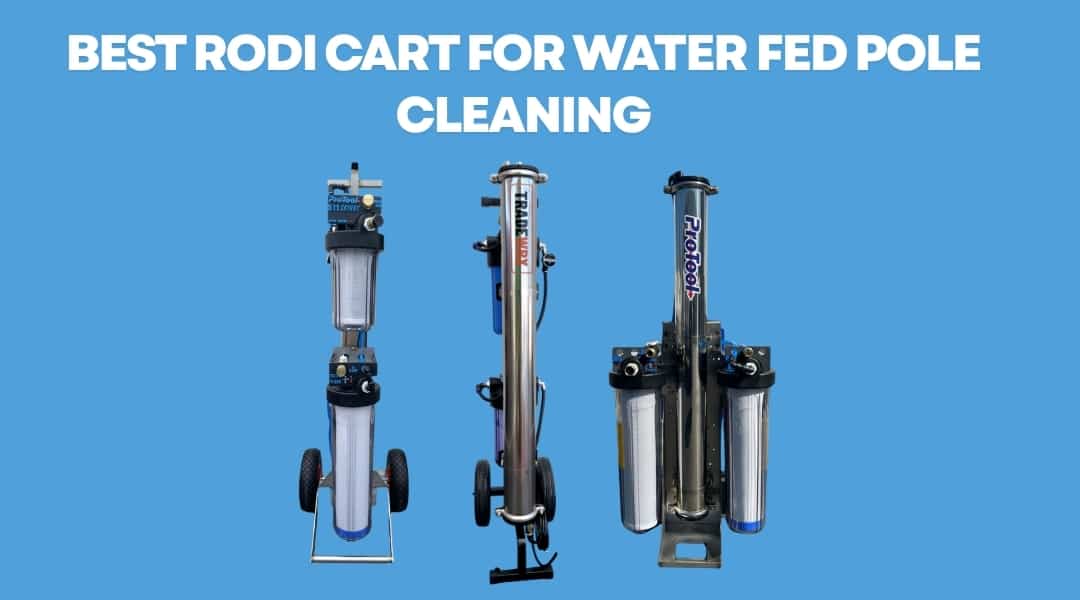
The ProTool 511 is the entry point for solo operators — compact, stainless steel frame, oversized filtration, and enough output for single-pole residential work. It rolls through a standard gate and fits in most vans without removing components.
The ProTool HiFlo steps up to high-flow RO membranes and can feed two poles simultaneously on commercial routes. The clear-sump housings and integrated TDS monitoring make field diagnostics fast.
For crews running three or more poles, the ProTool HiFlo MAX with a 110V boost pump maintains consistent pressure and flow even on sites with poor municipal supply. It's the commercial workhorse.
Every cart ships with a complete ProTool pure water kit option that bundles the cart with matched poles, brushes, and delivery hose — engineered as a single system so you're not guessing at compatibility.
For operations that have outgrown carts entirely, ProTool HydroPanel wall mounts and pure water skids provide permanent or truck-mounted RODI production at higher GPM with integrated delivery reels.
J.Racenstein stocks every replacement filter, membrane, and fitting these systems use. When a sediment filter needs swapping mid-route, you're not waiting on a third-party backorder — you're ordering from the same source that built the cart.
Products Mentioned
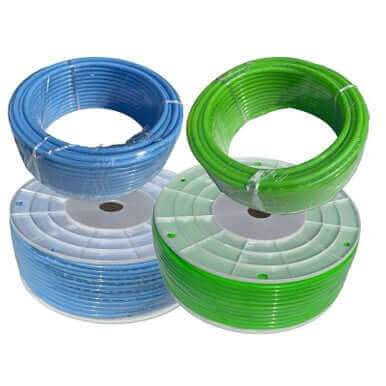 ProTool Water Fed Hose SKU: 151-02M | 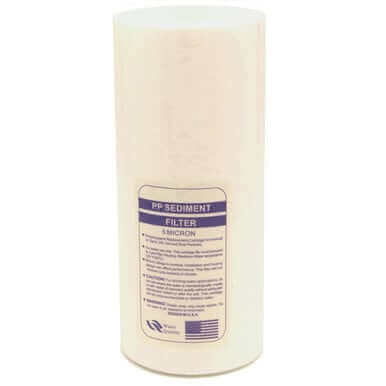 ProTool Sediment Filter 4.5in x 10in SKU: 150-005 | 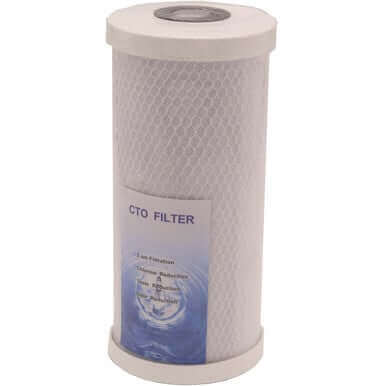 ProTool Carbon 4.5 inch x 10 inch Water Filter Cartridge SKU: 150-006 |
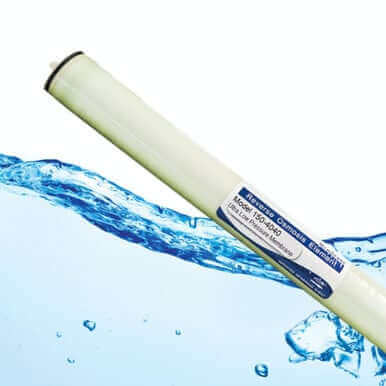 ProTool RO Membrane 4040 Ultra Low Pressure SKU: 150-4040 | 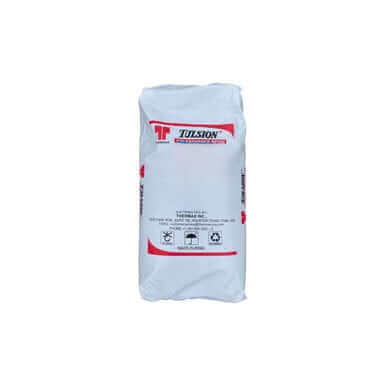 Resin DI Cubic foot - New Virgin Resin SKU: 150-040 | 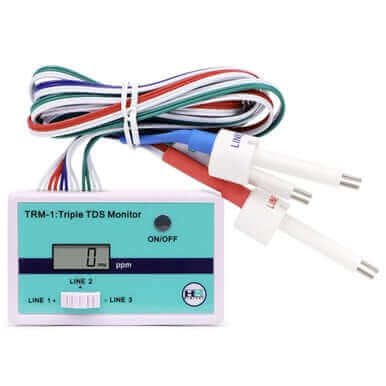 TDS Inline MeterTriple 1/4in Probes SKU: 150-017 |
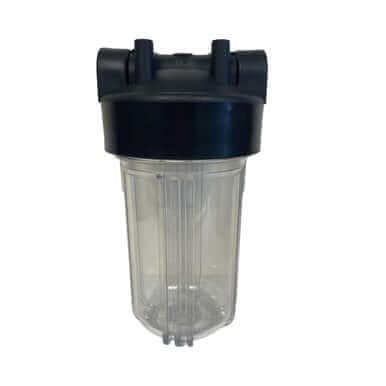 ProTool Filter Housing for 4.5 x 10 Filters with Clear Sump SKU: 150-03710 | 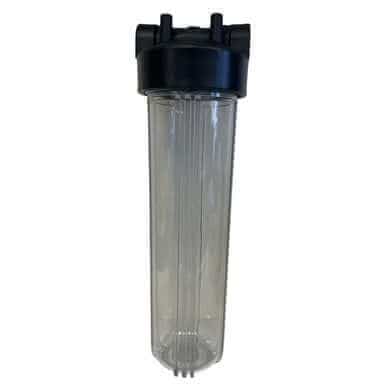 ProTool Filter Housing 4.5in x 20in with Clear Sump SKU: 150-03711 | 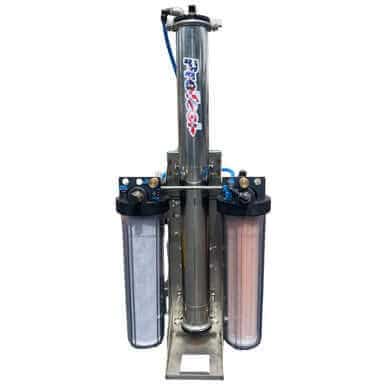 ProTool HiFlo Pure Water Cart Stainless Steel SKU: 150-0521 |
 TradeWrx Inline TDS Meter LED SKU: 150-0194 | 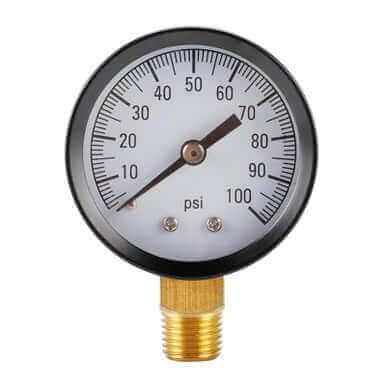 ProTool Pressure Gauge 100psi Max 1/4in SKU: 150-0392 | 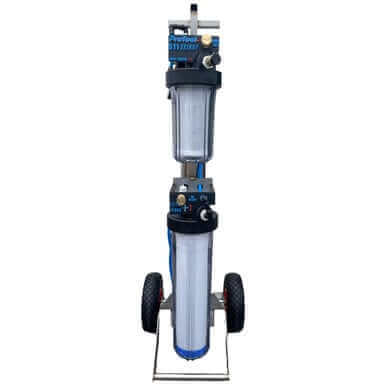 ProTool 511 Pure Water Cart SKU: 150-0515 |
ProTool HiFlo Pure Water Cart Stainless Steel SKU: 150-0521 | 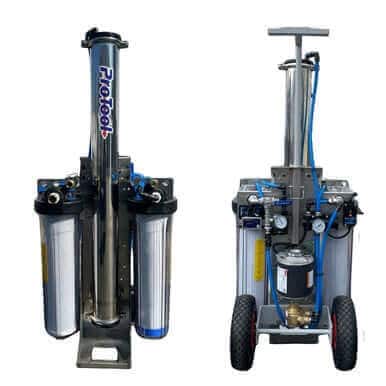 ProTool HiFlo Pure Water Cart MAX SS 110V SKU: 150-0523 | 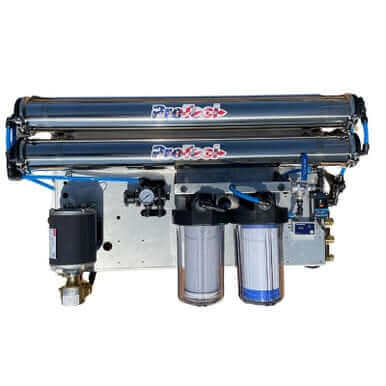 ProTool HydroPanel RODI Wall Mount SKU: 150-05346M |
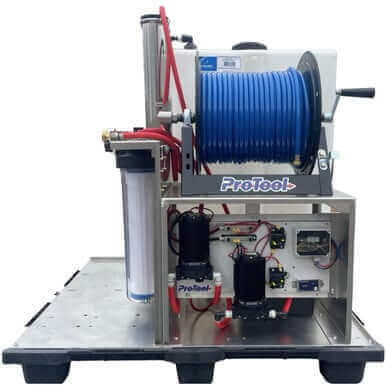 ProTool Pure Water Skid Single User with 1 Reel SKU: 150-0461 |