Commercial Window Cleaning Equipment: What Separates Pro Gear from Everything Else
Table of Contents
Commercial window cleaning equipment isn't a scaled-up version of residential gear. It's a different category entirely — engineered for continuous daily use, chemical exposure, UV degradation, and the mechanical stress of cleaning hundreds of panes per shift. The gap between consumer tools and professional-grade equipment shows up fast: mid-job failures, premature rubber wear, flexing channels that leave streaks on plate glass. If your equipment can't survive a full commercial contract without downtime, it's costing you more than the invoice says.
This guide covers what matters for building a commercial equipment roster in 2026: material standards, pure water system selection, height-based equipment tiers, safety compliance, and sourcing strategy.
Why Commercial-Grade Equipment Is a Different Category
The defining spec is duty cycle. A residential squeegee might see ten hours of use per year. Commercial gear runs eight-hour shifts, five days a week, across contracts that punish weak materials. Residential-grade polypropylene and thin-walled aluminum crack under UV exposure and aggressive surfactants. Professional-grade polymers include UV stabilizers. Load-bearing components use 304 stainless steel, tempered brass, or high-modulus carbon fiber — materials chosen for rigidity-to-weight ratio, not sticker price.
That weight difference compounds. Shaving a few ounces off a squeegee handle or T-bar reduces cumulative fatigue across a full shift, lowering repetitive strain risk and keeping production rates steady into the afternoon.
Channel Rigidity and Handle Mechanisms
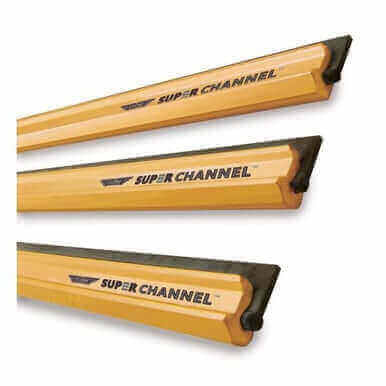
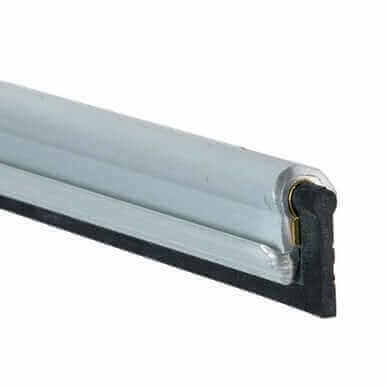
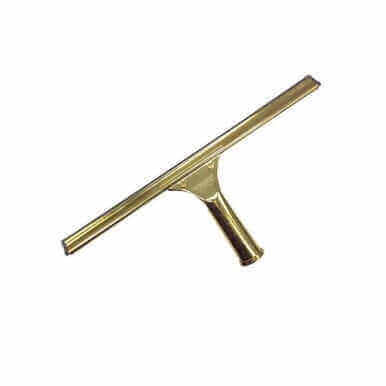
Commercial squeegee channels must resist flex across large plate glass. A bowing channel creates uneven pressure — streaks — which means re-work and lost time. The Ettore Super Channel and Pulex Alumax are built for this: aircraft-grade aluminum that holds its line across 22" or wider panes.
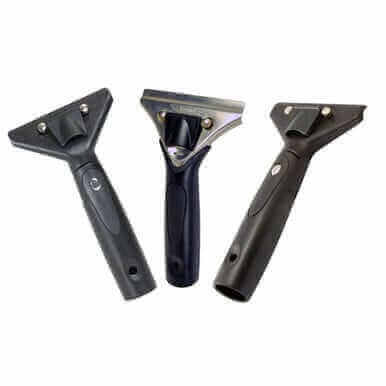
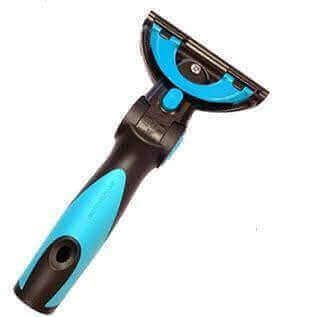
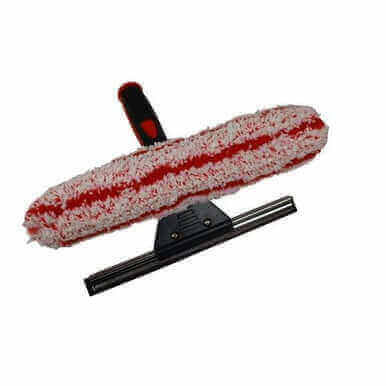
Handle mechanisms matter just as much. Consumer handles use screw-down clamps. Professional quick-release handles — like the Ettore Pro+ Super System or the Moerman Excelerator 2.0 — let a tech swap channels or adjust offset angles in seconds. On a 200-pane storefront route, those seconds add up to an extra job per day.
Modularity and Cost-Per-Job
Consumer tools are disposable. When a component fails, you throw the whole thing out. Professional equipment is modular: blades, clips, springs, grips, rubber — every part is individually replaceable. A Pulex TechnoDuo or Ettore Complete Squeegee will outlast dozens of consumer tools because you're replacing consumables, not the whole unit.
Calculate cost-per-job, not purchase price. Equipment rated for 2,000+ annual service hours is an asset. Everything else is a recurring expense.
Pure Water Systems vs. Traditional Tools
This isn't an either/or decision. Most commercial crews run both.
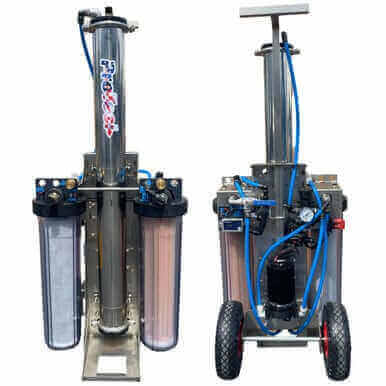
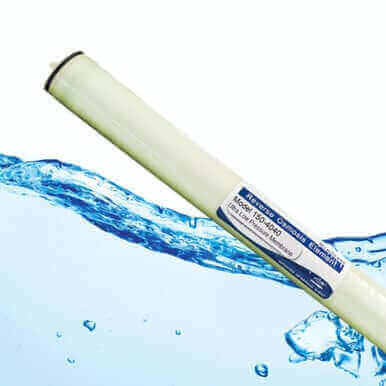
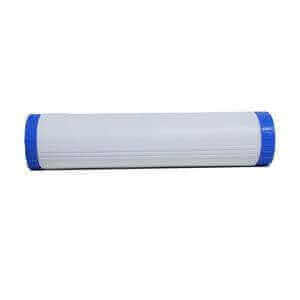
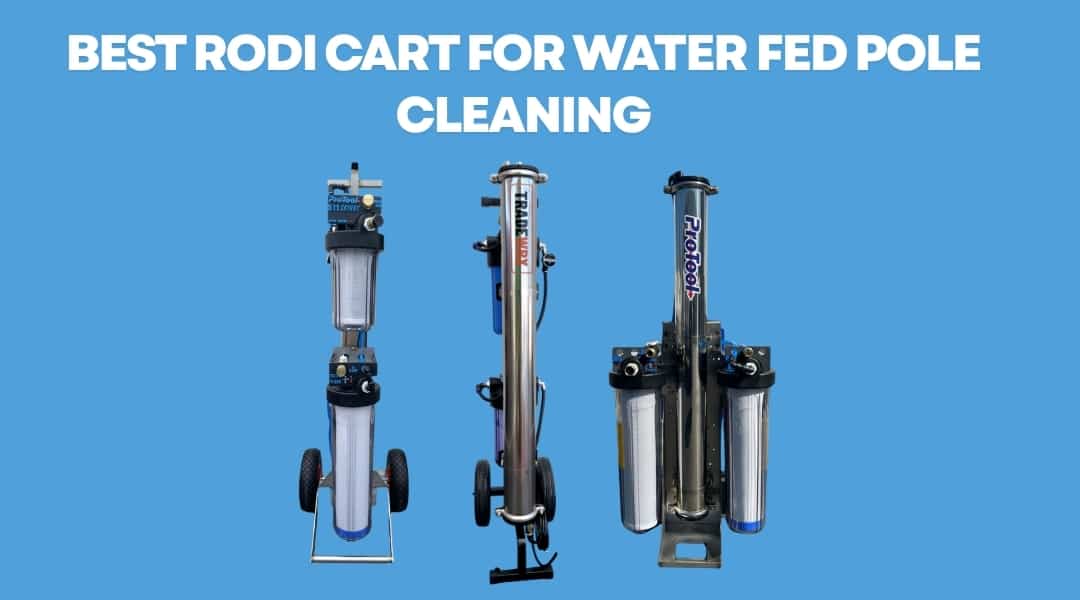
Pure water — using RO (reverse osmosis) and DI (deionization) filtration — eliminates mineral content so water dries spot-free without toweling. DI resin handles immediate ion exchange; RO membranes strip roughly 90% of dissolved solids before the water reaches the resin. In hard-water markets, running DI-only burns through resin fast. A multi-stage RO/DI system like the ProTool HiFlo Ultra Cart protects resin life and keeps operating costs predictable.
Traditional tools remain essential for interior glass, ground-level storefronts where water runoff must be controlled, and detail work visible at eye level. The right approach is building your roster for both: pure water for exterior production, traditional for precision.
Water-Fed Pole Selection
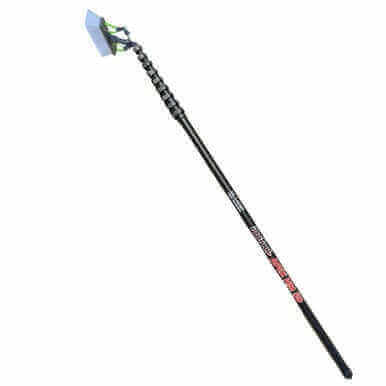
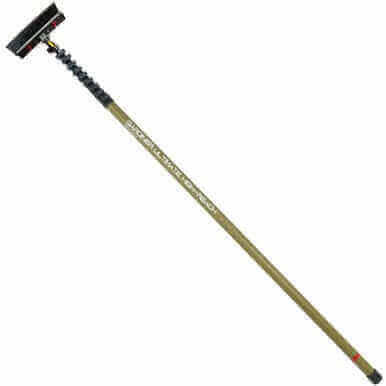
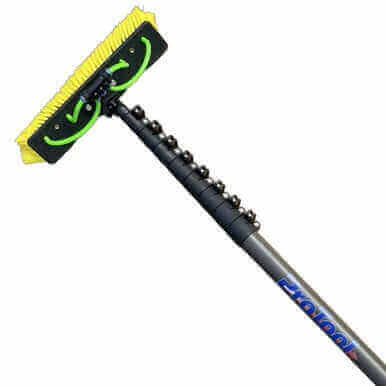
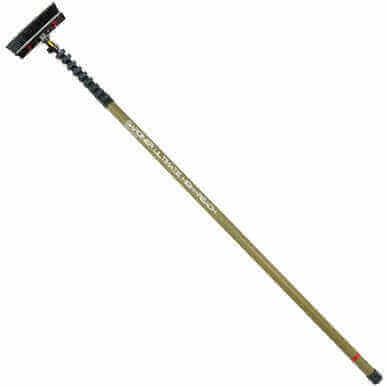
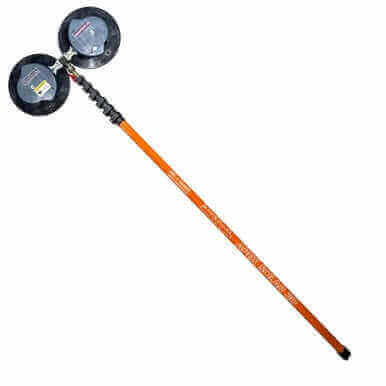
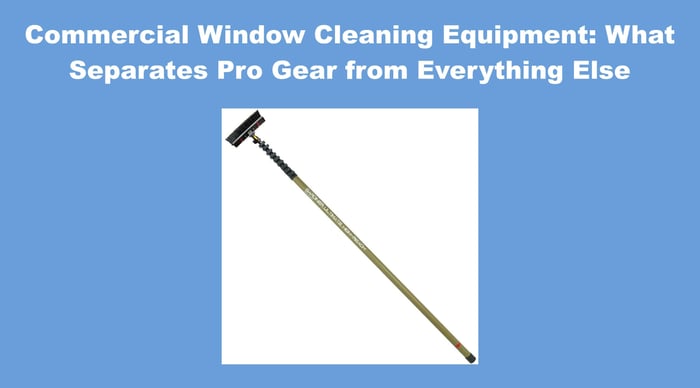
Pole performance comes down to carbon fiber modulus. Low-mod poles flex — "whip" — above 30 feet, making brush control inconsistent. High-mod poles like the ProTool Apex Hi-Mod or Gardiner Ultimate 57ft maintain stiffness at full extension, so you get consistent pressure against the glass even at 50+ feet.
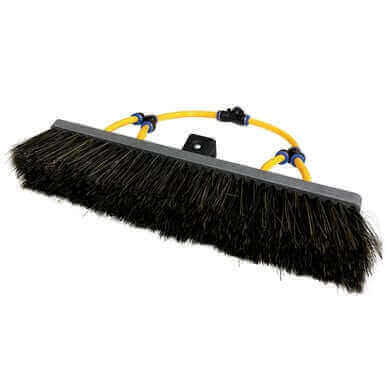
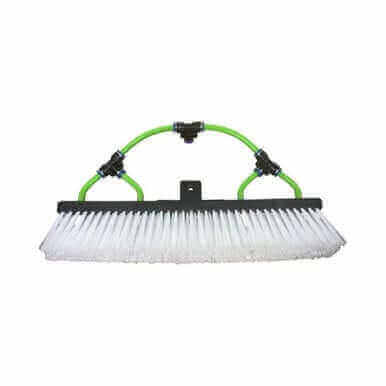
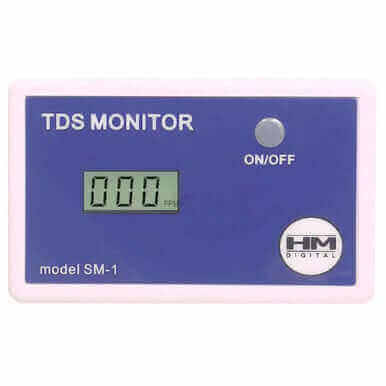
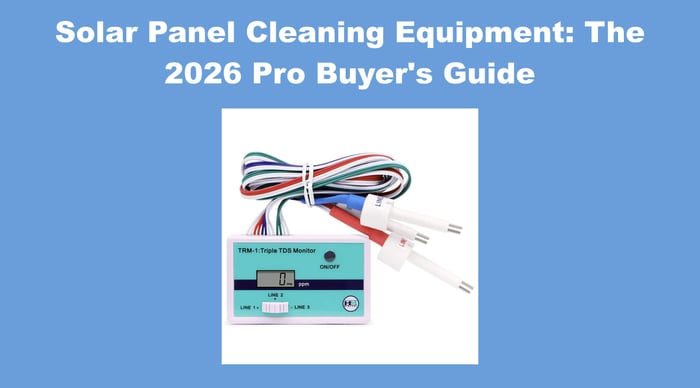
Brush choice depends on soil load. Boar's hair brushes handle heavy organic buildup. Nylon bristle brushes glide better on routine maintenance cleans. Monitor output with a ProTool inline TDS meter — anything above 000 PPM means your resin or membrane needs attention.
Traditional Tools for Detail Work
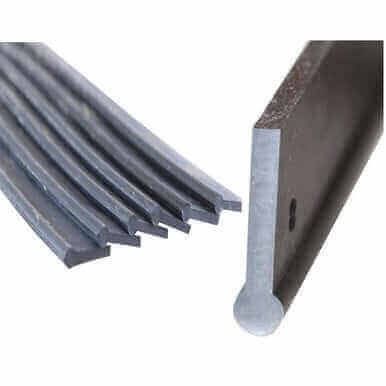
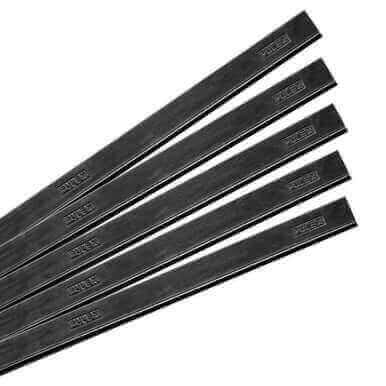
Interior glass and storefront routes still demand squeegee mastery. Stock professional rubber — Ettore Master, or Pulex,— in both soft and hard compounds. Soft rubber grips better in cold weather; hard rubber holds its edge longer in heat.
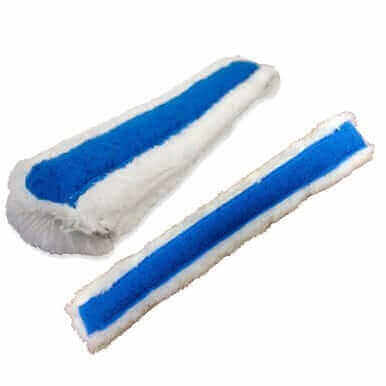
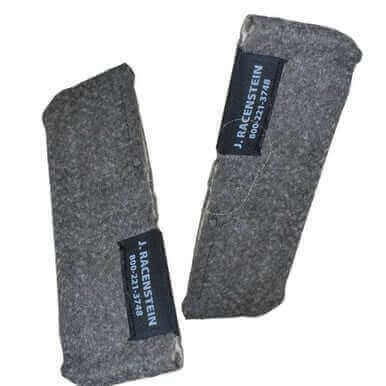
For construction cleans or heavy residue, abrasive strip sleeves provide scrubbing power without scratching. For paint, tape adhesive, or silicone overspray, 0000 steel wool sleeves polish glass clean — provided the surface stays lubricated.
Matching Equipment to Building Height
Equipment tiers map directly to building height. Over-investing in gear you don't need for your market is as wasteful as under-equipping for jobs you can't reach.
Ground-Level and Storefront
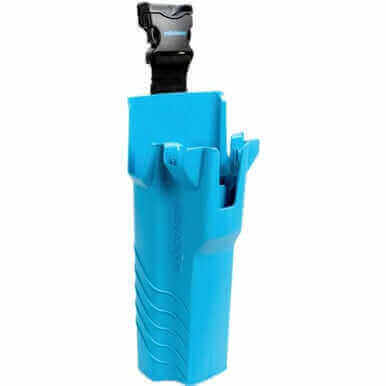
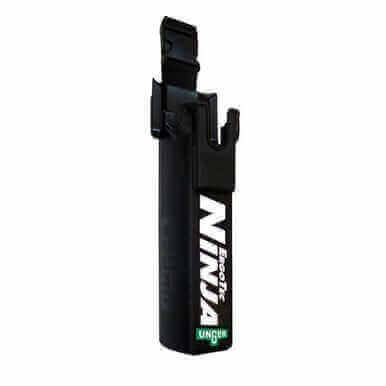
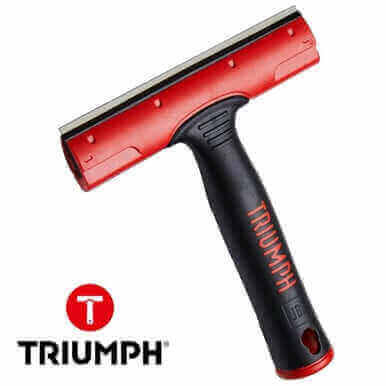
This is production-volume work. Speed comes from organization: a Moerman Side Bucket on a Belt or Unger Ninja BOAB keeps tools accessible and hands free between panes. Professional window cleaning soap cuts commercial grime — vehicle exhaust, oily film, mineral deposits — that consumer dish soap can't emulsify. For tape, decals, and paint overspray, a Triumph MK3 6" scraper with stainless steel blades removes debris without scratching tempered storefront glass.
Mid-Rise: 3–5 Stories
This is where water-fed poles replace ladders for most of the work. A 30-foot hi-mod pole covers three stories from the ground. Four to five stories requires 40–50 feet of reach — the ProTool 50ft HM Carbon Pole or Gardiner Ultimate 46ft handle this range without excessive flex.
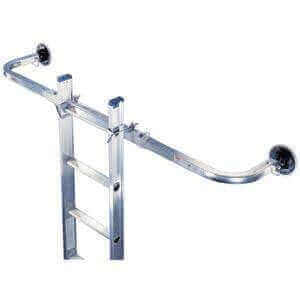
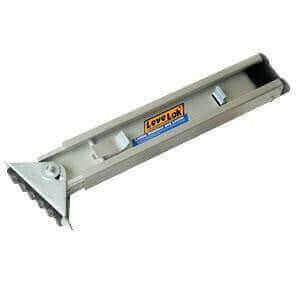
When ladders are necessary, ProTool Ladder StandOffs and LeveLok levelers provide stable contact points. Any roof access demands proper fall protection — harnesses, lanyards, and certified anchor points — as a non-negotiable baseline.
Specialty: Solar Panels and Skylights
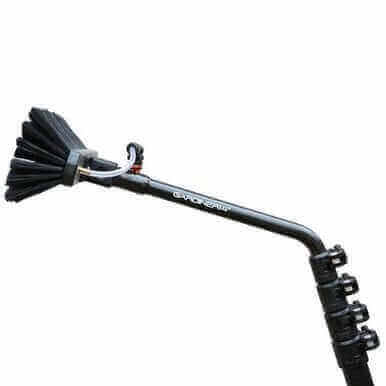
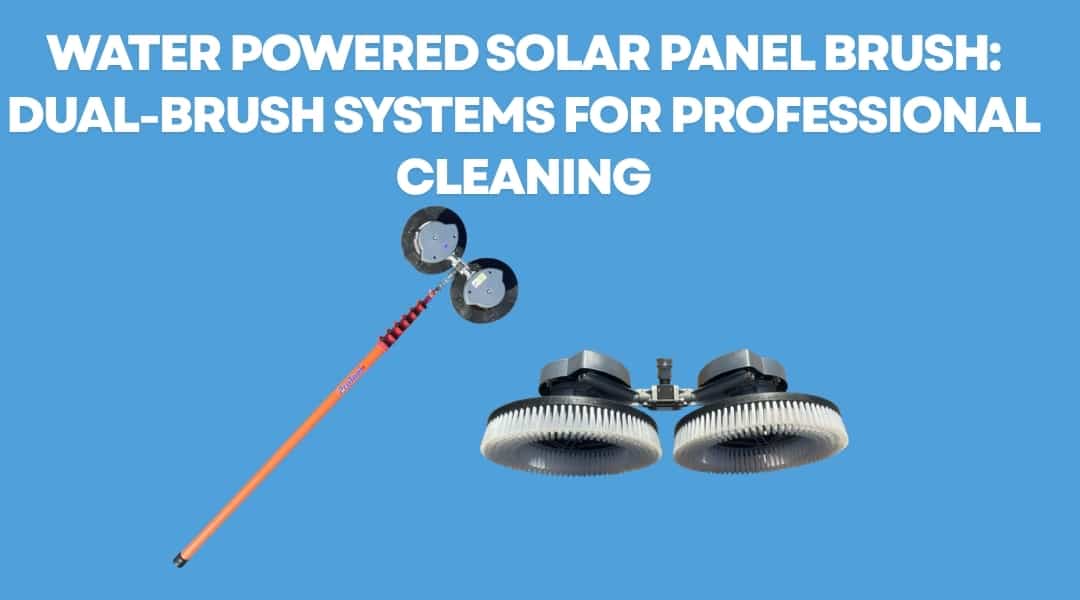
Solar arrays and skylights require different brush geometry and flow rates. The ProTool DualForce 25 counter-rotating brush handles delicate panel surfaces at high flow without damage. For awkward skylight angles, Gardiner carbon goosenecks with Quick-LoQ adapters reach where straight poles can't.
Safety Compliance and Equipment Maintenance
Maintaining commercial equipment isn't optional polish — it's a legal obligation tied to your insurance, your OSHA compliance, and your crew's physical safety.
Daily Inspection Routine
Every shift starts with a check of load-bearing components. For pure water systems: verify TDS readings, check filter pressure, inspect membrane housings for leaks. RO membranes need regular flushing to prevent mineral scaling. DI resin cartridges get replaced when TDS output climbs above 000 PPM — not when the water "looks fine."
For traditional tools: inspect squeegee channels for bends, check rubber edges for nicks or rounding, verify handle latch engagement. A bent channel or worn rubber means streaks, re-work, and lost production.
Fall Protection and OSHA/ANSI Compliance
Fall arrest systems — harnesses, shock-absorbing lanyards, certified anchors — must be inspected before every use. Check webbing for cuts, abrasion, UV damage. Verify buckle function. Inspect anchor point certification dates. High-visibility apparel and site signage are required for ground-level work in traffic areas.
Document every inspection. A digital or physical log proves compliance during audits and protects your business if an incident occurs.
Vehicle Storage and Spare Parts
Transit vibration loosens connectors and causes micro-cracks in carbon fiber if poles aren't racked properly. Dedicate storage bins for rubber, O-rings, and small components — temperature swings and chemical exposure degrade them fast in an unorganized van.
Stock critical spares: O-rings, clamps, replacement rubber, filter cartridges. A $3 O-ring failure that shuts down a $400/day crew is an expensive lesson you only need once.
Sourcing Commercial Equipment
A single-brand catalog limits your options. Commercial work demands component-level selection: a specific pump flow rate, a particular carbon modulus, the right brush bristle for the soil type. J.Racenstein stocks multiple professional brands — ProTool, Gardiner, Ettore, Unger — so you pick the best tool for each application, not the only tool available.
For crews scaling from residential to commercial, complete ProTool pure water kits bundle filtration, poles, brushes, and delivery hose into tested configurations. For operators who already know exactly what they need, individual components ship from maintained inventory — no backorder delays stalling your crew.
Custom Builds and Support
Generic starter kits cut corners. A crew in Phoenix running hard water needs more RO membrane capacity than a crew in Seattle. A contractor servicing five-story office parks needs different pole specs than one running strip-mall routes. ProTool custom builds let you spec equipment to your actual operating conditions — water hardness, building height, crew size, vehicle space — instead of adapting your workflow to somebody else's generic bundle.