Window Cleaning Scheduling Tips That Build Predictable Revenue

Table of Contents
Every minute your van idles in traffic or sits parked because of a pop-up storm is revenue you never recover. For professional window cleaners, window cleaning scheduling tips aren't administrative polish — they're the difference between a crew that bills seven hours a day and one that bills four. Route gaps, weather cancellations, and mismatched equipment eat margins faster than any price competition.
This guide covers the scheduling decisions that move the needle: route density, weather pivots, equipment-to-calendar alignment, and the CRM workflows that hold it all together.
Why Scheduling Is a Profit Lever, Not an Admin Task
The metric that matters is squeegee-on-glass time versus windshield time. Driving between sites is non-billable: it burns fuel, adds vehicle wear, and compresses the hours you can actually invoice. A crew that shaves ten minutes of drive time between each of six daily stops reclaims a full hour of production — roughly one additional job per day.
Professional scheduling accounts for variables a basic calendar ignores: crew certifications (high-rise work demands fall protection gear and training), equipment inventory (two crews can't share one water fed pole system), and site access logistics. A crew arriving at a gated estate without a gate code wastes thirty minutes and cascades every appointment behind it.
Commercial vs. Residential Rhythm
Commercial storefronts on weekly or bi-weekly cycles create a baseline of recurring revenue that persists when residential demand dips. Residential jobs — typically semi-annual — carry higher per-job margins but are seasonal and weather-sensitive. A strong schedule layers both: commercial routes fill the floor, and residential work stacks on top during peak months.
Weather-Adaptive Scheduling
Rain: Pivot, Don't Cancel
Light rain is workable with a pure water system — mineral-free water doesn't spot glass. The spots clients complain about after rain land because raindrops hit existing grime on frames and sills, not because the rain itself is dirty. Educating clients on this saves you constant rescheduling.
Heavy downpours call for an "Interior Only" fallback. Maintain a running list of clients who need interior glass, tracks, and sills. When exterior conditions shut you down, pull from that list and keep every tech billable. A 48-hour rain guarantee — promising to touch up any storm-caused spots — keeps the original job on the books and prevents the administrative nightmare of cramming a lost day into a packed future week.
Wind and Heat Protocols
Wind above 20–25 mph is a hard stop for ladder work and rope descent systems. OSHA 1910.27 governs this. No schedule is worth a technician losing control at height.
Heat management is subtler. Schedule the sun-facing elevation for early morning before solutions flash-dry and streak. This matters even more for solar panel cleaning — cold water on a sun-baked panel risks thermal micro-cracking. Clean arrays at dawn. As the sun moves, shift crews to shaded elevations. Mandatory hydration breaks in peak summer aren't just compliance; fatigued techs slow down and make errors that cost more than the break itself.
Matching Equipment to the Calendar
The tool you deploy determines whether a job takes ninety minutes or four hours. Scheduling without accounting for equipment capability is guessing.
Water Fed Pole vs. Traditional: The Time Math
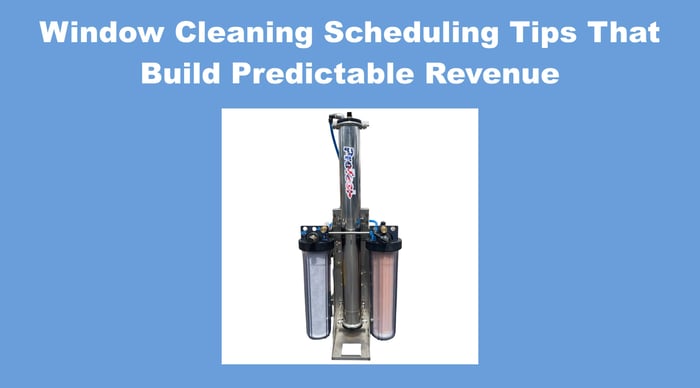
A standard 2,500-square-foot residential exterior takes a solo tech 3.5–5 hours by ladder and squeegee. The same property often clocks under 90 minutes with a high-mod carbon pole like the ProTool Apex Carbon Fiber Pole fed by a ProTool HiFlo Pure Water Cart. That's roughly 60% less time — which means two large residentials in a morning instead of one.
Traditional squeegee work stays essential for interior glass and storefronts where water control matters. The scheduling takeaway: know which method each job demands before booking it, and allocate time accordingly. Post-construction cleanups or heavy hard-water jobs requiring 0000 steel wool or scrapers need additional time blocks — don't let them cascade into the next appointment.
Equipment Maintenance Windows
A blown pump hose or a depleted DI resin cartridge at 9 AM wipes out the day. Schedule maintenance like a billable task:
- Daily: TDS readings during morning load-out. Inspect hoses for abrasion, check squeegee rubber for nicks.
- Weekly: Flush filtration systems. Inspect fall protection hardware for wear.
- Monthly: Inventory restock — replacement rubber, surgical huck towels, chemicals, filters. Order before you run out, not after.
Maximizing Route Density
Route density is the single biggest lever for net margin. Every mile you don't drive stays in your profit column.
Geographic Clumping
Assign specific zip codes to specific days. If Tuesday is the Westside, every Westside client books on Tuesday — no exceptions. When a gap opens in a target neighborhood, fill it with localized prospecting: door hangers, neighbor referrals, or a quick knock while you're already on the block. Adding one job to a route where travel is already covered by existing clients can add meaningful annual revenue per crew with zero additional fuel cost.
The "cloverleaf" approach works well for expansion: anchor on a large estate or commercial complex, then market outward in concentric rings. Since the van is already on-site, upselling gutter cleaning or a driveway rinse with your pressure washing equipment adds ticket value without adding drive time.
Frequency Management
Lock commercial clients into subscription billing — weekly or bi-weekly — so baseline overhead is covered before the month starts. For residential clients on semi-annual cycles, reach out in January or February to pre-book spring cleanings. This prevents your April calendar from becoming a bottleneck and reserves peak slots for new, higher-margin leads. The "feast or famine" cycle is a scheduling problem, not a demand problem.
CRM and Digital Workflow
Paper calendars and spreadsheets break the moment you add a second crew. Dedicated field-service CRM platforms (Jobber, Housecall Pro, or similar) centralize routes, job history, equipment notes, and client data in one place — accessible to every tech in the field.
Field Tech Workflow
Digital job folders give techs site-specific data before they arrive: gate codes, prior-visit photos, safety requirements, window counts. Real-time clock-in/clock-out tracking lets you compare estimated versus actual time on every job. When a job consistently runs 20% over estimate, you adjust the baseline — preventing future cascading delays and unpaid overtime. Before-and-after photos captured in-app protect against liability claims for pre-existing damage.
Client Communication Automation
Automated SMS reminders 24–48 hours before service cut no-shows and access issues. "On My Way" notifications add a professional touch without a manual phone call. Post-job automation — immediate digital invoice plus a prompt to book the next recurring visit — locks in your next service date while the value of today's work is still fresh. That single automated follow-up is the easiest recurring-revenue tool you'll ever deploy.
Putting It Together
Scheduling is where operational discipline meets revenue growth. Tighten your geographic focus, match your gear to each job type, build weather fallbacks into every week, and let a CRM handle the communication overhead. The result is more billable hours per crew, fewer surprise cancellations, and a monthly revenue floor you can plan around.
Reliable gear keeps an aggressive schedule on track. Browse water fed poles, pure water systems, and professional window cleaning tools at J.Racenstein — built for the production rates a tight route demands.
Products Mentioned
 ProTool Apex Carbon Fiber Water Fed Pole SKU: 151-32M | 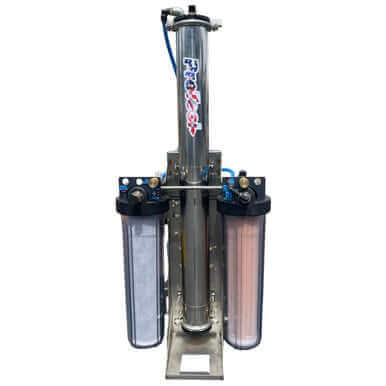 ProTool HiFlo Pure Water Cart Stainless Steel SKU: 150-0521 |  ProTool Steel Wool Bag 0000 SKU: 26-20 |
 ProTool Towel Surgical New per LB SKU: 24-33 |