Water Fed Poles for Solar Panel Cleaning: Equipment, Technique, and Setup
Table of Contents
Water fed poles for solar panel cleaning solve a problem that pressure washers and garden hoses cannot: delivering purified water to angled glass at height without cracking tempered surfaces, voiding warranties, or putting technicians on roofs. The pole's rigidity, the water's purity, and the brush's filament type each determine whether you leave panels at peak output or create micro-fractures that silently bleed efficiency for years.
This guide covers pole material selection, multi-stage RO/DI filtration, brush technique for PV coatings, and how to build a professional solar cleaning kit from J.Racenstein's solar cleaning lineup.
Why Water Fed Poles Beat Every Other Method on Solar
A water fed pole is a purified-water delivery system. It transports 0 ppm TDS water to the panel surface through internal tubing, where a brush provides gentle mechanical agitation and a rinse bar flushes debris downward. No squeegee, no detergent, no roof access.
That last point matters more than convenience. OSHA fall protection requirements for roof work mean harnesses, anchors, or scaffolding — all of which eat margin. A 40–50 ft carbon pole lets one technician clean an entire residential array from the ground in a fraction of the time, with zero fall exposure.
What Soiling Actually Costs
Dust, pollen, bird droppings, and industrial fallout form a film that reflects or absorbs incoming radiation before it reaches the silicon cells. In high-pollution or agricultural zones, heavy soiling cuts energy production by 20% or more. Light rain doesn't fix it — it turns accumulated dust into a baked-on mud film that's worse than what was there before. Professional wet cleaning remains the only reliable method for restoring full light transmission and protecting the asset owner's ROI.
Why Consumer Tools Damage Panels
Consumer-grade pressure washers crack tempered glass and blow out frame seals. Cold hose water on sun-heated glass causes thermal shock — invisible micro-fractures that degrade electrical output permanently. Household detergents leave sticky residue that attracts more dust within days. A professional water fed pole paired with pure water leaves the glass chemically neutral and physically intact. That distinction is what separates maintenance from damage.
Pole Material and Reach: Carbon Fiber vs. the Rest
Solar work punishes poles differently than window cleaning. Instead of near-vertical extension, you're pushing a brush at 30–45° across angled glass. That orientation multiplies gravitational deflection — the flex or "bounce" in the pole sections. Excessive deflection makes it impossible to hold consistent brush pressure, which means inconsistent cleaning and faster operator fatigue.
Weight alone doesn't tell the story. Outer diameter matters for grip during wet shifts. A pole that's too thin cramps hands and kills control. A well-balanced base diameter gives better torque for horizontal sweeps across large arrays.
Three Material Classes
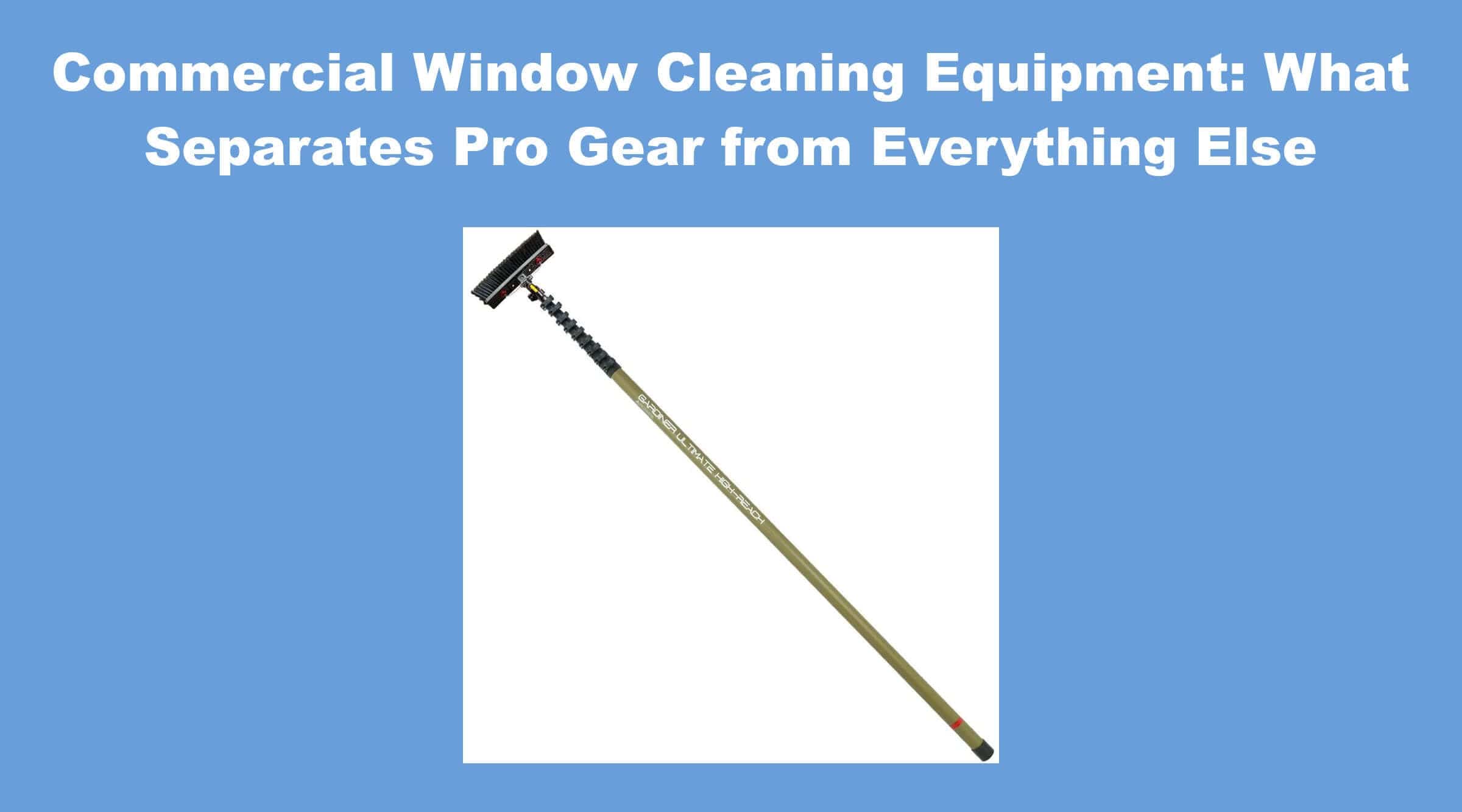
- High-modulus carbon fiber — the standard for commercial work above 50 ft. Highest stiffness-to-weight ratio, virtually no whip. The ProTool Apex Hi-Mod Carbon Fiber Pole is purpose-built for this: rigid enough for extended horizontal reaches on ground-mount farms, light enough for full-shift use.
- Hybrid (carbon/fiberglass) — workable for residential-scale solar. Less rigid than full carbon, so deflection increases at longer extensions. The Gardiner CLX 27ft Carbon Composite fits this tier for shorter-reach residential jobs.
- Aluminum — heavy, and electrically conductive near high-voltage PV arrays. Safety-conscious operators avoid it entirely on solar.
Calculating Effective Reach
A 40 ft pole doesn't cover 40 ft of horizontal roof space when you're working at an angle. You must account for standoff distance from the building, panel pitch, and the height of the array's top edge. For ground-mount farms, shorter, stiffer poles maximize speed and downward pressure. If your contracts span residential rooftops and commercial farms, a system that supports bolt-on extensions — like the Gardiner Modular Pole Extender — lets you scale reach without buying multiple base units.
Pure Water Filtration: RO/DI Systems for Solar
Standard tap water leaves mineral deposits — calcium, magnesium, silica — that crystallize into white spots as the water evaporates. Those spots obstruct sunlight and reduce output. Purified water (0 ppm TDS) is a "hungry" solvent: it actively attracts and suspends dirt, pollen, and pollutants, then evaporates clean. No squeegee pass needed. On a 500-panel commercial array, eliminating the squeegee step alone can save hours per visit.
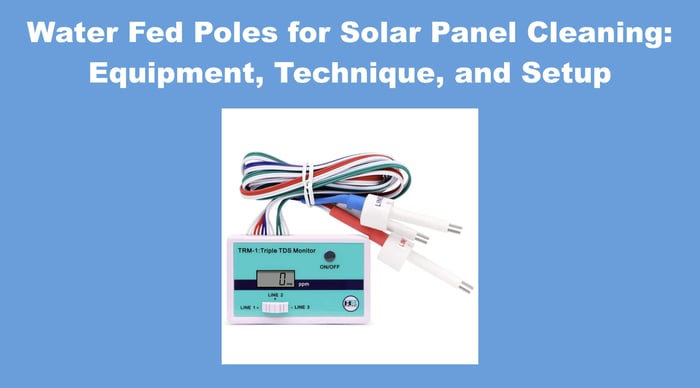
IEC 62446-1 suggests a 50 ppm limit. Professional operators target 0 ppm. Monitor with a calibrated TDS Inline Meter — it's the only way to verify filtration performance in real time and avoid costly recleans.
DI-Only vs. RO/DI
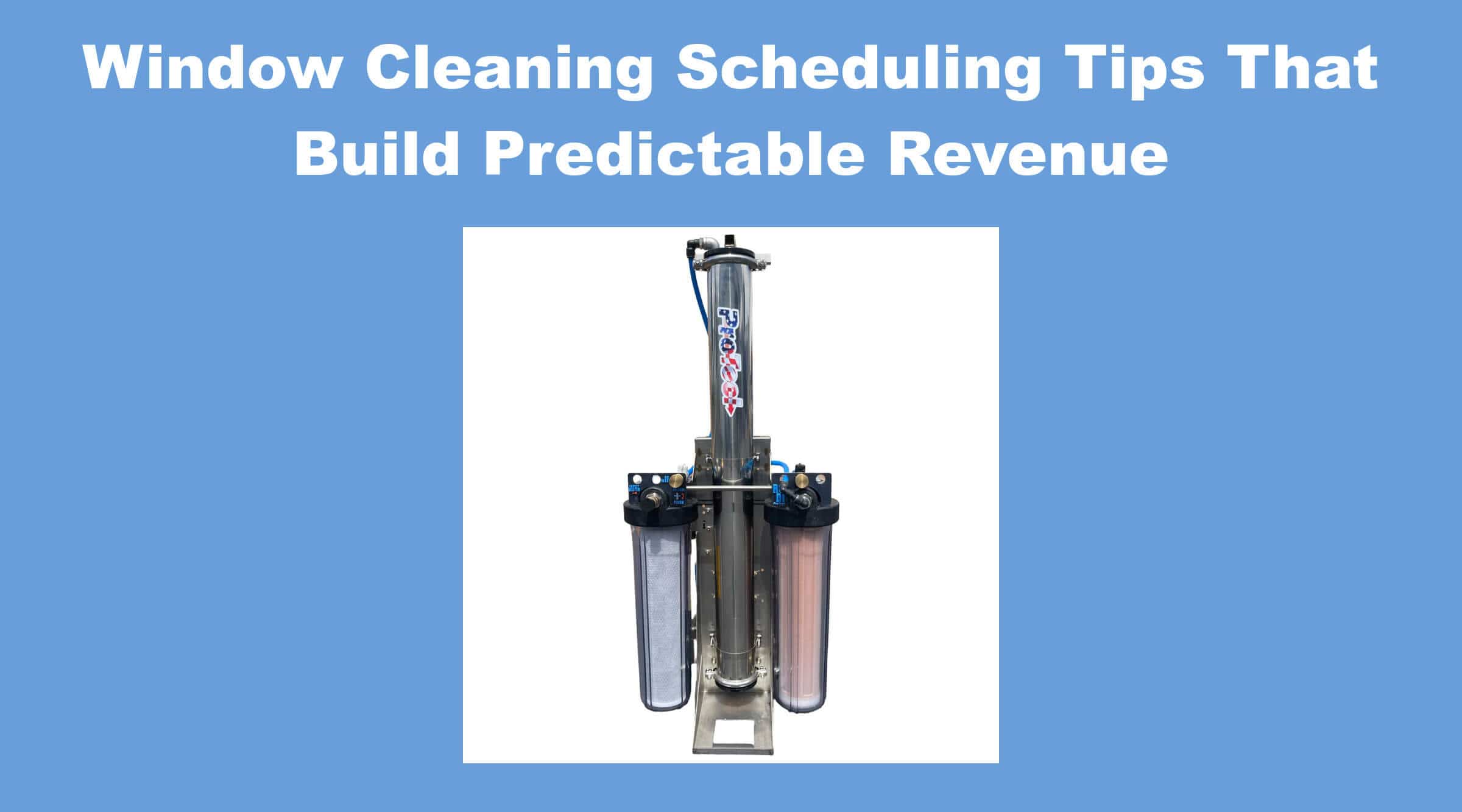
Single-stage DI is portable and cheap upfront. It works where tap TDS is under 100 ppm. Above that, resin exhausts fast and consumable costs spike. Multi-stage RO/DI — where a reverse osmosis membrane strips ~95% of contaminants before the DI resin polishes the remainder — is the production standard. It extends resin life dramatically and delivers consistent quality regardless of municipal water variation. The ProTool HiFlo Pure Water Ultra Cart packages dual RO membranes, carbon/sediment pre-filtration, and DI polishing into a stainless steel cart ready for truck mounting.
Maintaining Flow at Height
Friction loss through long hose runs kills flow at the brush head. On high-reach or utility-scale sites, a ProTool 90psi 5.0gpm Regulated Pump or a 110V Booster Pump maintains the PSI needed for effective rinsing. Balance hose diameter against operator weight: a thinner pole hose is lighter to handle, but the supply run from cart to pole needs larger diameter to prevent pressure drops over distance.
Cleaning Technique for PV Panels
Before deploying the pole, inspect every module. Cracked glass, loose wiring, compromised frames — applying water to a damaged module risks electrical arcing. Verify the DC system is properly grounded per NEC Article 690.
Work top-down. Gravity moves suspended solids and rinse water off the panel surface for you. Maintain a 2-inch overlap between vertical strokes to prevent uncleaned strips. Suspend operations if wind exceeds 15 mph (you'll lose pole control) or if surface temperature is high enough to risk thermal shock from cold purified water. Early morning and late afternoon are the operational windows.
Brush Selection
Standard window brushes are too aggressive for anti-reflective (AR) coatings on modern PV modules. Nylon filaments are the default — soft, durable, AR-safe. For stubborn organics like bird droppings, boar's hair provides stronger mechanical agitation without excessive pressure. The ProTool 4 Pencil-Jet Boar's Hair Brush 12in delivers that agitation with an integrated rinse bar for continuous flushing.
Dual-trim brushes — shorter inner bristles for scrubbing, longer outer bristles for rinsing — offer the best balance for mixed soiling conditions. A rinse bar on the brush head is non-negotiable for high-flow efficiency: it creates a constant water curtain that carries debris away as the brush moves.
Protecting the Asset
Never walk on modules. Foot traffic causes micro-cracks that permanently degrade output and void manufacturer warranties. Reach is the solution — a properly sized water fed pole lets you clean the center of large arrays without stepping on glass. That's not just safer for the technician; it's the difference between a maintenance visit and a warranty claim for the asset owner.
Building a Professional Solar Cleaning Kit
A solar kit is only as strong as its weakest component. Here's what a production-ready setup looks like at three levels:
Starter (Residential Focus)
- Gardiner CLX 27ft Carbon Composite Pole — enough reach for two-story residential arrays
- ProTool DI Filter 20in RTU — portable single-stage DI for soft-water areas
- ProTool 4 Pencil-Jet Hybrid Brush 12in
- Handheld TDS Meter for quality verification
Professional (Mixed Residential/Commercial)
- ProTool Apex Hi-Mod Carbon Fiber Pole — rigid enough for 30–45° angles on commercial rooftops
- ProTool HiFlo Pure Water Ultra Cart SS — dual RO, DI polishing, stainless steel frame
- ProTool Boar's Hair Brush 12in for heavy soiling
- TDS Inline Meter Triple Probe for continuous monitoring
- Gardiner Resi-Neck Angle Adaptor for pitched arrays
Premium (Utility-Scale / Solar Farm)
- ProTool Apex Hi-Mod Pole with Gardiner Modular Extender sections
- ProTool HydroPanel RODI Wall Mount — permanent truck or trailer installation for high-volume production
- ProTool 90psi 5.0gpm Regulated Pump to overcome friction loss on long hose runs
- ProTool DualForce 25 Solar Brush — water-powered counter-rotating brush for utility-scale speed
- ProTool Stainless Steel Reel with 100ft Hose for organized hose management
Browse the full Solar Panel Cleaning category for additional brushes, rotary systems, and filtration components.
Products Mentioned
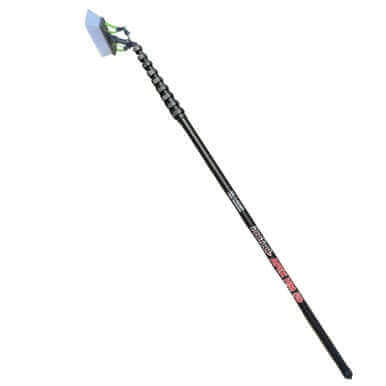 ProTool Apex Hi-Mod Carbon Fiber Pole SKU: 151-3502 | 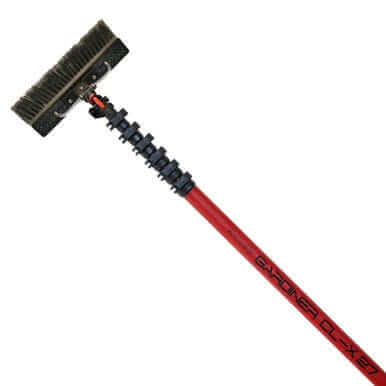 Gardiner CLX 27ft Pole Carbon Composite SKU: 155-4272 | 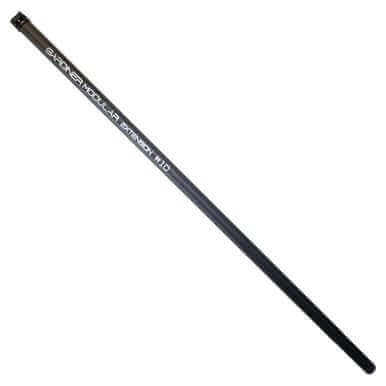 Gardiner Modular Pole Extender SKU: 155-40M |
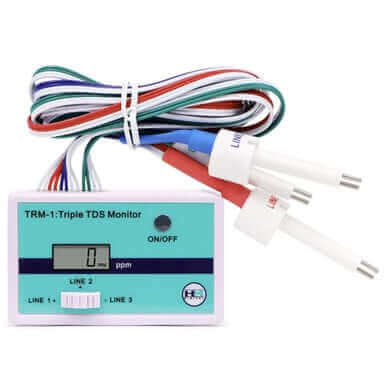 TDS Inline MeterTriple 1/4in Probes SKU: 150-017 | 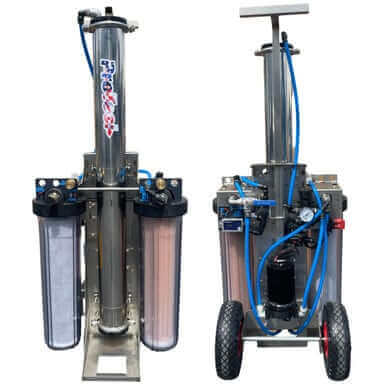 ProTool HiFlo Pure Water Ultra Cart SS 12V or 110V SKU: 150-0522 | 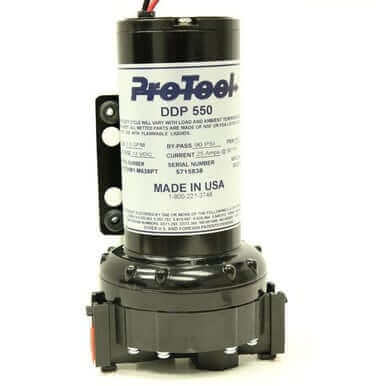 ProTool Pump 90psi 5.0gpm Pump Regulated SKU: 150-0856 |
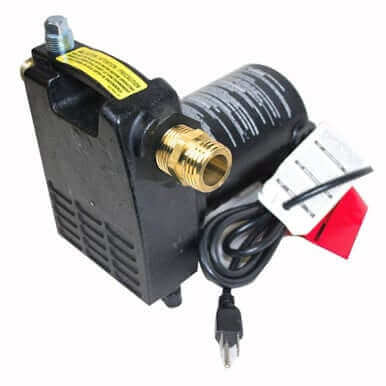 Pump 110v Boost Water Pressure add 40psi SKU: 150-0602 | 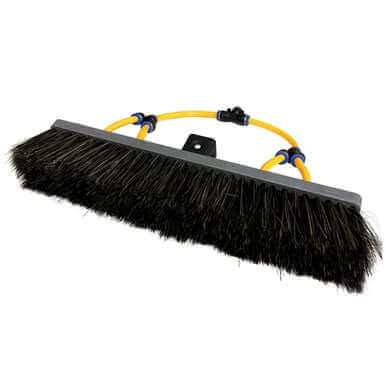 ProTool 4 Pencil-Jet Boar's Hair Brush 12in SKU: 151-221 | 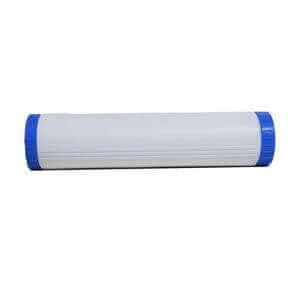 ProTool DI Filter 20in Blue/White RTU SKU: 150-012 |
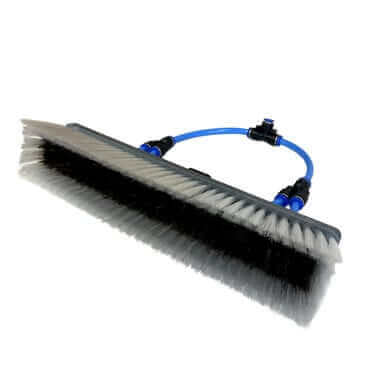 ProTool 4 Pencil-Jet Hybrid Brush 12in SKU: 151-211 | 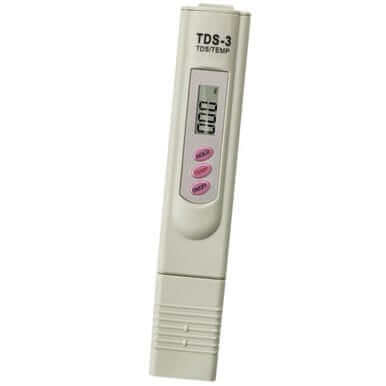 TDS Meter Handheld TDS-3 SKU: 150-0199 | 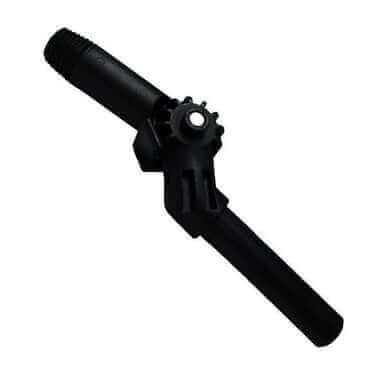 Gardiner Angle Adaptor Resi-Neck 1 Std SKU: 157-40269 |
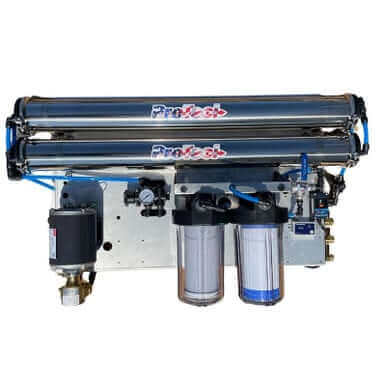 ProTool HydroPanel RODI Wall Mount SKU: 150-05346M | 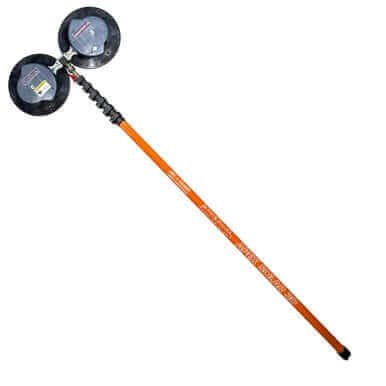 ProTool DualForce 25 Solar Brush SKU: 159-206 | 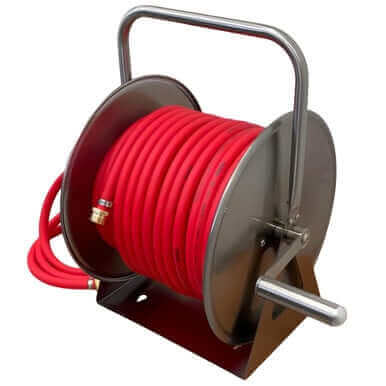 Reel Stainless Steel w/ 100ft 3/8in hose SKU: 68-011 |
TDS Inline MeterTriple 1/4in Probes SKU: 150-017 | Gardiner CLX 27ft Pole Carbon Composite SKU: 155-4272 | ProTool 4 Pencil-Jet Boar's Hair Brush 12in SKU: 151-221 |
ProTool Apex Hi-Mod Carbon Fiber Pole SKU: 151-3502 | Gardiner Modular Pole Extender SKU: 155-40M |