Bronze Wool for Window Cleaning: Scratch-Free Detailing That Won't Stain Frames
Table of Contents
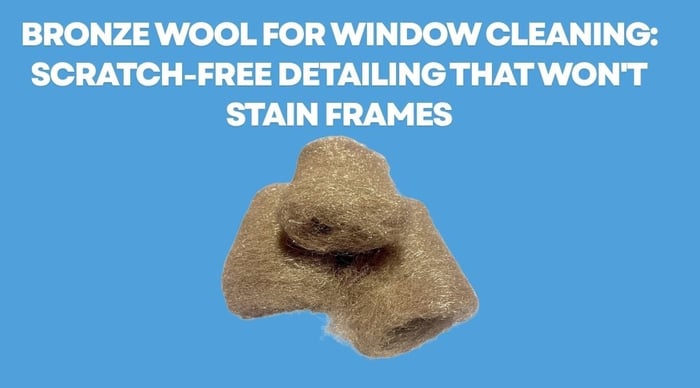
A strand of steel wool left on a window sill bleeds orange after the first rain. Bronze wool for window cleaning eliminates that problem entirely — it's a non-ferrous copper-tin alloy that cannot rust, even stored wet in your bucket between jobs. For construction cleans, hard water restoration, and any detailing work where frame protection matters as much as glass clarity, it's the abrasive that belongs in your kit.
Why Bronze Wool Belongs in a Pro's Toolkit
Bronze wool is a copper-tin alloy — no iron content at all. That single metallurgical fact changes your workflow in three ways:
- No rust transfer. Steel wool sheds microscopic ferrous fragments into weather stripping, gaskets, and weep holes. One dew cycle and you've got orange stains on white vinyl frames that cost more to fix than the original job paid. Bronze fragments don't oxidize.
- Longer pad life. A steel wool pad typically gets one shift before it rusts in your pouch. Bronze pads rinse, dry, and go again across multiple jobsites.
- Wider safety margin on glass. Bronze sits around 3 on the Mohs scale. Glass runs 5.5–6.5. Steel averages 4.5. Both are softer than glass, but bronze gives you more room for operator error — especially relevant on tempered units with fabrication debris.
The Middle Ground Between Scrapers and Pads
A stainless steel scraper is fast for large-scale paint removal but carries real scratch risk on tempered glass or surfaces with fabricating debris. A standard white scrub pad often lacks the bite for stubborn silicone or baked-on mineral deposits. Bronze wool sits between the two — conforming to the glass surface, distributing pressure across thousands of cross-hatched fibers instead of concentrating it on a blade edge. That makes it the default for tempered units where scraper use is restricted by manufacturer warranties or site protocols.
Bronze Wool vs. 0000 Steel Wool
Steel wool's primary failure mode is shattering. The fibers are brittle — as you scrub, microscopic fragments break off and embed in seals and frames. Bronze alloy is ductile; it doesn't produce those brittle "fines." Even if a fiber remains behind, it won't rust.
The cross-hatched wire structure of wool (bronze or steel) is what makes it effective: fibers act like thousands of tiny chisels lifting contaminants rather than pushing them across the surface. The open weave also dissipates friction heat that can bake residues onto glass during dry detailing.
Cost comparison favors bronze over a full season. Steel wool's lower unit price gets eaten by single-use disposal and — more expensively — by callbacks. One rust stain on a white vinyl frame costs more in labor and reputation than a case of ProTool Bronze Wool pads.
Where to Use Bronze Wool — and Where Not To
High-Value Applications
- Post-construction detailing: silicone residue, paint overspray, adhesive stickers, mortar splatter — the debris a squeegee pass won't touch.
- Baked-on organics: bird droppings, bee pollen, insect nests hardened under UV.
- Coastal and industrial contaminants: sea salt film, light mineral deposits from irrigation. Bronze wool breaks these bonds during the agitation phase without resorting to aggressive acid chemistry.
- Tempered glass: the industry-preferred abrasive because it glides over fabrication debris imperfections rather than catching them the way a scraper blade does.
- Historical and leaded glass: soft metal cames are easily damaged by harder tools; bronze is gentle enough.
Restricted Surfaces — Do Not Scrub
- Aftermarket window tints and soft low-E coatings on exterior surfaces — these films are softer than the bronze alloy and will scratch immediately.
- Plexiglass, acrylic, and polycarbonate — any metal abrasive will mar these substrates.
- Self-cleaning glass with hydrophilic titanium dioxide coatings — wool strips the coating and destroys the self-cleaning function.
If you're unsure whether a window has an exterior coating, default to a microfiber sleeve and chemical agitation.
Technique: Getting the Most from Bronze Wool
Lubrication First
Wet the surface before scrubbing. A professional glass soap or pure water creates a suspension layer that prevents trapped grit from grinding into the glass. Dry scrubbing is acceptable only for light detailing on small panes where you've already confirmed the surface is grit-free.
Hand Technique
Use a flat-palm grip — not fingertip pressure. Flat palm distributes force evenly across the pad, preventing "hot spots" where excessive friction could mar sensitive coatings. Overlapping circular motions lift contaminants from all angles rather than pushing them in one direction.
Tool Integration
For large commercial glass, mount wool into a pad holder or swivel tool. The leverage makes stubborn mineral deposits manageable and reduces operator fatigue on full-day construction cleans. On upper-story glass, bronze wool pads on WFP brush attachments allow high-reach detailing from the ground — account for pole flex to maintain consistent pad contact, and always follow with a thorough DI water rinse to flush loosened debris from frames.
Construction Detail Workflow
- Initial rinse with hose or water-fed pole — remove loose grit and sand that could scratch under the wool.
- While glass is wet, identify problem spots: adhesive residue, silicone, mortar splatter.
- Targeted scrubbing with fine-grade bronze wool on those areas. Overlapping circular motions.
- Final squeegee pass or DI water rinse for a spot-free finish.
Choosing the Right Grade and Format
Fine grade (the 0000 equivalent) is the standard for glass detailing and light mineral removal. Medium grade is too aggressive for most glass but works well for restoring metal frames, tracks, or clearing heavy oxidation from non-glass surfaces.
Format depends on crew size and workflow:
- Bulk rolls — best value for large commercial crews. Cut custom sizes for specialized pad holders.
- Pre-cut pads — faster for residential techs who need to grab and go without prep time.
Watch for coated-steel imitations sold as "bronze." They rust once the surface layer wears through. Genuine bronze wool has uniform strand thickness throughout the roll — inconsistent shaves create uneven pressure points and increase scratch risk. ProTool Bronze Wool Fine (3-pack) meets these specs and stores without degradation in a service van.
Building the Complete Detailing Kit
Bronze wool is most effective as part of a system. A pro detailing kit should include:
- Fine-grade bronze wool — ProTool Bronze Wool Fine for primary glass work
- A ProTool Pad Holder to prevent hand fatigue and ensure even pressure
- ProTool Microfiber Towels for final frame and sill wiping
- A quality glass soap like Glass Gleam 4 or a pure water system for lubrication and final rinse
- A ClearView 100 Hard Water Stain Remover for mineral deposits that need chemical help beyond mechanical agitation
Bronze wool won't replace every tool in your van. But for the detailing phase — where frame protection, scratch risk, and callback liability converge — it's the abrasive that earns its spot. Stock the right grade, pair it with proper holders and lubrication, and the rust-stain callbacks stop.
Products Mentioned
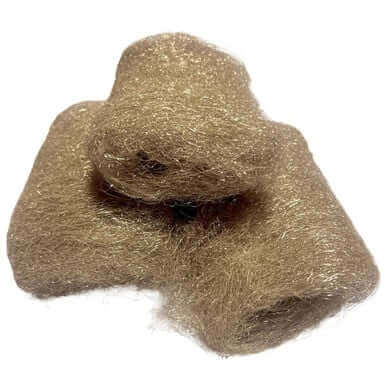 ProTool Steel Wool Bronze Fine (3) SKU: 26-50 | 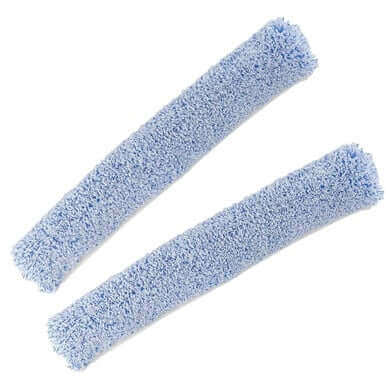 Pulex Sleeve Microfiber SKU: 11-32M | ProTool Steel Wool Bronze Fine (3) SKU: 26-50 |
ProTool Steel Wool Bronze Fine (3) SKU: 26-50 | 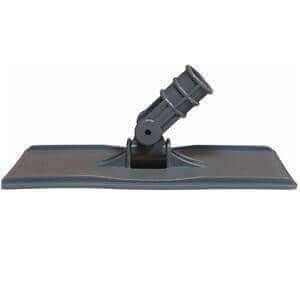 ProTool Pad Holder Threaded Socket (no pads) SKU: 362-154 | 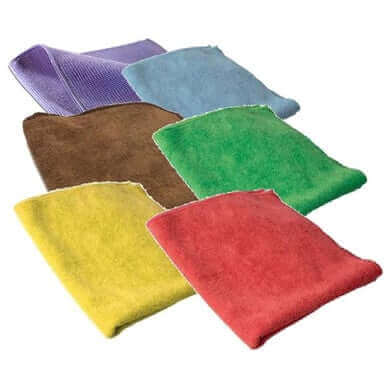 ProTool Microfiber Towel SKU: 24-5M |
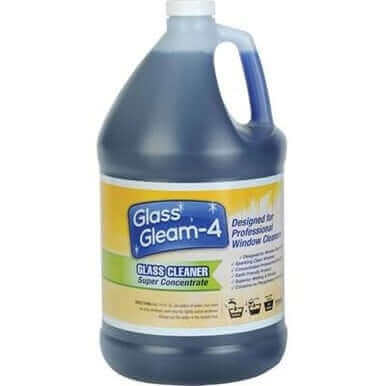 Titan Labs Glass Gleam 4 Window Cleaning Soap SKU: 84-52M | 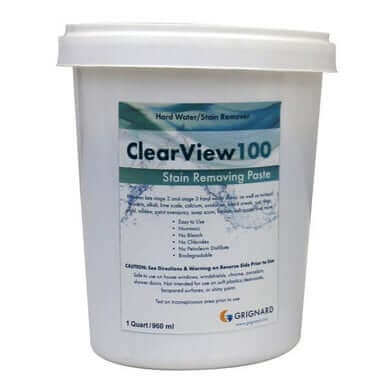 ProTool ClearView 100 HardWater Stain Remover Paste Quart SKU: 86-513 |