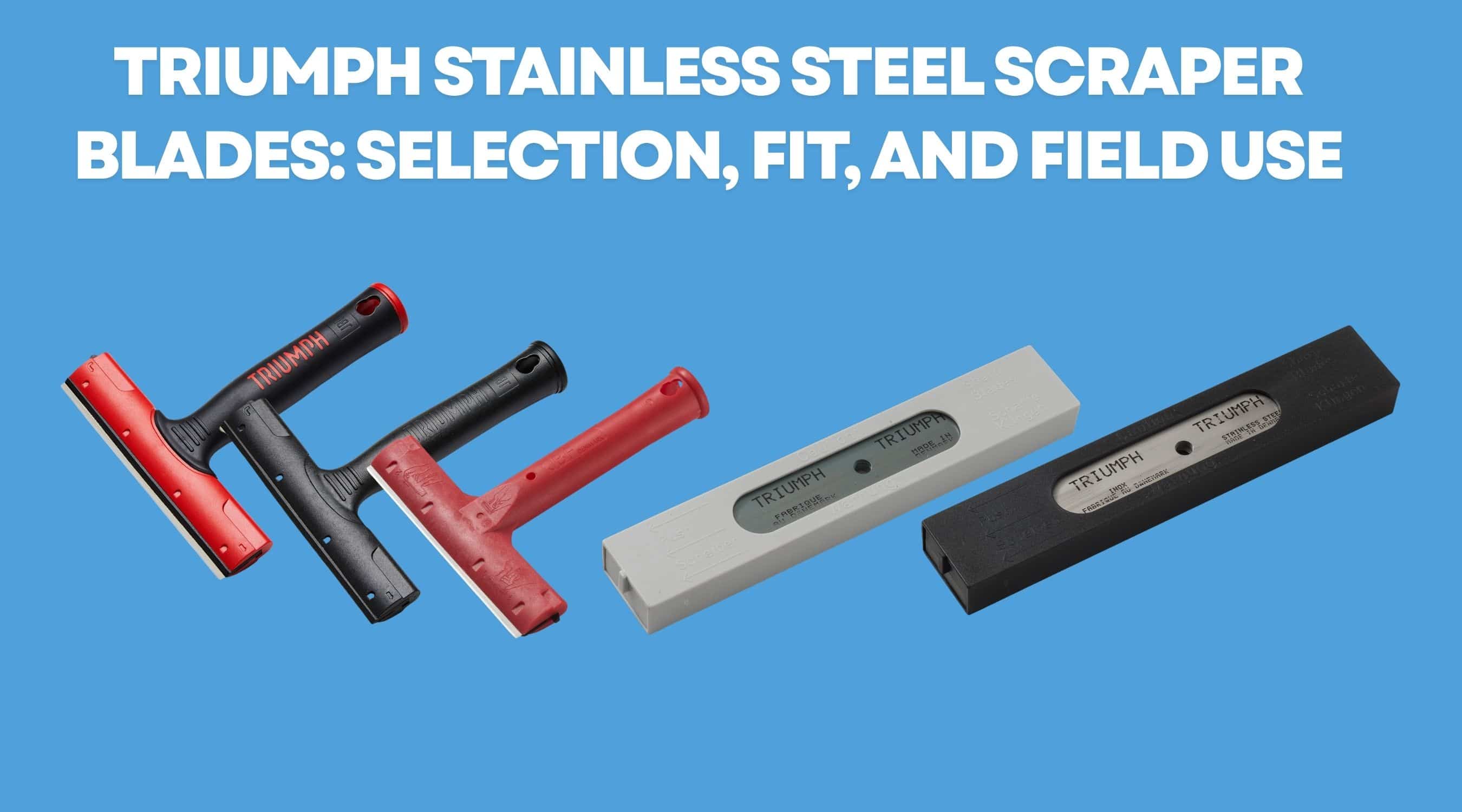
Triumph Stainless Steel Scraper Blades: Selection, Fit, and Field Use

Table of Contents
Triumph stainless steel scraper blades are a staple in professional window cleaning — but material and size alone don't confirm that a blade fits your holder or suits the glass you're working on. The wrong fit wastes time; the wrong blade on the wrong glass costs money. Here's how to match Triumph blades to your setup, assess glass before scraping, and keep your blades working correctly.
Confirming Fit Before You Order
Three things matter before you add blades to your cart: the blade's dimensions, the scraper or holder it must fit, and the glass you're working on. A 6-inch Triumph blade doesn't automatically fit every 6-inch holder — mounting geometry, thickness, and clip style vary between manufacturers and even between models from the same brand.
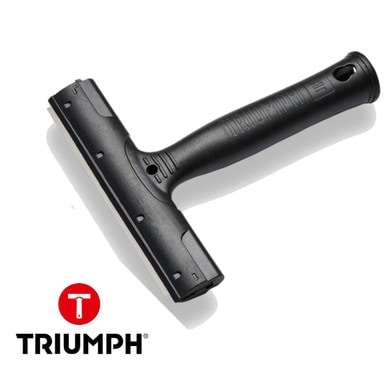
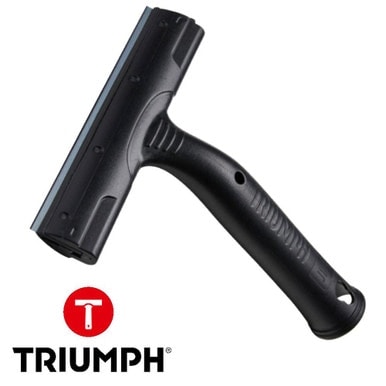
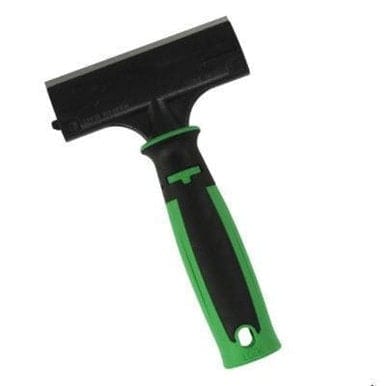
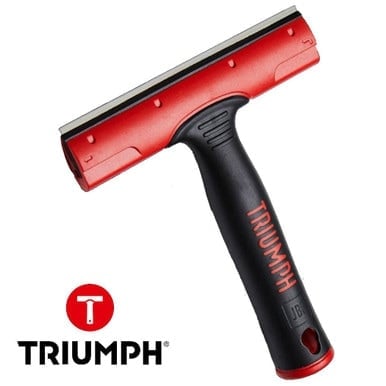
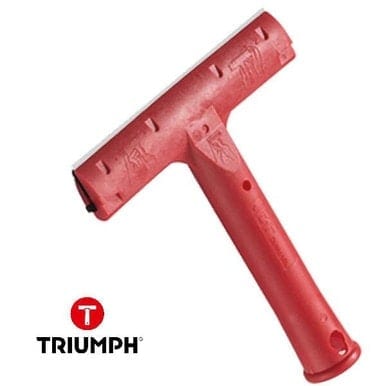
Start with your scraper. Know the exact manufacturer and model. The Triumph MK2 6-inch Straight Scraper and the Triumph MK2 6-inch Angled Scraper both accept Triumph 6-inch blades, but that compatibility doesn't extend to every 6-inch scraper on the market. If you're running an Unger ErgoTec 6-inch, you need Unger blades — the mounting systems are not interchangeable.
Triumph 6-inch blade options
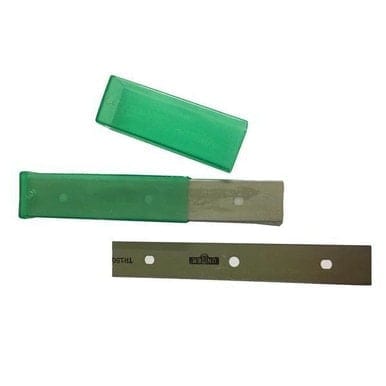
Triumph offers several 6-inch blade variants. The differences that matter for selection:
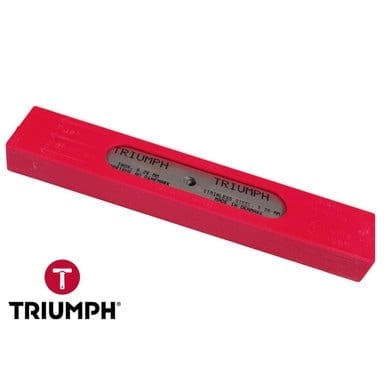
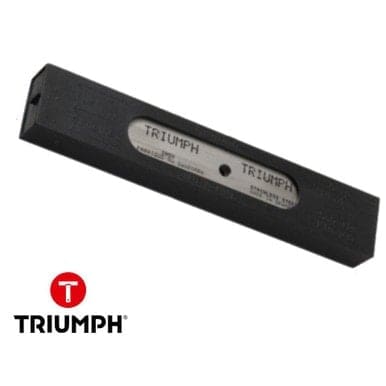
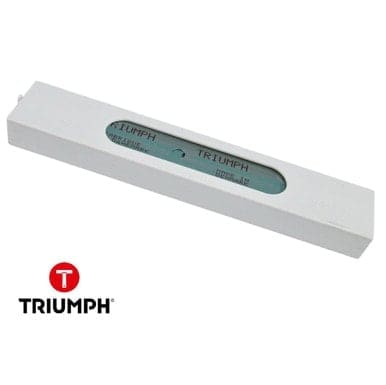
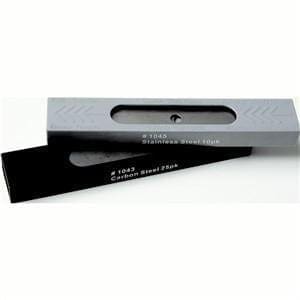
- Stainless steel, 0.20mm thick (25-pack) — the standard professional choice. Corrosion-resistant, holds an edge well on most commercial flat glass.
- Stainless steel, 0.15mm thick (25-pack) — thinner blade flexes more, useful when you want a lighter touch on delicate contaminants.
- Carbon steel, 0.20mm (25-pack) — sharper initial edge, but corrodes if stored wet. Better for single-use-and-discard workflows.
"Stainless" tells you the blade resists corrosion. It does not tell you thickness, edge profile, or whether it's the right blade for your specific holder. Always cross-reference the blade listing with your scraper model.
Assessing Glass Before You Scrape
Blade fit and glass suitability are separate decisions. A blade can be correctly installed in the right holder and still be the wrong tool for the surface in front of you.
The critical question isn't whether the blade is sharp — it's whether the glass can tolerate scraping at all. Tempered glass with fabricating debris (FD), low-E coatings, tinted films, and heat-strengthened panels all carry scratch risk that has nothing to do with blade quality. On post-construction jobs especially, identify the glass type before the blade touches the surface.
Pre-scrape checklist
- Identify the glass. Is it tempered, coated, filmed, or laminated? If you can't confirm, don't scrape.
- Identify the contaminant. Paint overspray, sticker residue, and mineral deposits each respond differently to blade work.
- Wet the surface first. Never dry-scrape. A soapy surface reduces friction and floats debris away from the edge.
- Use a flat angle. Keep the blade as close to parallel with the glass as the holder allows — typically 20–30 degrees.
- Single-direction strokes. Push forward, lift, return. Don't drag the blade backward across the glass.
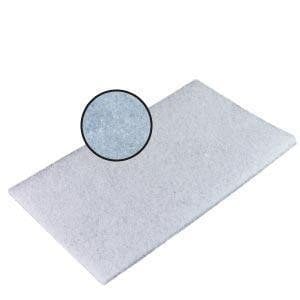
If guidance from the glass manufacturer says no scraping, that overrides your assessment. Walk away from the blade and use a chemical approach or a non-abrasive scrub pad instead.
Triumph Stainless vs. Carbon vs. Other Brands
Material choice is not about "best" — it's about matching the blade to the job and your workflow.
| Factor | Triumph Stainless (0.20mm) | Triumph Carbon (0.20mm) | Ettore ProPlus SS |
|---|---|---|---|
| Corrosion resistance | High — store wet or dry | Low — rusts if left wet | High |
| Initial edge sharpness | Good | Very sharp | Good |
| Edge retention | Longer working life | Dulls faster | Comparable to Triumph SS |
| Holder compatibility | Triumph scrapers | Triumph scrapers | Ettore ProPlus scraper |
| Best workflow fit | Multi-day jobs, route work | Single-use, heavy removal | Ettore-equipped crews |
Carbon steel gives you a sharper initial cut, which matters on heavy paint overspray or caked-on construction debris. But if you're running route work and the blade sits in a damp holster between stops, stainless is the obvious choice — a corroded edge scratches glass.
Blade brand must match scraper brand. Ettore ProPlus 6-inch SS blades fit Ettore scrapers. Unger ErgoTec 6-inch carbon blades fit Unger scrapers. Triumph blades fit Triumph scrapers. Mixing brands risks poor seating, blade wobble, and scratched glass.
Installation, Inspection, and Replacement
A controlled blade workflow starts before the blade goes into the holder.
Before installing
- Identify your holder. Confirm the exact model — a Triumph MK3 Straight and a Triumph Heavy Duty may accept the same blade size but differ in clip mechanism.
- Inspect the blade. Look for edge nicks, bends, or corrosion. A damaged blade is a scratch waiting to happen — discard it.
- Inspect the holder. Worn clips, bent retainers, or debris in the blade channel all cause poor seating.
- Install per the holder's design. Slide the blade in until it clicks or seats fully. If you have to force it, it's the wrong blade.
- Verify before use. The blade should sit flush with no lateral play. If it rocks or shifts, remove it and troubleshoot.
When to replace
There's no universal mileage number. Replace the blade when:
- You feel it dragging rather than gliding — the edge is rolled or dulled.
- You see nicks or chips along the cutting edge.
- Corrosion is visible (carbon steel blades especially).
- The blade no longer seats securely in the holder.
On post-construction cleanup, some crews swap blades every pane. On route work with light contaminants, a stainless blade may last a full day. Let the glass and the feel of the blade dictate the interval, not a calendar.
Storage
Store stainless blades dry or lightly oiled. Store carbon blades dry — period. Keep loose blades in their original packaging or a blade case, not rattling around in a tool bucket where edges contact each other and dull.
Choosing the Right Blade for Your Setup
Match the blade to the holder first, then to the job. If you're running Triumph scrapers, the 0.20mm stainless 25-pack covers most professional use cases. Switch to the 0.15mm stainless when you want a thinner, more flexible edge. Use carbon steel for aggressive single-use removal where corrosion isn't a concern.
If you're outfitting a crew, standardize on one scraper platform and its matching blades. Mixed scraper brands across a crew means mixed blade inventory, mixed training, and mixed results. Pick a system — Triumph, Unger ErgoTec, or Ettore ProPlus — and commit to it.