Window Cleaning Scrapers: Blade Selection, Technique, and Field Setup

Table of Contents
A window cleaning scraper is a precision instrument. Treating it like a utility knife is the fastest route to a glass damage claim. The anxiety around tempered glass — fabrication debris, compromised edges, a blade that looked fine yesterday — is real, and it costs contractors real money when it goes wrong.
This guide covers the mechanical differences between blade alloys, the exact angles and motions that keep you out of trouble on tempered glass, and how to integrate scrapers into a field kit that actually works at speed. Whether it's post-construction cleanup or route maintenance, the goal is faster debris removal with zero scratches.
What Separates a Professional Scraper from a Utility Knife
Width and blade retention are the two things that matter. A professional window cleaning scraper holds its blade flat across the glass under lateral pressure — consumer utility knives do not. Pros categorize by width: a 1.5-inch pocket scraper for spot adhesive removal, 4-inch for residential production, and 6-inch for commercial panes where speed matters.
During initial cleaning, the scraper removes bulk contaminants a squeegee can't touch. In restoration, it strips mineral deposits and oxidation. On extended commercial shifts, ergonomic handle design becomes a real factor — contoured grips reduce hand fatigue and repetitive strain across an eight-hour day.
Anatomy: What to Look For
Every professional scraper needs a safety cap, a blade retention mechanism that won't slip under pressure, and a handle material that performs when wet. Fixed-head models give direct leverage; angled heads — like the Triumph MK3 6in or the Unger ErgoTec Glass 6in — provide better reach and a more natural wrist position on poles or deep sills.
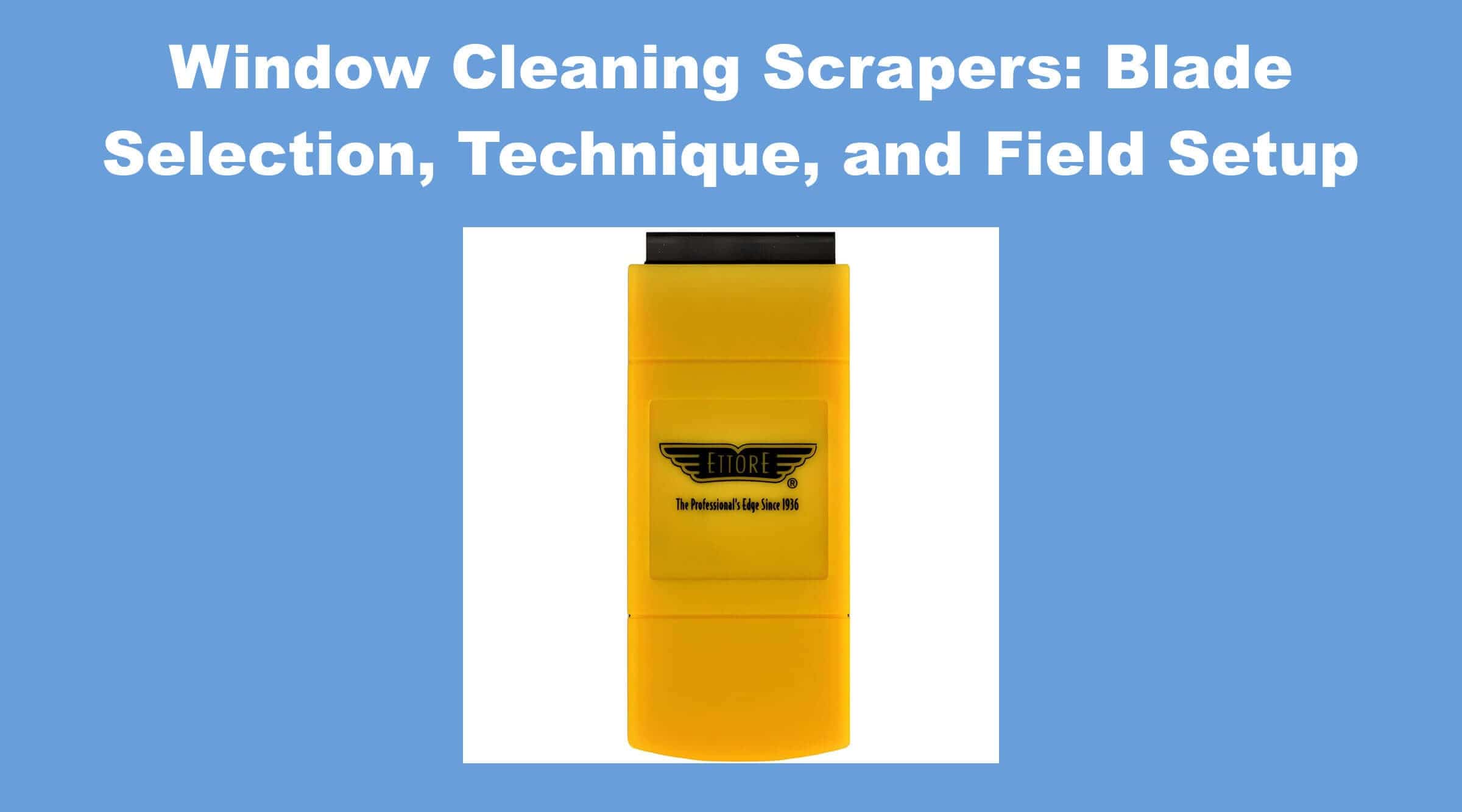
For pocket work, the Ettore Pocket Scraper remains a belt staple for localized adhesive removal and tight corners.
Common Debris Targeted by Pros
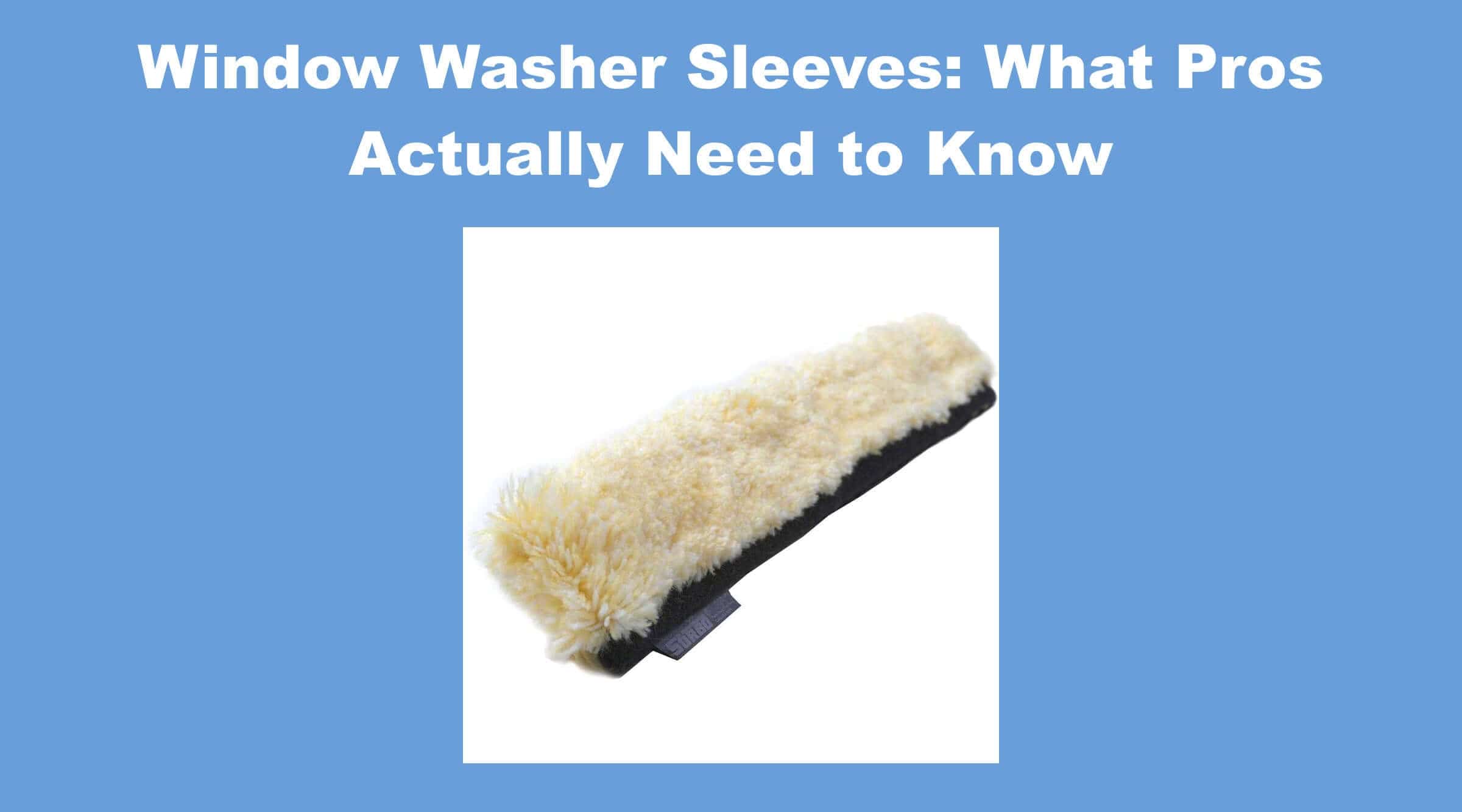
Scrapers are the primary weapon in post-construction cleanup: paint overspray, stickers, tape residue, stucco, cement, silicone. Using a scraper first prevents hard particles from embedding in your washer sleeve, where they'd cause widespread scratching during the scrub phase. The blade clears bulk contaminants faster than any abrasive — that's the whole point.
Blade Metallurgy: Carbon Steel vs. Stainless Steel
The blade alloy you choose affects cost-per-window, edge retention, and scratch risk. Get this wrong and you're either burning through blades or burning through insurance deductibles.
Carbon Steel
Higher hardness rating. Superior initial edge. Carbon steel shears through thick paint and hardened construction debris better than stainless. The trade-off: it lacks chromium, so it oxidizes fast. If a carbon blade sits wet in a holster, microscopic rust pitting develops — and those pits snag glass imperfections and cause scratches.
Carbon steel works best on high-volume post-construction jobs where you're swapping blades frequently. The lower unit price makes it cost-effective when blades are essentially consumable. Triumph Carbon 6in blades (25-pack) are a reliable choice for heavy removal.
Stainless Steel
Chromium content lets stainless survive a wet holster without immediate degradation. Slightly softer than carbon, but the added ductility is actually useful on curved glass or uneven surfaces. Stainless is the standard for daily maintenance and residential route work — especially in humid climates where carbon blades fail within hours.
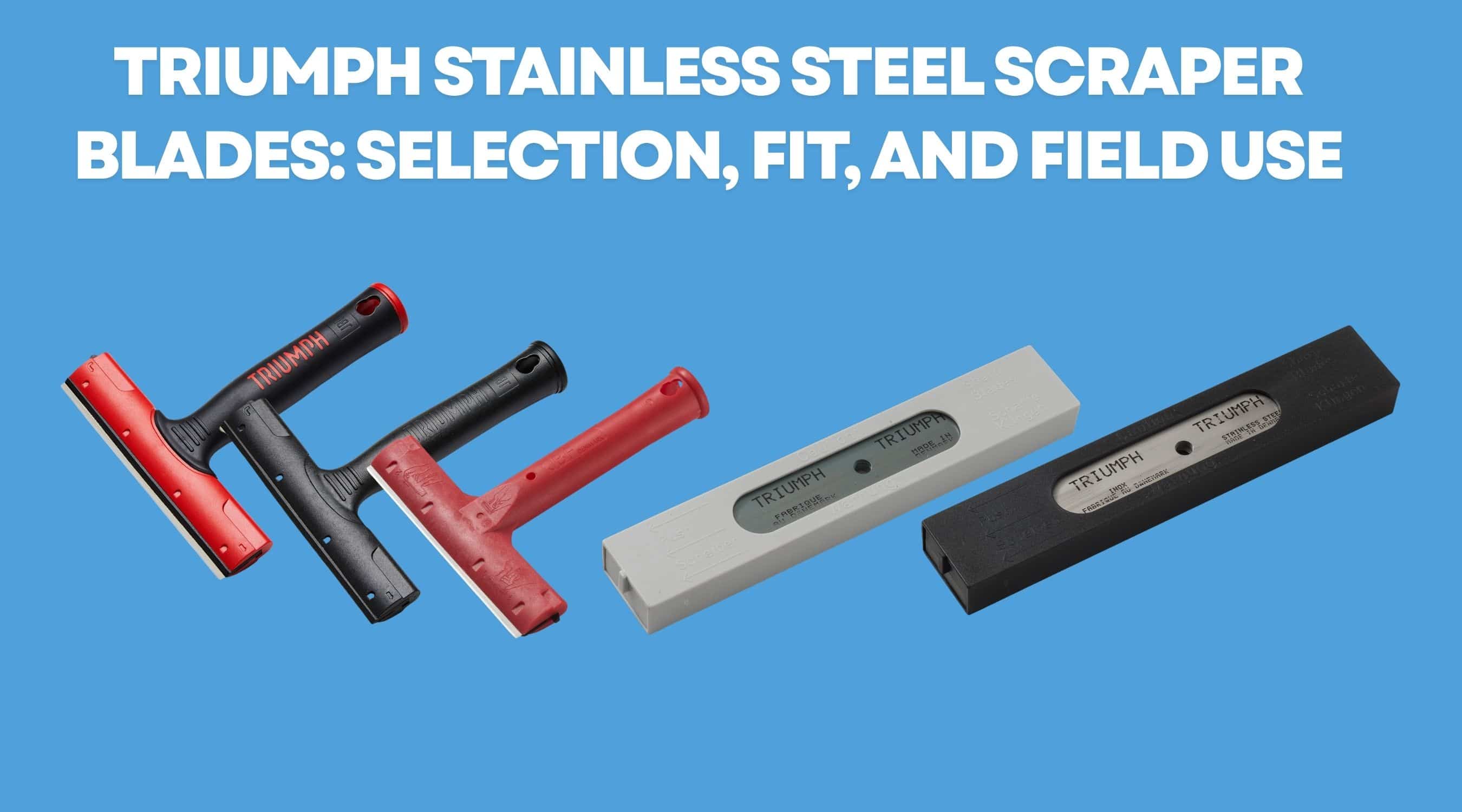
The Triumph Stainless Steel 6in blades (25-pack) are a workhorse for route crews. Higher unit price, longer usable life, net savings on most workflows.
Most 4-inch and 6-inch scrapers use double-edged blades — flip to a fresh side mid-job, effectively doubling blade life. Snap-off blades are generally reserved for pocket scrapers and localized adhesive work.
Scrapers vs. Abrasives: The Restoration Workflow
The "depth of debris" rule dictates your starting point. If the contaminant has a measurable profile above the glass — paint drops, silicone beads — start with a scraper. A 6-inch blade clears bulk material faster than any manual scrub. But scrapers are linear tools. They leave ghosting where the blade skips over microscopic depressions or where hard water minerals remain bonded in the glass pores. That's where abrasives finish the job.
The Scrape-and-Scrub Sequence
- Lubricate first. Never scrape dry glass. A soap solution or dedicated lubricant suspends particles and lets the blade glide.
- Scrape the bulk. Forward-only strokes, 30–45° angle, clearing inorganic material.
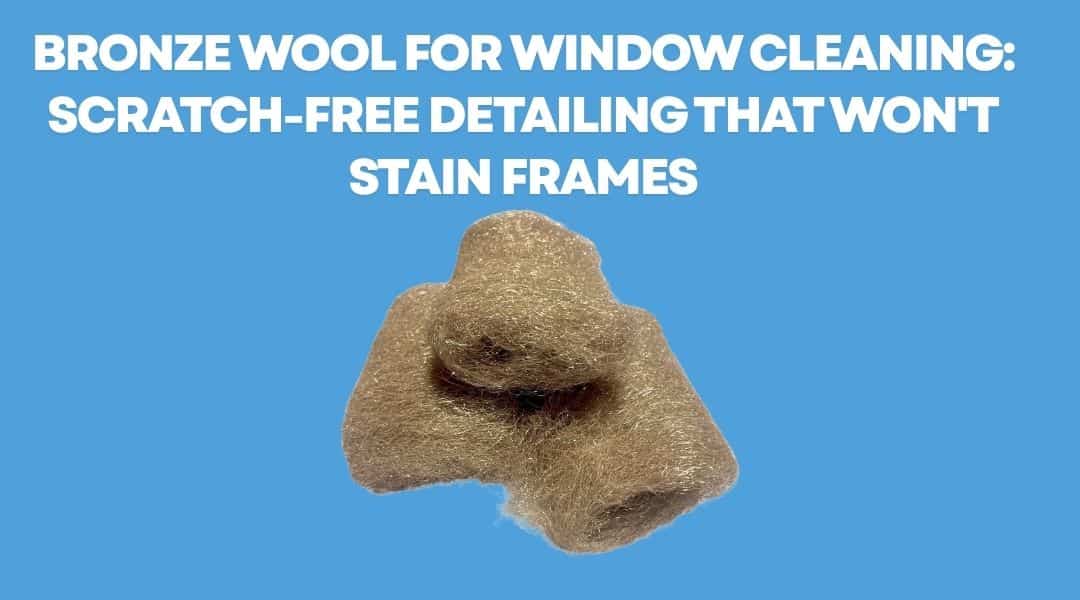
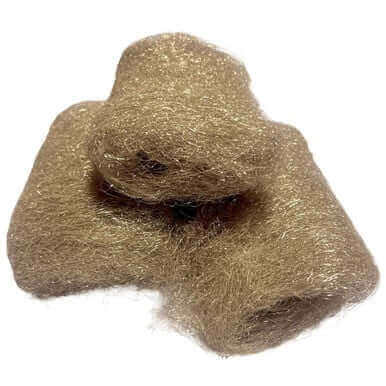
- Scrub the residue. ProTool 0000 Steel Wool or ProTool Bronze Wool removes remaining film. Bronze wool doesn't rust — better for wet detailing.
- Diagnostic pass. A light scrape with a fresh blade "feels" for remaining silicone or adhesive. Silent glide = done. Chatter or snag = more abrasive work needed.
For moderate buildup that doesn't quite need a blade, ProTool Walnut Pads provide more agitation than a nylon sleeve without the aggressive profile of metal wool.
The No-Scrape Zone
Know when a blade will cause irreparable damage before you start:
- Plexiglass and acrylic — scratches immediately under any metal blade.
- Tinted and security film — blades tear or delaminate the polyester layers.
- First-surface Low-E coatings — the metallic layer on the exterior face strips permanently under a steel edge.
Check the glass corner for manufacturer stamps indicating coatings. A "draggy" feel during a wet finger test usually means a surface treatment is present — switch to chemical solvent and a soft nylon pad.
Safety Protocols: Tempered Glass and Fabrication Debris
The blade itself doesn't cause most scraper damage on tempered glass. Fabrication debris does. These microscopic glass particles — "fines" — are a byproduct of the tempering process. When a blade dislodges fines, they get trapped between steel and glass and act like sandpaper.
The protocol:
- Forward-only motion. Never drag the blade backward. Lift after each stroke.
- Lubricate continuously. A wet surface suspends particles away from the glass face.
- Maintain 30–45° angle. The blade shears debris rather than digging into the substrate.
Identifying Fabrication Debris
Fabrication debris concentrates on the tin side of tempered glass — where the pane contacted the rollers during heat treatment. Listen for a gritty "zipper" sound during your first pass. That's the warning. Stop, document, and switch to a non-mechanical method like bronze wool.
From a liability standpoint, the IWCA's position is that cleaners shouldn't accept responsibility for defects caused by manufacturing flaws. Always test-scrape an inconspicuous corner and document results before committing to the full pane.
Blade Maintenance
A dull blade is more dangerous than a sharp one. Compromised edges require more pressure, which increases slip and uneven force. For heavy construction work, follow the one-job-one-blade rule. Dispose of used blades in a sharps container — crew safety and waste handler safety both matter.
Keep replacement stock on hand. The Triumph SS 6in thin blades and Unger ErgoTec Carbon 4in blades cover most field scenarios between them.
Kit Integration: Holsters, Poles, and Field Setup
A scraper is only as effective as the system around it. Belt access, blade protection, and pole compatibility all affect production speed.
Holster Selection
Leather holsters retain water and accelerate blade corrosion. Nylon dries faster. The best option for most crews is a hard-plastic BOAB (Bucket on a Belt) integration with a dedicated scraper slot — the Unger Ninja BOAB or the ProTool BOAB Gray both include scraper-friendly layouts. For high-rise, use a locking holster. Verify drain holes to prevent standing water from degrading blade metallurgy.
High-Access Scraping
Pole-mounted scraping requires a tapered adapter that won't spin or detach under lateral pressure. At 30+ feet, angle-of-attack control gets difficult — adjust pole length and body position to keep the blade at 30–45°.
Having the right adapters and scrapers together in a single window cleaning kit eliminates downtime when transitioning between ground-level detail work and high-access restoration.
Products Mentioned
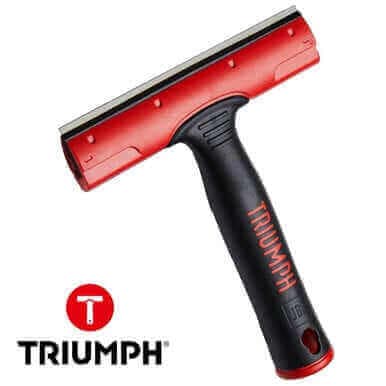 Scraper Straight Triumph MK3 6in SKU: 35-36 | 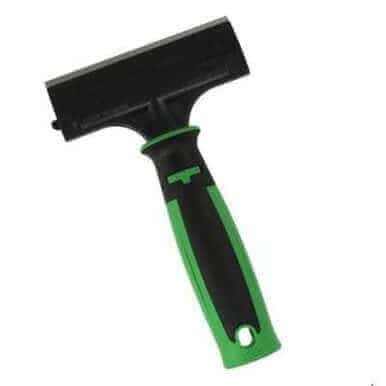 Scraper Ergotec Glass 6in Unger SKU: 35-25 | 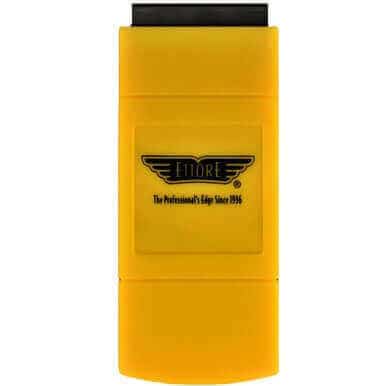 Pocket Scraper Ettore SKU: 35-100 |
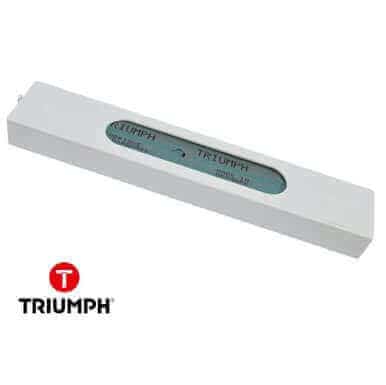 Blades Triumph Carbon 06 inch 0.20mm Thick (25 Pack) SKU: 36-31 | 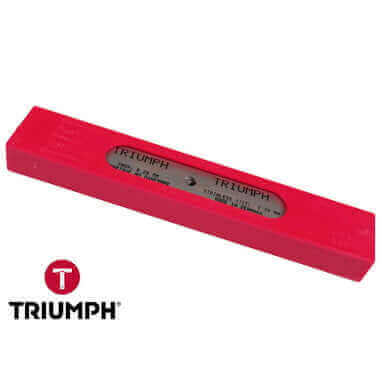 Blades Triumph Stainless Steel 06in 0.20 mm Thick (25 Pack) SKU: 36-331 | 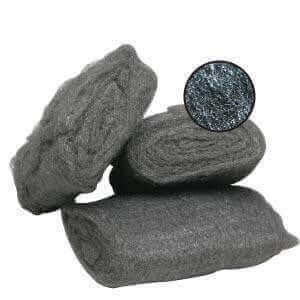 ProTool Steel Wool Bag 0000 SKU: 26-20 |
 ProTool Steel Wool Bronze Fine (3) SKU: 26-50 | 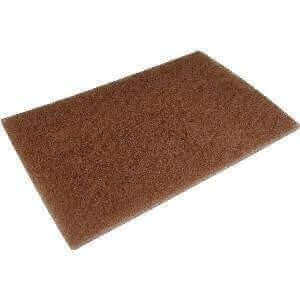 ProTool Pad Scrub Walnut 6x9 (1) SKU: 26-11 | 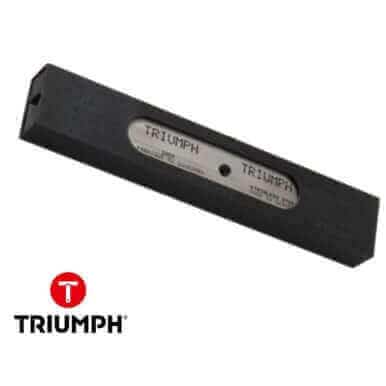 Blades Triumph Stainless Steel 06 inch 0.15 mm Thick (25 Pack) SKU: 36-33 |
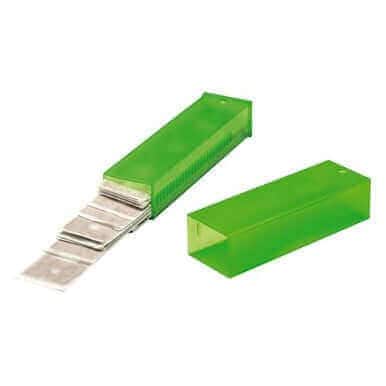 Blades ErgoTec Carbon 04in (25) Unger SKU: 36-23 | 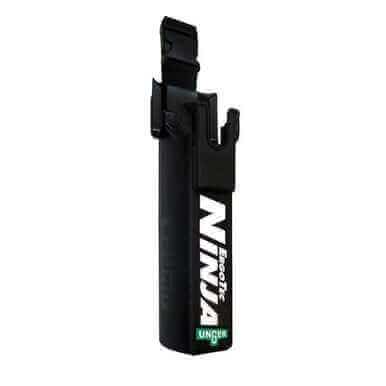 Holster Bucket on a Belt NINJA Unger SKU: 48-24 | 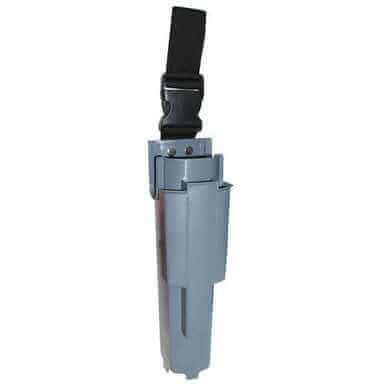 Holster Bucket on Belt Pro Gray SKU: 48-03 |