Choosing the Right Fall Arrest System for Exterior Cleaning Pros
Table of Contents
Fall protection is OSHA's most-cited violation for the 15th consecutive year. For exterior cleaning pros, choosing the right fall arrest system isn't a catalog browse — it's an engineering decision where a wrong component match can kill someone. This guide covers the selection criteria, clearance math, and chemical-exposure realities that matter for window cleaners, pressure washers, and rope access technicians.
How a Personal Fall Arrest System Actually Works
A Personal Fall Arrest System (PFAS) stops a fall after it starts. Unlike guardrails, it's active — it demands correct assembly, correct use, and correct maintenance. Every component must be rated to the same performance standard. Mix manufacturers carelessly and you risk a system that's never been tested as a unit under load.
Four elements make the system:
- Anchorage: The attachment point. Non-engineered anchors must support 5,000 lbs per worker. Engineered anchors need a safety factor of two.
- Body wear: A full-body harness distributing arrest energy across thighs, pelvis, chest, and shoulders.
- Connectors: Lanyards or lifelines linking harness to anchor.
- Deceleration device: A shock absorber or SRL that caps arresting force at 1,800 lbs — the threshold above which internal trauma becomes likely.
OSHA vs. ANSI: What You're Actually Held To
OSHA is law. ANSI Z359 is voluntary — but its standards consistently exceed OSHA minimums in durability and testing rigor. For 2026, spec ANSI-rated gear where available. The practical payoff: ANSI-rated equipment tends to last longer under the chemical and moisture exposure that exterior cleaning inflicts on gear daily. Always verify that your components are tested together under load — mixing across manufacturers can compromise the 3.5-foot maximum deceleration distance OSHA requires.
Why Exterior Cleaners Default to Active Systems
Passive barriers like guardrails protect without worker action, but they rarely exist on the rooftops, ledges, and facades where you work. Active systems — harnesses, lifelines, SRLs — are the default for the trade. The catch: active systems are only as good as the training behind them. A worker who can't execute a proper pre-use inspection or donning sequence is at risk regardless of equipment quality.
Site Assessment: The Variables That Drive Your System Choice
OSHA triggers fall protection at 4 feet in general industry and 6 feet in construction. For exterior maintenance, nearly every rooftop or elevated platform task falls under the 4-foot general industry standard — more stringent than most people assume. But trigger height is just the starting point. Site geometry drives the rest.
Swing Fall: The Hazard Most Crews Underestimate
When your anchor isn't directly overhead, a fall becomes a pendulum swing. The worker arcs into the building facade or structural steel at velocity. The fix is straightforward in theory — position anchors as close to directly above the work zone as possible — but on many exterior cleaning jobs, that's the hardest constraint to meet. Plan anchor placement before the crew leaves the truck.
Leading Edge Exposure
If a lifeline can contact a sharp concrete or steel edge during a fall, standard webbing can sever. Only Leading Edge (LE) rated lifelines provide the shear resistance needed. This isn't optional on parapet edges or steel-framed rooftops — it's the difference between a functioning system and a severed line.
Calculating Fall Clearance Distance
You cannot eyeball this. The formula:
Lanyard Length + Deceleration Distance (3.5 ft) + Worker Height (6 ft) + Safety Margin (3 ft) = Total Clearance Required
For a standard 6-foot shock-absorbing lanyard, the baseline is 18.5 feet. If your work height is under 18.5 feet, a shock-absorbing lanyard won't arrest the fall before ground impact. You need an SRL.
Chemical Exposure: The Exterior Cleaning Variable
Sodium hypochlorite, surfactants, and acidic detergents degrade harness webbing and corrode hardware — sometimes without visible discoloration. Specify corrosion-resistant hardware (stainless steel or zinc-plated) and inspect webbing aggressively after every soft wash or chemical application job. Wet surfaces compound the problem by increasing slip hazard, making lifeline tension and retraction speed critical.
Selecting Components: Harnesses, Connectors, and Anchors
Harness Selection: Comfort Drives Compliance
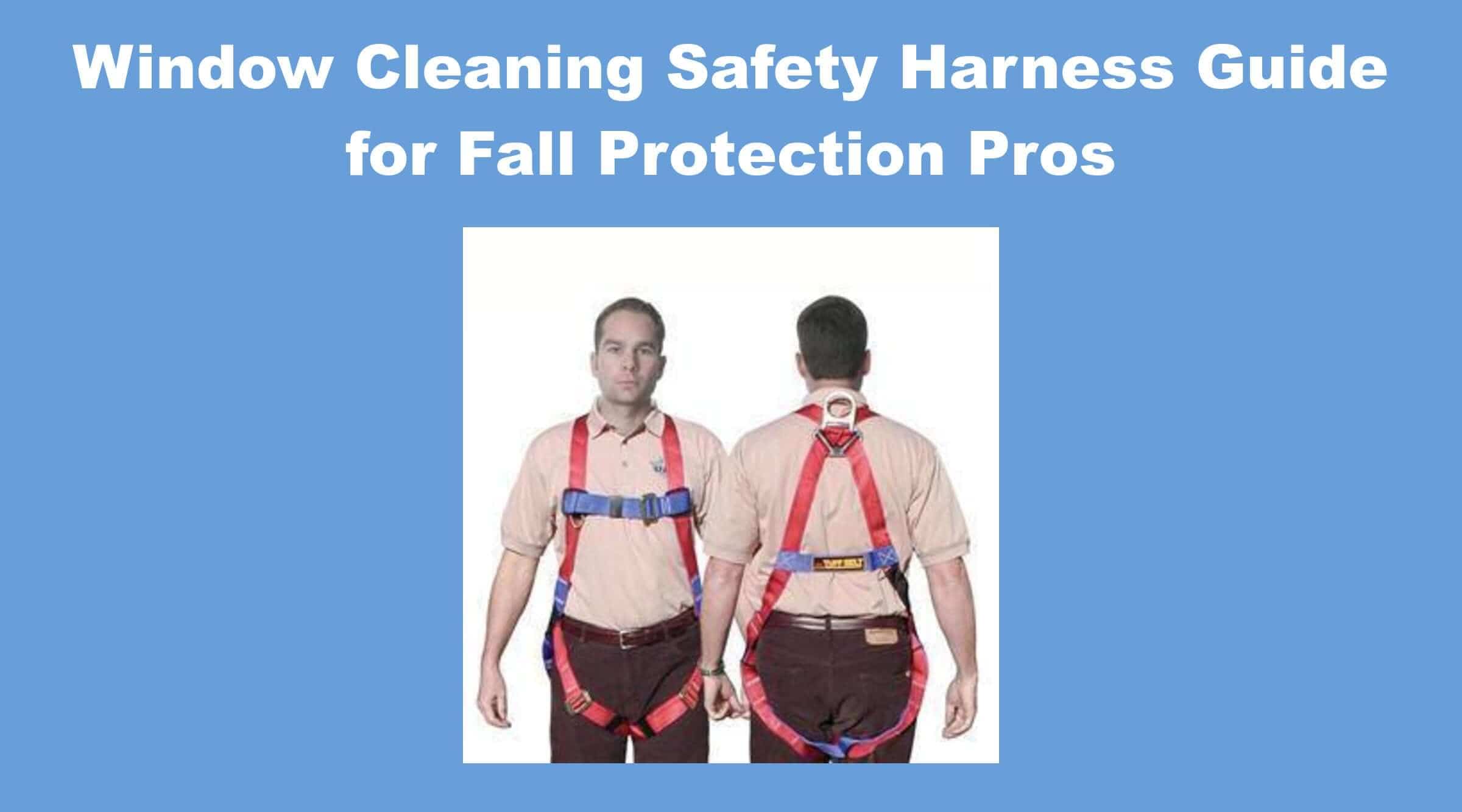
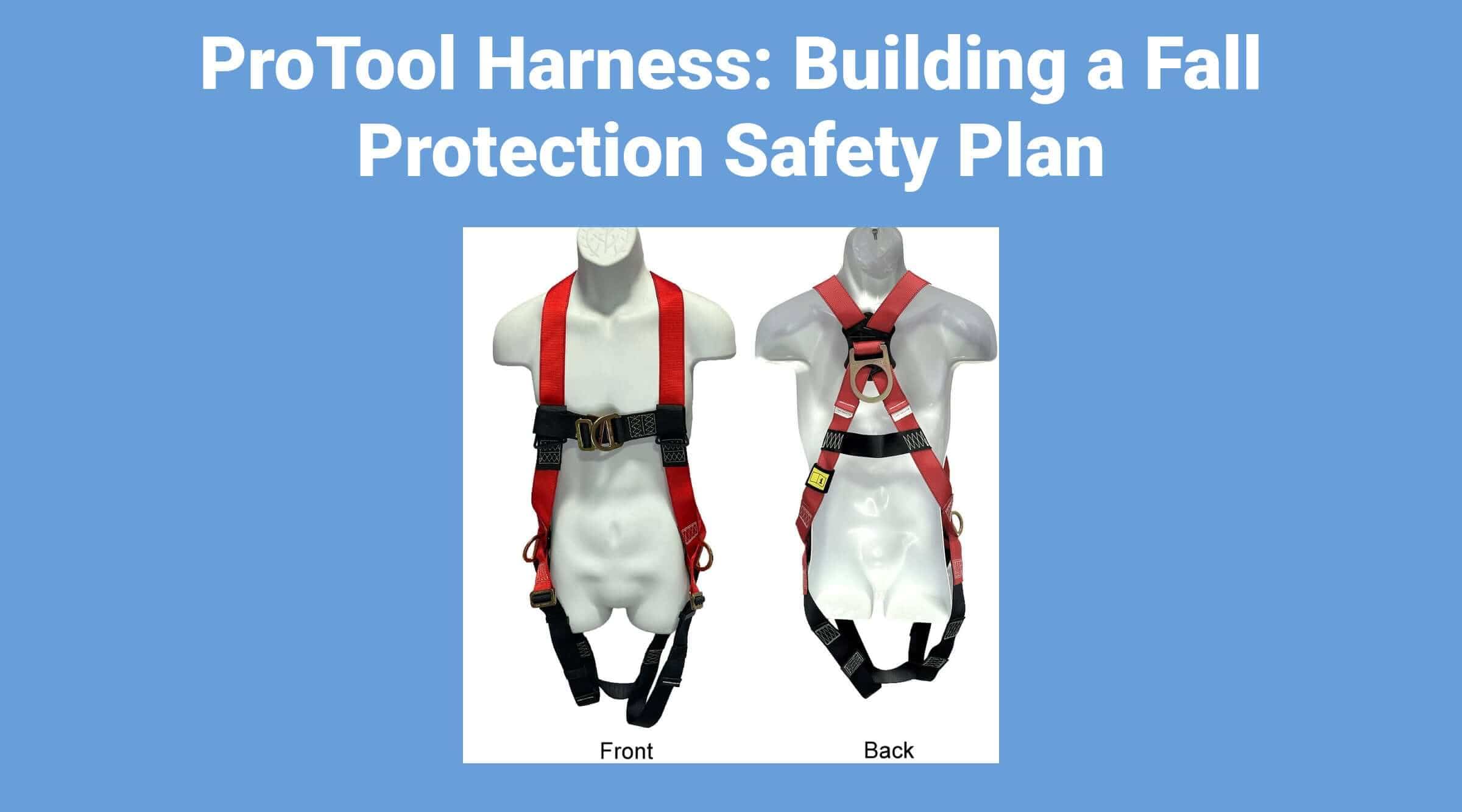
A harness that chafes or restricts movement gets loosened. Loosened straps shift during arrest, causing secondary injuries or complete failure. Specify 5-point adjustment (shoulders, chest, legs) so the dorsal D-ring stays centered between the shoulder blades — a misplaced D-ring tilts the body during arrest and accelerates suspension trauma.
For all-day exterior work, prioritize padded leg and shoulder straps, breathable mesh linings, and quick-connect buckles. Quick-connects eliminate the threading errors common with grommet buckles under time pressure. The Petzl Avao Bod Harness delivers the adjustment range and padding that full-shift exterior work demands. For crews needing side D-ring integration with tool belts, the Gemtor #922 Harness with Side D-Rings keeps squeegees and scrapers accessible without compromising fall arrest geometry.
Anchors: The Most Common Point of Failure
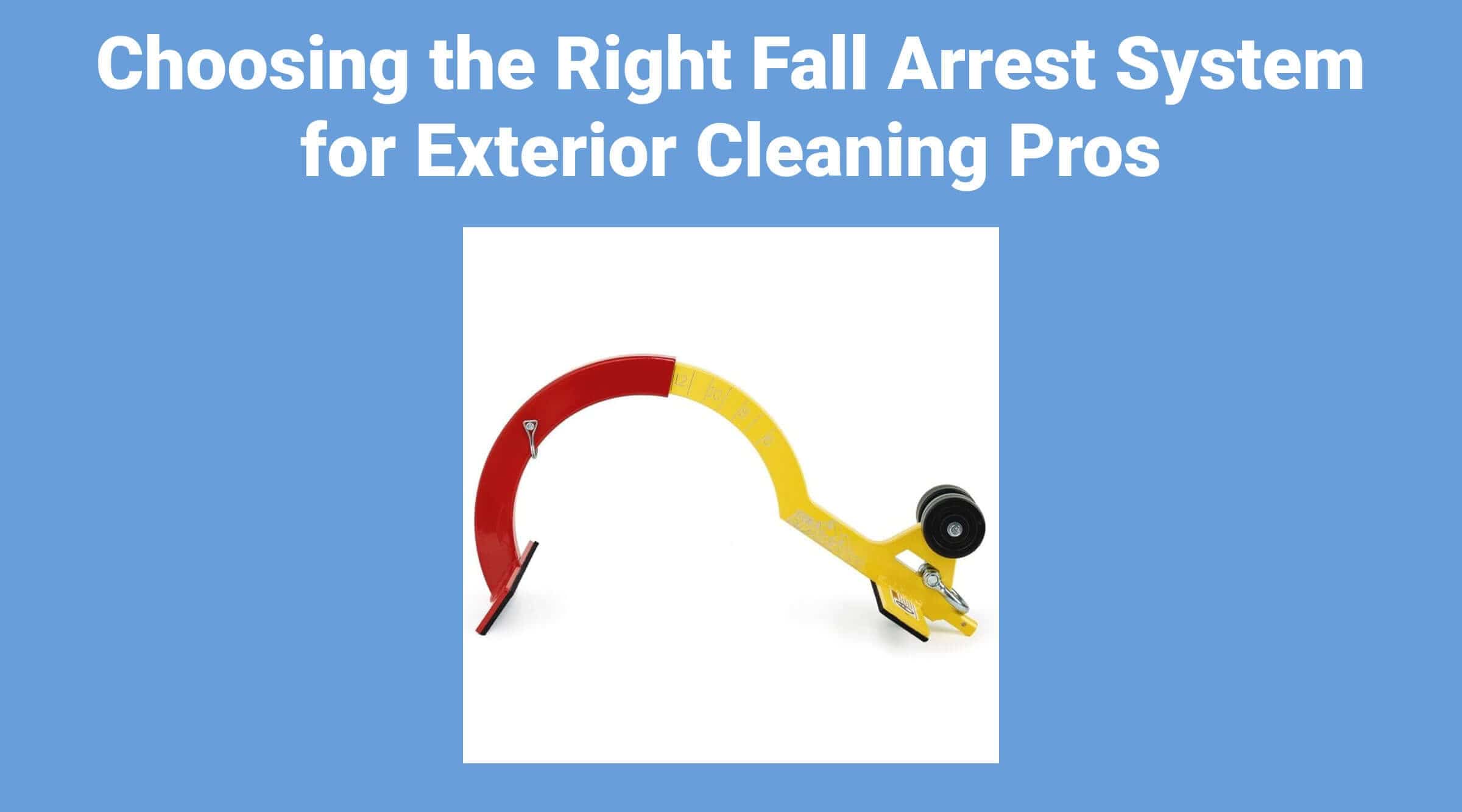
Cross-arm straps wrap structural beams for versatile temporary anchoring. Beam clamps provide rigid, semi-permanent attachment on industrial steel. For sloped residential and commercial roofs, the RidgePro Roof Anchor installs on ridge peaks without penetration and handles the angles that flat-roof anchors can't. Disposable roof anchors work for single-use applications where leaving hardware behind isn't practical. Every anchor point: 5,000 lbs minimum, no exceptions.
Connectors: SRLs vs. Shock-Absorbing Lanyards
| Feature | Shock-Absorbing Lanyard | SRL (Class 1 or 2) |
|---|---|---|
| Clearance Needed | High (18.5 ft baseline) | Low (typically under 6 ft) |
| Worker Mobility | Limited to lanyard length | High (retractable cable) |
| Best For | High-clearance, near-anchor work | Low clearance, lateral movement |
| Cost | Lower initial investment | Higher initial investment |
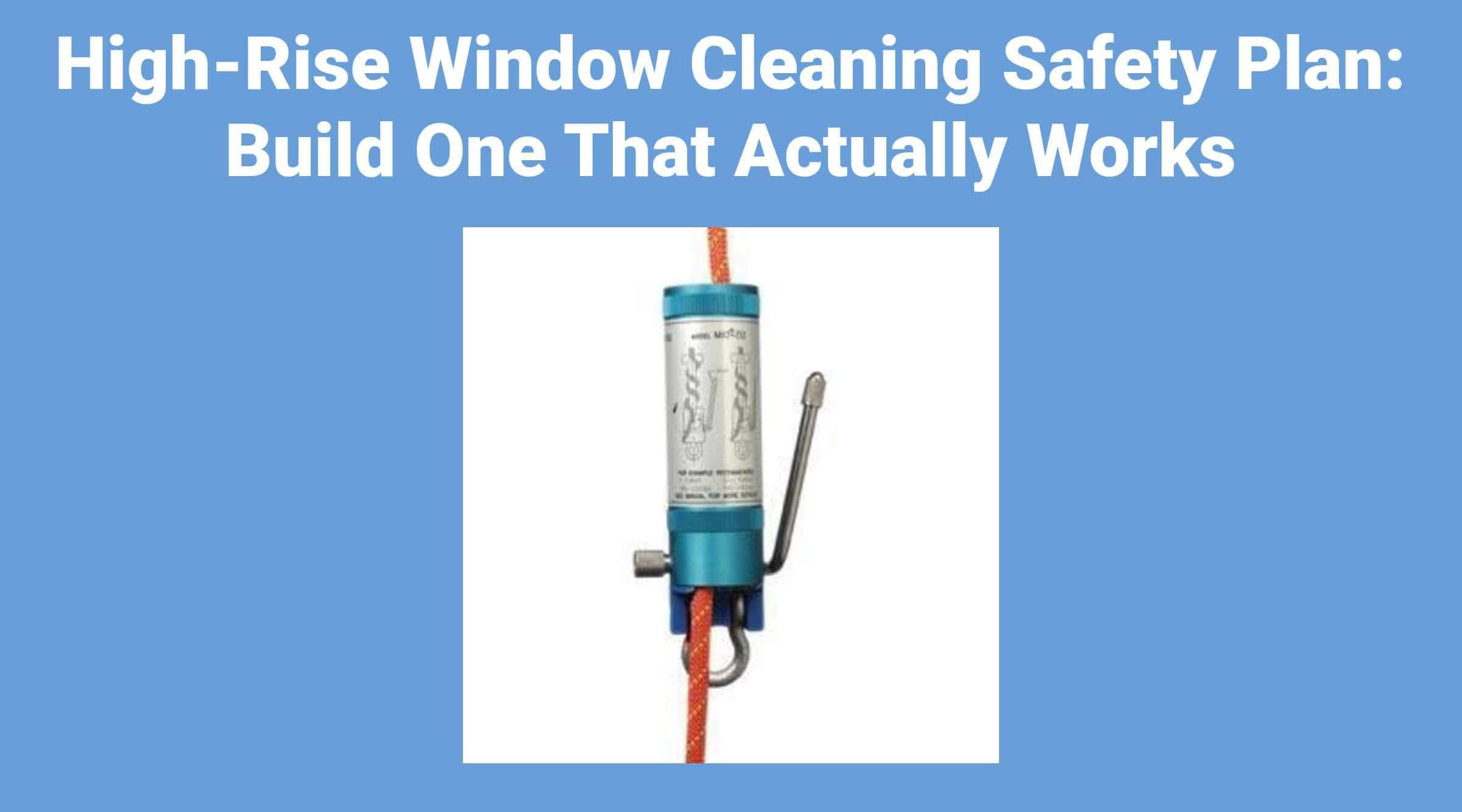
SRLs use a centrifugal brake to stop a fall within inches — the clear choice when clearance is tight. The DBI/Sala Rebel 20ft SRL covers most exterior cleaning scenarios where standard lanyards can't provide enough clearance. For budget-conscious crews working at height with adequate clearance, a Gemtor shock-absorbing lanyard handles the job at lower cost.
In leading-edge environments, standard connectors won't cut it. Specify LE-rated equipment. And if your anchor is at foot level rather than overhead, you need a 12-foot free-fall rated connector — standard 6-foot ratings don't account for the added energy.
Inspection, Fit, and Rescue Planning
Pre-Use Inspection Checklist
- Webbing: Check for fraying, stiffness, discoloration, or "fuzzing" — all signs of chemical degradation. SH exposure can weaken fibers without obvious visual cues.
- Hardware: Inspect carabiners and lanyard gates for cracks, distortion, or corrosion. Gates must snap closed and lock automatically.
- Load indicators: If a load indicator has deployed, the harness has been impact-loaded. Destroy it.
- SRL retraction: Confirm smooth, hesitation-free retraction. Any sticking means the unit comes off the truck.
Donning and Fit
Straps should be snug enough that only a flat hand slides between strap and leg. The dorsal D-ring must sit centered between the shoulder blades — check it on every worker, every time. Loose straps shift violently during arrest. A misplaced D-ring tilts the body and accelerates the onset of suspension trauma.
After a Fall Event
Every component involved in an arrested fall gets retired immediately. No re-inspection, no "it looks fine" — destroy the gear to prevent accidental reuse. Most professional-grade harnesses include load indicators that deploy during a fall, giving a clear visual signal.
Suspension Trauma and Rescue Planning
A worker hanging motionless in a harness can die within 15 minutes as blood pools in the legs. OSHA requires a written, site-specific rescue plan for every job where fall arrest systems are deployed. Trauma straps — which let a suspended worker stand in the harness and relieve arterial pressure — extend the rescue window significantly. Stock them. Train on them.
For pre-configured kits that include harness, anchor, lanyard, and a rescue-ready approach, the Roof Work Fall Protection Kit and Softwash Roof Cleaning Safety Kit eliminate the component-matching guesswork and get crews compliant faster.
Building a System That Fits Exterior Cleaning Work
Standard construction fall protection gear often restricts the lateral movement and tool access that window cleaners and pressure washers need. The selection criteria shift when your crew is running water-fed poles at height or maneuvering soft wash equipment on a 6/12 pitch roof.
Key integration points:
- Tool belt compatibility: Harnesses with side D-rings let you clip holsters and tool pouches without blocking the dorsal attachment.
- Chemical resistance: Stainless steel hardware and chemical-resistant webbing survive SH and surfactant exposure that destroys standard gear in months.
- Mobility: SRLs paired with overhead anchor trolleys give the lateral range that exterior work demands.
Browse the full Fall Protection Equipment category at J.Racenstein to match components to your specific operation — whether that's a single-tech residential window route or a multi-crew commercial pressure washing fleet.
Products Mentioned
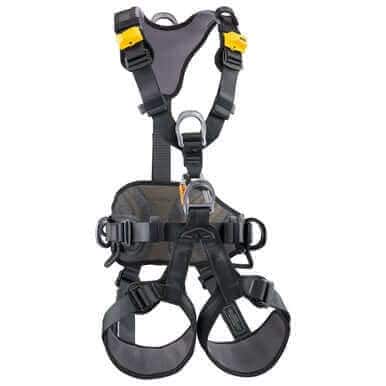 Petzl Avao Bod Harness SKU: 96-41M | 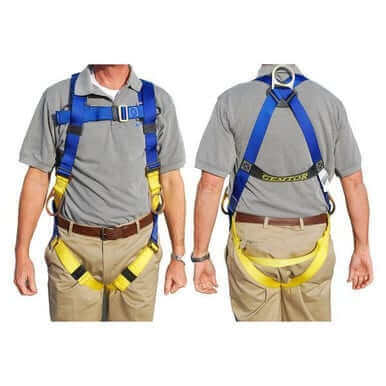 #922 Harness w/side D-rings Gemtor SKU: 96-50 | 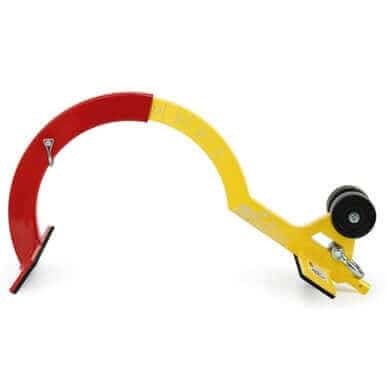 The RidgePro Roof Anchor SKU: 99-304 |
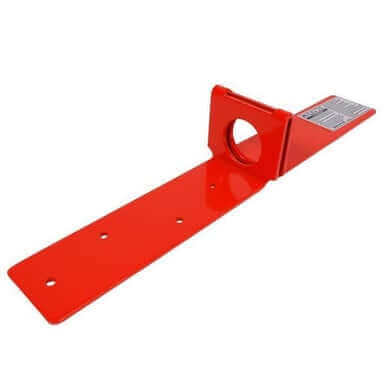 Roof Anchor Disposable SKU: 99-301 | 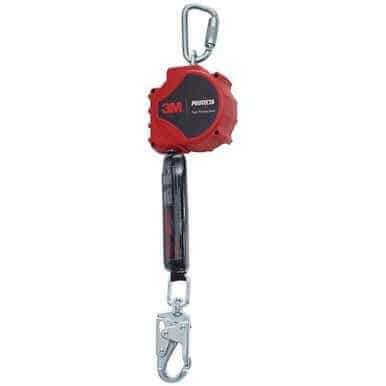 Self Retracting Lifeline 20ft Rebel Web SKU: 97-910 | 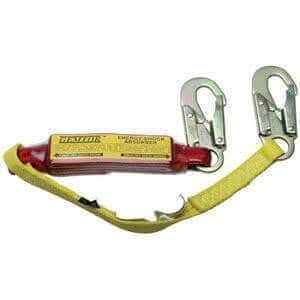 Gemtor Lanyard Shock Absorbing SKU: 97-5M |
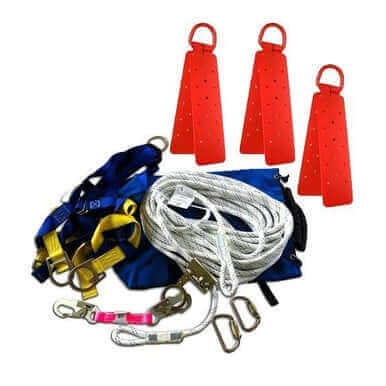 Roof work Fall Protection Kit SKU: 12-660 | 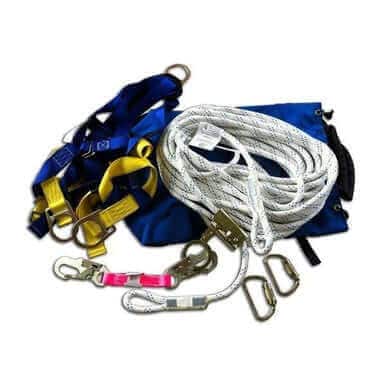 Safety Kit for Softwash Roof Cleaning SKU: 12-650 |