Window Cleaning Safety Harness Guide for Fall Protection Pros
Table of Contents
A window cleaning safety harness is not a belt you strap on and forget. It is a precision fall protection tool — the central component of a Personal Fall Arrest System (PFAS) — and the single piece of equipment most likely to determine whether a technician walks away from a job site incident. Fall protection has topped OSHA's most-cited violations list for over a decade. If you are running crews at height and treating harness selection as an afterthought, you are building liability into every shift.
This guide covers the technical distinctions that matter: fall arrest vs. rope access configurations, the hardware and webbing specs that separate professional gear from consumer junk, OSHA-mandated inspection protocols, and how to match a harness to the actual demands of your jobsite.
Why Consumer-Grade Gear Has No Place on a Commercial Job
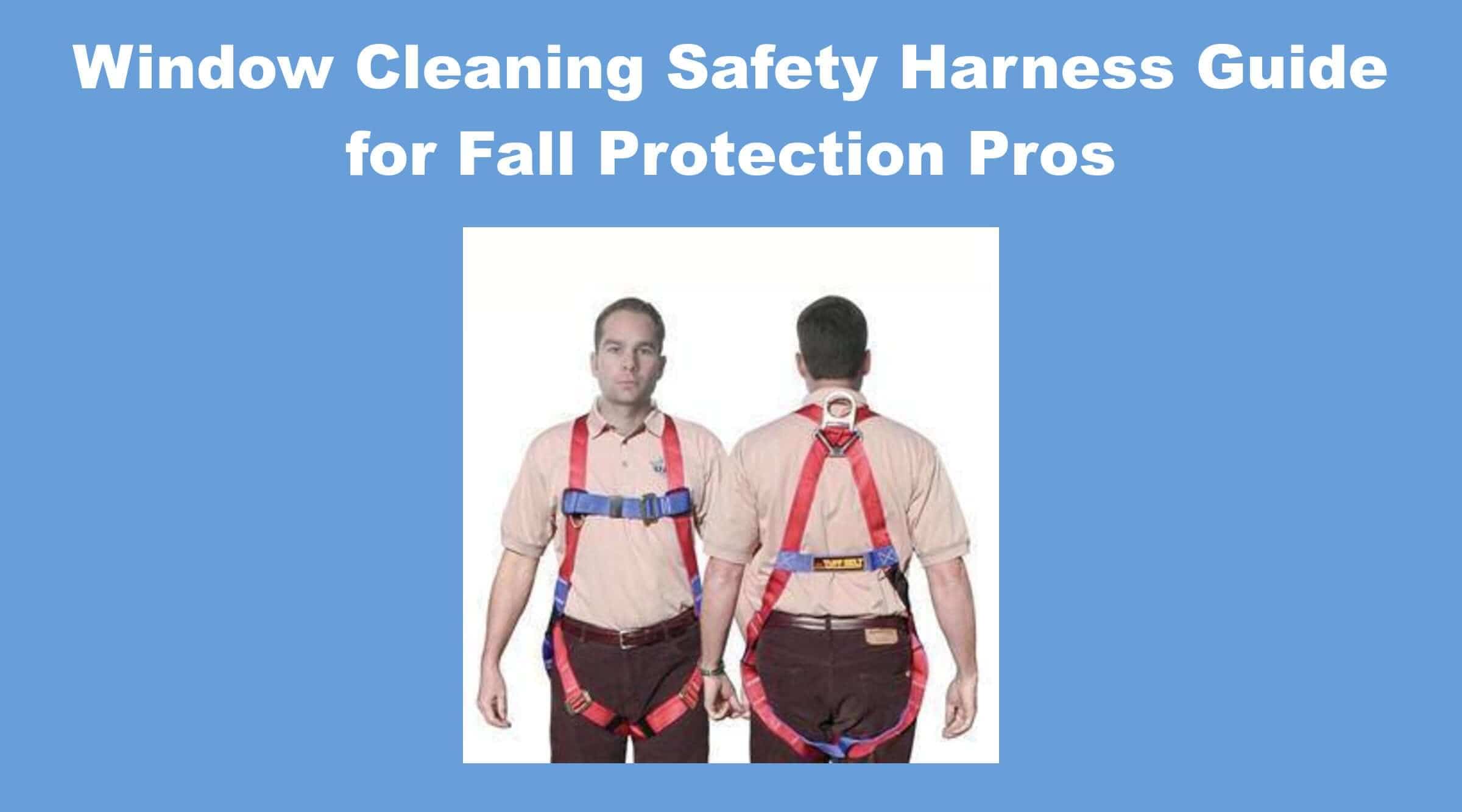
A full-body harness distributes arrest forces across the shoulders, chest, pelvis, and upper thighs. A waist belt concentrates those forces on internal organs. That is not a nuance — it is the difference between a recoverable event and a fatality. OSHA prohibits body belts for fall arrest outright, and using non-compliant gear on a commercial site exposes your business to citations, denied insurance claims, and criminal liability if something goes wrong.
Suspension trauma is the risk most crews underestimate. After a fall is arrested, blood pools in the legs. Without integrated relief straps or rapid rescue, orthostatic intolerance sets in within minutes. Professional harnesses from manufacturers like Petzl and Gemtor build relief step functionality into the design. Consumer gear does not.
Three things separate professional-grade harnesses from what you find at a hardware store:
- Webbing durability: High-tensile polyester resists UV degradation and the caustic chemicals used in soft washing and glass restoration. Nylon stretches when wet and degrades faster under acid exposure.
- Hardware integrity: Corrosion-resistant D-rings and buckles that hold up to daily moisture, debris, and chemical contact.
- Certification: Legitimate ANSI Z359.1 labeling backed by dynamic and static load testing. If the tag only says "OSHA compliant" without the specific ANSI designation, walk away.
Fall Arrest vs. Rope Access: Matching the Harness to the Job
This is where most purchasing mistakes happen. A harness suited for residential roof work will not support high-rise suspension, and vice versa. The distinction is how the system handles gravity — fall arrest acts as a secondary safety net that stays slack until deployment, while rope access places the harness under constant tension as the primary means of support.
Fall Arrest for Residential and Low-Rise
Residential crews working pitched roofs and ladder setups need lightweight vest-style harnesses with a dorsal (back) D-ring. The dorsal D-ring keeps the body upright during arrest. These systems pair with vertical lifelines and rope grabs for maximum mobility. Weight distribution during suspension is less critical here because the technician is primarily on their feet — the harness is a backup, not a workstation.
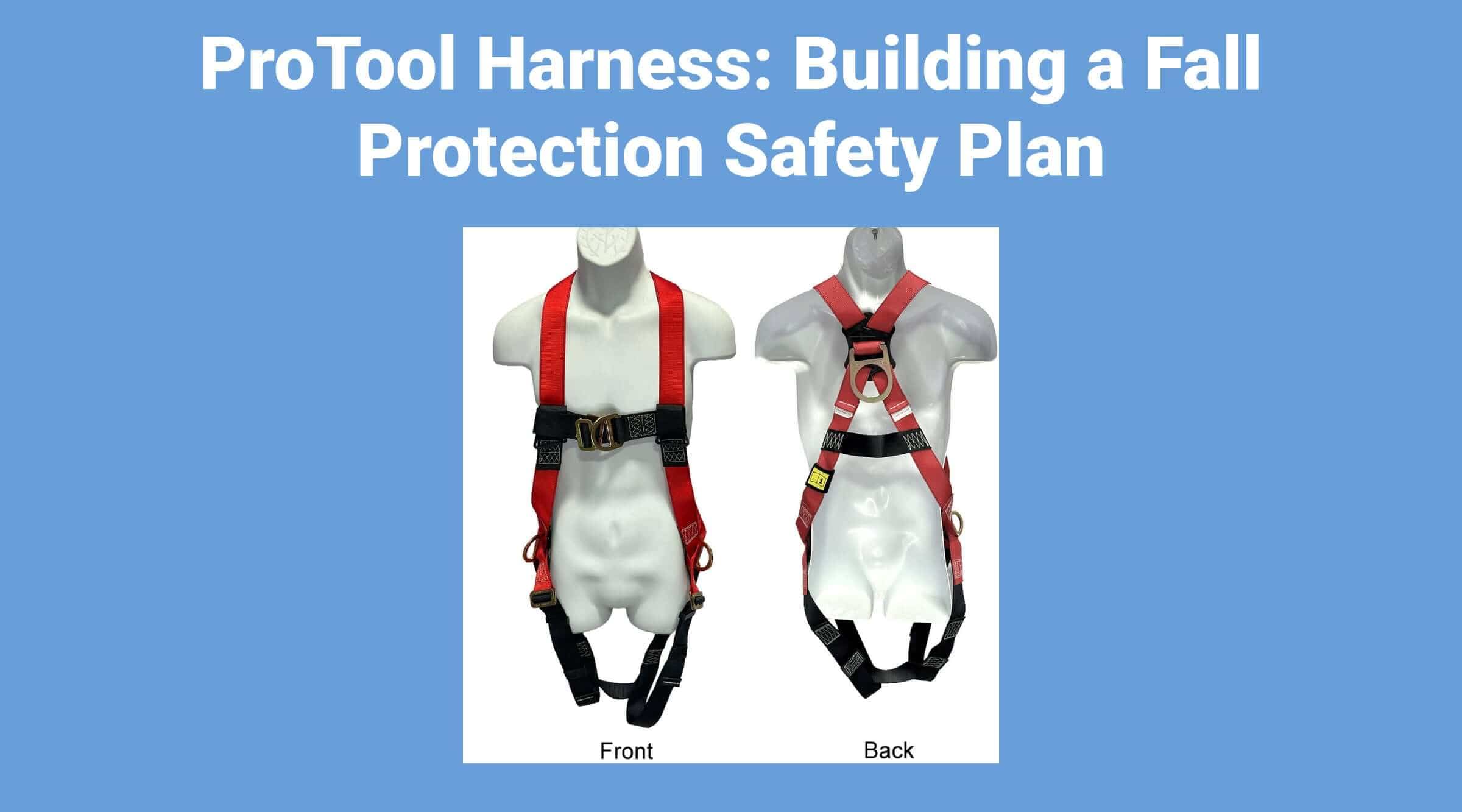
The Feather-Lite Full Body Harness is a strong residential option: lightweight, fast to don, and compatible with the roof safety kits most residential crews already run.
Rope Access and Suspension for High-Rise
High-rise operations using Rope Descent Systems (RDS) are a different animal. The ventral (front waist) D-ring is the mandatory attachment point for descenders. Side D-rings handle work positioning against the building face. Because technicians remain suspended for multi-hour shifts, the harness must include heavy-duty padding in the leg loops and lumbar region to shift load from the shoulders to the hips.
The Petzl Avao Bod Harness and the Petzl Astro Bod Fast are purpose-built for this work. Wider webbing and structured padding disperse pressure across the lower body, reducing the circulation problems that cause suspension trauma during long drops. Pair them with a Petzl ID descender and you have a system engineered for the actual demands of high-rise window cleaning — not adapted from construction gear that was never designed for sustained suspension.
Critical Hardware and Features
Quick-Connect buckles are not a luxury feature. They are a time multiplier. A crew running four residential stops per day loses 30+ minutes to tongue buckles over the course of a shift. Quick-Connect hardware lets technicians don and doff without losing their custom fit settings. On a per-job basis the time savings are small. Over a season they are significant.
D-ring placement determines what the harness can actually do:
- Dorsal (back): Standard for fall arrest. Keeps the body upright during a catch.
- Sternal (front chest): Ladder safety systems and certain climbing applications.
- Ventral (front waist): Mandatory for descender attachment in RDS work.
- Side D-rings: Work positioning — stabilizing against a building face during cleaning.
A multi-point harness like the Gemtor 933 covers all configurations and lets crews transition between residential and commercial work without swapping gear.
Tool Integration
Reinforced tool loops and holster compatibility points must be positioned so scrapers, squeegees, and side buckets do not interfere with the primary webbing or the deployment path of a shock-absorbing lanyard. If your tool pouch sits on top of your dorsal D-ring attachment, you have a problem — and you will not discover it until the system deploys.
Webbing and Chemical Resistance
High-tensile polyester is the right fiber for exterior maintenance. It resists stretching when wet and holds up better than nylon under acid exposure from cleaning chemicals. UV-resistant coatings are mandatory — crews spend entire shifts in direct sunlight, and uncoated webbing becomes brittle within a season of heavy use. Inspect for chemical stiffening regularly; caustic soft wash solutions accelerate degradation faster than most crews expect.
Adjustability
A 5-point adjustability system (shoulders, legs, chest) is the minimum for professional use. "Universal" sizing is a compromise that leads to poor weight distribution and excess webbing that snags on building features during ascent. Integrated strap keepers secure loose ends — a detail that matters when you are working around cornices and ladder rungs 200 feet up.
OSHA Inspection and Maintenance Protocols
Buying good gear is half the job. Maintaining it is the other half, and it is the half that OSHA actually audits.
The rules are straightforward: a "Competent Person" must perform a formal, documented inspection of every window cleaning safety harness at least once per year. That person must have the technical knowledge to identify hidden defects and the authority to pull non-compliant gear from service immediately. Any harness involved in a fall arrest event is retired and destroyed — no exceptions, no visual inspections, no second chances. The internal fibers stretch to absorb the arrest force and cannot safely perform that function twice.
Daily 5-Point Pre-Shift Inspection
The annual audit is a legal requirement. The daily pre-shift check is what actually keeps people alive.
- Webbing integrity: Flex the webbing in an inverted U to expose surface damage. Look for cuts, singed fibers, or chemical stiffening.
- Stitching patterns: Examine load-bearing box stitches at D-rings and buckles. Pulled, broken, or missing threads indicate structural fatigue.
- Hardware condition: Check D-rings and adjusters for cracks, sharp edges, or deformation. Any bent or rusted metal gets evaluated for retirement.
- Buckle functionality: Test spring tension on Quick-Connect or tongue buckles. Hardware must engage smoothly and stay locked under manual pull.
- Label legibility: If the manufacturer's label — safety specs, serial number, date of manufacture — is missing or unreadable, the harness is technically non-compliant.
Cleaning and Storage
Mild soap and water only. Bleach and harsh detergents degrade polyester fibers. Never use industrial dryers or direct heat — high temperatures shrink webbing and compromise the molecular structure of the fibers. Air dry in a ventilated area.
Store hanging in a cool, dry space away from direct sunlight. Throwing harnesses into a truck bed where they cook in UV and sit in moisture next to sharp tools is the fastest way to destroy expensive gear. Proper storage is not fussiness — it is extending the functional life of a $300+ piece of equipment.
Building a Complete Fall Protection System
A harness alone is not a fall protection system. It is one component. The full PFAS includes an anchorage point, a connecting device (lanyard or self-retracting lifeline), and the harness itself. All three must be rated for the total load — the technician's body weight plus tools, clothing, and side buckets.
For residential roof work, pair a harness with a RidgePro roof anchor and a shock-absorbing lanyard. For high-rise RDS, pair with a certified descender and an independent lifeline with an anti-panic rope grab. J.Racenstein stocks complete fall prevention kits that bundle these components for crews building out their safety program from scratch.
Products Mentioned
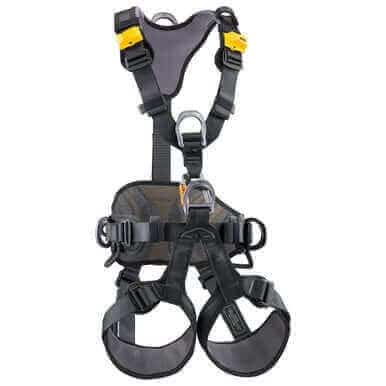 Petzl Avao Bod Harness SKU: 96-41M | 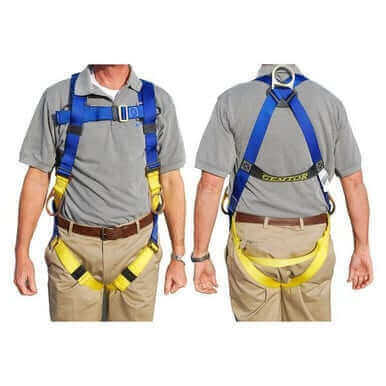 #922 Harness w/side D-rings Gemtor SKU: 96-50 | 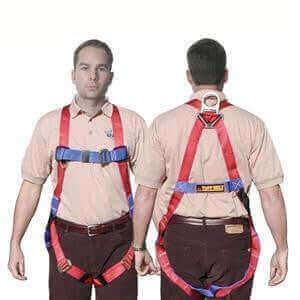 Harness Feather-Lite Full Body SKU: 96-710 |
Petzl Avao Bod Harness SKU: 96-41M | 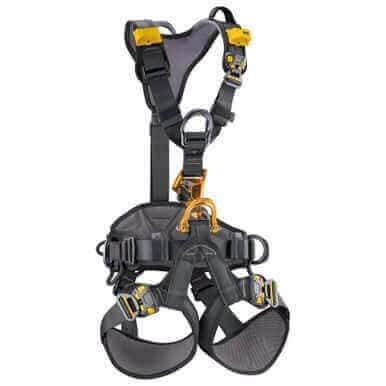 Astro BOD FAST Harness SKU: 96-43M | 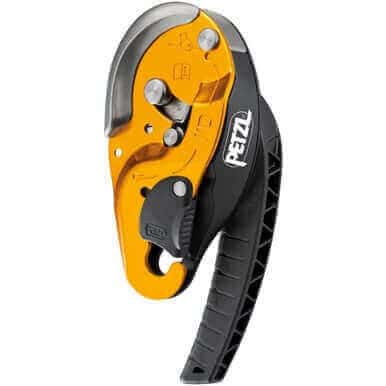 Petzl Descender ID SKU: 93-5M |
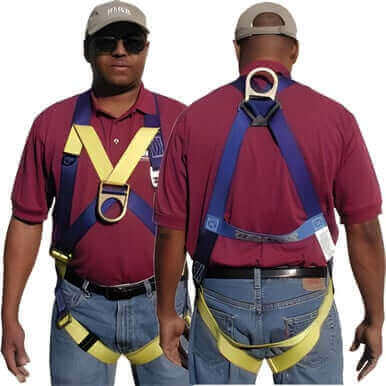 #933 Front & Back D-Ring Harness Gemtor Universal SKU: 96-52 | 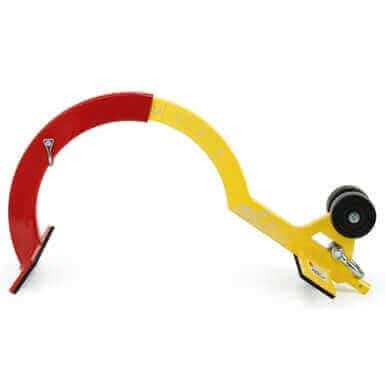 The RidgePro Roof Anchor SKU: 99-304 |