Window Cleaning Safety Harness Guide for Fall Protection Pros
Table of Contents
A window cleaning safety harness is a precision tool — not a belt you throw on because OSHA says so. Fall protection has topped the OSHA violation list for over a decade, and the reason is rarely dramatic equipment failure. It's the wrong harness for the job, a skipped inspection, or consumer-grade gear on a commercial site. Any of those turns a routine shift into a liability event.
This guide covers harness selection by job type, the features that actually matter for exterior cleaning pros, inspection protocols that keep you compliant, and what to look for when sourcing equipment.
Why a Professional-Grade Harness Matters
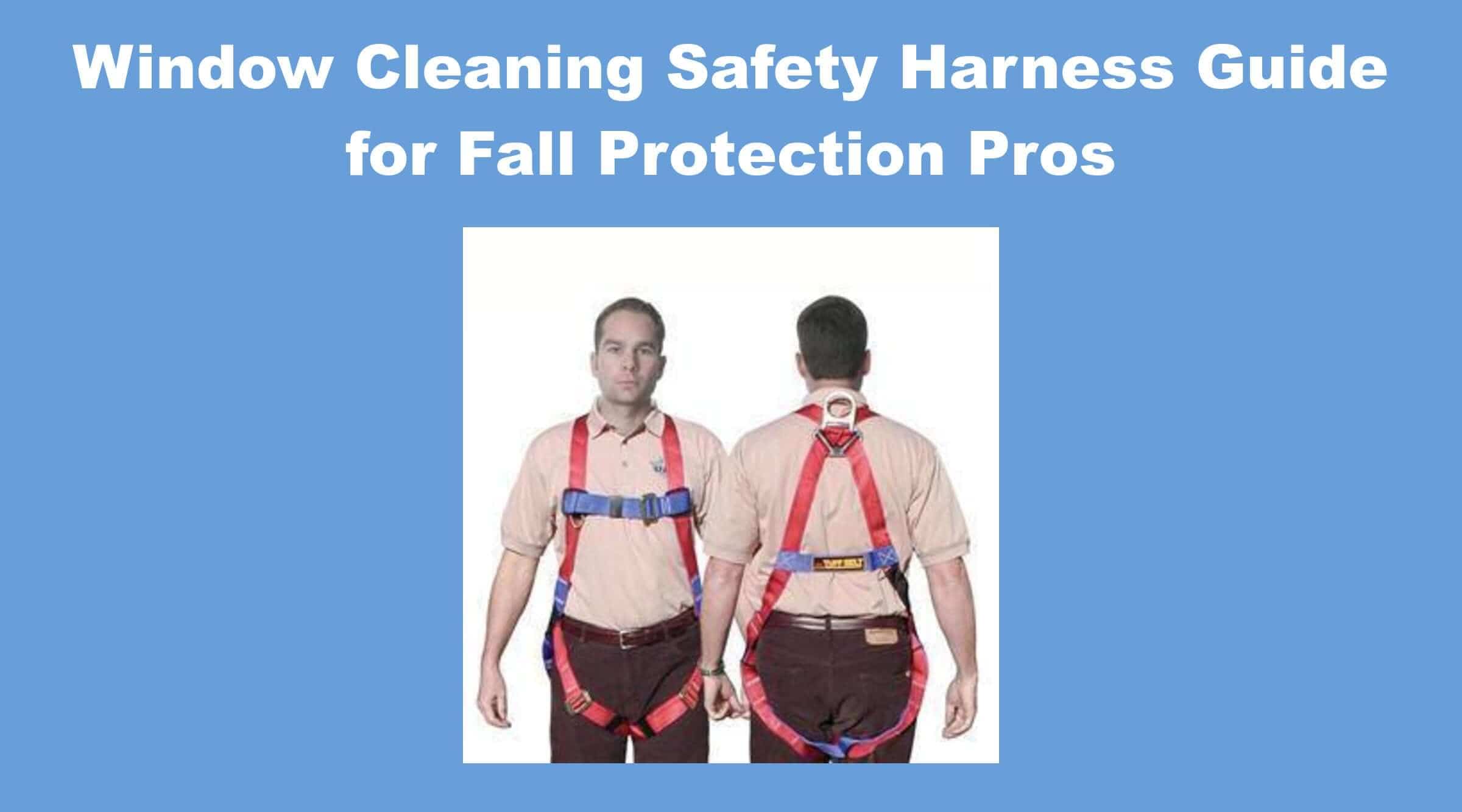
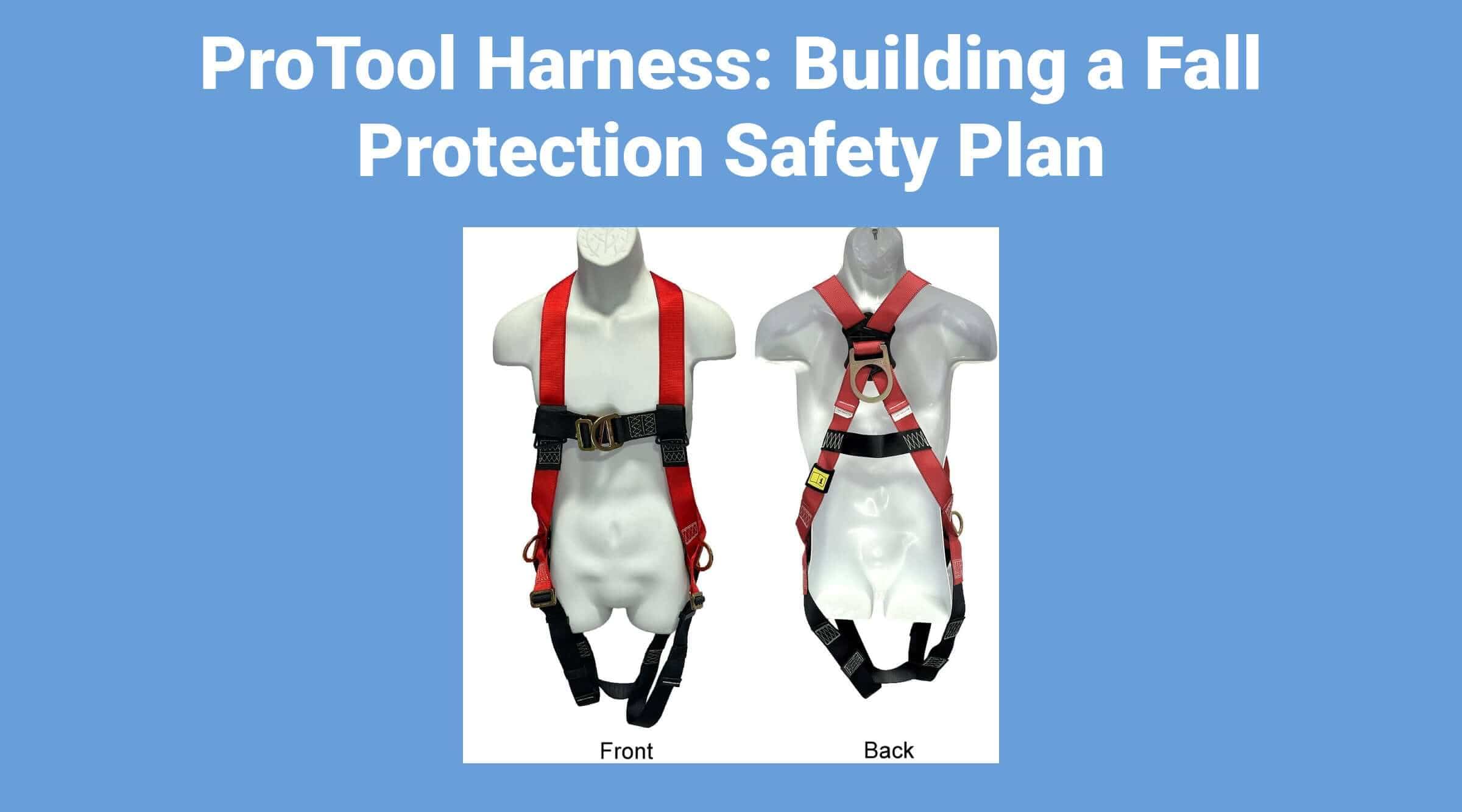
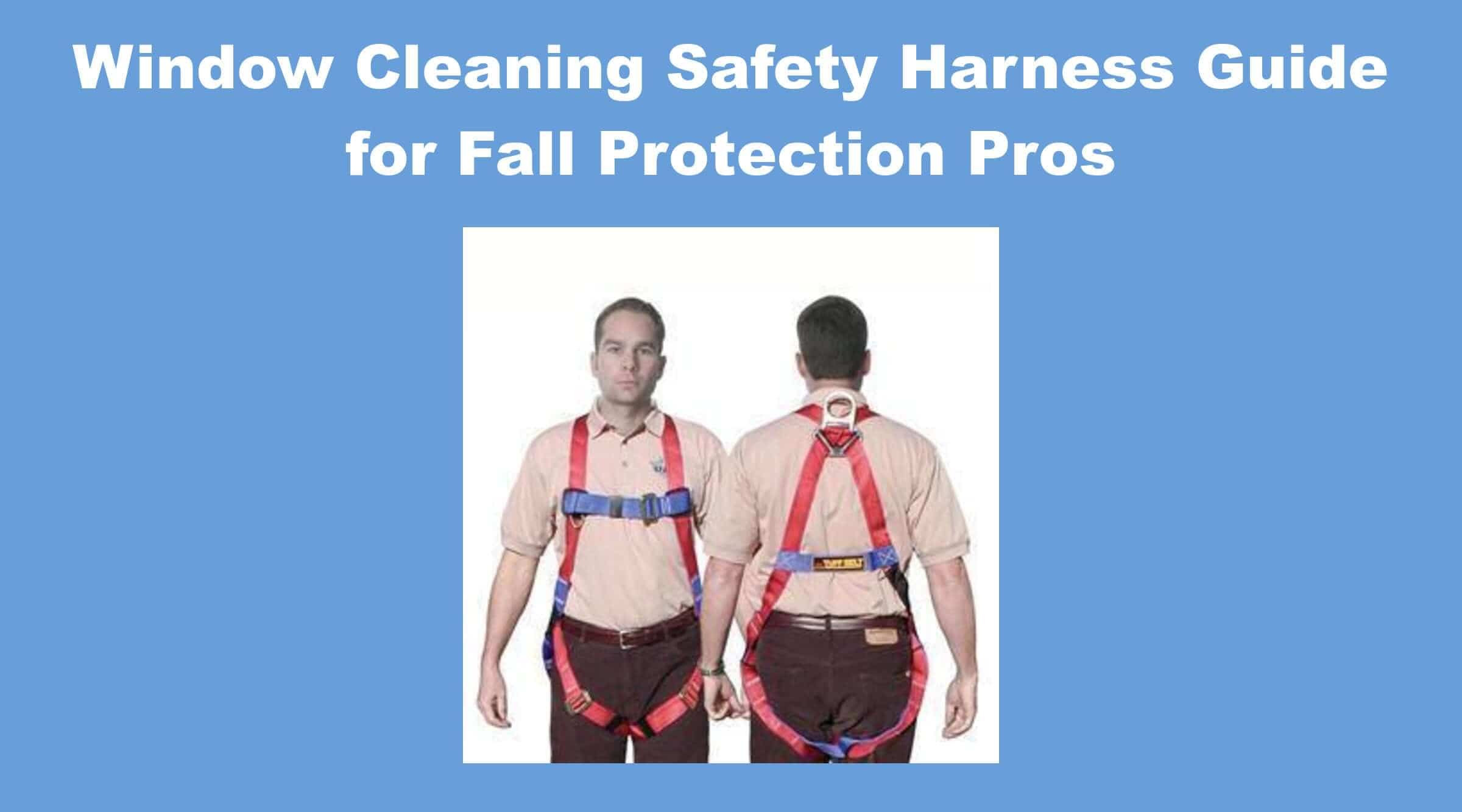
A full-body window cleaning safety harness is the core of a Personal Fall Arrest System (PFAS). It distributes arrest forces across the shoulders, chest, pelvis, and upper thighs — the strongest parts of the skeletal structure. A waist belt can't do that. During a fall event, a belt concentrates force on soft tissue and internal organs. On a commercial site, using one is an OSHA citation waiting to happen, and your insurance carrier will deny the claim.
Suspension trauma is the risk most crews underestimate. After a fall arrest, blood pools in the legs. Without relief straps or rescue within minutes, orthostatic intolerance sets in. Harnesses built for the window cleaning trade — like the Petzl Avao Bod or Sky Genie LifeSaver — integrate relief steps and ergonomic padding specifically for this scenario.
Consumer vs. Professional: Three Differences That Matter
- Webbing durability. Professional harnesses use high-tensile polyester or nylon rated for UV exposure and chemical contact. Soft wash chemicals, restoration acids, and all-day sun destroy consumer webbing within months.
- Hardware integrity. Corrosion-resistant D-rings and heavy-duty buckles that maintain function despite constant moisture, debris, and cleaning chemical exposure. A corroded D-ring is a failure point you can't see until it's too late.
- Certification. Legitimate ANSI Z359.1 and OSHA 1910.27 labeling — not just "meets OSHA standards" on a hang tag. The safety harnesses category at J.Racenstein stocks only certified, field-tested equipment.
Fall Arrest vs. Rope Access: Matching the Harness to the Job
Equipment suited for a residential roof will fail a high-rise suspension application. The distinction is how the system handles gravity: fall arrest acts as a backup safety net; work positioning is the primary means of support. Weight distribution, D-ring placement, and padding levels all change based on which mode you're working in.
Fall Arrest for Residential and Low-Rise
Residential crews working pitched roofs and ladder setups need lightweight vest-style harnesses with a dorsal (back) D-ring — the attachment point that keeps the body upright during arrest. These integrate with vertical lifelines and rope grabs for maximum mobility. The webbing prioritizes flexibility over suspension comfort because the worker is primarily on their feet, not hanging.
The Feather-Lite Full Body Harness paired with a 5/8" rope grab and 3ft lanyard is a solid residential setup — light enough to move fast across a roof line, compliant enough to pass inspection.
Rope Access and Suspension for High-Rise
High-rise Rope Descent Systems (RDS) demand a ventral (front/waist) D-ring for descender attachment, heavy-duty leg loop and lumbar padding, and side D-rings for work positioning against the building face. Technicians hang for multi-hour shifts. The load shifts from shoulders to hips and legs — a fundamentally different engineering requirement.
The Petzl Astro Bod FAST is purpose-built for this work: wide webbing, integrated padding, fast-connect buckles, and the full multi-point D-ring configuration. Pair it with a Petzl ID descender and a Teufelberger KMIII 1/2" rope for a compliant high-rise system.
Features That Separate Working Gear from Catalog Filler
Quick-Connect Buckles
Crews running multiple sites per day lose real money fumbling with pass-through buckles. Quick-connect leg and chest buckles let a tech don the harness in seconds without resetting the fit. Over a week of multi-site residential work, that adds up to a meaningful time savings.
D-Ring Configuration
Dorsal D-ring: fall arrest standard. Sternal D-ring: ladder safety systems and certain climbing applications. Ventral D-ring: mandatory for descender attachment on RDS. Side D-rings: work positioning against the building face. A multi-point harness lets your crew transition between environments without swapping gear.
Tool Integration
Professional harnesses feature reinforced tool loops and holster compatibility points positioned so scrapers, squeegees, and side buckets don't interfere with webbing or shock-absorbing lanyard deployment. If your tool attachment compromises your PFAS, you have the wrong harness.
Webbing and Chemical Resistance
High-tensile polyester resists stretching when wet and holds up better than nylon against acidic cleaning agents. UV-resistant coatings are mandatory for crews spending full shifts in direct sun. For specialized industrial sites, flame-resistant webbing adds another layer — but for most exterior cleaning operations, chemical and UV resistance are the two specs that determine real-world lifespan.
Adjustability
"Universal fit" is a compromise that leads to poor load distribution and faster fatigue. Look for 5-point adjustability (shoulders, legs, chest) with integrated strap keepers to manage excess webbing. Loose webbing snagging on cornices, ladder rungs, or building features during ascent is a hazard that a tailored fit eliminates.
Inspection and Maintenance: The Protocols That Keep You Compliant
OSHA mandates that a "Competent Person" performs a formal, documented inspection of every window cleaning safety harness at least annually. But the technician's daily pre-shift check is what actually prevents incidents. Any harness involved in a fall arrest event — even with no visible damage — must be retired and destroyed immediately. The internal fibers stretch to absorb the 1,800-pound maximum arresting force. They cannot do it twice.
5-Point Daily Inspection Checklist
- Webbing integrity. Flex the webbing in an inverted U to reveal surface damage — cuts, singed fibers, or chemical stiffening from prolonged cleaning agent exposure.
- Stitching patterns. Examine load-bearing box stitches at D-rings and buckles for pulled, broken, or missing threads.
- Hardware condition. Check all D-rings and adjusters for cracks, sharp edges, deformation, or corrosion.
- Buckle function. Test spring tension on quick-connect or tongue buckles. They must engage smoothly and hold under manual tension.
- Label legibility. If the manufacturer's label — safety specs, serial number, date of manufacture — is missing or unreadable, the harness is non-compliant.
Cleaning and Storage
Mild soap and water only. Bleach and harsh detergents degrade polyester fibers. Never use a dryer or direct heat — high temperatures shrink webbing and compromise fiber structure. Air dry in a ventilated area.
Store harnesses hanging in a cool, dry space away from direct sunlight. Throwing gear into a truck bed where it sits in UV, moisture, and next to sharp tools is the fastest way to shorten equipment life. Proper storage is the cheapest safety investment you'll make.
Building Your Fall Protection System
A harness is one component. A compliant PFAS includes the harness, a connecting device (shock-absorbing lanyard or self-retracting lifeline), and an anchorage point. Every component must be rated for the total load — the technician's weight plus all tools, buckets, and clothing.
For residential roof work, the Roof Cleaning Safety Kit bundles the essentials: harness, rope, grab, and anchor in a single package sized for the job. For high-rise operations, build the system around the harness and descender combination, adding ANSI-rated carabiners, tie-off pads, and rope protectors based on the building profile.
J.Racenstein stocks the full fall protection equipment category — harnesses, ropes, descenders, rope grabs, helmets, and anchorage — from Petzl, Gemtor, Kong, Sky Genie / Descent Control, and other field-proven brands. If you need help matching a system to a specific building type or descent protocol, the team has the technical knowledge to spec it correctly.
Products Mentioned
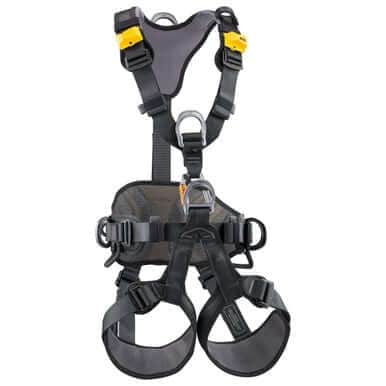 Petzl Avao Bod Harness SKU: 96-41M | 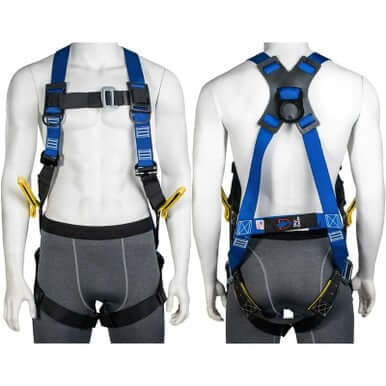 Descent Control LifeSaver Full Body Harness Sky Genie SKU: 96-22M | 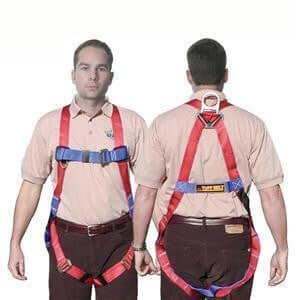 Harness Feather-Lite Full Body SKU: 96-710 |
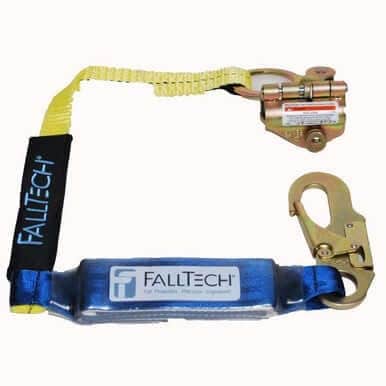 Rope Grab 5/8in w/03ft Lanyard FallTech SKU: 94-63 | 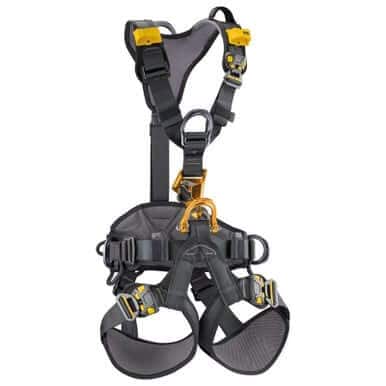 Astro BOD FAST Harness SKU: 96-43M | 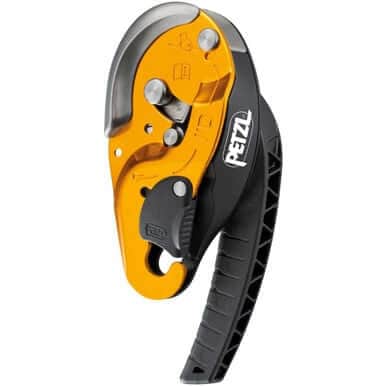 Petzl Descender ID SKU: 93-5M |
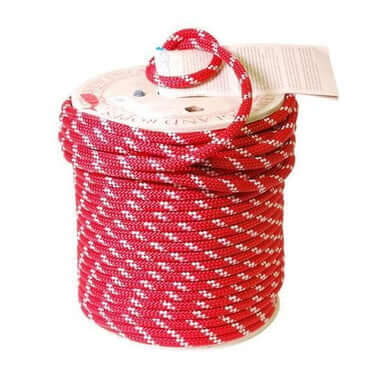 Teufelberger Rope KMIII 1/2in Red SKU: 90-14M | 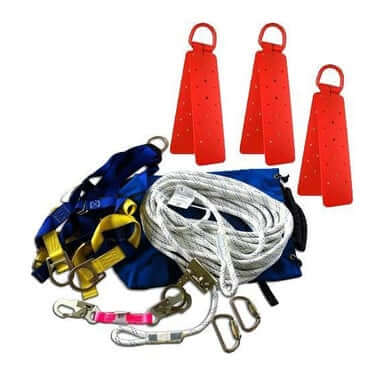 Roof work Fall Protection Kit SKU: 12-660 |