Electric Pressure Washers: What Contractors Actually Need to Know

Table of Contents
Electric pressure washers have a reputation problem in the trades. Most contractors tried a consumer-grade unit once, tripped a breaker on a client's property, and wrote off the category. That's a reasonable reaction to a $300 box-store machine — but it has nothing to do with what a professional-grade electric unit actually delivers.
The distinction matters because electric units solve problems gas can't. Indoor work, noise-restricted HOA communities, hospital and school campuses, permanent wash bays — these are revenue opportunities that a gas engine literally cannot access. The contractor who dismisses electric outright is leaving money on the table.
Where Electric Outperforms Gas
Don't think of electric as a replacement for your gas rig. Think of it as a specialist tool that opens job categories your gas machine locks you out of.
Indoor and enclosed spaces. Commercial kitchens, parking garages, equipment wash-down stations, detail bays — anywhere exhaust fumes create a liability. A gas engine in an enclosed space is a CO hazard and often a code violation. Electric is the only option.
Noise-sensitive sites. Hospital campuses, assisted living facilities, schools during session, and residential neighborhoods with enforced noise ordinances. Electric units run quiet enough to work during business hours without complaints or violations.
Stationary installations. If you're building a permanent wash bay or detail station, electric eliminates fuel logistics, reduces fire risk, and gives you instant-on power with no pull-start routine. The motor runs when you squeeze the trigger and stops when you release it.
Specs That Separate Professional from Consumer
PSI and GPM on the box mean nothing if the internals can't sustain them through a full work day. Here's what actually determines whether an electric unit earns its keep:
Pump type
Consumer units use axial cam pumps — sealed, non-serviceable, and designed for maybe 200–500 hours before they're landfill material. Professional units run triplex plunger pumps with ceramic plungers and brass manifolds. These are rebuildable, serviceable, and rated for thousands of hours. If the spec sheet says "axial cam," walk away.
Motor and drive
Consumer motors spin at 3,450 RPM and burn out fast. Professional induction motors run at 1,750 RPM — cooler, quieter, and built for continuous duty. Belt-drive configurations isolate the pump from motor vibration and heat, extending pump life significantly over direct-drive setups.
Cleaning Units
PSI × GPM = Cleaning Units (CU). This is the number that actually predicts how fast you'll finish a job. A 1,500 PSI × 4.0 GPM unit (6,000 CU) will outperform a 3,000 PSI × 1.5 GPM unit (4,500 CU) on house washing because flow moves soap and rinse water. High PSI with low flow is a consumer marketing trick. Match the balance to the work: higher GPM for rinsing and soap application, higher PSI for concrete and flatwork.
Electrical Requirements You Must Verify Before Unloading
This is where electric units demand discipline that gas rigs don't. Get the power situation wrong and you're standing in a client's driveway with a dead machine and a tripped panel.
120V vs. 240V
Standard residential outlets deliver 120V and support units up to roughly 2,000 PSI. For anything more powerful, you need a 240V circuit — the kind found in garages with welders, workshops, and commercial facilities. Verify the outlet type before quoting the job. A 240V receptacle has a distinct larger plug configuration; if you're not sure, ask the client or check the panel.
Amperage and breakers
A professional electric unit can pull 15+ amps under load. Your first stop on site should be the breaker panel. Identify a dedicated 20-amp circuit — never share one with the client's HVAC, refrigerator, or other high-draw equipment. One tripped breaker in front of a customer erodes confidence fast.
Extension cords
This is the most common failure point for electric setups, and it's entirely preventable. An undersized extension cord creates voltage drop that starves the motor, causes overheating, and shortens its life. The rules are simple:
- Runs up to 50 feet: 12-gauge minimum
- Runs over 50 feet: 10-gauge
- Always use the shortest cord the job allows
- Never bypass the GFCI on the plug — it's there because water and electricity coexist on this tool
Form Factors and Where They Fit
Hand-carry units are compact and light — ideal for interior detail work, restroom cleaning, or jobs where you're carrying equipment through a building.
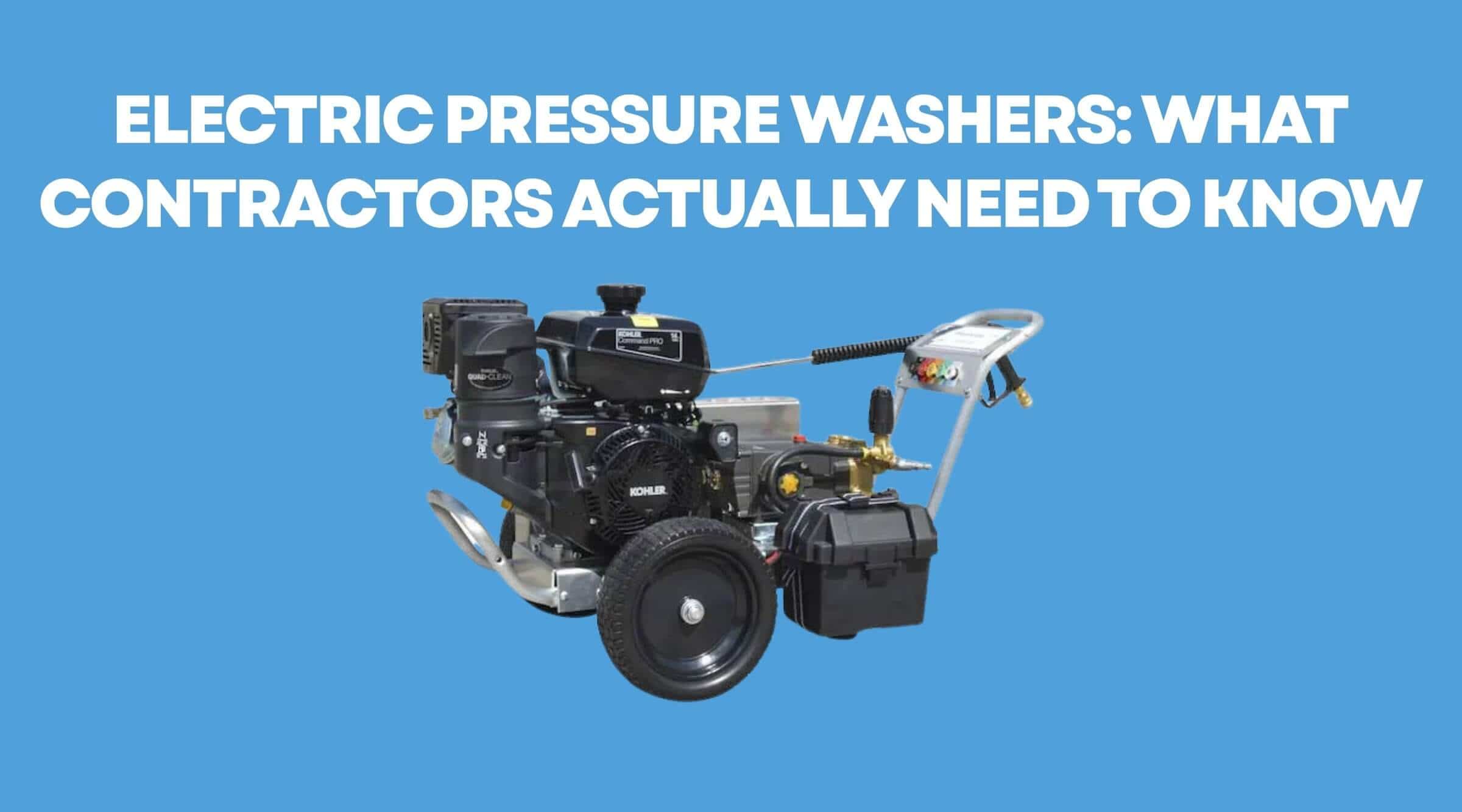
Cart-mounted units are the professional standard. Durable frames, pneumatic tires, and enough hose capacity for most residential and light commercial work. This is what most contractors adding electric to their fleet should start with.
Wall-mount and stationary skids belong in permanent installations — fleet wash bays, detail shops, food processing facilities. No setup, no teardown, instant-on cleaning whenever you need it. The pressure washing skid category includes options built for this kind of fixed installation.
Accessories That Actually Matter
The machine is half the equation. The accessories determine how fast and how well you clean.
Turbo nozzles. A rotating turbo nozzle concentrates impact force on concrete and other hard surfaces, cutting cleaning time significantly over a standard fan tip. Size the nozzle to your machine's GPM and PSI — an oversized nozzle drops pressure, and an undersized one restricts flow.
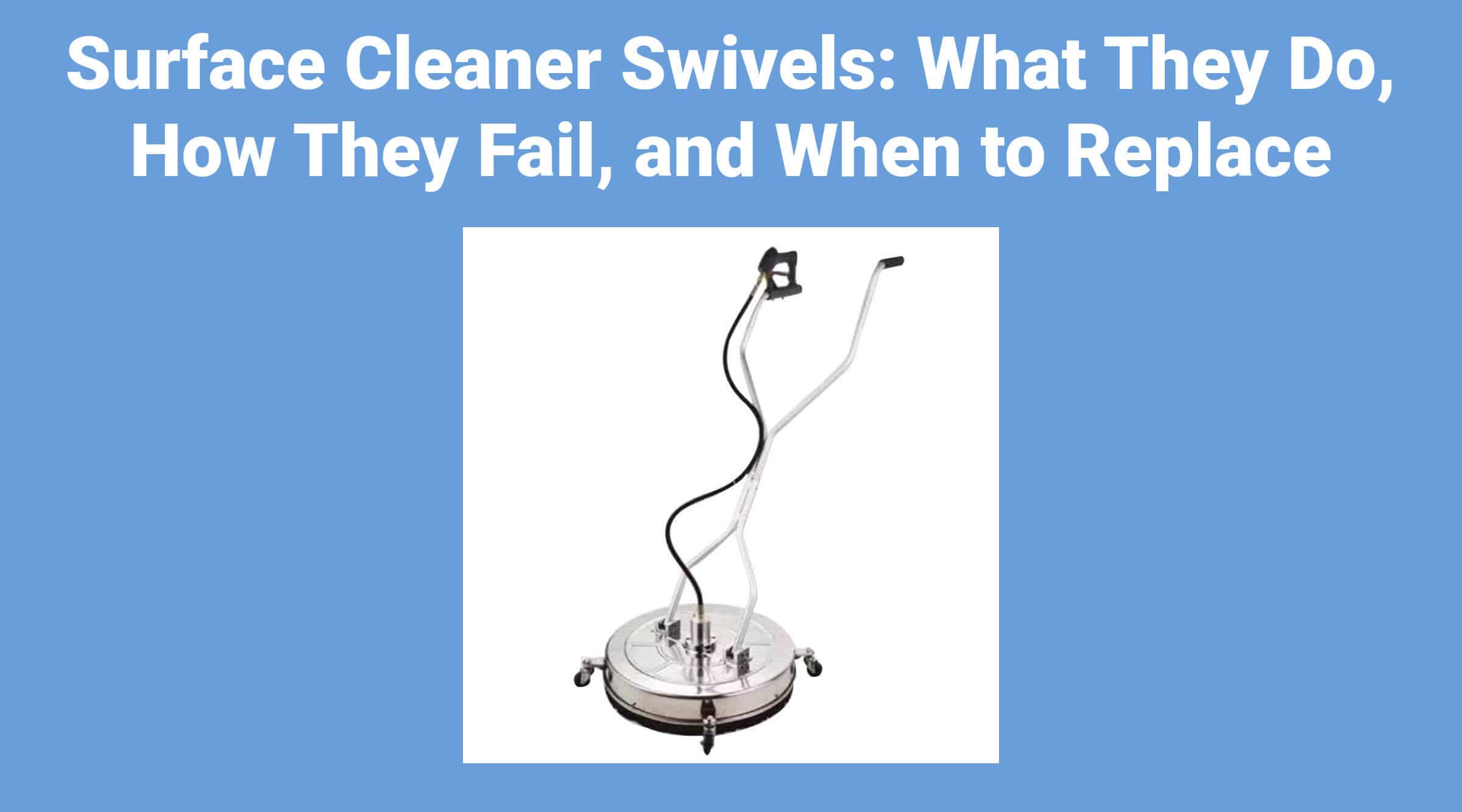
Surface cleaners. For any flatwork — driveways, sidewalks, warehouse floors — a surface cleaner is non-negotiable. Consistent, streak-free results at two to three times the speed of a wand. The profitability difference on a 2,000 sq ft driveway is measured in hours.
Hoses and reels. Upgrade from the stock hose to a non-marking, steel-braided pressure hose rated for your machine's PSI. A proper hose reel cuts setup and breakdown time on every job and protects the hose from kinks and abrasion.
Quick connects. Standardize on stainless steel quick connects across your setup. Brass corrodes. Zinc-plated steel rusts. Stainless lasts.
Maintenance That Prevents Downtime
Electric units have dramatically less maintenance than gas — no oil changes, no carburetors, no fuel stabilizer. But "less" doesn't mean "none."
Before every job: Inspect the power cord for frays and damage. Test the GFCI. Check hose connections for leaks. This takes two minutes and catches the problems that strand you on site.
Pump oil: Triplex pumps need oil changes on the manufacturer's schedule. Clean oil prevents premature seal and plunger wear. Skip this and you'll be rebuilding the pump months ahead of schedule.
Winterization: Water left in the pump freezes, expands, and cracks the manifold. Run pump-safe antifreeze through the system before storage in any climate that drops below freezing. A $10 bottle of antifreeze prevents a $400+ pump replacement.
Seals and O-rings: These are wear items. Keep a rebuild kit on hand — seals and O-rings are inexpensive and easy to replace before they fail on a job site. The unloader valve is another common service point; learn how yours adjusts and keep it functioning properly.