Fleet Fuel Costs: What Cleaning Contractors Actually Control

Table of Contents
- Establish a Baseline Before You Coach Anything
- Driver Coaching That Changes Behavior
- Route Planning That Reduces Miles, Not Just Finds Cheap Gas
- Driver Scorecards That Lead to Action
- Telematics and Fuel Management Tools
- Fuel Purchase Policies That Work
- Equipment Load Planning Supports Fuel Efficiency
- Products Mentioned
Fleet fuel costs are not a pump-price problem. They are an operations problem — and most cleaning contractors treat them backwards. They chase cheaper stations instead of fixing the routes, habits, and dispatch decisions that burn the fuel in the first place.
The contractors who actually move the needle track consumption per vehicle, coach drivers on specific habits, and build fuel policies that flag exceptions automatically. This is how to do that without turning fleet management into a second full-time job.
Establish a Baseline Before You Coach Anything
You cannot improve what you have not measured against itself. Pull fuel purchases, miles traveled, engine hours, and route type for each vehicle. Compare similar work — a truck doing short urban window cleaning stops burns fuel differently than one running highway routes to commercial pressure washing jobs. That distinction matters more than most managers realize.
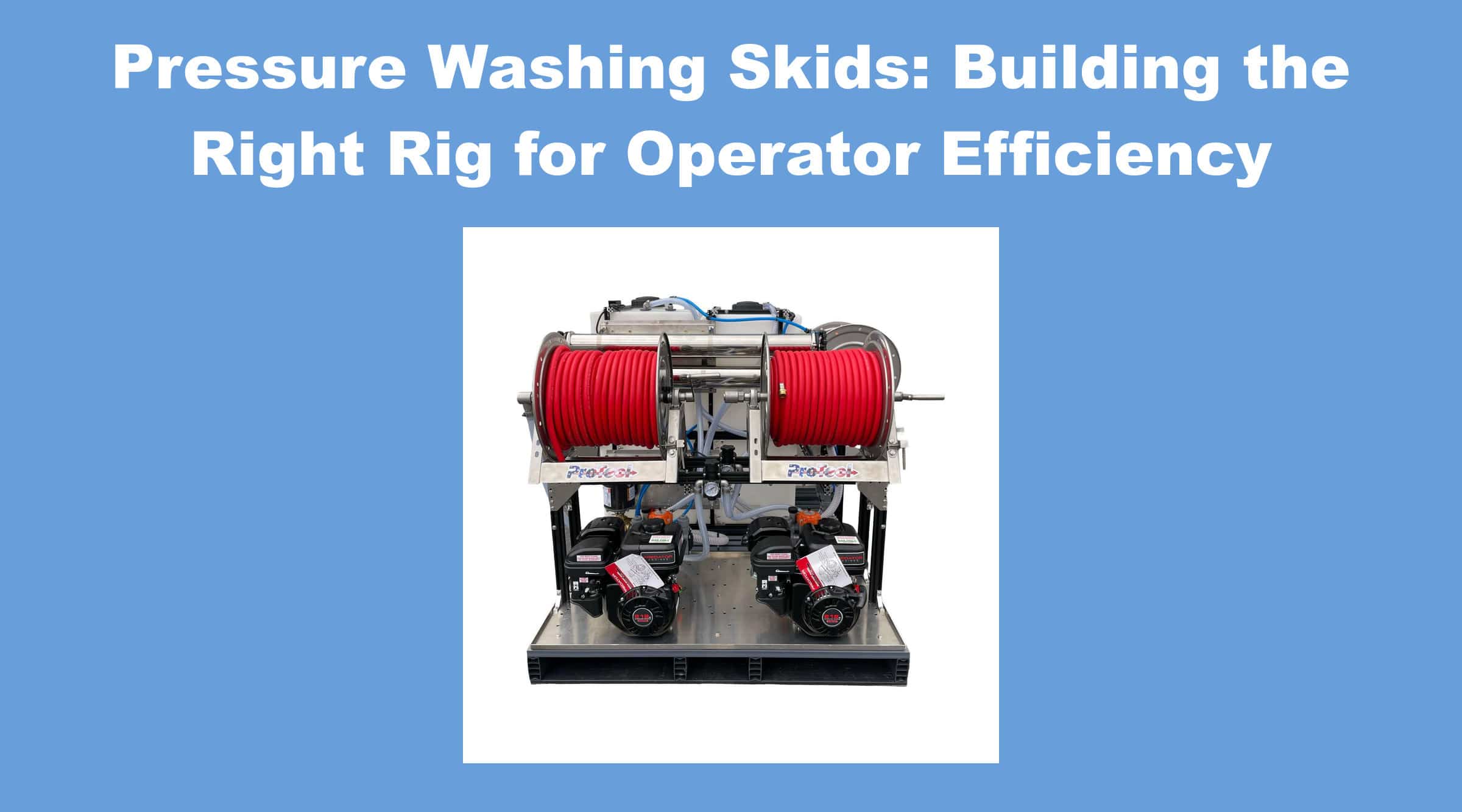
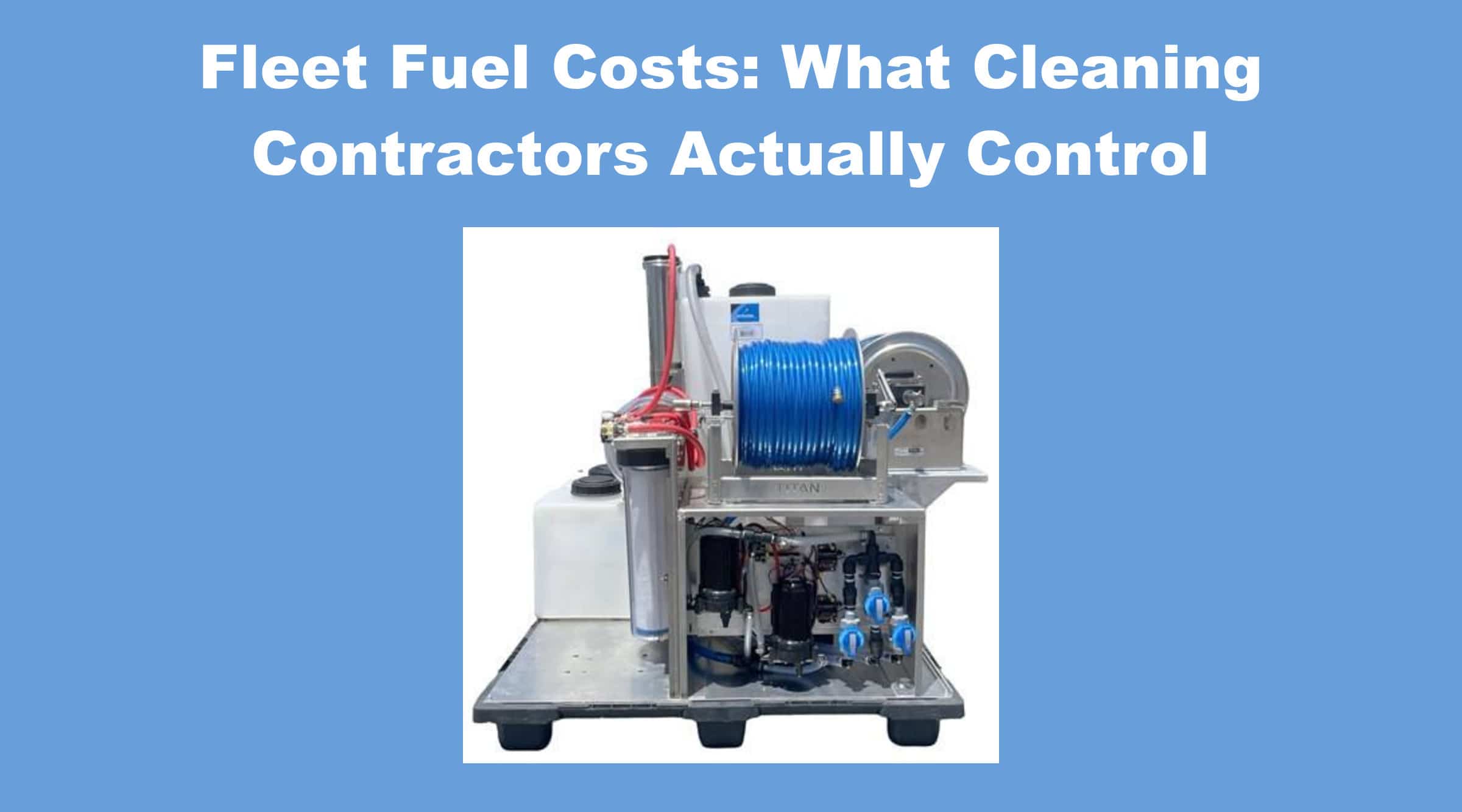
Once you have baseline numbers, set individual improvement targets. A blanket "reduce fuel use by 10%" goal ignores the reality that a van running a softwash and pure water skid through suburban neighborhoods has a fundamentally different consumption profile than a truck hauling a pressure washing skid across a metro area.
Driver Coaching That Changes Behavior
General reminders do not work. "Drive better" is not coaching. Effective coaching identifies one observed habit, explains its measured effect, and agrees on a change the driver can apply on the next shift.
The habits worth targeting, in order of typical impact:
- Speeding above 50 mph. Fuel economy drops sharply. FuelEconomy.gov data confirms what fleet operators already see in their own numbers.
- Extended idling. Distinguish avoidable idling from engine use required to run cleaning equipment — a truck powering a ViPower electric soft wash sprayer has a legitimate reason to run. A truck sitting in a parking lot for 20 minutes before a job does not.
- Hard acceleration and braking. Review routes with repeated speed changes. Smoother driving through a dense service area compounds savings across a full day.
Compare trip records from similar routes rather than individual fill-ups. A single fuel transaction tells you almost nothing. A pattern across two weeks of similar work tells you everything.
Maintenance Is Part of the Coaching Conversation
The U.S. Department of Energy puts the number at roughly 0.2% fuel economy loss per psi drop across all four tires. That sounds small until you multiply it across a fleet running 50,000 miles a year. A pre-trip checklist capturing tire pressure, warning lights, and visible damage catches problems before they compound.
Keep inspection and service records alongside fuel tracking. When consumption spikes on one truck, you need to distinguish a driving habit from a mechanical issue — and you cannot do that if the data lives in separate systems.
Route Planning That Reduces Miles, Not Just Finds Cheap Gas
A low pump price that adds six miles of detour is not savings. It is a rounding error dressed up as thrift. Compare the full trip: off-route distance, traffic, fueling time, and tank range.
The bigger lever is job assignment. Match each job to the nearest available crew with the right equipment. A window cleaning crew should not cross town when another team with the same capability is three miles away. Group appointments in the same service area. Review addresses before dispatch — including yard travel and stop order — so the route reflects the actual workday, not a theoretical optimum.
Small and midsize fleets that implement telematics-driven route optimization typically report 5–15% fuel savings within six months. That is a useful benchmark, but your own route records will tell a more honest story.
Fuel Stops Deserve the Same Scrutiny as Job Assignments
Evaluate stops by route distance, fuel grade, canopy height for larger trucks, turning radius, and highway proximity. A low-price site requiring a difficult turn or lengthy detour is not the efficient choice. Keep a preferred-location list aligned with common routes and truck access needs, and update it quarterly.
Price Volatility and Surcharges
Build a consumption forecast from fleet data and planned route mileage, then model how price swings affect spending. If customer agreements allow fuel surcharges, tie the calculation to documented price changes with a defined review interval. Keep surcharge records separate from route-efficiency tracking — price changes and operational changes are different problems with different solutions.
Driver Scorecards That Lead to Action
A scorecard is only useful if it changes something. Track engine idle time, speeding events, hard acceleration, and harsh braking consistently across vehicles. Compare each driver against their own history and similar work — ranking a city route against a highway route is meaningless.
The scorecard should answer three questions:
- What behavior appeared repeatedly?
- What was the trip context? (Dense urban stops look different from open highway.)
- What is the next action?
If a driver shows repeated extended idling at one site, investigate the site before reprimanding the driver. If multiple drivers show the same pattern at the same location, the problem is dispatch or job setup, not driver behavior.
Recognition matters. Tie incentives to consistent records and clear goals — but never reward fuel economy alone if it encourages unsafe driving or neglect of equipment requirements. A crew rushing through a soft wash job to save fuel is creating a different, more expensive problem.
Telematics and Fuel Management Tools
Telematics combines vehicle data with location records. The value is not in the data volume — it is in connecting fuel transactions to route context so you can investigate a change instead of staring at a spreadsheet.
Rising consumption alongside longer idle periods points to a different issue than rising consumption with unchanged routes. You need both data streams to distinguish them.
Fuel-Card Integration
Fuel-management software that integrates with fuel cards records and organizes transactions automatically. Link each transaction to the correct vehicle and compare it with telematics records. A purchase that does not match the vehicle's usual activity becomes obvious when location, time, and consumption data appear together.
Configure transaction alerts for exceptions — an unusual purchase amount, an off-route location, a second fill-up within hours. Set clear thresholds and assign responsibility for reviewing each alert. Trying to review every transaction manually does not scale past three trucks.
Keep Reporting Actionable
A dashboard should answer operational questions: which vehicle needs review, what triggered the flag, and what action to take. If an alert shows unusual fuel activity, compare the transaction with the vehicle's location and recent work. Correct mismatched vehicle records immediately — inaccurate assignments distort every comparison that follows.
Fuel Purchase Policies That Work
A written fuel policy turns expectations into checks managers can apply consistently. Specify approved fuel types, permitted refueling locations, and purchase limits matched to each vehicle's requirements and normal routes.
Clear rules help managers identify exceptions without treating every unusual transaction as misconduct. A truck assigned to a route near the yard that refuels at a station 30 miles away deserves a question — but the answer might be legitimate.
Mixed Fleets and On-Site Fueling
Mixed fleets running gasoline, diesel, and potentially electric vehicles need controls that account for different fuel types and vehicle classes. A single fuel-card system supporting multiple classes consolidates data. Without that, managers juggle multiple programs for the same fleet — and discrepancies hide in the gaps.
On-site fueling requires its own audit trail. Pair tank-level records with card records for retail purchases. A vehicle appearing in both in-house and retail records within an hour may have a legitimate explanation — check the sequence, location, and vehicle activity before treating both entries as errors.
Companies with formal fuel policies and automated monitoring typically reduce fuel expense by an additional 5–10%. The savings come from catching exceptions faster, not from the policy document itself.
Equipment Load Planning Supports Fuel Efficiency
Every pound on the truck costs fuel. A crew carrying equipment they do not need for the day's jobs is hauling dead weight across every mile. Match the vehicle load to the assigned work — a window cleaning route does not need a full pressure washing rig, and a pressure washing crew does not need bins of squeegees and scrubbers.
This is not about stripping trucks bare. It is about reviewing what each vehicle carries against what the day's jobs actually require, then adjusting the load plan when assignments change. Equipment selection is part of the operational review, not separate from it.
Products Mentioned
 Softwash Sprayer, Pure Water, Water Fed Skid, 2 Delivery Reels SKU: 150-0468 |  Pressure Washer Mini Skid 4g 3600p SKU: 150-0490 | 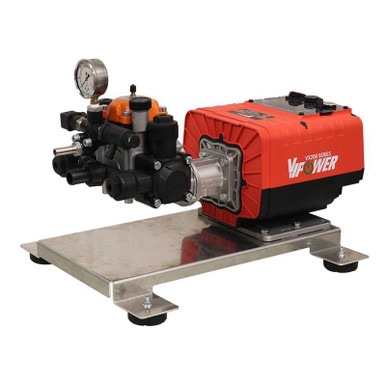 ViPower Electric Soft Wash Sprayer SKU: 150-0433M |