Pressure Washing Business Expenses: What to Track and Why It Matters

Table of Contents
Pressure washing business expenses are where most operators lose money without realizing it. Not on the jobs themselves — on the gap between what they think a job costs and what it actually costs once you account for pump seal replacements, chemical consumption rates, nozzle wear, and the insurance premiums that run whether the truck moves or not. A structured expense tracking system is the difference between a 35% margin and a 12% margin that feels like 35% until tax season.
This guide breaks down the expense categories that matter for professional pressure washing contractors, explains how to calculate the real cost of running your rig per hour, and covers the compliance overhead that catches operators off guard.
Why Expense Tracking Changes How You Bid
Most contractors set pricing based on what competitors charge or what feels right. That works until a triplex plunger pump fails and there's no reserve to cover a $600–$1,200 replacement. A working expense ledger isn't a tax document — it's an operational tool that tells you whether last Tuesday's driveway job actually made money after chemical costs, fuel, and the incremental wear on your hose and gun assembly.
The core metric is your True Cost per Hour. This number includes:
- Fuel for the pressure washer engine (separate from vehicle fuel)
- Chemical consumption at your actual dilution ratios — not the theoretical ones
- Prorated equipment depreciation based on engine hours
- Insurance and fixed overhead divided across your monthly billable hours
If you don't know this number, you're guessing on every bid. Operators who track it consistently report catching $3–$8 per hour in hidden costs they were previously absorbing.
Equipment Shock and Sinking Funds
"Equipment shock" is what happens when a burner assembly or pump manifold fails and there's no cash set aside. Professional operators run sinking funds — a fixed monthly transfer into a dedicated account based on the expected lifespan of major components. If your 4.0 GPM cold water pressure washer has an engine rated for 3,000 hours and you run 20 hours a week, you know roughly when that engine needs attention. Your ledger should predict that expense, not react to it.
Variable Costs: Where Margins Actually Live
Fixed costs are predictable. Variable costs are where jobs go from profitable to break-even without anyone noticing.
Chemical Consumables
Sodium hypochlorite and surfactant costs vary by job type, soil level, and — critically — by who's mixing. A technician running a heavy SH mix on a lightly soiled vinyl siding job burns margin in real time. Track starting and ending tank volumes per site. Graduated batch tanks or inline flow meters give you the data. Over a month, the pattern tells you whether your crews are mixing efficiently or costing you 15–20% more per gallon than necessary.
If your chemical delivery system makes precise application difficult, that's an equipment problem worth solving. Diaphragm pumps with consistent output — like the Comet P40 or BPX25 — reduce waste compared to inconsistent setups.
Fuel: Two Separate Line Items
Vehicle fuel and engine fuel are different expenses with different drivers. Your truck's fuel cost is a function of route planning. Your pressure washer's fuel cost is a function of engine hours under load. Track them separately. An operator running a gas-powered unit at 20 hours per week can easily burn $80–$120 in engine fuel alone, and that number climbs fast with inefficient nozzles or idling between surfaces.
Small-Wear Items That Add Up
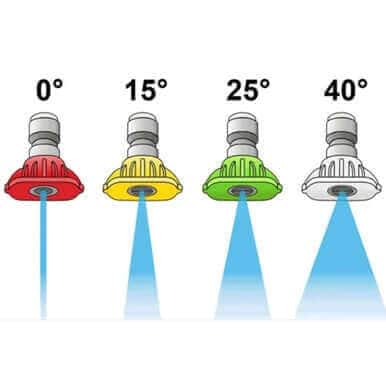
O-rings, stainless steel quick-connects, spray tip nozzles, and trigger gun valve kits are cheap individually but significant in aggregate. A set of nozzles costs $15–$30; replacing them every 200–400 hours across multiple tips on a multi-nozzle holder means $100+ per quarter. Track replacement frequency and you'll also catch equipment issues early — if tips are wearing faster than expected, something upstream (water quality, pump pressure spikes) needs attention.
Fixed Overhead: The Floor Under Your Pricing
Fixed costs don't change with job volume, which means they hit hardest during slow weeks. Your pricing must cover these whether you run one job or twelve.
- General Liability Insurance: $500–$1,500/year is standard for $1M coverage. Non-negotiable for commercial work.
- Commercial Auto Insurance: $1,000–$2,000/year for a dedicated work truck or trailer rig.
- Inland Marine Insurance: $200–$500/year to cover equipment in transit — often overlooked until a highway accident destroys a $4,000 skid.
- Permits and Registrations: Environmental discharge permits, commercial vehicle registration, and any municipality-specific requirements.
Divide your total annual fixed costs by your projected billable hours. That's the minimum hourly overhead you must recover before variable costs and profit. If fixed overhead runs $6,000/year and you bill 1,200 hours, every hour carries $5 in overhead whether you realize it or not.
Equipment Maintenance as a Separate Category
Maintenance is not a capital expense and it's not a variable cost — it's a third category that behaves like both. A professional 4.0 GPM unit runs $1,500–$4,000 depending on configuration, but maintenance determines whether it lasts 2,000 hours or 5,000.
Pump System
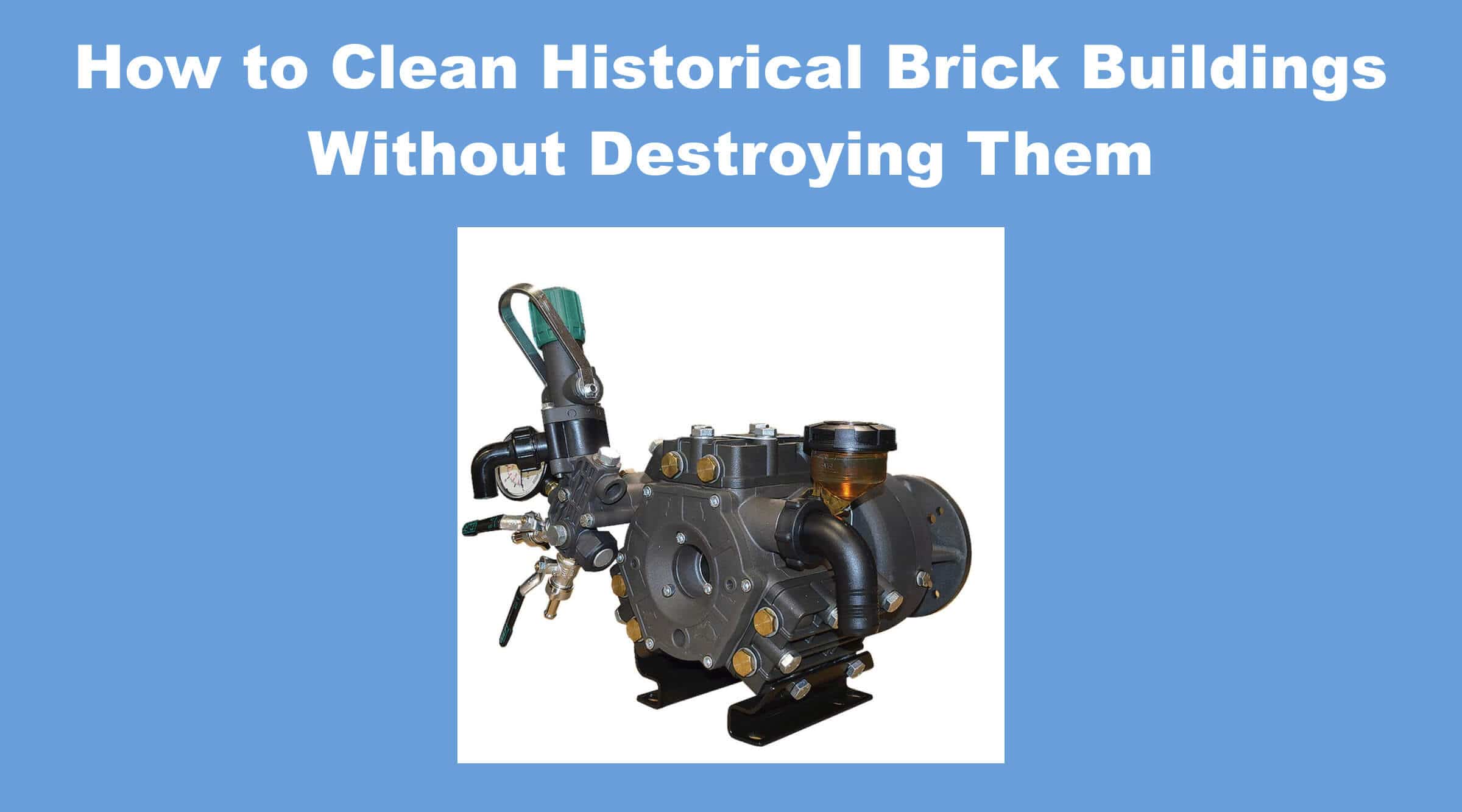
Log pump crankcase oil changes every 50–100 engine hours. Track unloader valve and thermal relief valve replacements — these are the components that prevent bypass overheating and catastrophic pump failure. If you're replacing seal kits more than once a season, the pump manifold may need resurfacing. Your ledger should show this pattern before the pump seizes in the field.
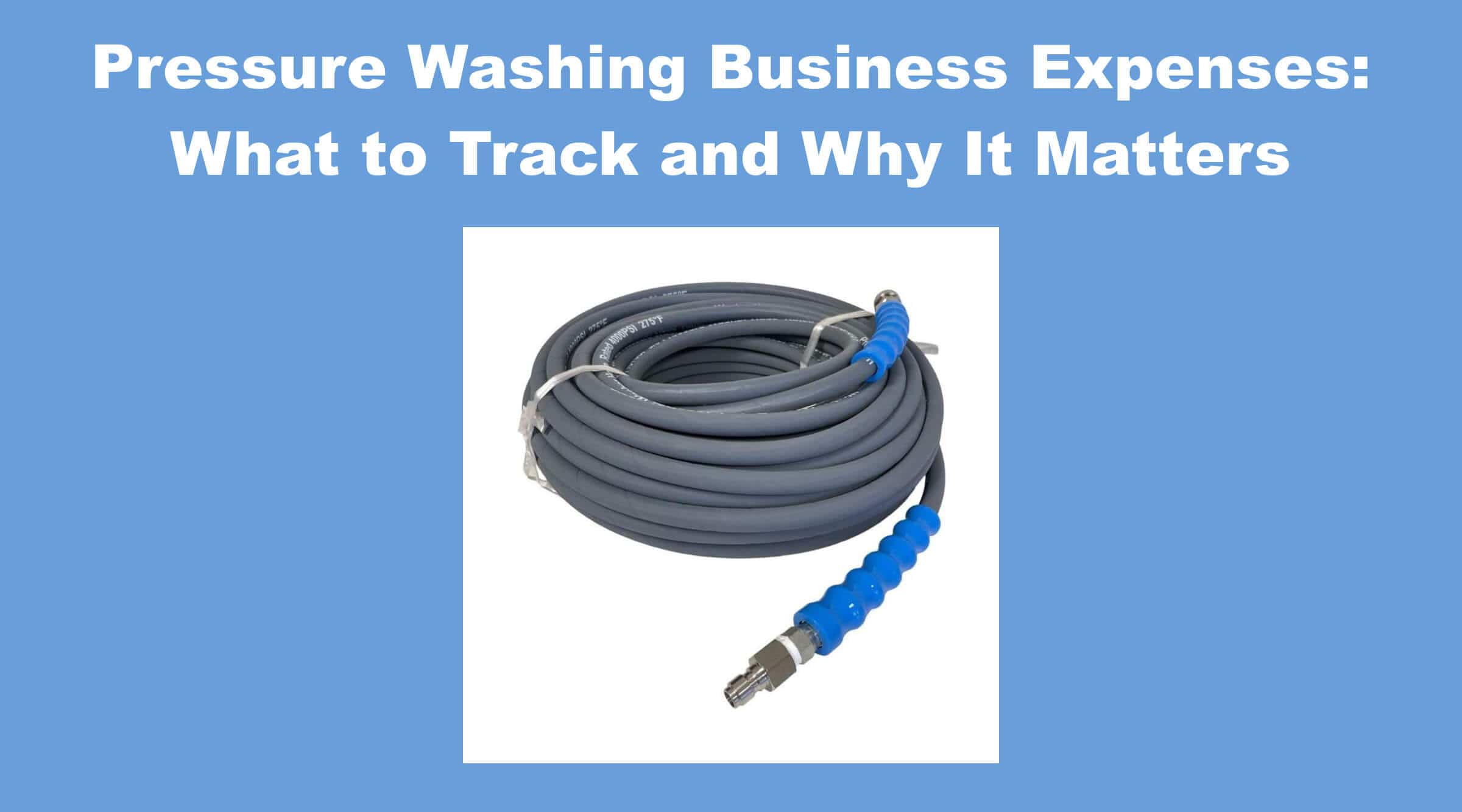
Operators running ProTool 4000 PSI hoses and matched pump systems see longer intervals between seal replacements because component compatibility matters more than individual part quality.
Hoses, Guns, and Nozzles
1-wire hoses work for residential. 2-wire hoses last longer on commercial sites with abrasive surfaces. Track which hoses go to which job types and their replacement intervals — the data will tell you whether the weight savings of a 1-wire hose actually saves money or just shifts cost to more frequent replacements.
Nozzle orifice wear is invisible until performance drops. As the orifice enlarges, pressure drops, the engine compensates by working harder, fuel consumption rises, and engine wear accelerates. A $6 nozzle replacement every 200–400 hours protects a $2,000+ engine investment. Budget 5–10% of gross monthly revenue for maintenance across all categories.
Safety and Compliance Overhead
OSHA requires fall protection for work at heights of 4–6 feet depending on the standard that applies. Harnesses, lanyards, and rope grabs have documented lifespans and require annual inspection. Your ledger should carry purchase dates, inspection results, and projected replacement dates for every piece of fall protection gear in your inventory.
PPE for chemical applications — nitrile gloves, respirators, splash-proof eye protection — are consumables. They need line items, not afterthoughts.
Environmental compliance is the expense that surprises operators who move into commercial work. Clean Water Act violations can run up to $50,000 per day. Water recovery systems, containment berms, and discharge permits are not optional for commercial contractors working near storm drains or sensitive sites.
Specialized Service Tracking
If you're running solar panel cleaning or water-fed pole work alongside pressure washing, those services carry unique consumable profiles. DI resin saturation rates depend on local TDS levels. Brush head wear on rotary solar brushes depends on panel texture and cleaning frequency. Drone cleaning adds battery cycle tracking and specialized liability coverage. Each service line needs its own expense column — combining them with general pressure washing costs masks their true profitability.
Why Professional Equipment Reduces Long-Term Costs
Your expense ledger will eventually make the case for you. Consumer-grade equipment shows up as higher maintenance frequency, more downtime days, and shorter component lifespans. Professional-grade units — commercial pressure washers with Tier 1 engines and pumps — cost more upfront but produce lower cost-per-hour numbers over their service life.
A lost field day costs $800–$2,100 in foregone revenue (two to three residential jobs at $400–$700 each) plus the fixed overhead that keeps running. Matched component systems — where the pump, engine, unloader, and hose reel are spec'd to work together — reduce the mismatch failures (pump cavitation, engine strain) that cause most unplanned downtime.
Implementing Your Tracking System
Digital spreadsheet or industry software — the platform matters less than the discipline. Set a weekly "finance hour" to enter fuel receipts, chemical volumes, and any parts replaced. Review monthly for patterns: rising chemical costs per job, shortening replacement intervals on a specific component, or fixed overhead creeping up as a percentage of revenue.
When the data shows excessive labor hours on grease-heavy commercial sites, that's the signal to evaluate a hot water system investment. When nozzle replacement frequency doubles, check upstream water quality and pump output. The ledger doesn't just track money — it diagnoses operational problems before they become expensive.
Products Mentioned
 Nozzle Tip Quick Connect Pressure Washer 1/4in Plug SKU: 74-50M |  ProTool Pressure Washing Hose 4000psi 1 Wire SKU: 74-36M |