Pressure Washing Insurance Requirements for Contractors
Table of Contents
A single property damage claim can end an uninsured exterior cleaning business before peak season. Even experienced crews face risks on every job — a blown seal etches a client's limestone, a chemical runoff kills landscaping, a subcontractor falls off a ladder. Understanding pressure washing insurance requirements is not optional if you plan to survive past your first bad day.
This guide covers the policies you actually need, the coverage gaps most contractors miss, and how to structure limits that match the work you bid on.
Legal and Contractual Requirements
Before you pull a trigger on any job, you need a legal business presence: EIN, Sales Tax ID, and whatever municipal or state license your jurisdiction requires. These aren't formalities — they're what separate you from the unlicensed operator who undercuts your bid by 40% and disappears after the first claim.
State and Local Licensing
Many jurisdictions now require a minimum of $1 million per occurrence in general liability just to hold an active business license. That floor keeps rising. You also need to account for EPA Clean Water Act exposure — if your runoff enters a storm drain, standard GL may not cover the resulting environmental fines. Federal penalties for improper discharge can exceed $37,500 per day per violation. Operating without correct coverage often means immediate license revocation on top of the fine.
Commercial Contract Requirements
Commercial property managers will not let you on-site without a valid Certificate of Insurance. Standard indemnity clauses require you to list the client as an "Additional Insured" on your policy, meaning they're protected under your coverage for work-related incidents. No COI, no contract — and no amount of low pricing changes that.
Core Insurance Policies
General Liability (GL)
GL is your primary defense against third-party claims — homeowners, pedestrians, neighboring property. A high-pressure stream shatters a double-pane window, your sodium hypochlorite runoff kills a client's landscaping — GL covers the damages. Standard starting point: $1,000,000 per occurrence, $2,000,000 aggregate. That baseline works for most residential operations but falls short on commercial work.
Workers' Compensation
If you have a crew, you almost certainly need workers' comp. The common workaround — using 1099 subcontractors — fails in most states if those subs don't carry their own policy. Your carrier will charge you the full premium for their labor at year-end audit. Misclassifying employees as subcontractors can trigger fines exceeding $2,500 per worker under Department of Labor guidelines. Consistent safety training and proper fall protection gear reduce your experience modification rating over time, which directly lowers premiums.
Commercial Auto
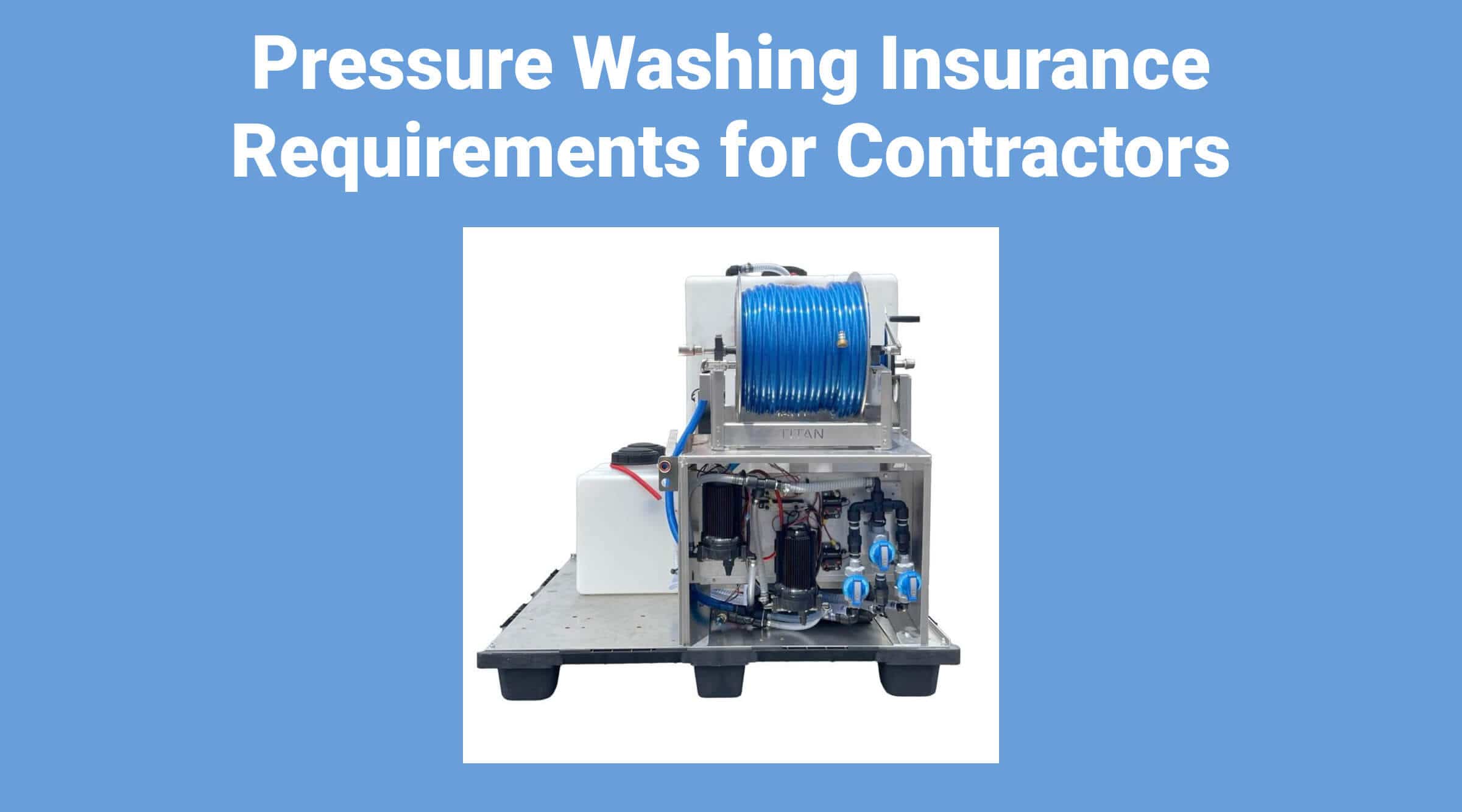
Your personal auto policy will deny a claim if an accident happens while you're hauling a trailer to a job site. Commercial auto covers heavy-duty trucks and specialized rigs. Value your truck-mounted equipment accurately — soft wash skids, RODI systems, surface cleaners — so they're fully covered in a total-loss scenario. If employees drive their own vehicles to pick up supplies, you also need hired and non-owned auto coverage.
Professional Liability (Errors & Omissions)
GL covers physical accidents. Professional liability covers claims of poor workmanship or technical errors — wrong chemical concentration on a delicate facade, bad advice on wood restoration that causes permanent staining. High-end commercial clients increasingly require this in their contracts.
Specialized Coverage Most Contractors Miss
Inland Marine (Tools and Equipment)
Standard commercial property insurance covers items at a fixed address. Your revenue depends on mobile gear. Inland Marine covers your pumps, hoses, surface cleaners, and skids while they're in transit or parked at a job site. Equipment theft from service vehicles rose 12% in urban areas in 2024. Without this policy, you're paying out of pocket for a $6,000+ skid replacement. Track serial numbers and purchase dates for every piece of gear — your carrier will require it for any claim.
Care, Custody, and Control (CCC) Endorsements
This is the coverage gap that burns contractors hardest. Standard GL excludes damage to the property you're actively working on. You're cleaning a high-end deck and accidentally blast off wood fibers or cause permanent scarring — a basic policy denies that claim because the property was in your care. CCC endorsements bridge that gap. They cover the specific surface you're treating. Non-negotiable for anyone handling high-end residential, historical restoration, or commercial facade work.
Environmental and Pollution Liability
Standard policies often exclude chemical runoff. A pollution liability endorsement covers risks from sodium hypochlorite and detergent discharge. If a chemical spill reaches a storm drain, EPA fines for improper discharge can hit $12,000 per violation before cleanup costs. The endorsement covers cleanup, legal fees, and regulatory fines. If you're running SH through a soft wash system, this rider is not optional.
Equipment Breakdown
Mechanical failure on a high-GPM unit can halt production for days. Equipment breakdown coverage protects against internal failures that standard warranties ignore — the kind that happen mid-job on a pressure washer that's been running hard all season.
Choosing the Right Coverage Limits
A $1M/$2M policy (per occurrence / aggregate) serves roughly 85% of startup residential operations. The insurer pays up to $1M on a single claim and $2M total during the policy period. That works for driveways and house washes. It does not work for commercial parking garages, industrial degreasing, or high-rise exterior cleaning.
Match your limits to the replacement value of the properties you service. If a technician damages a commercial roof or causes a flash fire on an industrial site, $1M exhausts fast. Excess liability or umbrella policies add layers above your primary limits — essential when bidding municipal or corporate contracts.
Residential vs. Commercial
Residential clients usually require proof of coverage but rarely mandate limits above $1M. Commercial property managers typically demand $2M per occurrence to cover business interruption and large-scale property damage. If you're moving from residential driveways to commercial work, adjust your coverage before you submit that first bid — not after.
The Certificate of Insurance (COI)
The COI proves your business is insured. It displays the carrier name, policy number, effective dates, and specific coverage amounts for GL, workers' comp, and auto liability. For commercial bids, you'll need to list the client as an Additional Insured. Most agencies now deliver digital COIs within 24 hours. Expired dates or missing policy numbers on a COI get your bid rejected immediately — property managers treat these as disqualifying red flags.
Equipment Quality as Risk Management
Reliable equipment is not just about efficiency — it's your first line of defense against the claims that drive up premiums. Equipment failure causes roughly 20% of property damage claims in exterior cleaning. A calibrated pressure gauge and properly maintained pump prevent the accidental surface etching and window seal blowouts that generate claims.
Fall protection is the other half of risk management. If your crew works at any height — even a single story — fall protection gear meeting OSHA 1910 and 1926 standards is a core component of your insurance strategy, not an add-on. Catastrophic injuries from inadequate fall protection are the fastest way to destroy your experience mod rating and price yourself out of coverage entirely.
Regular maintenance on pressure washing equipment using genuine replacement parts keeps your gear performing predictably. Predictable gear lets you bid confidently on 50,000 square foot commercial projects. Cutting corners on equipment or using residential-grade machines on commercial jobs creates a ceiling on your revenue and a floor under your liability exposure.
Products Mentioned
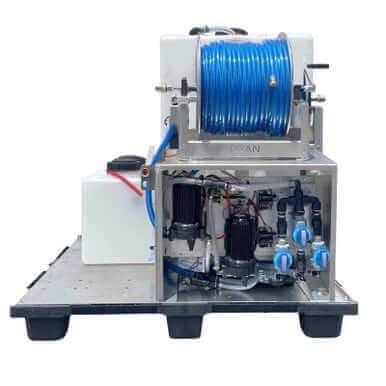 ProTool Soft Wash Skid 12V SKU: 150-047M | 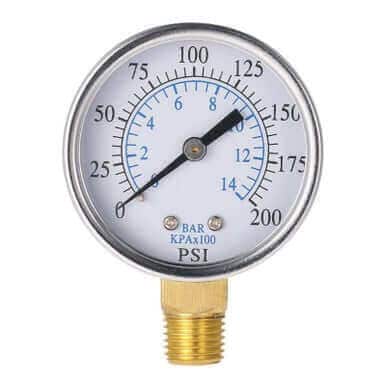 ProTool Pressure Gauge 200psi Max SKU: 150-0394 |