Gutter Cleaner Tools: High-Reach Pole and Vacuum Systems for Pros

Table of Contents
Professional gutter cleaner tools are the dividing line between a crew that clears ten houses a day and one stuck repositioning a ladder every four feet. Consumer scoops crack by mid-morning. Carbon fiber poles and high-CFM vacuums let a single tech clear 40-foot gutters from the ground — faster, safer, and at service rates that actually justify the truck roll.
This guide covers the equipment that matters: specialized hand tools for working around hidden hangers, ground-based pole and vacuum systems, pressure-wash flush attachments, and the kit builds that turn gutter work from a break-even add-on into a standalone profit center.
Why Professional-Grade Gutter Tools Pay for Themselves
A hardware-store scoop handles a homeowner's once-a-year cleanout. It does not survive five to ten residential stops a day, five days a week. Professional gutter cleaner tools are built from high-impact polypropylene and reinforced aluminum with UV-resistant stabilizers — materials that hold up under sustained outdoor use without becoming brittle or stripping at threaded joints.
The real cost of cheap equipment isn't the replacement price. It's the billable hour lost when a tool breaks at 9 AM and the tech has to drive back to the shop. Over a season, those lost hours dwarf the price difference between consumer and professional gear.
Weight matters just as much as durability. An eight-hour shift with a heavy aluminum pole produces shoulder fatigue that cuts your afternoon production rate in half. Lightweight carbon fiber poles from Gardiner and ProTool maintain rigidity at full extension while keeping operator fatigue low enough to sustain pace across a full day.
Manual Hand Tools: Scoops, Spoons, and Downspout Clearing
The Gutter Spoon vs. the Standard Scoop
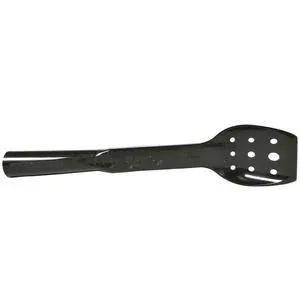
A standard scoop moves volume in open runs. A gutter spoon — slender, flat, built from high-impact polypropylene — slides under gutter hangers without snagging. That distinction matters every time you hit a hanger-mounted section, which is most of a modern gutter system. Choose high-visibility colors (safety orange) so crews stop leaving tools on roofs.
The Gutter Hawg handles the aggressive end of manual clearing — compacted organic matter that has cemented over multiple seasons. For more routine debris, a Gutter Getter scoop or Gutter Grabber covers the open runs fast.
Downspout Elbows: Where 85% of Clogs Live
If a gutter is clear but water still pools during your test flush, the blockage is in the first elbow or the underground transition. Standard scoops cannot reach these vertical segments. A Gutter Downspout Snake gets into the elbow without dismantling the assembly. Follow extraction with a high-flow hose flush — that's your QC step before leaving the site.
High-Reach Systems: Carbon Fiber Poles and Gutter Vacuums
Ground-based gutter cleaning eliminates ladder repositioning — the single biggest time sink and injury risk in this work. A 30- to 40-foot carbon fiber pole paired with the right attachment lets one tech handle a three-story house without leaving the pavement.
Carbon Fiber Pole Selection
Carbon fiber's advantage is its high modulus of elasticity: a 30-foot pole stays rigid instead of bowing under the weight of wet debris. Aluminum bows noticeably past 25 feet, which makes tool control imprecise and exhausting. Quick-connect clamping mechanisms (not friction-fit joints) prevent sections from spinning or collapsing mid-job.
The Gardiner X3 Xtreme 47ft and ProTool 50ft HM Carbon pole are built for this application — rigid at full extension, light enough for sustained use, and compatible with gutter vacuum nozzles and camera attachments. Both use the same pole platform contractors already run for water-fed window cleaning, so a gutter attachment turns existing inventory into a second revenue stream.
Gutter Vacuum Systems
High-CFM vacuums with single or triple motor configurations lift saturated sludge that no scoop can match. The IPC Eagle 24-gallon 3-motor vacuum provides the suction needed for heavy wet debris; pair it with Gardiner's 27ft gutter pole or 38ft gutter pole for reach. Specialized gutter vacuum nozzles — tapered tips, angle-cut nozzles, crevice tools — let you penetrate compacted blockages and work around guards.
Many pros now mount wireless cameras at the pole tip for real-time inspection. Visual proof of work justifies higher service rates and satisfies property managers who can't verify results from the ground.
Pressure Washing and Soft Washing Gutter Attachments
Flushing: Flow Over Pressure
Gutter flushing is a GPM game, not a PSI game. A flow rate of 5.5 to 8 GPM creates the volume needed to carry heavy sediment to the downspout without risking water injection behind the fascia. For compacted mud, a rotating turbo nozzle breaks up blockages that a fan tip bounces off. Keep PSI below 1,000 at the point of contact — the goal is debris transport, not structural damage.
A stainless steel J-hook attachment on a pressure washer lets you flush from the ground on large commercial runs where manual scooping is impractical.
Chemical Cleaning: Tiger Stripe Removal
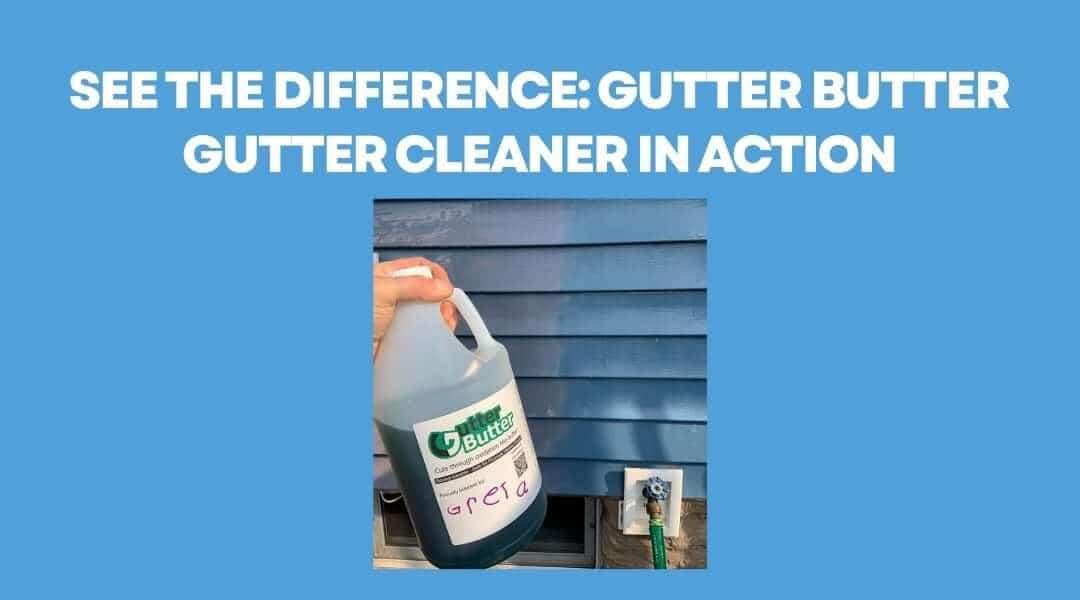
Tiger stripes — the dark vertical lines on gutter faces — are an electrostatic bond between metallic pollutants and the gutter finish. Mechanical cleaning alone won't break that bond. Low-pressure chemical application with a dedicated gutter oxidation remover does.
ProTool Gutter Bomb and ProTool Purple Magic are formulated specifically for this. Apply at low pressure, dwell, rinse. Offering "gutter brightening" as a premium add-on typically increases the average ticket by 15–25% per project — high-margin work with minimal extra time.
Building Your Professional Gutter Cleaning Kit
Starter Kit (Residential, 1–2 Stories)
- Manual gutter spoons and scoops (Gutter Cleaning Tools category)
- 20-foot telescopic pole
- Basic downspout snake
- Fall protection harness and lanyard for any ladder work
Production Kit (High-Volume, 2–3+ Stories)
- 40ft+ carbon fiber pole (Gardiner or ProTool)
- Triple-motor gutter vacuum with specialized nozzle set
- Wireless pole-tip camera
- Pressure washer J-hook with high-GPM pump
- Gutter oxidation remover for brightening upsells
Cross-Service Advantage
The same carbon fiber poles you run for water-fed window cleaning accept gutter vacuum and brush attachments. A single pole platform covers window cleaning, gutter clearing, and solar panel maintenance — three revenue streams from one equipment investment. Browse the full range at Water Fed Poles.
Maintenance That Prevents Mid-Season Failures
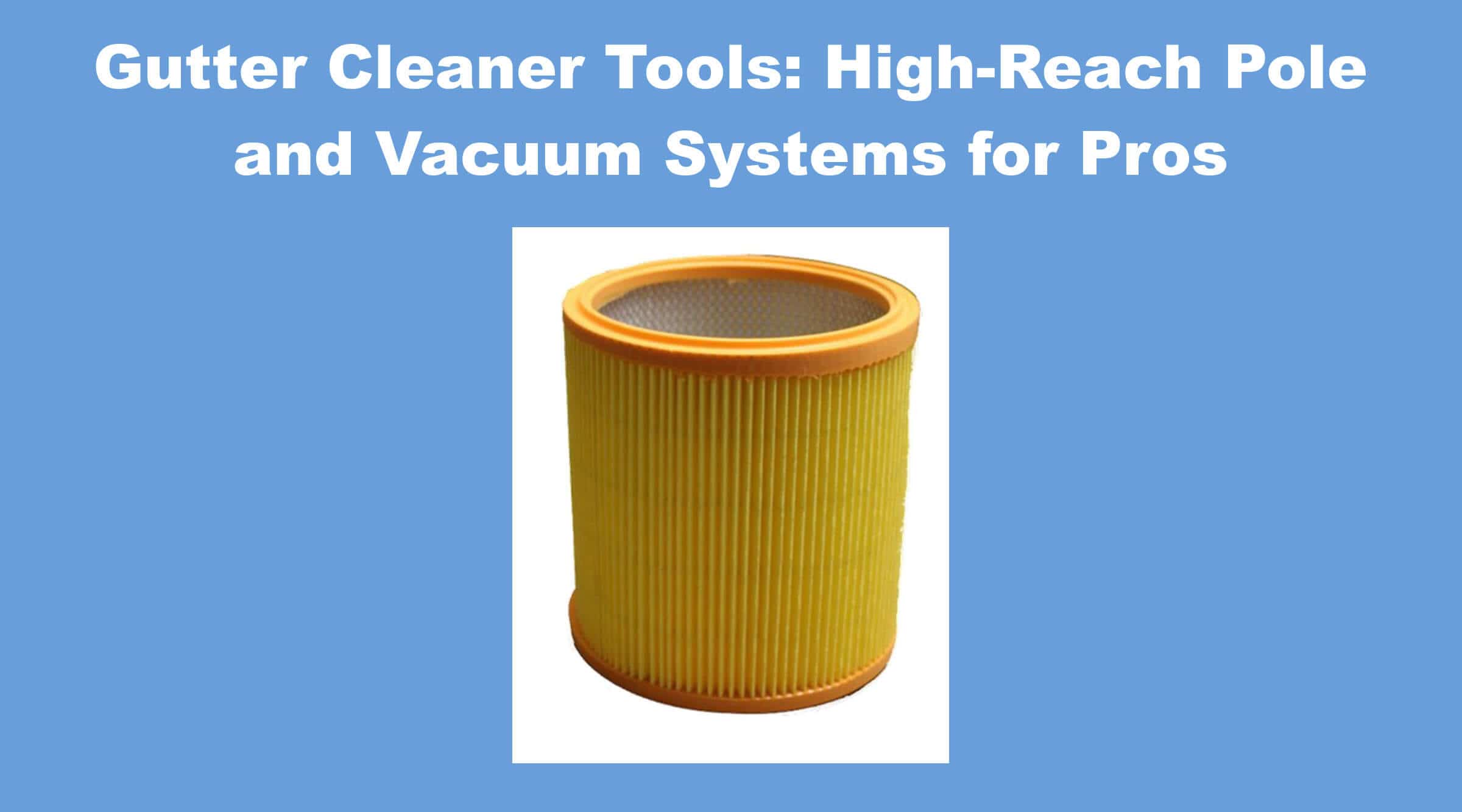
Vacuum tanks: empty and rinse daily. Acidic organic matter corrodes seals fast. Pole inspection: check clamps and look for hairline fractures in the carbon fiber weave every Monday. Replace worn vacuum filters and pole clamps before suction drops or a section collapses on site. Small parts replacements prevent catastrophic mid-week failures.
Products Mentioned
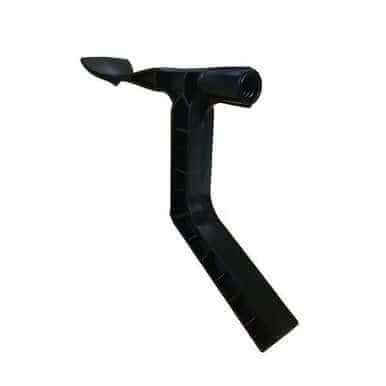 The Gutter Hawg SKU: 55-109 | 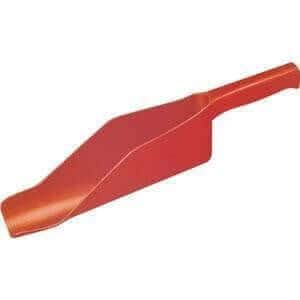 Scoop Gutter Getter (1) SKU: 55-23 | 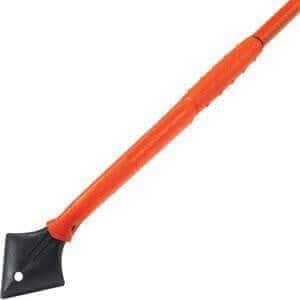 Gutter Grabber (1) SKU: 55-22 |
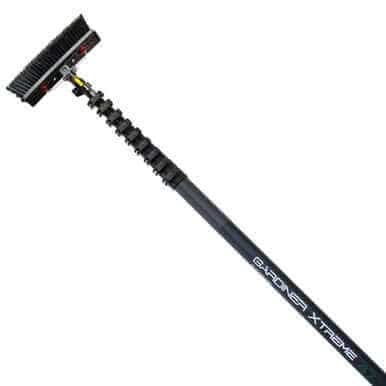 Gardiner X3 Xtreme 47ft High Modulus Carbon Pole SKU: 155-547 | 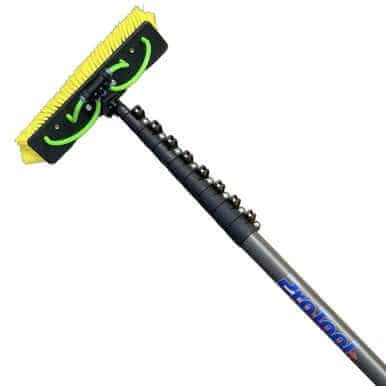 50ft ProTool HM Carbon Water Fed Pole SKU: 151-350 | 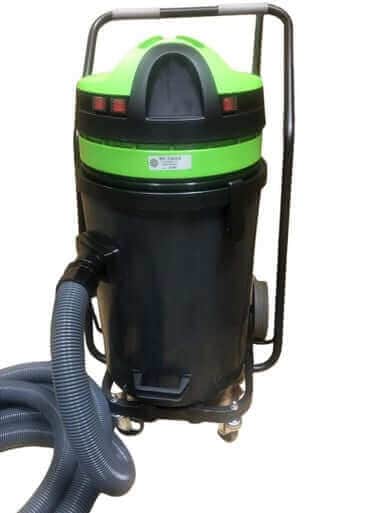 Vacuum 24ga 3 Motor Sideport with Standard Filter SKU: 258-111 |
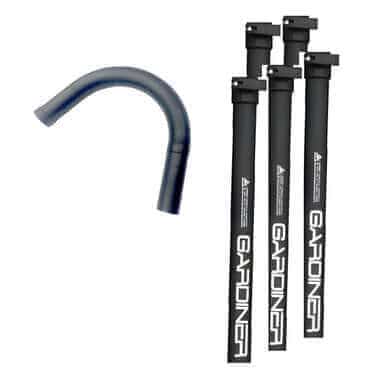 Gutter Pole Gardiner 27ft Carbon Fiber SKU: 158-066 | 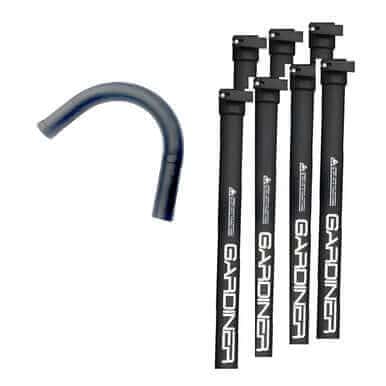 Gutter Pole Gardiner 38ft Carbon Fiber SKU: 158-068 | 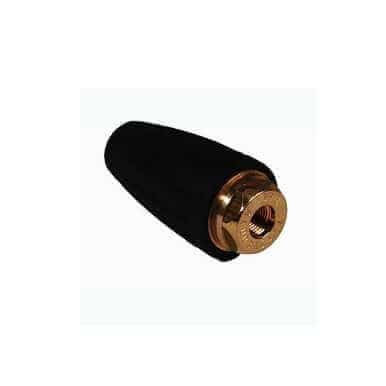 Turbo Nozzle Pressure Washer Tip SKU: 74-57M |
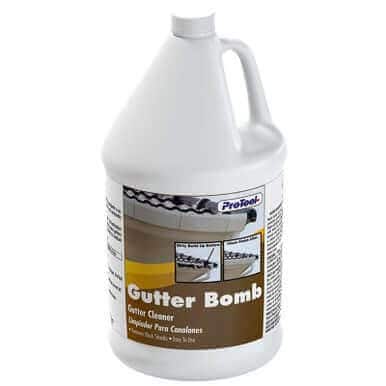 ProTool Gutter Bomb - Gutter Cleaner - Oxidation Remover SKU: 89-82M | 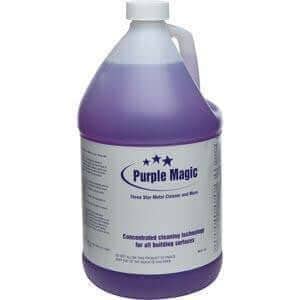 ProTool Purple Magic Gallon SKU: 89-21 | 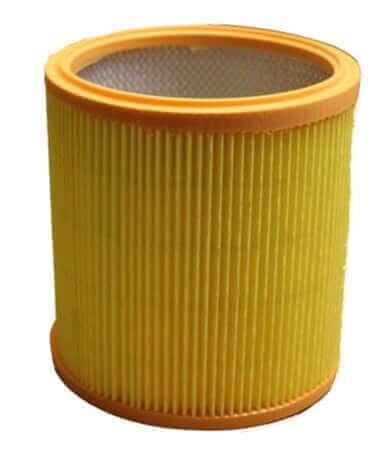 Vacuum HEPA Cartridge for Barrel Vac SKU: 258-128 |