How to Remove Graffiti from Brick: Professional Methods That Protect the Substrate
Table of Contents
If you want to know how to remove graffiti from brick without destroying the substrate, stop reaching for the pressure wand first. Aggressive mechanical force is the fastest way to etch a client's masonry — carving the graffiti's outline permanently into the brick face while driving pigment deeper into the pores. The professional approach is chemical-first: dissolve the bond between aerosol resins and the substrate, then flush at low pressure.
The payoff for getting this right goes beyond a clean wall. Municipal abatement timelines are tightening — San Francisco requires removal within 30 days of notice, Santa Cruz within five working days. Contractors who can deliver complete removal without substrate damage, then sell anti-graffiti barriers as a recurring service, own the most profitable segment of exterior restoration work.
Why Brick Makes Graffiti Removal a Technical Problem
Brick is a mineral sponge. When aerosol paint hits masonry, capillary action wicks the liquid resin deep into a network of microscopic pores. The binders — acrylics, alkyds, or epoxies — harden inside those pores, creating a mechanical bond that resists surface scrubbing and brute-force pressure washing.
Before selecting chemicals or equipment, identify the substrate:
- Face brick — denser, fired at higher temperatures. Better resistance to deep pigment migration, but still prone to surface shadowing.
- Common brick — softer and more porous. Paint migrates deeper and faster; shadows are harder to extract.
- Historical masonry — lime-based mortar, hand-pressed bricks. Extremely fragile. Aggressive chemicals or high pressure will cause irreversible damage.
The paint chemistry matters equally. Acrylics break down with mild solvents. Alkyds (oil-based) require professional-grade solvents. Epoxies form cross-linked bonds that often need caustic strippers and hot water to fully liquefy.
The Dry Application Rule
Apply removal chemicals to completely dry masonry. Water already occupying the pores blocks the solvent from reaching embedded paint. If you apply product to a wet wall, the solvent thins the paint and capillary action carries it deeper into the brick rather than lifting it out. Dry application is the single most important procedural step most contractors skip.
Assessing Brick and Mortar Before You Start
Run a scratch test with a metal tool in an inconspicuous area. If the brick crumbles or scratches easily, you're on a soft substrate — soft wash methods are mandatory. Check for spalling (surface flaking); spalled brick is already compromised and even moderate pressure accelerates decay. Mortar joints are almost always softer than the brick itself — reduce pressure significantly when crossing mortar lines to prevent joint blowout.
Choosing the Right Graffiti Remover
Match the chemical to the paint's molecular structure. Professional removers fall into three categories:
- Solvent-based — industry standard for most aerosol paints. Modern formulations are NMP-free for regulatory compliance. Ideal for single-layer tags.
- Caustic-based — potassium hydroxide or sodium hydroxide formulations that eat through multiple layers of tagging or heavy epoxy coatings. Require a mandatory acid-neutralization step after rinsing to prevent efflorescence (white salt deposits).
- Bio-based — corn or soy-derived, lower VOC. Safer for sensitive environments but require longer dwell times.
Viscosity is non-negotiable for vertical work. If the remover runs down the wall before it penetrates, you get ghosting. Professional-grade gels cling to the surface for the full dwell period, reaching paint trapped deep in the substrate. Products in the Worlds Best graffiti remover line are formulated specifically for this — high-viscosity gels engineered for porous masonry substrates.
For bare brick, stone, and standard masonry, Worlds Best Bare Brick/Stone/Masonry Remover is the go-to. For historical facades or delicate surfaces, the Heritage Old Building formula provides effective removal without attacking lime mortar or soft-fired brick.
Step-by-Step Professional Removal Process
1. Apply Bottom-to-Top on Dry Masonry
Use a low-pressure pump sprayer — something like the Solo 2-gallon acid-resistant sprayer — for uniform chemical coverage. Apply bottom-to-top to prevent the active product from running down the wall and creating permanent streak marks on untreated brick below.
2. Manage Dwell Time
Most professional solvents need 10–30 minutes. Chemical activity roughly doubles with every 18°F increase in ambient temperature — in cold weather, extend dwell times or plan to rinse with hot water. Keep the surface moist with product during the entire dwell period; if dissolved paint dries back into the brick, you're starting over.
3. Agitate
Stiff-bristle nylon brushes for most face brick. Circular scrubbing — not linear strokes — engages the uneven pore edges from every angle and forces solvent deeper into the texture. A professional graffiti brush set gives you the right bristle stiffness without risking surface damage.
4. Rinse Top-to-Bottom at Low Pressure
Flush liquefied paint and chemical residue toward the ground. Configure your pressure washing equipment to 500–1,000 PSI — enough to clear the pores without etching. Use a 25-degree (green) or 40-degree (white) fan tip. Never use a 0-degree red tip on masonry; it acts like a chisel. Maintain 6–12 inches from the brick face with consistent, even passes to avoid wand marks.
Equipment: Hot Water vs. Soft Wash
Hot Water Systems
Heat is a thermal catalyst that reduces the surface tension of aerosol resins. Most industrial removers perform dramatically better when rinsed at 140°F–180°F. At those temperatures, paint binders liquefy and emulsify more readily, and you can flush pores at lower PSI. Cold water forces you to compensate with pressure — and pressure is what causes etching.
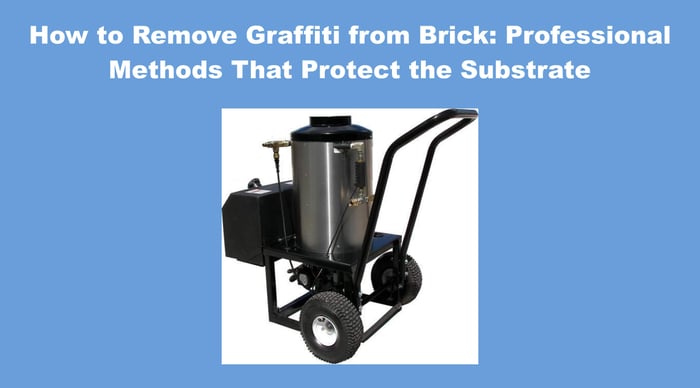
A hot water pressure washer or a hot box add-on for your existing cold rig is the single best equipment investment for graffiti abatement work. The PressurePro 4.0 GPM / 4000 PSI Hot Box bolts onto a cold skid and gives you the thermal advantage without replacing your entire rig.
Soft Wash for Historical Masonry
Lime mortar and hand-pressed brick cannot survive standard pressure washing at any setting. Use a soft wash system — higher chemical concentration applied under 500 PSI. The chemistry does 100% of the work; the equipment only applies and rinses.
For large-scale jobs, X-Jet nozzles or downstream injectors let you draw remover directly into the water stream, eliminating manual pump sprayers and increasing coverage speed.
Dealing with Ghosting and Shadows
Ghosting — the faint outline of pigment still visible after the bulk paint is gone — is the most common reason for client callbacks. Do not increase pressure to blast it out. That etches the brick and makes it worse.
Instead, apply a shadow remover to the dry ghosted area and let it dwell until residual color lifts. These high-penetration solvents have low surface tension, designed to re-liquefy pigments trapped deep in the capillary network. If chemical treatment alone doesn't resolve it, soda blasting is a last resort — sodium bicarbonate crystals shatter on impact, removing pigment without the aggressive profiling of sand or glass media.
Anti-Graffiti Barriers: The Recurring Revenue Play
Cleaning is a one-time fee. Protection is a maintenance contract. Two options:
- Sacrificial coatings — wax-based polymers. When the wall gets tagged again, rinse with 140°F–180°F water and the paint slides off with the wax. Reapply after each cleaning.
- Permanent coatings — silane or siloxane-based. Long-term protection without reapplication. Must be vapor-permeable so the brick can breathe — trapped moisture leads to spalling and structural decay in freeze-thaw climates.
A professional anti-graffiti coating like MuralShield simplifies future removal to a hot-water rinse. Packaging this as a subscription — removal plus barrier reapplication on an abatement timeline — creates predictable revenue and locks in faster, easier repeat jobs on pre-treated surfaces.
Safety and Containment
Professional-grade strippers demand proper PPE: vapor-rated respirator, chemical-resistant nitrile gloves, and wrap-around eye protection. Always consult the SDS for your specific product.
Environmental containment is a legal requirement in most jurisdictions. Use reclaim berms or vacuum recovery systems to prevent chemical runoff from entering storm drains. Fines for non-compliance are steep — and one violation can cost more than an entire season of graffiti jobs pays.
Products Mentioned
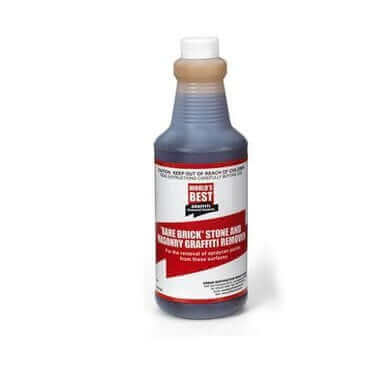 Graffiti Remover Qt BareBrick/Stone/Masonry SKU: 82-710 | 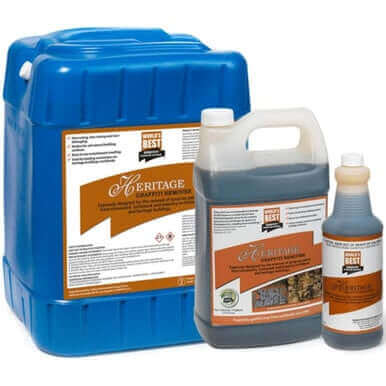 Worlds Best Graffiti Remover Heritage Old Building SKU: 82-73M | 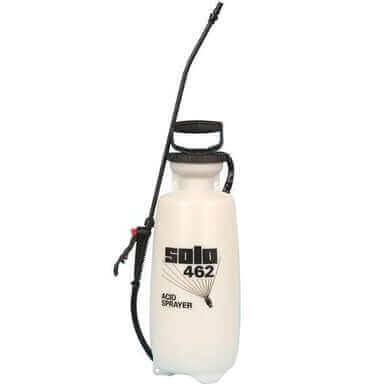 Pump Sprayer 2 Gal Acid Resistant Solo SKU: 515-045 |
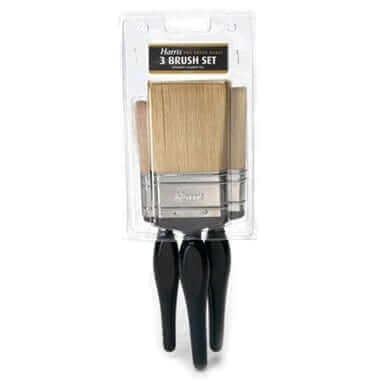 Graffiti Remover Brush Set SKU: 82-705 | 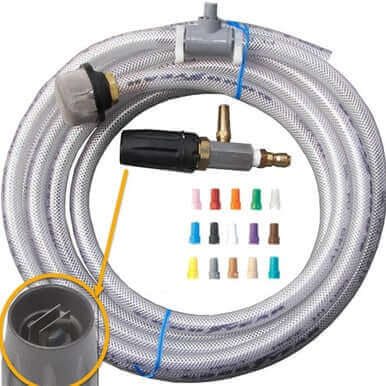 X-Jet M5 Variable Spray SKU: 74-53M | 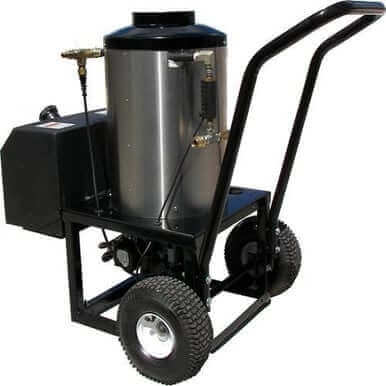 4.0g 4000psi Hot Box 115v 2 wheel SKU: 74-1404 |