
How to Soft Wash Stucco: Equipment, Mix Ratios, and Field Technique

Table of Contents
Soft washing stucco is one of the higher-margin exterior cleaning services — and one of the easiest to botch. Pressure washers over 500 PSI pit the finish, force water behind the substrate, and leave wand marks the homeowner will notice before you've loaded your truck. The real risk isn't the cleaning itself; it's the runoff. Unmanaged sodium hypochlorite draining into ornamental beds will kill landscaping faster than drought, and the insurance claim that follows erases the profit from every stucco job you ran that month.
This guide covers the equipment, chemistry, and application sequence professional contractors use to soft wash stucco — from dedicated pump systems and surfactant selection to the bottom-up spray pattern that prevents streaking on porous vertical surfaces. If you're still downstreaming stucco jobs, you're leaving results and money on the table.
Why Stucco Demands Soft Washing
Stucco is cement-based plaster — durable in compression, but porous and breathable by design. That porosity is the problem. Organic contaminants like Gloeocapsa magma and green algae don't sit on the surface; they root into microscopic voids. A pressure washer at 3,000 PSI shears the top layer of finish without reaching those roots, and it forces water deep into the substrate. That trapped moisture can sit for weeks, rotting wood framing or causing the finish to bubble and delaminate.
Soft washing flips the approach: low pressure (under 100 PSI at the nozzle), high volume (5–10 GPM), and chemistry that kills growth at the root. The surfactant and sodium hypochlorite penetrate the pores. The rinse flushes the dead material out. No etching, no wand marks, no water intrusion.
Soft Wash vs. Pressure Wash on Stucco
- Pressure washing: 2,500+ PSI, 3–4 GPM. High risk of surface scarring and water intrusion. Downstream injectors max out around 1:10 dilution — too weak for heavy stucco infestations.
- Soft washing: Under 100 PSI, 5–10 GPM. Delivers a 3–4% SH solution directly to the surface. Chemistry does the work; equipment provides gentle delivery.
Equipment for Professional Stucco Soft Washing
Standard pressure washers don't belong on stucco. You need a dedicated soft wash system built around chemical-resistant components that can deliver sodium hypochlorite at the concentrations stucco demands.
Pump Systems
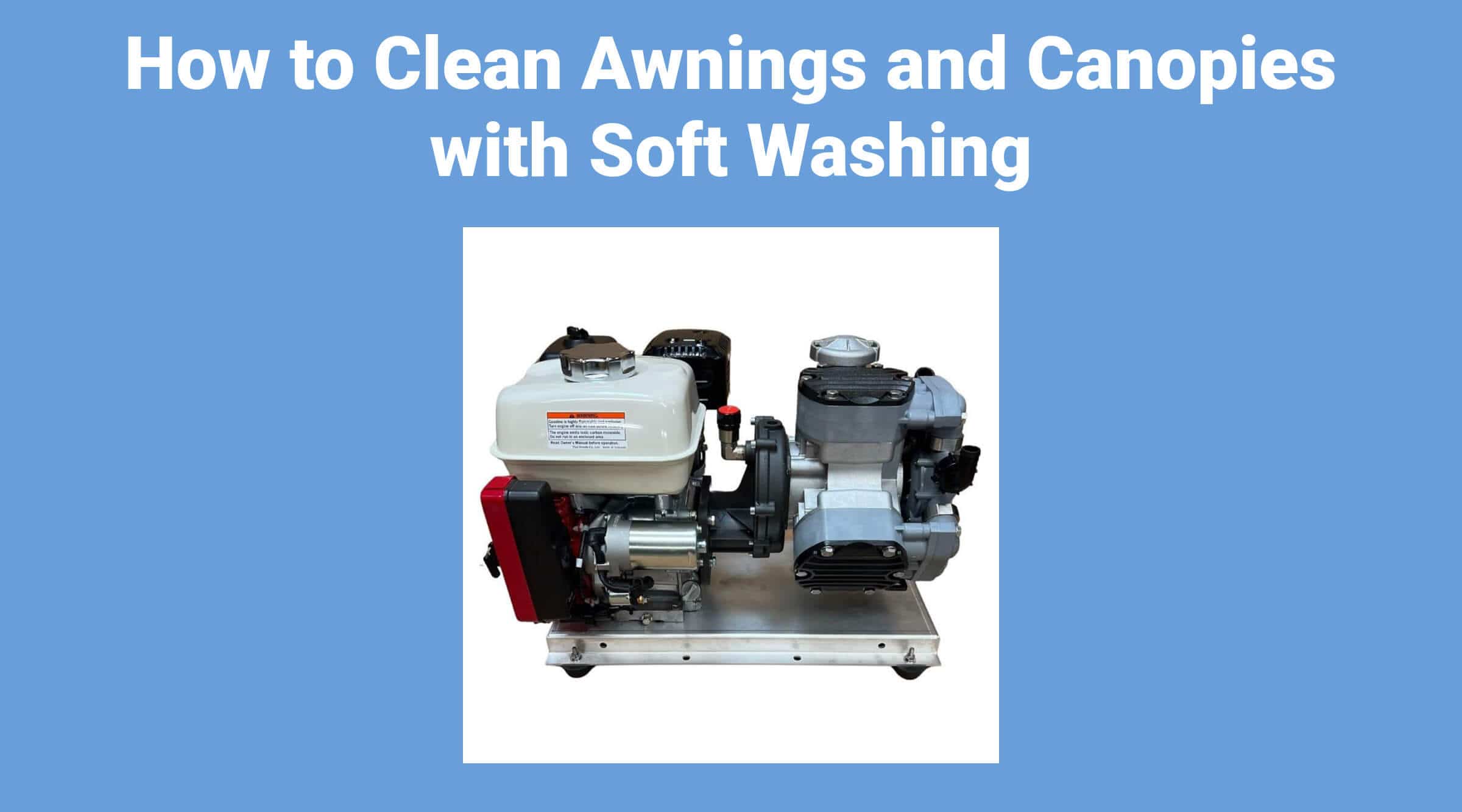
For residential work, a 12-volt diaphragm pump delivering 5–7 GPM at under 300 PSI is the baseline. Quiet, efficient, and sized right for single-family homes. For commercial volume or multi-story work, gas-powered diaphragm pumps like the Comet P40 provide the flow rates and durability needed for all-day operation. A ProTool BPX25 Soft Wash Skid consolidates pump, tank, hose reel, and metering into one footprint — contractors running these report cutting setup and teardown time significantly versus cobbled-together rigs.
Nozzles and Delivery
Every wetted component must handle SH. Standard brass fails within weeks; 316-grade stainless steel fittings are mandatory. A poly-trigger gun like the ProTool Wash Down Gun won't degrade the way metal alternatives do.
- Shooter tips: Tight, long-range stream for reaching third-story peaks from the ground. ProTool Shooter Tips are sized for 4–4.5 GPM soft wash systems.
- Fan tips: Wide, even coverage for large wall sections. Uniform chemical dwell across the surface.
- Hose: 1/2-inch or 5/8-inch ID chemical-resistant hose. Larger diameter reduces friction loss and keeps your pump delivering its rated GPM over long runs. 3/4-inch braided hose works well for main supply lines.
Metering and Mixing
Guessing your SH concentration wastes chemical and risks substrate damage. A ProTool Soft Wash Metering Block lets you dial ratios precisely and repeat them across every job. If you're batching by hand, you're introducing variance that costs you in callbacks or plant damage.
Chemical Mix Ratios for Stucco
The mix ratio depends on infestation severity, not surface type. Stucco's porosity means you need enough dwell time for the solution to penetrate — but concentration determines kill depth.
Standard Ratios
- Light maintenance (green algae, light dirt): 1–1.5% SH. Handles 90% of routine residential house washes.
- Heavy organic (black mold, thick lichen): 3–4% SH. This "roof mix" concentration is needed when growth has rooted deep into the pores. Mix 1 part 12.5% SH with roughly 3–4 parts water.
Water hardness above 120 ppm reduces SH effectiveness. In hard-water areas, you may need to bump concentration slightly or add a water-softening additive.
Surfactants: The Vertical Surface Multiplier
Water beads and rolls off vertical stucco. Without a surfactant, your SH solution contacts the surface for seconds before sheeting to the ground. Professional surfactants break surface tension, making the mix cling. Cling time is the single biggest variable on vertical work — if your solution runs off in 10 seconds, it isn't working.
ProTool Sticky is purpose-built for this: it extends dwell time on vertical surfaces and includes scent-masking agents that reduce the bleach odor homeowners complain about. ProTool Lemony works similarly with a citrus scent profile. Add approximately 1 oz per gallon of final solution.
Do not substitute dish soap. Household soaps contain degreasers or ammonia-based additives that react with SH, lack the cling properties you need, and leave residue that attracts airborne pollutants — making the stucco look dirty again within 30–60 days.
Step-by-Step Application
1. Pre-Wash Property Protection
Follow the "Pre-Wet, Wash, Post-Rinse" protocol. Spend a full 5–8 minutes soaking all grass, shrubs, and flower beds within 15 feet of the work zone. Saturated root systems won't absorb SH solution. For concentrations above 3%, apply a neutralizer like ProTool Post Rinse to sensitive foliage before you start spraying. Seal electrical outlets with waterproof tape. Cover high-end light fixtures with 4-mil plastic.
2. Bottom-Up Application
Apply from the bottom of the wall and work upward. This prevents concentrated chemical from running down dry stucco and leaving permanent "clean streaks" — vertical lines where the solution contacted bare surface before the surrounding area was treated. Stucco's porosity amplifies this: skip-trowel finishes absorb roughly 25% more liquid than flat siding, so coverage must be complete before gravity pulls the solution down.
Allow 10–15 minutes of dwell time. You know the reaction is working when green algae turns brown and black mold turns white. For deep textures, apply a second coat while the first is still damp to reach the deepest recesses.
3. Top-Down Rinse
Rinse from the top down using a high-volume, low-pressure nozzle — 8–10 GPM is ideal. This flushes dead organic material and spent chemical out of the pores without the etching that high-pressure tips cause. Continue rinsing until you see zero soap bubbles hitting the ground. Finish with a 5-minute rinse of surrounding plants to dilute any overspray.
4. Final Inspection
Check window sills, inside corners, and any horizontal ledges where solution pools during application. White chalky streaks mean residue — hit them with a low-pressure rinse immediately. Rinse every window with a wide fan pattern; SH spots glass if it dries. This close-out step is what separates a callback from a referral.
Post-Wash and Recurring Revenue
Explain the result to the customer in terms they'll repeat to their neighbors: the brighter appearance comes from eradicating the biofilm of algae and mold, not just rinsing dirt. That sanitization keeps the surface cleaner longer than pressure washing ever could.
Recommend a maintenance wash every 12–18 months in humid climates, 24–36 months in dry ones. Setting up recurring house washes on a schedule turns a one-time $600 job into predictable annual revenue. Customers who understand the maintenance cycle don't price-shop — they call you back.
Scaling Your Rig
A portable 12V pump handles startups. Scaling means moving to a trailer- or truck-mounted system with a dedicated gas-powered diaphragm pump or high-output 12V setup. The ProTool Curbside Reel Soft Wash Skid or a BPX25 Dual User Skid give you the capacity to run multiple hose lines simultaneously — cutting labor time 30–45% per property. That time savings is where margin lives.
For a deeper look at soft wash spray technique, this J.Racenstein YouTube channel covers equipment walkthroughs and field demonstrations.
Products Mentioned
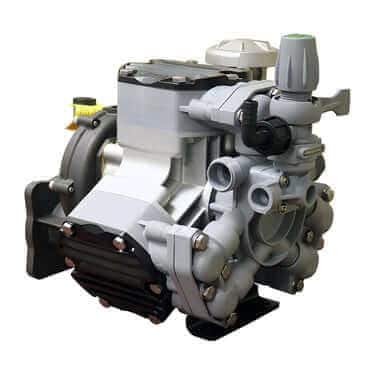 Comet P40 Diaphragm Pump SKU: 150-0428 |  BPX25 - P40 Soft Wash Sprayer Skid SKU: 150-0432M | 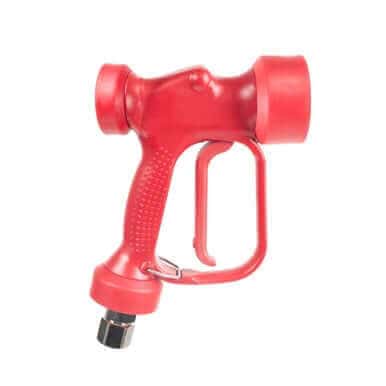 ProTool Wash Down Soft Wash Gun SKU: 74-5204 |
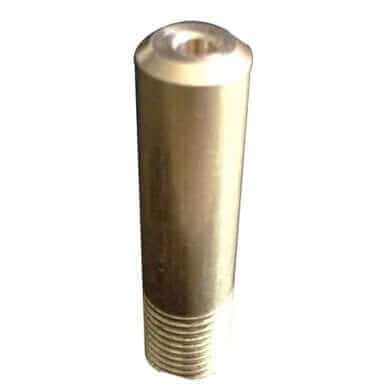 ProTool 30 Shooter Tip 4-4.5gpm PW SKU: 74-54M | 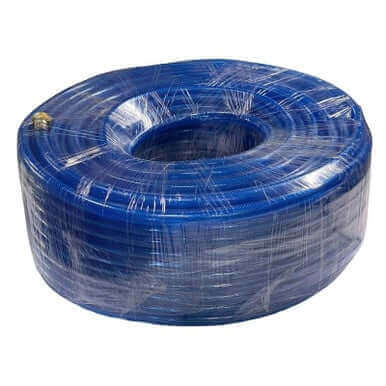 Hose 3/4in Braided By the Ft Blue SKU: 150-0318 | 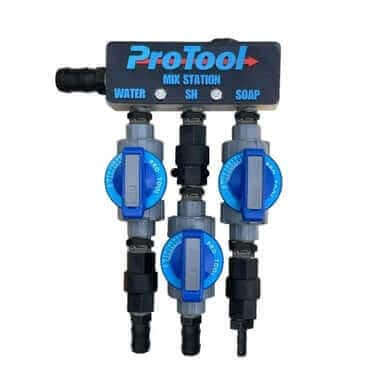 Soft Wash Metering Block SKU: 150-0454M |
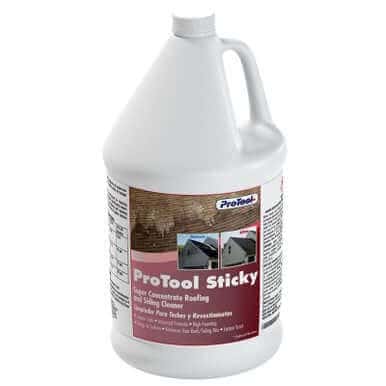 ProTool Sticky SKU: 83-07M | 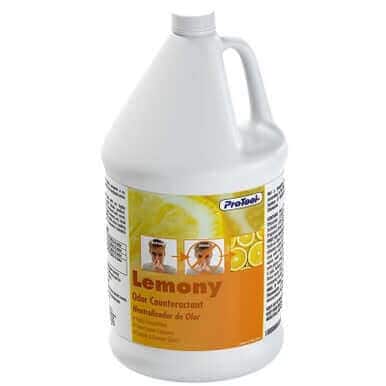 ProTool Lemony SKU: 83-05M | 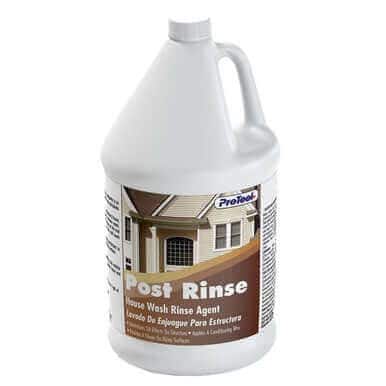 ProTool Post Rinse SKU: 83-03M |
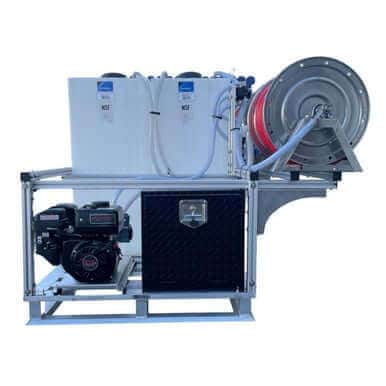 ProTool Soft wash Skid Curbside Reels BPX 25 SKU: 150-04762 | 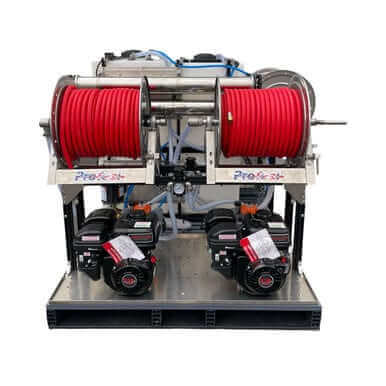 ProTool Dual User Pure Water and Soft Wash Skid BPX 25 SKU: 892-40100 |