
Oxalic Acid for Wood Cleaning: The Professional Contractor's Guide

Table of Contents
Oxalic acid for wood cleaning is the step that separates a deck restoration that lasts from one that fails within a season. Most contractors know they need a brightener after stripping, but few understand why — or what happens chemically when they skip it. The acid chelates metal ions (primarily iron), converts them to a water-soluble form, and resets the substrate's pH after high-alkaline strippers have done their work. Without it, you get saponified stain, premature darkening, and fiber degradation — all callbacks waiting to happen.
This guide covers the chemistry, the three-step workflow, the mixing ratios, and the safety protocols you need to run oxalic acid for wood cleaning on commercial-scale deck and fence restoration jobs.
How Oxalic Acid Actually Works on Wood
Oxalic acid is a dicarboxylic organic acid, typically sold as a crystalline powder. It works through chelation: the acid molecules bind to metal ions — especially iron — and convert them into water-soluble complexes that rinse off the substrate. That's the mechanism behind every rust streak and nail-head stain it removes.
Contractors often conflate "cleaning" and "brightening." They're different jobs. Alkaline cleaners like sodium percarbonate break down organic oils and dirt. They also leave the wood dark — sometimes called "burned" — because the high pH alters the wood's surface chemistry. Oxalic acid is the corrective step: it neutralizes that alkalinity and returns fibers to their natural, light-toned state. More importantly, it prepares the wood to actually accept a stain or sealer rather than letting the finish sit on top of dead, oxidized cells.
Oxalic Acid vs. Chlorine Bleach
Chlorine bleach (sodium hypochlorite) is an oxidizer that kills biological growth — mold, mildew, algae. It also breaks down lignin, the polymer that holds wood fibers together. On a deck, that translates to fuzzy, weakened grain after repeated use.
Oxalic acid is a reducing agent. It's far less aggressive on the wood itself while being dramatically more effective at removing inorganic stains. It targets ferrous oxide (rust) by chemically altering the iron molecules so they no longer present as dark discoloration. Use SH for biological growth. Use oxalic acid for metallic and tannin stains. They are not interchangeable.
Identifying Tannin vs. Iron Stains
Accurate stain identification drives your mix ratio and dwell time:
- Iron stains: Blue-black or gray-black streaks, typically radiating from galvanized nails, screws, or hardware. This is an iron-gall reaction — metal particles meeting the wood's natural acids.
- Tannin bleed: Reddish-brown discoloration, most common in redwood, Western red cedar, and white oak. These stains are embedded in the wood's cellular structure and require adequate dwell time.
Always run a test patch on a small area. You need to confirm the concentration lifts the stain without over-brightening the surrounding timber — especially on mixed-species jobs where different boards react differently.
When to Reach for Oxalic Acid
Reversing UV Damage (Photodegradation)
UV exposure breaks down lignin and leaves behind dead, gray cellulose fibers. A brightener strips away this oxidized layer to expose healthy wood underneath. This isn't cosmetic polish — it's functionally necessary. Stain applied over oxidized fibers cannot penetrate into the grain. It sits on top, peels early, and generates a callback.
Rust Streak Removal
Carbon steel fasteners bleed iron oxide into surrounding wood as they corrode. Because oxalic acid chelates those metallic ions, a single application followed by a rinse clears the dark streaks that plague older decks and fences. No mechanical abrasion, no sanding — just chemistry.
Efflorescence Near Masonry
Wood structures adjacent to masonry — pergolas against stone pillars, decks bordering concrete patios — pick up mineral salt deposits that create white, chalky efflorescence on the grain. Oxalic acid dissolves these deposits without the aggressive abrasion that damages soft wood fibers. On multi-surface jobsites, precise application with an acid-resistant pump sprayer keeps the solution on the target surface and off the surrounding landscape and stone.
Post-Stripper Neutralization
This is the most critical application. Strippers containing sodium hydroxide are effective at breaking down old oil-based stains, but they leave the wood in a caustic, high-alkaline state. Fail to neutralize and you get:
- Stain saponification: Residual alkalinity turns new oil-based stains into soap. They never cure.
- Premature darkening: High pH keeps wood dark and muddy, obscuring natural grain.
- Fiber degradation: Prolonged alkaline exposure weakens the surface.
You'll see the wood "flash" from dark brown to a bright, natural tan when the acid has done its job. For precision, use pH test strips — the substrate should read 6.5 to 7.0 before you let it dry for staining.
The 3-Step Restoration Workflow
Wood restoration is a sequenced chemical process, not a single-step cleaning task.
Step 1 — Strip: Apply a high-alkaline cleaner or stripper (sodium hydroxide-based products like ProTool Deck and Fence Cleaner) to remove old finishes and organic growth.
Step 2 — Brighten: While the wood is still damp from Step 1, apply oxalic acid for wood cleaning. This neutralizes the alkalinity and resets pH. Products like ProTool Wood Brightener and Neutralizer are formulated for this step. Timing matters — if the wood dries while still alkaline, the fibers can become permanently darkened, and the acid will struggle to correct the color.
Step 3 — Rinse and Dry: Low-pressure rinse, then a mandatory drying period. Do not stain until the moisture content drops below 15%.
Mixing and Dilution
For custom-strength solutions using pure oxalic acid crystals, the standard ratio is 4 oz to 8 oz per gallon of water. Use hot water to increase solubility — undissolved crystals will clog nozzles. Mix in acid-resistant HDPE containers only. Metal buckets or agitators react with the acid immediately, weakening the solution and corroding equipment.
If you prefer a pre-formulated option, ProTool Oxy Wood Cleaner provides a ready-to-use alkaline cleaning step, while the brightener handles neutralization — no crystal measuring required.
Application Techniques
Downstreaming through a pressure washer works for large vertical surfaces like fences, but it dilutes the concentration. For decks and horizontal surfaces where tannin bleed is heavy, a dedicated chemical-resistant pump sprayer or a soft wash system delivers consistent, full-strength application.
Work in manageable sections and maintain a wet edge to avoid lap marks. The solution needs 10 to 20 minutes of dwell time — don't let it dry on the wood. Dried acid leaves white crystalline residue that interferes with stain adhesion.
Safety Protocols and PPE
Oxalic acid is corrosive. The crystalline powder and the mixed solution cause chemical burns and respiratory distress if mishandled. OSHA's Short-Term Exposure Limit is 2 mg/m³ over any 15-minute period — easy to exceed when measuring dry crystals on a windy day.
Baseline PPE for every job:
- Respirator: NIOSH-approved with N95 or P100 filters, especially when handling dry crystals.
- Gloves: Heavy-duty nitrile or PVC chemical-resistant gloves. Standard latex does not provide an adequate barrier.
- Eye protection: Wrap-around goggles or full face shield — mandatory during application and high-pressure rinsing.
Mix only in well-ventilated outdoor environments. Don't atomize in high-wind conditions — chemical drift exposes the operator and bystanders. If skin contact occurs, flush with clean water for a minimum of 15 minutes.
Environmental and Site Protection
Pre-wet all surrounding vegetation before starting and keep it wet throughout the process. For high-value plantings, use heavy-duty tarps to divert runoff. Before wastewater enters storm drains, neutralize it with a baking soda (sodium bicarbonate) and water solution to raise the pH to neutral.
Chemical Storage and Equipment
Storage
Store crystals in a cool, dry environment in their original labeled containers. Moisture causes clumping and reduces solubility. Keep inventory dry and your chemical activity stays consistent through the season.
Critical safety rule: Never store oxalic acid near chlorine-based cleaners like sodium hypochlorite. Accidental mixing of an acid and a bleach generates toxic chlorine gas — a lethal hazard in the confined space of a service vehicle. Use secondary containment bins for all chemicals, and keep OSHA-compliant labeling and SDS documents on board.
Equipment That Survives Acid
Consumer-grade sprayers degrade fast when exposed to corrosive acids. For longevity, use sprayers with Viton seals and HDPE tanks — like the Solo 2-gallon acid-resistant sprayer. After every job, flush the entire fluid system with clean water to prevent internal corrosion of the pump and wand assemblies.
Pre-Job Checklist:
- SDS accessible for all crew members on site
- Sprayer seals and hoses inspected for chemical degradation
- Secondary containment secure for transport
- All containers labeled with correct chemical and concentration
Products Mentioned
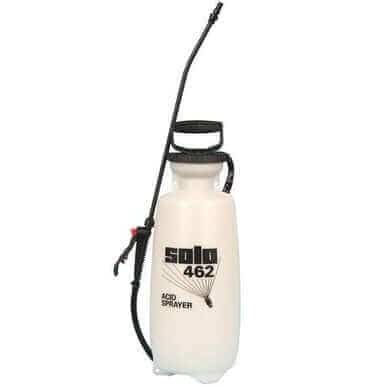 Pump Sprayer 2 Gal Acid Resistant Solo SKU: 515-045 | 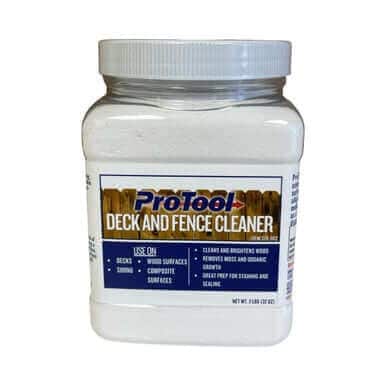 Protool Deck and Fence Cleaner SKU: 320-002 | 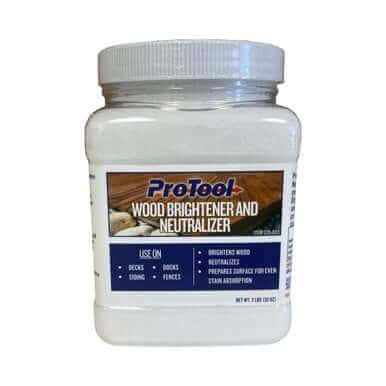 Protool Wood Brightener and Neutralizer SKU: 320-003 |
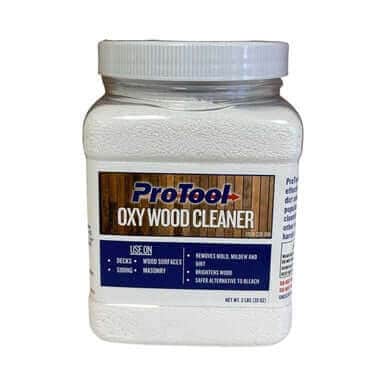 Protool Oxy Wood Cleaner SKU: 320-001 | 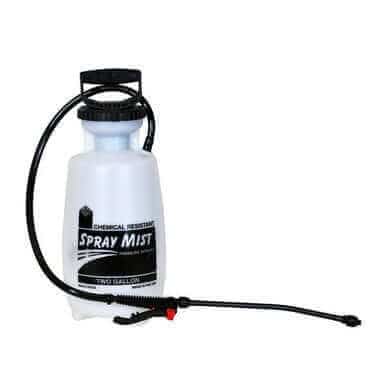 Pump Sprayer 2 Ga, Chem Resistant SKU: 515-039 |  Goggles Splash Proof SKU: 58-75 |
Pump Sprayer 2 Gal Acid Resistant Solo SKU: 515-045 |