Pressure Washer Hose Guide: Ratings, Materials, and Selection for Pros

Table of Contents
A pressure washer hose rated for 4,000 PSI sounds like overkill for a 3,000 PSI pump — until you realize that rating alone tells you almost nothing about whether the hose will actually perform on your rig. Diameter, wire-braid construction, jacket material, fitting compatibility, and total run length all determine whether your system delivers full flow at the nozzle or bleeds pressure through friction and restriction. This pressure washer hose guide breaks down every spec that matters, so you can match your hose to your pump's actual output and stop leaving performance on the table.
Understanding Pressure Washer Hose Ratings
Working pressure is the maximum sustained PSI the hose handles safely — not a target to push toward. Professional-grade hoses carry a 4:1 safety ratio: a 4,000 PSI working pressure means a 16,000 PSI burst rating. That margin exists to absorb pressure spikes when the trigger gun releases and the unloader cycles, not to give you headroom to over-pressurize.
The reinforcement layer is what holds the rating. Two constructions dominate the market:
- Single-wire braid — standard for 3,000–4,500 PSI applications. Flexible enough for daily facade and flatwork use while still taking abuse on concrete. The ProTool 4000 PSI 1-Wire Hose is the workhorse here.
- Double-wire braid — built for applications exceeding 5,000 PSI. Heavier and stiffer, but mandatory for industrial rigs. The ProTool 6000 PSI 2-Wire Hose handles the extremes.
PSI vs. GPM: Which Matters More?
PSI breaks the bond; GPM does the cleaning. A hose rated far above your pump's output adds weight and stiffness without adding performance. If your pump pushes 4,000 PSI at 4 GPM, a hose rated for 6,000 PSI just means you're dragging extra mass across the job site. Match the hose to the pump's actual specs — the right rating, not the highest one.
Temperature Limits
Standard cold-water hoses top out around 140°F. Hot-water and steam units push 250°F or higher. Running a cold-water hose on a burner softens the inner tube and outer jacket — the hose bubbles, swells, and eventually blows out. If you run a dual-purpose machine, the pressure washer hose must be rated for the burner's max output, not just the cold-water mode. The PressurePro Flextral Hose covers both temperature ranges in a single line.
Choosing the Right Material: Rubber, Thermoplastic, and Hybrid
Jacket material determines where a hose belongs in your operation. The wrong choice either scuffs a client's property or fails under heat.
Wire-Braided Rubber
Rubber is the default for commercial and industrial work. Superior heat resistance, excellent abrasion protection when dragged across concrete, and cold-weather flexibility for year-round operations. The trade-off: weight. A 100-foot section of high-grade rubber is significantly heavier than synthetic alternatives, and that mass compounds over a full shift. But rubber survives job sites that destroy lighter hoses.
Lightweight Thermoplastic
PVC and polyurethane hoses cut weight dramatically — a real advantage on steep roof pitches, long runs, and drone-assisted cleaning. They're also inherently non-marking. Standard black rubber transfers carbon black to pool decks, light siding, and pavers; thermoplastic jackets don't.
The limitations: thermoplastic softens above 140°F, making it incompatible with hot-water units. It also develops "memory coil" more readily, resisting a flat lay. For soft washing, roof cleaning, and residential applications where weight and surface protection matter more than heat resistance, thermoplastic wins.
Hybrid Polymers
Hybrids aim for rubber's kink resistance with thermoplastic's weight savings. The ProTool Ultra Light Hybrid Hose is a good example — flexible, lightweight, and available in non-marking jackets for residential work. For industrial sites where cosmetics don't matter, a standard black jacket saves cost. For residential facade and roof cleaning, non-marking is the professional standard.
Hose Diameter and Length: The Flow Equation
Friction loss is the silent performance killer. Water molecules drag against the interior wall, converting kinetic energy to heat. The result: the pressure at your nozzle is lower than the gauge on your pump. Two variables control that loss — internal diameter and total run length.
- 1/4-inch — short whip lines and machines under 3 GPM only.
- 3/8-inch — the professional standard. Handles 4–10 GPM without significant friction loss and fits standard 3/8-inch quick-connect fittings.
- 1/2-inch — mandatory for high-volume soft wash rigs and industrial systems above 10 GPM.
Why 3/8-Inch Is the Standard
It handles the flow range most commercial rigs operate in (4–10 GPM) without inducing massive pressure drops. It fits standard QC fittings, spools efficiently on a hose reel, and weighs significantly less than 1/2-inch over a 200-foot run. Unless your rig pushes above 10 GPM, 3/8-inch is the right call.
The Bottleneck Effect
Forcing 5 GPM through a 1/4-inch line creates backpressure that generates internal heat, stresses seals, and cycles the unloader constantly. That's a direct path to pump failure. If your pump's output exceeds the hose's flow capacity, the hose isn't just underperforming — it's actively destroying the pump.
The 100-Foot Rule
Friction loss scales linearly with length. A 4,000 PSI pump pushing through 300 feet of 3/8-inch hose delivers considerably less than 4,000 PSI at the gun. You must account for that drop when selecting nozzle tips — orifice size should be based on actual delivered pressure and GPM, not pump-rated specs.
Fittings and Connections for Professional Setups
The best pressure washer hose in the world fails at a bad connection. Fittings are the primary failure point in any high-pressure system.
Material matters: stainless steel or high-grade brass for professional use. Plated steel corrodes, galls, and strips threads under daily cycling. The ProTool 3/8 FPT SS Coupler and ProTool 3/8 MPT SS Plug are built for rigs that run every day.
M22 Stem Sizes: The 14mm vs. 15mm Problem
Most professional pumps use a 14mm stem. Many consumer-grade and some European machines use 15mm. Forcing a 14mm coupler onto a 15mm stem won't seal. Putting a 15mm coupler on a 14mm stem risks a blowout. Measure with a caliper before you buy. The M22 Twist Connect category covers both sizes with adapters and unions.
Quick-Connect Standards
- Stainless steel QCs — mandatory for downstreaming corrosive chemicals and coastal environments.
- Brass QCs — adequate for standard water applications, but softer and more prone to mechanical wear.
- O-ring maintenance — a single flattened O-ring causes pressure drops and unloader cycling. Inspect daily; replace at the first sign of deformation. Keep Viton O-rings on the truck.
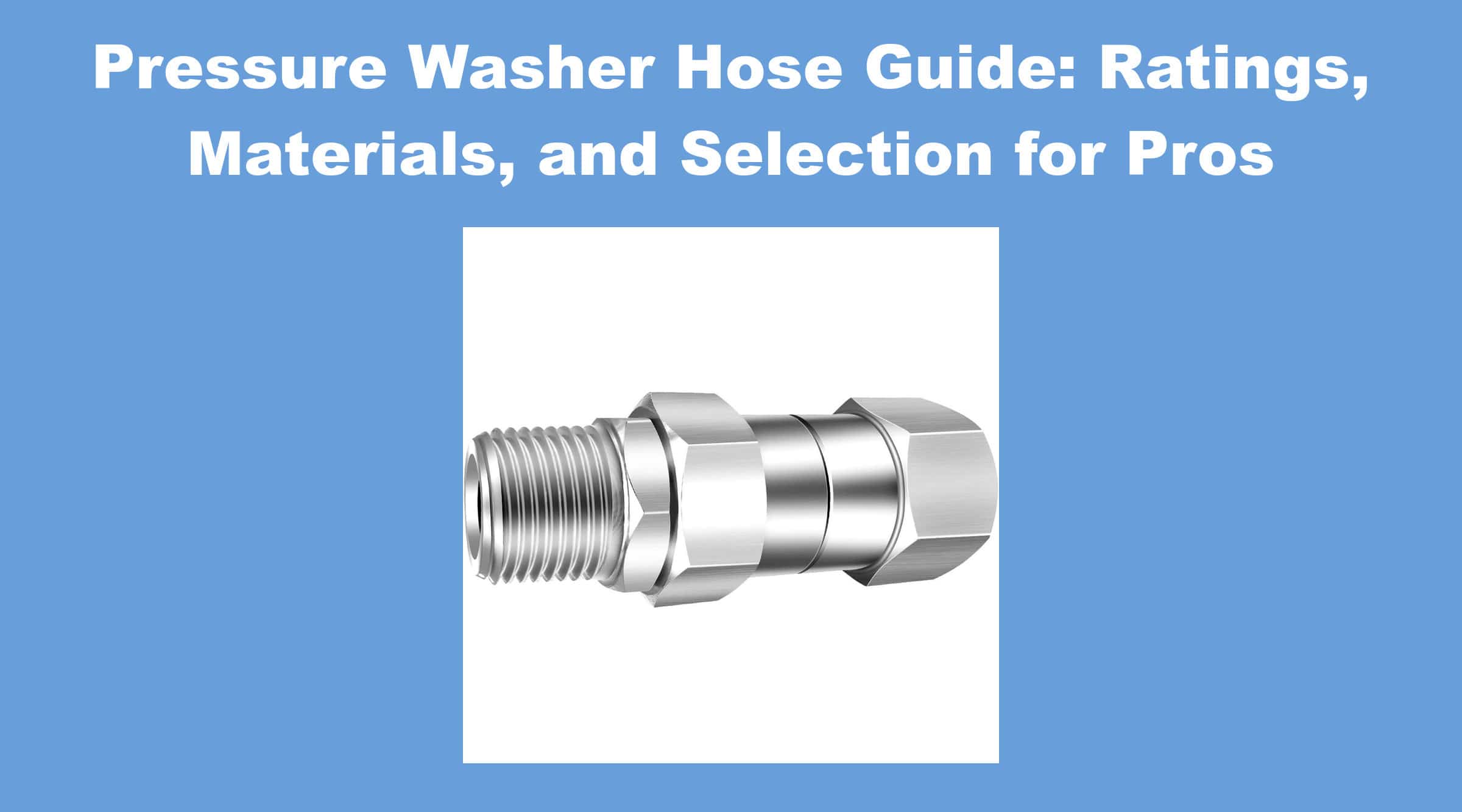
High-pressure swivels between the gun and hose let the gun rotate independently of the line — fewer tangles, less wrist fatigue, longer shifts.
Whip Lines and Adapters
A short whip line between the pump outlet and main reel absorbs high-frequency pump vibration. Without it, the main hose fatigues at the connection point and fails prematurely. Use NPT threads for permanent reel connections — they handle the torque of daily coiling and uncoiling without loosening.
Maintenance and Inspection
A pre-shift tactile and visual inspection catches problems before they become blowouts:
- Soft spots — the inner liner has failed. Pressurized water is infiltrating the reinforcement layer. The hose will burst.
- Deep cracks or abrasion — exposed wire braid corrodes fast once oxygen and moisture reach it.
- Visible wire braid — remove from service immediately. No exceptions.
UV exposure degrades both rubber and thermoplastic jackets over time, making them brittle and crack-prone. In cold climates, drain every line before storage — ice expansion inside a hose ruptures the inner tube and permanently deforms the wire braid.
Extending Hose Life
Proper reel management prevents kink-memory — permanent weak points from tight, overlapping coils stored under tension. After any soft wash or downstream job, flush the line with fresh water. Residual sodium hypochlorite degrades the inner liner overnight. On high-traffic job sites, hose bridges and ramps prevent crush damage from vehicles.
J.Racenstein stocks the full range of contractor-grade pressure washer hoses, quick connects, and pressure washing accessories built for rigs that run daily. If you're configuring a new system or replacing worn lines, the inventory is built around the specs covered in this guide.
Beyond the Hose: How Equipment Layout Matters
Choosing the right pressure washer hose is important, but how that hose is integrated into your equipment matters too. Hose reel placement, routing, connection points, and accessibility all affect how efficiently a crew can work throughout the day.
ProTool, J. Racenstein's equipment manufacturing brand, considers these details when designing professional pressure washing skids and trailers. From organizing multiple hose reels to positioning components for easier operation and maintenance, the goal is to build a complete system that works together.
Learn more about The ProTool Way and how thoughtful equipment design goes beyond simply selecting the right components.
Products Mentioned
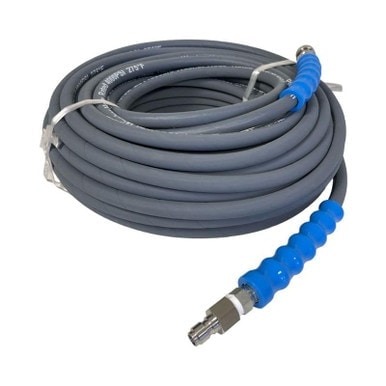 ProTool Pressure Washing Hose 4000psi 1 Wire SKU: 74-36M | 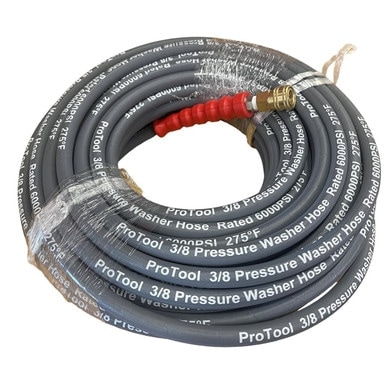 ProTool Pressure Washer Hose 50ft 2 Wire 6000psi with Quick Connects SKU: 74-3521 | 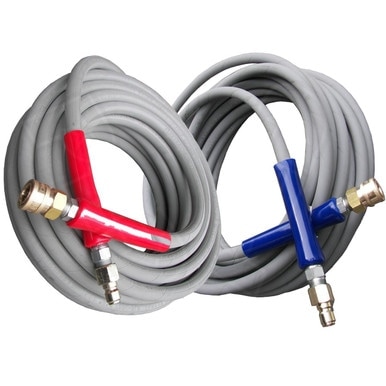 PressurePro Flextral Pressure Washer Hose SKU: 74-33M |
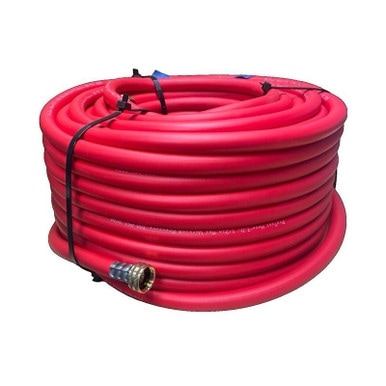 ProTool Ultra Light Hybrid Hose 300 PSI SKU: 150-035M | 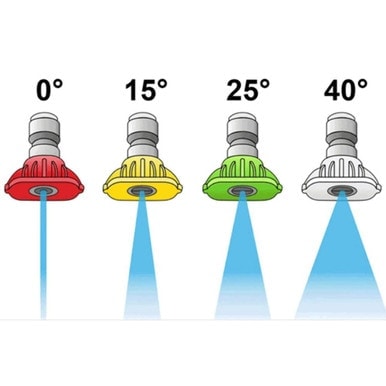 Nozzle Tip Quick Connect Pressure Washer 1/4in Plug SKU: 74-50M | 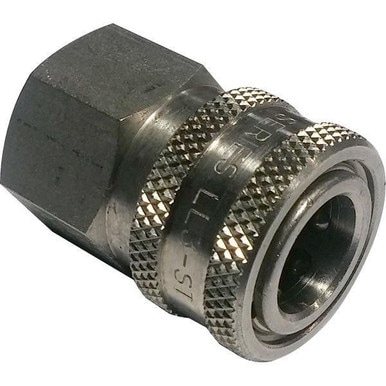 ProTool Coupler 3/8 FPT SS Socket SKU: 74-4205 |
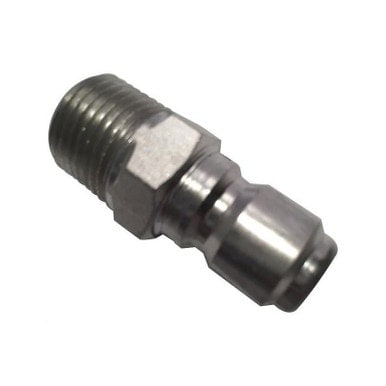 ProTool Plug 3/8 MPT SS SKU: 74-4209 | 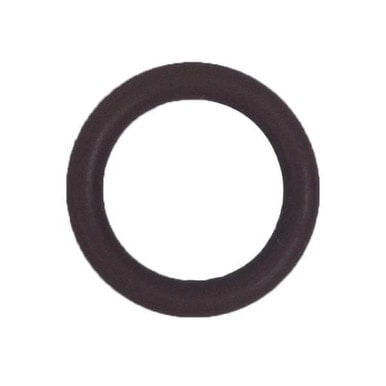 3/8in QC O-Ring Viton SKU: 74-4312 | 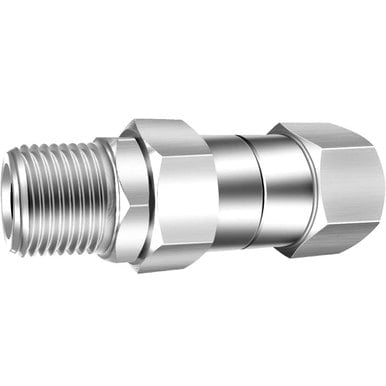 Swivel 3/8in Male-Female 4500 psi, 350 degrees F SKU: 74-2610 |