Pressure Washer Pump Guide: Selection, Specs, and Maintenance

Table of Contents
A single seal failure on a Tuesday morning costs more than the seal. It costs the job, the schedule, and the crew's day. The pressure washer pump is the most failure-prone component on a professional rig, and most contractors understand it the least. This guide covers what matters: matching pump to engine, reading failure symptoms before they strand you, and choosing specs that actually increase production rather than just hitting a bigger PSI number on paper.
How a Pressure Washer Pump Actually Works
The pump converts engine torque into hydraulic force — pressurizing water and pushing it through the system. Every professional rig fails at the pump first. High-pressure seals, check valves, and ceramic plungers operate under extreme mechanical stress, and any gap in maintenance or water quality shows up fast.
The PSI vs. GPM distinction matters more than most operators realize. PSI is stripping force — it breaks the bond between contaminant and surface. GPM is volume — it moves the debris away. Higher flow rates let you clean more square footage per hour, which is where the money is. A 4 GPM pump at 3500 PSI will outproduce a 2.5 GPM pump at 4000 PSI on nearly every commercial job.
Triplex Plunger vs. Axial Cam
Triplex plunger pumps are the professional standard. Three ceramic plungers, brass manifolds, crankshaft-driven. Fully rebuildable. A well-maintained triplex outlasts an axial cam pump by a factor of ten.
Axial cam pumps use a swash plate that generates more heat and friction. Most are sealed units — non-serviceable, 100–200 hour lifespan. The lower buy-in is a false economy when you factor in replacement frequency and lost billable hours. If you're running jobs daily, axial is not the play.
The Unloader Valve
When you release the trigger, the unloader diverts pressurized water into a bypass loop to prevent the pump from building pressure against a dead head. If the unloader sticks or is set too high, you get pressure spikes that crack manifolds and destroy plungers. A malfunctioning unloader is also a safety hazard — it's not a set-and-forget component. Inspect and adjust it regularly.
Drive Types and Shaft Sizing
Getting the pump onto the engine correctly is non-negotiable. Shaft diameter must match the power source exactly; a mismatch creates vibration that destroys the drive assembly.
- 3/4-inch shafts — engines under 8 hp.
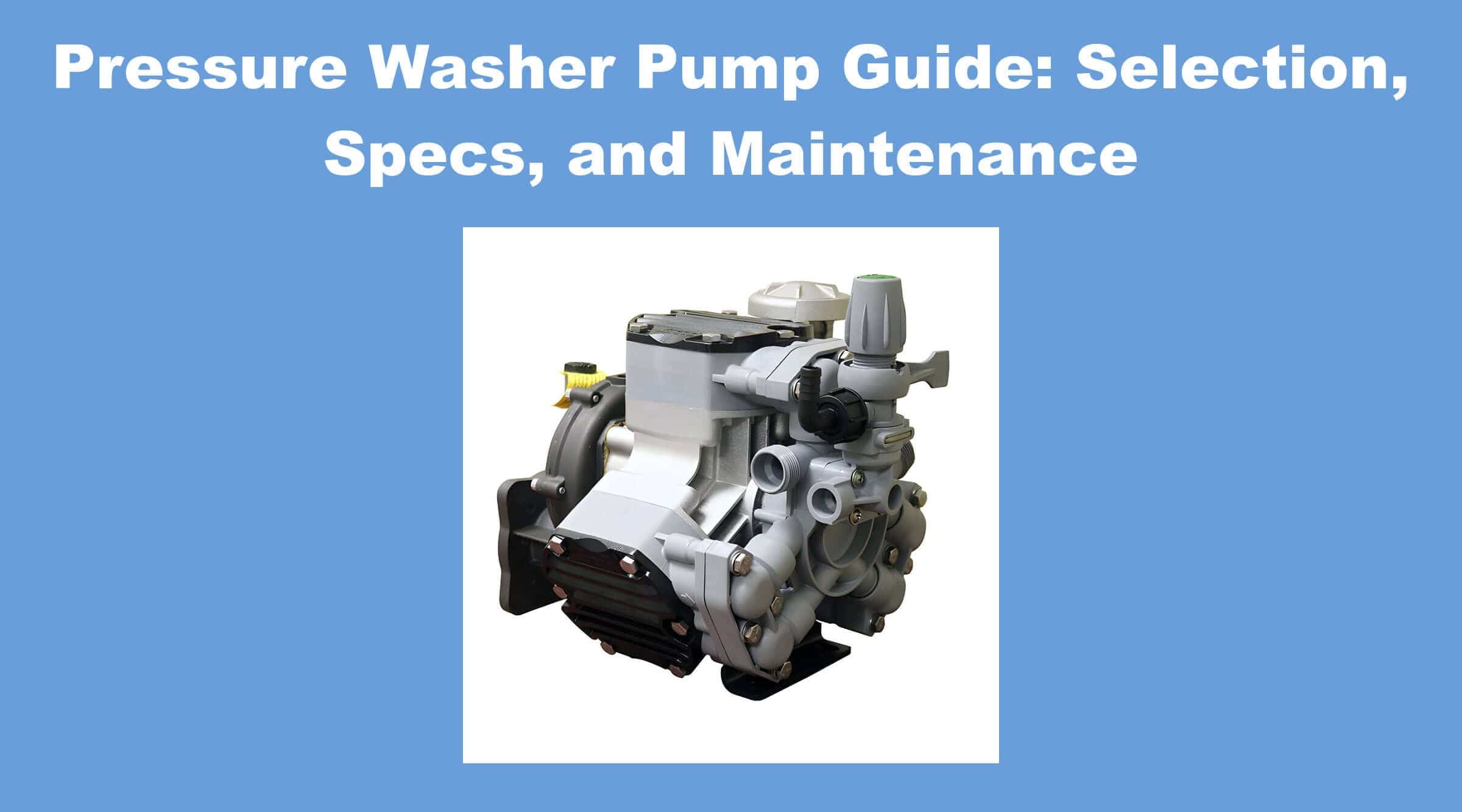
- 1-inch shafts — industrial engines like the Honda GX390 (13 hp) paired with pumps like the Comet P40 or similar high-output units.
RPM rating dictates service life. Pumps rated at 1750 RPM run at half the speed of 3450 RPM models — less heat, less seal wear, longer intervals between rebuilds. The 3450 RPM units are more compact and cheaper, but they wear faster under sustained commercial use.
Direct Drive vs. Belt Drive
Direct drive bolts the pump straight to the engine shaft. Compact, efficient, and it subjects the pump to every degree of engine heat and every vibration cycle. Belt drive systems use pulleys to isolate the pump from the engine, dropping pump RPM below engine RPM. The result: cooler operation, longer seal life, and significantly less vibration transfer. For daily commercial use, belt drive wins. Gearbox drives split the difference — speed reduction in a smaller footprint.
Shaft and Mounting Details
Hollow shaft pumps slide onto the engine crankshaft directly (common with direct drive). Solid shafts pair with belt or gearbox setups. Gas engines typically use a four-bolt flange pattern; electric motors follow NEMA standards. The shaft keyway — a machined slot holding a square metal key — is what locks pump and engine rotation together.
Every rig also needs a thermal relief valve. When bypass mode pushes water temperature past 145°F, this valve dumps hot water to prevent heat damage inside the pump head. Without it, extended trigger-off time cooks your seals.
Choosing the Right Pump for Your Work
Revenue in exterior cleaning is tied to square footage per hour. The "GPM is King" rule holds: moving from a 4 GPM pump to an 8 GPM unit doesn't just add water — it doubles your production capacity on flatwork. A higher GPM rating also lets you run larger surface cleaners without starving them.
Balance flow against the PSI requirements of your target surfaces. Excessive PSI is a liability on residential siding and roofing. Insufficient PSI won't drive a surface cleaner on commercial concrete. And factor total cost of ownership — a cheaper pump that needs seal kits every 200 hours costs more over two years than a triplex that runs 2,000 hours between rebuilds.
Matching Output to the Surface
Residential siding: high flow, moderate pressure. The goal is detergent application and fast rinse without forcing water behind panels. Commercial concrete: maintain 3000–3500 PSI minimum to keep surface cleaners effective. Soft wash applications: pressure is a liability. Use dedicated low-pressure soft wash pumps or adjust the unloader to prioritize chemical dwell over mechanical force.
Future-Proofing Your Rig
Before upgrading the pump, confirm the engine has the horsepower. A pump rated at 4.0 GPM / 4000 PSI needs a 13 hp engine to reach spec. If you're planning a dual-operator setup or sharing supply between rigs, the pump selection must account for that demand. Planning the upgrade path now avoids a full rig overhaul when the business scales.
Diagnosing a Failing Pump
Catch failures early and you swap a $30 seal kit instead of a $600 pump head.
- Pulsating flow — stuck or worn check valve.
- Sudden pressure drop — bypass issue or worn high-pressure seals.
- Metallic knocking — bearing wear or broken connecting rod.
- Oil leak at the rear — failed crankcase seal.
- Milky oil in the sight glass — water has bypassed the HP seals and contaminated the crankcase.
None of these resolve without intervention. Ignoring them risks damage to the engine crankshaft.
The Bucket Test
Run the machine at full throttle, trigger the gun into a five-gallon bucket for exactly 60 seconds. Measure the collected volume against the pump's rated output. If your 4.0 GPM pump delivers 3.2 gallons, you've lost 20% efficiency. Standard seal kits and valve assemblies are inexpensive. But if the ceramic plungers are scored or the manifold shows washout erosion, replacing the pump head is more cost-effective than an exhaustive rebuild.
Cavitation
The most destructive force a pump faces. When water supply is restricted, a vacuum forms vapor bubbles inside the pump head. Those bubbles implode against the ceramic plungers and brass manifold hard enough to pit the metal. Air leaks in the intake line cause similar symptoms — erratic pressure and a vibrating high-pressure hose. Always run an inline inlet filter to keep debris out of the valve seats, and make sure your supply hose delivers at least 20% more GPM than the pump's rated draw. A buffer tank is the most reliable prevention for high-flow rigs.
Preventative Maintenance
First oil change at 50 hours (break-in shavings). Every 500 hours or once per season after that. Use non-detergent pump oil only. For cold-climate contractors, winterization is mandatory — use pump guard antifreeze to displace water and prevent freeze damage. These are cheap, simple steps that prevent expensive failures.
Pressure Washer Pumps at J. Racenstein
Every pressure washer and pump we carry is selected for commercial-grade construction — triplex plunger designs, rebuildable manifolds, rated for daily multi-hour operation. We stock complete 4.0 GPM cold water pressure washers, 8.0 GPM skid-mount systems, and the replacement pumps and parts to keep them running.
We also support specialized configurations — soft wash skids with diaphragm pumps, hot water add-on systems, and solar panel cleaning rigs that require specific pressure and flow profiles. If you're building or repairing a rig, our technical support team can help match pump output to engine specs and application requirements.
Products Mentioned
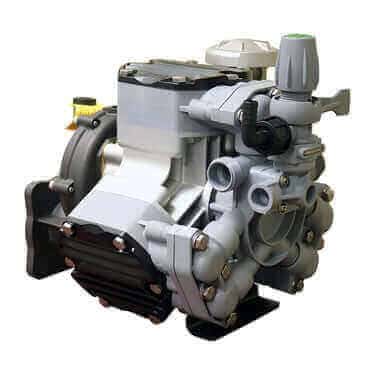 Comet P40 Diaphragm Pump w/ Regulator SKU: 150-0428 |