Rust Remover for Concrete: F9 BARC Application Guide
Table of Contents
Using the wrong rust remover on concrete creates more problems than it solves. Muriatic acid is `cheap and available everywhere, which is exactly why so many contractors reach for it — and exactly why so many driveways end up with permanent white etching where orange stains used to be. The acid is non-selective: it strips the cement paste, exposes micro-aggregates, and leaves the surface porous, rough, and visibly damaged. That chalky aftermath is irreversible without mechanical grinding.
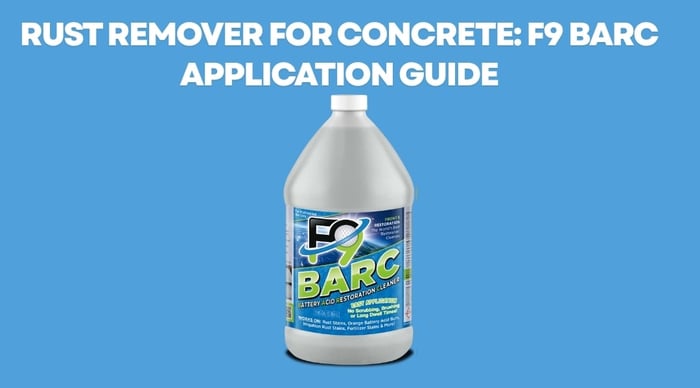
F9 BARC works differently. It penetrates the top 1/16" of the concrete substrate, reaches the iron oxide trapped in the pores, and chemically reverses the oxidation — without destroying the cream layer that gives the slab its finished appearance. The distinction matters: this is restoration, not cleaning. Standard cleaners address surface contaminants. A rust remover like BARC targets the chemical bond between iron and concrete.
Why Standard Acids Fail on Rust Stains
Iron-based stains — from fertilizer pellets, metal patio furniture, or high-iron irrigation water — bond chemically with concrete minerals. You cannot pressure-wash them away. Muriatic acid will remove the stain, but it removes the surface finish with it. The result is a white spot that stands out worse than the original rust.
F9 BARC is buffered to preserve the substrate while still delivering enough chemical strength to reverse oxidation. It is biodegradable, non-flammable, and follows exact safety protocols per the SDS. That combination of power and preservation is what makes it viable for decorative concrete, stamped slabs, and finished pavers where etching would be catastrophic.
One absolute restriction: never use F9 BARC on glass. Its mineral-reactive chemistry causes immediate, permanent etching on windows and glass doors. Protect glass with plastic sheeting or a constant water curtain.
Application Protocol: Step by Step
S 2 ccccccccccccccccurface preparation determines your outcome. Remove grease, oil, and heavy dirt with a surface cleaner before applying any rust remover. Chemical penetration requires clean, open pores. Let the surface dry completely — applying to wet concrete dilutes the active ingredients and prevents the 1/16" penetration depth the chemistry depends on.
Dilution Ratios
- Heavy battery acid stains: Full strength
- Moderate fertilizer/irrigation stains: 1:1 (one part water, one part chemical)
- Light irrigation discoloration: 2:1 (two parts water, one part chemical)
Use a chemical-resistant pump sprayer for consistent coverage. Uneven application creates lap marks — clean spots where the product hit heavier than the surrounding area. For deep-set stains, agitate with a stiff-bristled brush to help break stubborn iron bonds.
The F9 Cookbook Method
The Cookbook method is a stain-specific application sequence available through the official F9 app. It is not a single formula. For irrigation stains, the sequence calls for a light misting followed by a concentrated pass. Work in manageable sections so the chemical does not dry before you achieve even coverage. The goal is a uniform gray finish across the entire slab.
Rinsing and Neutralization
For most standard concrete jobs, let BARC dry on the surface to maximize the restoration effect. On delicate masonry or high-traffic areas, neutralize with F9 Double Eagle to stop the chemical reaction and balance the surface pH before foot traffic returns.
Inspect after the surface dries. If orange tints remain, a second light application may be needed. Wait for full drying between coats — wet-on-wet only dilutes the product.
Substrate Compatibility
BARC works on more than driveways. It is compatible with masonry, pavers, vinyl siding, stucco, asphalt, and rubberized playground surfaces. Each substrate has its own protocol:
- Asphalt: Avoid high-pressure rinsing that dislodges fines
- Rubber: Verify dye stability before full application
- Vertical surfaces (stucco, siding): Apply bottom-up to prevent clean streaks, rinse top-down
- Dense stone (granite, slate): Longer dwell times — the product stays on the surface because absorption is slow
- Porous pavers and brick: Apply to bone-dry substrate to maximize chemical draw into the pores
Always test an inconspicuous area first to verify the reaction and dial in your dwell time.
Troubleshooting Common Rust Removal Problems
Orange Stain vs. White Stain: Know the Difference
This is the single most common diagnostic error in rust removal. Orange flash acid burn is sulfuric acid reacting with concrete minerals — BARC reverses this. White, chalky residue from a lead-acid battery leak is a different problem entirely. That white stain means the concrete has been physically etched. No rust remover will fix a texture change. That requires mechanical grinding or patching. Stop before you waste product on a problem chemistry cannot solve.
Efflorescence Confusion
White powdery deposits that are not battery-related are likely efflorescence — mineral salt buildup migrating through the slab. This requires a different chemical approach. Use F9 Efflorescence/Calcium Remover to clear the salts before proceeding with rust restoration.
Chemical Drying Too Fast
In temperatures above 80°F, the substrate flash-dries the solution and the chemical reaction stops. Use a light water mist from a pump sprayer to keep the reaction active without washing the product away. Schedule restoration work for early morning to avoid midday heat.
Ghosting After Treatment
A faint shadow outline remaining after the primary stain lifts means iron has penetrated deeper than 1/16". A light pressure wash during the final rinse can pull remaining particles to the surface. If organic growth (mold, algae) overlaps the rust, treat organics first with sodium hypochlorite, rinse thoroughly, then proceed with the rust remover. Never mix these chemicals on the slab.
Pricing Rust Removal as a Restoration Service
Rust removal is not pressure washing. Pricing it by square footage undervalues the technical knowledge, specialized chemistry, and liability management the work requires. A per-stain or per-area model better reflects what you are actually delivering.
A single localized battery acid stain can require more precision, dwell time, and chemical cost than cleaning an entire sidewalk. Price accordingly. Before-and-after photos — orange slab to restored gray — close more contracts than written proposals.
ROI on Professional Chemistry
The gallon price is irrelevant if you factor in labor. One successful application with F9 BARC versus three failed attempts with a consumer-grade product saves hours per job and eliminates re-do liability. On standard concrete, one gallon covers 400–800 sq ft depending on porosity and stain severity. At 2:1 dilution for light stains, coverage per gallon increases substantially.
Building Your Restoration Kit
Beyond the chemistry, you need the right equipment for consistent results:
- Chemical-resistant pump sprayer — even application, no lap marks
- Stiff-bristled agitation brushes for deep stains
- Appropriate PPE per the SDS — chemical-resistant gloves, eye protection, respirator when working in enclosed areas
- F9 Double Eagle for neutralization on sensitive substrates
- F9 Efflorescence Remover for salt deposits encountered alongside rust
Buying F9 products in cases or 55-gallon drums lowers your cost per application and keeps inventory on hand for large commercial contracts.
Products Mentioned
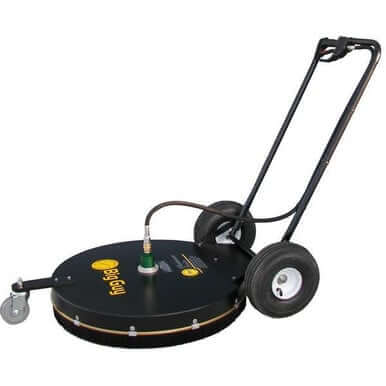
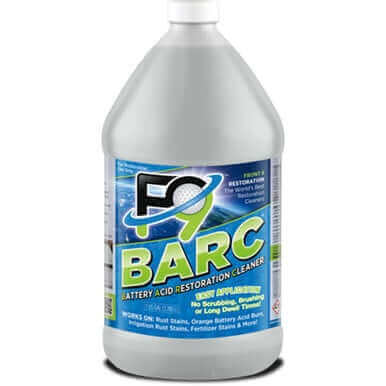 Front9 Restoration Rust Remover F9 B.A.R.C. SKU: 320-61M | 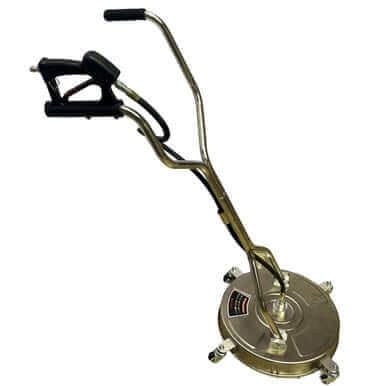 Surface Cleaner 18in Protool 4000psi SKU: 74-3795 | 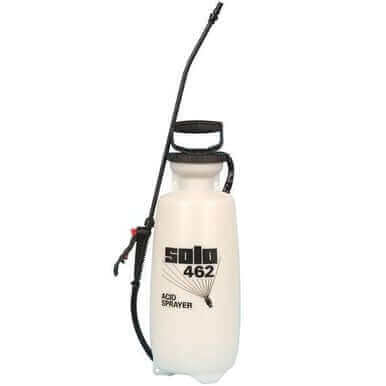 Pump Sprayer 2 Gal Acid Resistant Solo SKU: 515-045 |
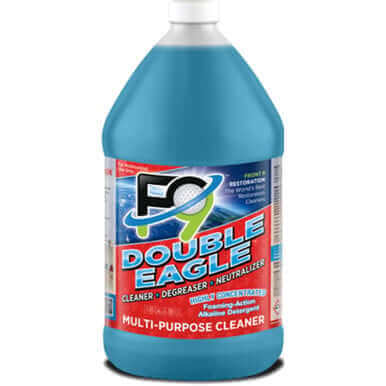 F9 Double Eagle Degreaser Gal SKU: 320-618 | 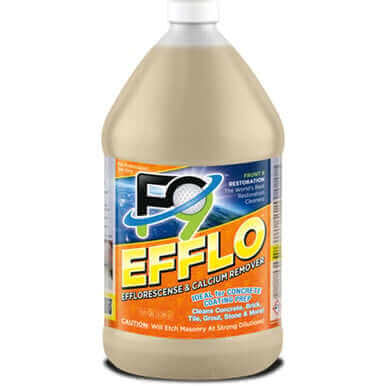 F9 Efflorescence/Calcium Remover Front9 Restoration SKU: 320-62M | 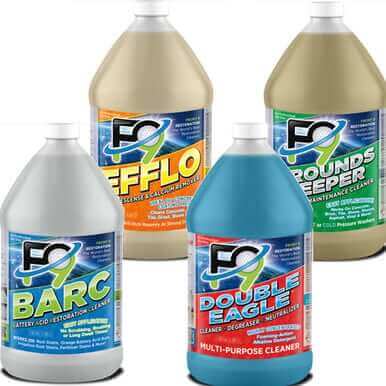 F9 Sample Pack 4 gallon SKU: 320-626 |
 F9 Double Eagle Degreaser 55 Gal Kit SKU: 320-6182 | 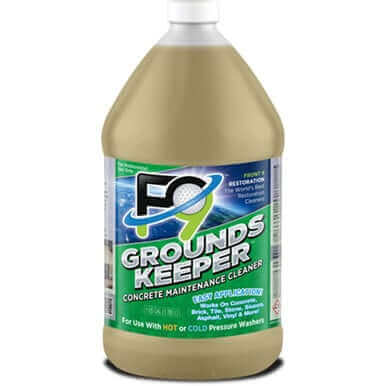 F9 GroundsKeeper Concrete Cleaner Gal SKU: 320-619 |