Professional Appearance for Exterior Cleaners: Gear, Rigs, and Image
Table of Contents
Professional appearance is the fastest shortcut to premium pricing in exterior cleaning. Clients decide whether you're worth $250 or $450 before you pull a trigger — based on your truck, your gear, and how your crew looks walking up the driveway. A stained shirt and tangled hoses don't just look bad; they cost you money on every bid. Here's how to build an image that matches your skillset.
What Professional Appearance Actually Means in the Field
Nobody expects a pressure washer to show up in a suit. But clients do read visual cues — and they read them fast. A branded truck with secured equipment, a crew in matching shirts, organized hose reels, and clean PPE signals an operation that handles liability, carries insurance, and won't leave chemical burns on the driveway. That perception is worth 15–25% on every quote.
The "First Five Minutes" concept is real. Residential clients judge your work quality before you touch a squeegee, based entirely on arrival presentation. A wrapped or lettered vehicle with a ProTool Soft Wash Skid mounted cleanly on the truck bed communicates a different tier than loose buckets and a garden hose. Commercial property managers are even more exacting — they want documentation, matching gear, and visible safety compliance before they'll sign a contract.
The Working Uniform: Functional, Durable, Branded
Fabric Selection
Cotton is a liability for exterior cleaners. It absorbs water, holds SH stains, and looks wrecked by mid-morning. Moisture-wicking polyester or synthetic blends dry fast, hold shape through a full shift, and resist the orange spotting that sodium hypochlorite leaves on standard fabrics. If your crew runs soft wash, bleach-resistant garments aren't optional — they're the difference between looking professional at your 3 PM appointment and looking like you lost a fight with a Clorox bottle.
Layer for temperature swings: moisture-wicking base, branded water-resistant shell on top. You strip down as it warms without losing brand visibility. Keep a dry kit in the truck — spare branded shirt, socks, fresh PVC boots. Changing after a morning house wash before an afternoon window job is a small move that pays outsized dividends.
Branding That Works
Small logo on the left chest, larger logo across the back. Whether the tech is facing the client or up on a ladder, the company name stays visible. For residential, clean polos. For production work, heavy-duty tees are fine — as long as they're clean and intact. Hats and outerwear carry the logo too. A branded crew shirt for a 3-person team often pays for itself within a month through neighbor referrals generated onsite.
Footwear
Sneakers on a job site tell the client everything they need to know — and none of it is good. Waterproof, non-slip boots with aggressive traction are baseline. They keep you safe on wet roofs and soapy concrete, and they signal that you take the work seriously enough to invest in proper gear.
Equipment Presentation: Your Rig Is Your Resume
Truck and Trailer
You sell cleaning. Your rig had better be clean. A truck caked in road grime or leaking chemical residue contradicts your entire pitch. Wash your rig weekly. Inspect pump frames, tank bands, and hose fittings for rust or wear — a corroded frame leaves stains on a client's driveway and kills your credibility on the spot.
A custom-built skid mounted properly communicates a different business class than a DIY setup with mismatched tanks. Even if you're not ready for a full custom build, keeping pumps, reels, and tanks organized and secure on the truck transforms the perception. Clients associate tidy rigs with meticulous work.
Tool Organization
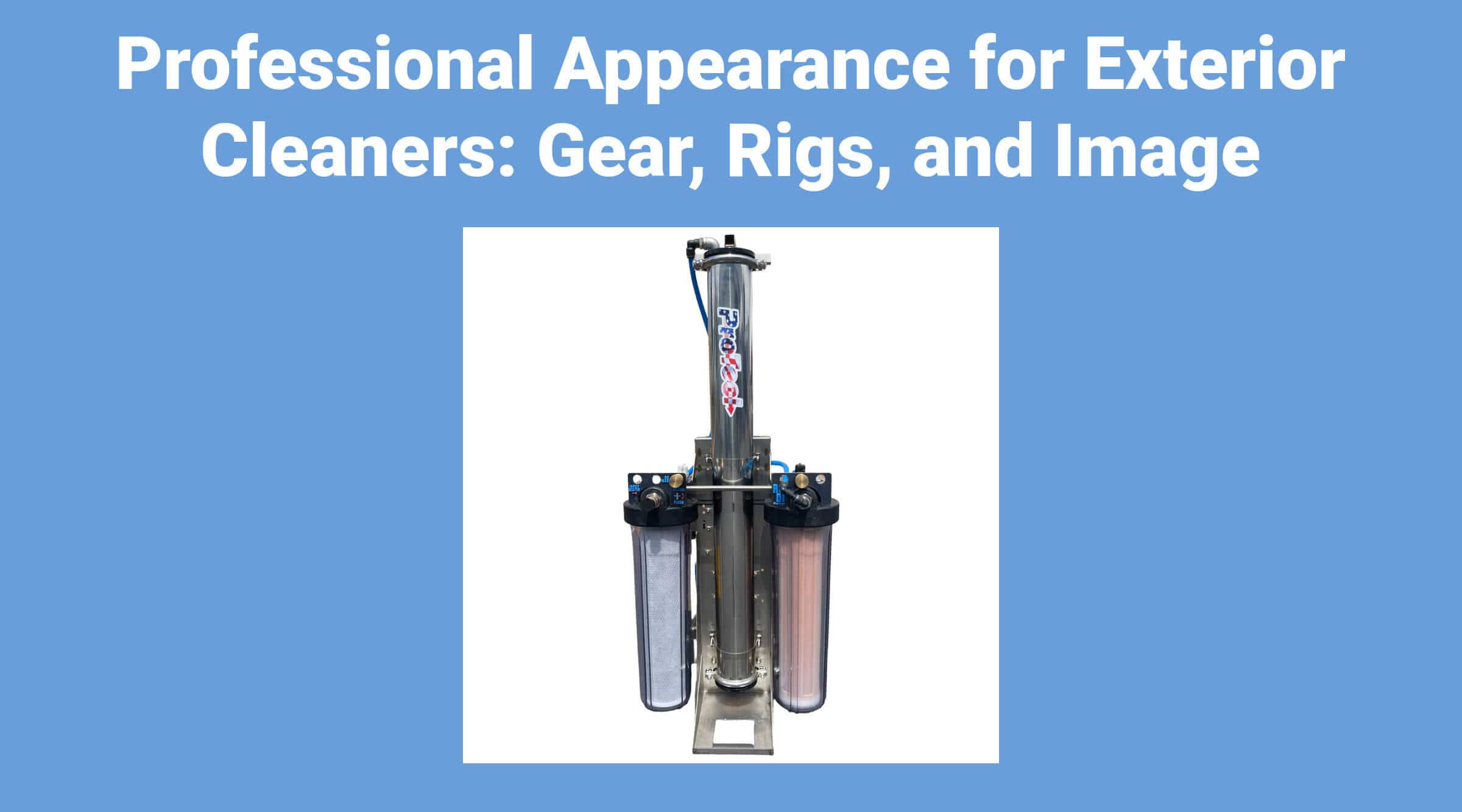
Tangled hoses and cords scattered across a driveway are a red flag. Neat hose reels and proper holsters keep tools accessible and off the ground. When a client watches you deploy a well-maintained ProTool HiFlo Pure Water Cart, they see the complexity and investment behind the process — and they stop questioning your price.
Sweat the small stuff. Squeegee rubber stored loose gets nicked and rounded, leaving streaks that tell the client you cut corners. Protective cases for water-fed poles, dedicated chemical storage, organized blade holders — these details separate the operator charging $150 from the one closing $500 jobs.
Safety Gear as a Credibility Signal
A technician hanging off a roof without a harness looks like a liability lawsuit. A technician secured with a ProTool full-body harness and proper anchoring looks like a specialist. Homeowners assume that if you're careful with your own life, you'll be equally careful with their property. That assumption converts directly into higher close rates and better reviews.
Standardize PPE across your crew: matching hi-vis vests, hard hats, eye protection, nitrile gloves for chemical handling. A professional respirator during soft wash applications replaces the "DIY" look of someone holding their breath while spraying bleach. Compliance with OSHA 1910 standards isn't just regulation — it's a sales tool. Mentioning it in your pitch gives you an immediate edge over operators who skip safety basics.
For commercial bids, documented safety protocols are often a hard requirement. Showing up with a plan and the right fall protection equipment proves you're a low-risk partner. That's what separates a small operation from a dominant market player.
Building a Consistent Image Across Your Fleet
Consistency compounds. When every van in your fleet carries matching tools and every tech wears the same branded gear, you build a reputation that precedes you. Audit your operation twice a year: inspect boots, truck wraps, tool condition, and PPE inventory. Replace anything that looks worn before it costs you a contract.
For new hires, standardize the onboarding kit — branded shirt, proper boots, organized tool belt, and safety gear on day one. The upfront cost is trivial compared to the revenue lost when a new tech shows up looking like they wandered in from a different trade.
High-performance equipment from brands on the Gardiner and Ettore end of the spectrum lasts longer, performs better, and maintains its appearance under heavy use. That durability is a business investment, not an expense.
Products Mentioned
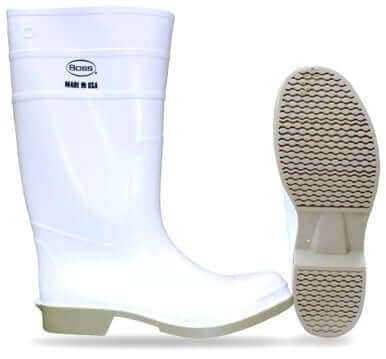 PVC White Boot SKU: 55-7M | 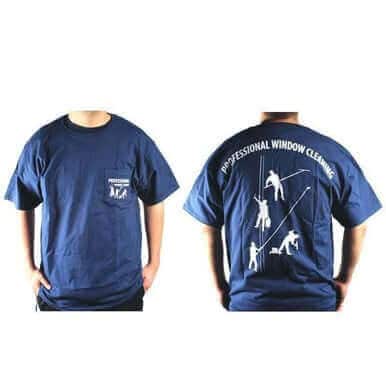 4 Dudes Navy Blue T-Shirt SKU: 57-13M | 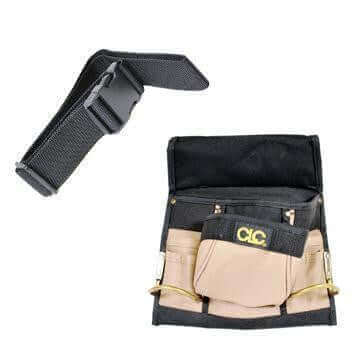 Holster, Super Duper, with Belt SKU: 49-02 |
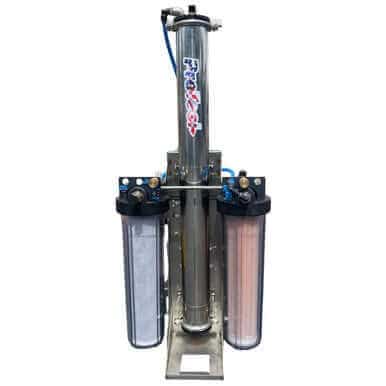 ProTool HiFlo Pure Water Cart Stainless Steel SKU: 150-0521 | 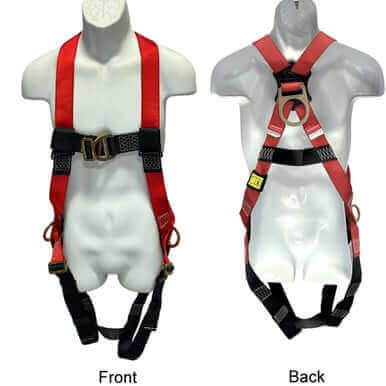 ProTool Harness with Front, Back and Side 2 Side D-Rings SKU: 96-10 | 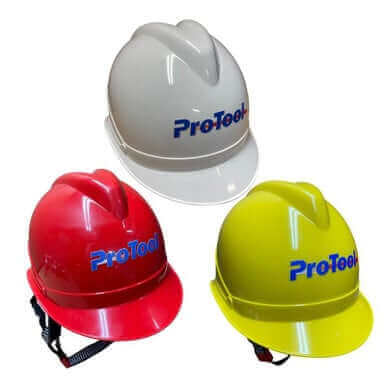 ProTool Hard Hat Helmet Class G Rated SKU: 98-7M |
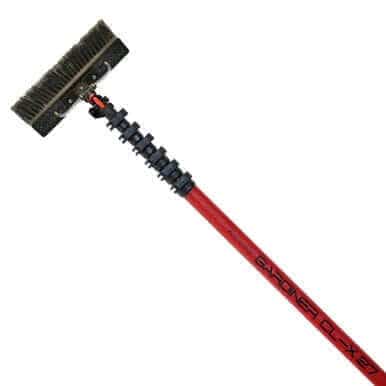 Gardiner CLX 27ft Pole Carbon Composite SKU: 155-4272 | 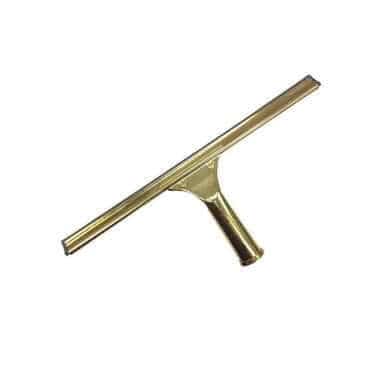 Ettore Squeegee Complete SKU: 12-12M |