How to Build Your First Professional Window Cleaning Kit

Table of Contents
A professional window cleaning kit is the difference between showing up ready and showing up guessing. New contractors staring at a wall of individual squeegees, channels, and sleeves usually make one of two mistakes: they buy consumer-grade tools that fail within weeks, or they overbuy equipment they won't touch for months. Either way, they burn cash.
This guide walks through what belongs in a starter kit, what doesn't, and what you'll actually need beyond the box — so your first investment matches the work you're bidding on.
Why a Curated Kit Beats Piecemeal Buying
Buying a pre-assembled professional window cleaning kit isn't about convenience — it's about compatibility. A kit from a distributor like J.Racenstein guarantees the channel fits the handle, the rubber fits the channel, and the T-bar matches the sleeve. Sourcing individually, especially as a beginner, almost always means at least one mismatch that costs you a return shipment and a lost morning.
The economics are straightforward:
- Bundled pricing runs 15–25% below the sum of individual components.
- Zero compatibility risk. Every piece is selected to work together out of the box.
- Faster ramp-up. You skip the research spiral and get on the glass sooner.
Consumer kits from big-box stores use stamped metal, thin rubber, and handles that loosen after a week. Professional kits use aircraft-grade aluminum channels, extruded natural rubber with two usable edges, and ergonomic handles rated for all-day use. The gap in longevity alone justifies the price difference.
Core Components of a Professional Window Cleaning Kit
Squeegees: Channel, Handle, and Rubber
The squeegee is three separate components, and understanding that matters. The handle controls angle and pressure. The channel — brass for weight and consistent contact, stainless steel for corrosion resistance and lighter feel — holds the rubber in place. The rubber blade does the actual work on the glass.
For residential route work, start with a 12-inch and an 18-inch channel. The 12 handles divided-lite windows and tight panes; the 18 covers standard picture windows and storefronts. A quick-release handle like the Ettore ProGrip Quick Release lets you swap between channel sizes without tools — a real time saver on a mixed route.
Rubber quality determines streak-free results more than technique. The Ettore Rubber Master and Unger ErgoTec Rubber are both proven options. Both offer two sharp edges per blade — flip it in the channel when the first side wears, doubling your service life before replacement.
Applicators: T-Bars and Washer Sleeves
Before you squeegee, you scrub. The T-bar holds a removable washer sleeve that applies solution and loosens dirt. Match your applicator width to your most-used squeegee size — a 14-inch applicator pairs well with a 12-inch channel, giving you slight overhang for full glass coverage.
Microfiber sleeves like the Pulex Microfiber Sleeve handle daily residential work. For tougher jobs — construction cleanup, hard water buildup, oxidation — step up to an abrasive-strip sleeve like the Pulex Abrasive Strip or the Ettore Porcupine. Machine-wash sleeves regularly on a gentle cycle, no fabric softener — softener coats the fibers and kills absorbency.
Buckets, Belts, and Holsters
A rectangular 6-gallon bucket like the Pulex Rectangular Bucket is non-negotiable. Round buckets won't fit a loaded T-bar flat for even saturation. Add a Unger Ninja Bucket on a Belt or a Moerman Side Bucket 2.0 to keep your wet applicator and squeegee hip-mounted while you work. This eliminates constant trips back to the bucket and keeps drips off the client's floor.
A basic tool belt with a holster for your scraper and a loop for your squeegee rounds out your mobile workstation.
Scrapers
Paint overspray, sticker residue, caulk smears — scrapers handle what scrubbers can't. A pocket scraper like the Ettore Pocket Scraper covers detail work. For post-construction cleanup, a 6-inch Triumph MK2 or Unger ErgoTec 6-inch is more efficient on large panes.
Two rules: always use a fresh, sharp blade, and always keep the glass wet while scraping. A dull blade on dry glass is how you scratch tempered panels and write a check.
Choosing the Right Kit for Your Work
Storefront Starter
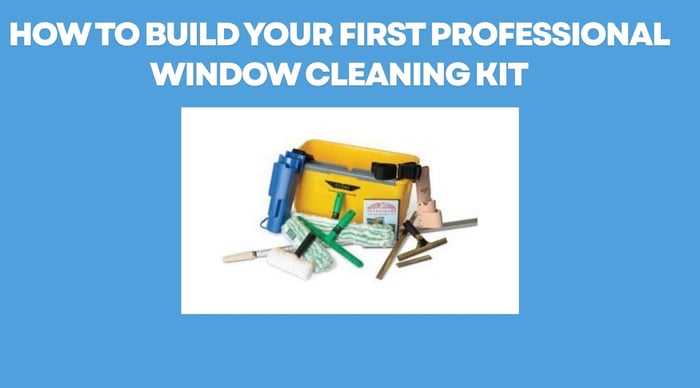
If you're starting with ground-level commercial routes — restaurants, retail, offices — keep it lean. A kit like the JRC Window Cleaning Kit or the Ettore Welcome Kit covers the essentials: handle, channels, applicator, bucket, scraper, and soap. Master technique on accessible glass before adding complexity.
Complete Residential Setup
Residential route work demands more flexibility. You'll face varied pane sizes, deep sills, second-story windows, and interiors. Add an Ettore Interlock Extension Pole for second-story reach from the ground, a smaller 6-inch channel for divided lites, and a supply of surgical huck towels for sill and frame detailing.
A residential kit is the most versatile starting point for a new operator. It handles storefront work too, so you're not limiting your bid capacity.
Water Fed Pole System — When to Upgrade
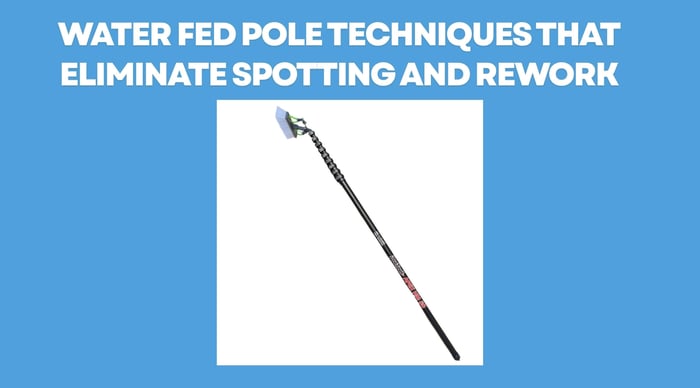
A water fed pole (WFP) system is not a starter kit — it's a business expansion tool. Once you're consistently booking multi-story residential or light commercial, a WFP like the ProTool Apex Carbon Fiber Pole paired with a ProTool 511 Pure Water Cart eliminates ladder work and dramatically increases production speed.
Master traditional squeegee technique first. WFP is faster per pane on upper stories, but if you can't detail with a squeegee when the situation demands it — interior glass, low ground-floor panes, mirrors — you have a gap in your service.
Essential Add-Ons Most Kits Don't Include
Towels
Surgical huck towels are the industry standard for wiping sills, frames, and squeegee blades — lint-free, absorbent, cheap in bulk. For final glass detailing, a quality ProTool Microfiber Towel removes snail trails and leaves a polished finish.
Don't bring bath towels or paper towels to a job site. Clients notice.
Cleaning Solutions
Your kit may include a starter soap. You'll quickly need more:
- Professional concentrate: Titan Labs Glass Gleam 4 delivers superior squeegee glide and is extremely economical per bucket.
- Hard water stain remover: Mineral deposits from sprinklers and runoff require a dedicated product like Titan Labs A1 or Bio Clean. Standard soap won't touch these.
- Degreaser: Restaurant and commercial kitchen glass accumulates grease film. ProTool Window Cleaning Concentrate is a solid all-purpose option that cuts grease better than dish soap.
Safety and Property Protection
- Ladder mitts: ProTool Ladder Mitts prevent siding damage and give you a non-slip contact point.
- Shoe covers: Pro Shoe Covers are a small investment that signals professionalism the moment you step inside.
- A stable ladder: Never cheap out here. A Little Giant Model 17 handles most residential scenarios and converts between configurations.
Maintaining Your Kit for Long-Term Performance
Squeegee Rubber Care
Run your finger along the rubber edge before every job. Any nick, tear, or rounding means streaks. Flip the blade when the first edge wears — both edges are usable. Replace immediately when both sides are spent. Store rubber out of direct sunlight; UV degrades the compound fast.
End-of-Day Protocol
- Rinse every tool — channel, T-bar, bucket, scraper — with clean water. Soap residue and trapped grit cause scratches on the next job.
- Machine-wash sleeves on gentle, no softener.
- Dry all metal components completely. Carbon steel scraper blades rust overnight if stored wet.
Organization
Your bucket is a tool caddy, not just a water container. Use a lid organizer or bucket-on-a-belt system to consolidate essentials for transport. An organized setup cuts setup time per stop and projects competence to the client before you touch the glass.
Products Mentioned
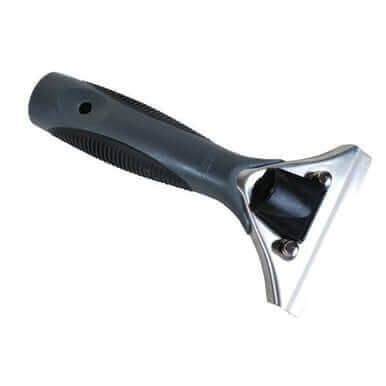 Handle ProGrip Quick Release Stainless Steel Ettore SKU: 01-1113 | 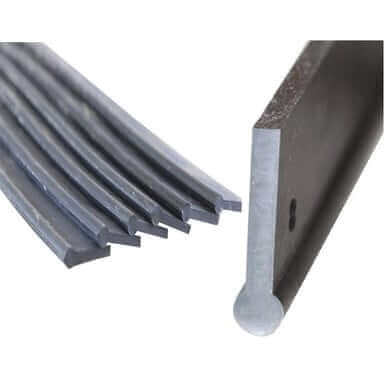 Ettore Rubber Master Replacement SKU: 03-1M | 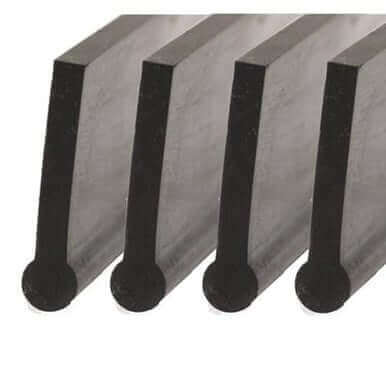 Unger ErgoTec Rubber SKU: 03-2M |
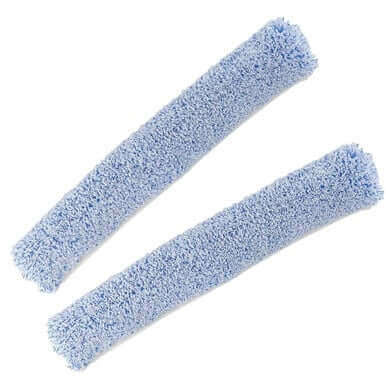 Pulex Sleeve Microfiber SKU: 11-32M | 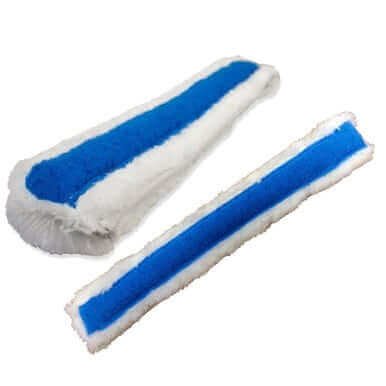 Pulex Sleeve Abrasive Strip SKU: 11-31M | 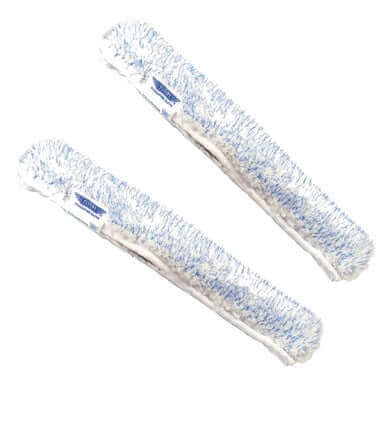 Ettore Sleeve Porcupine SKU: 11-14M |
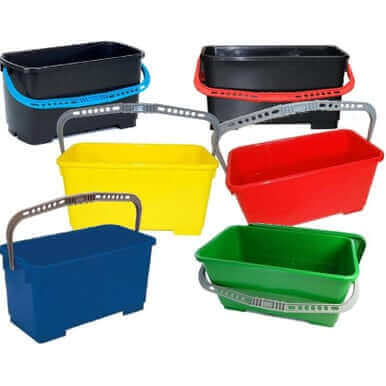 Pulex Bucket Rectangular SKU: 20-3M | 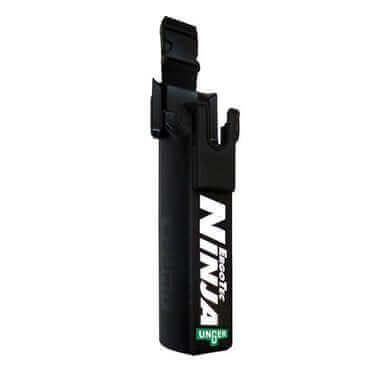 Holster Bucket on a Belt NINJA Unger SKU: 48-24 | 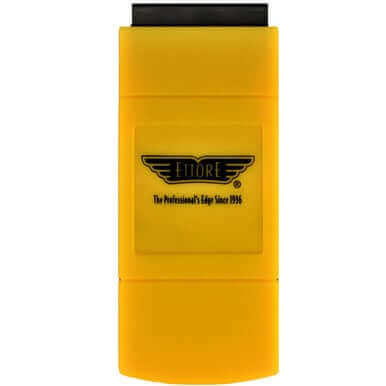 Pocket Scraper Ettore SKU: 35-100 |
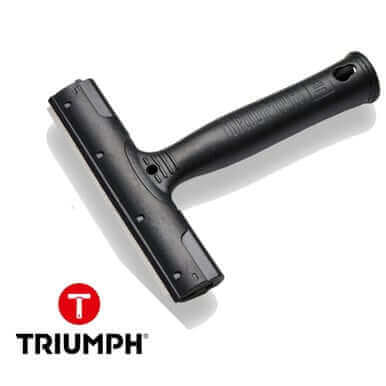 Scraper Straight Triumph MK2 6in SKU: 35-31 | 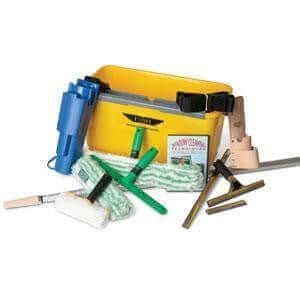 Window Cleaning Kit JRC SKU: 12-0101a |  Congratulations Welcome Kit Ettore SKU: 12-105 |
 ProTool Apex Carbon Fiber Water Fed Pole SKU: 151-32M | 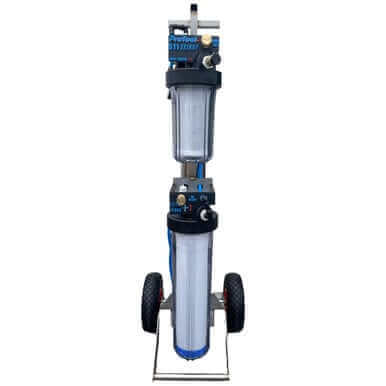 ProTool 511 Pure Water Cart SKU: 150-0515 | 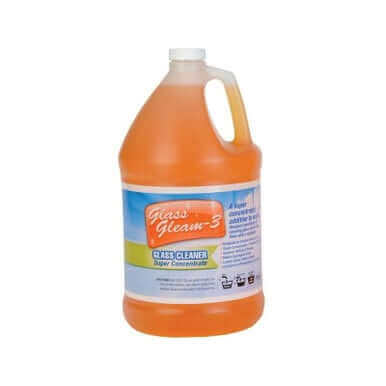 Titan Labs Glass Gleam 3 Window Cleaning Soap SKU: 84-51M |
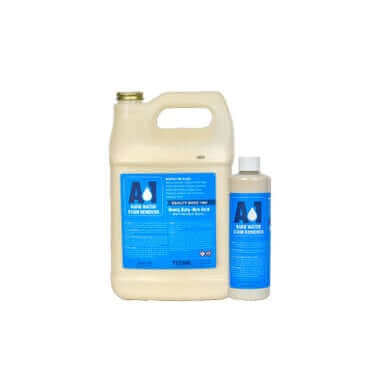 Titan Labs A1 Hard Water Stain Remover SKU: 85-5M | 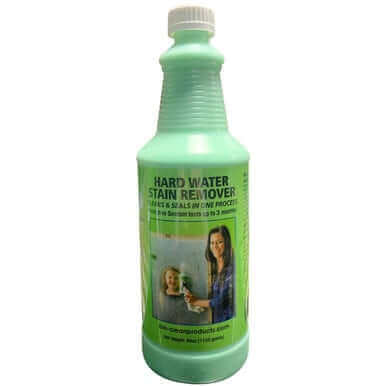 Bio Clean, 40oz, (1) SKU: 85-703 |  ProTool Ladder Mitts SKU: 73-81 |
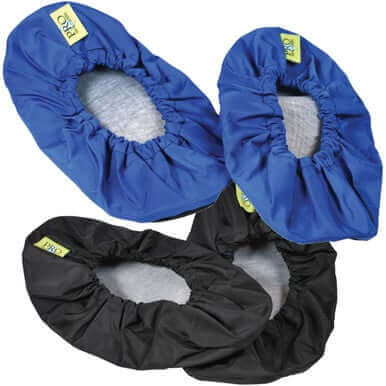 Pro Shoe Covers SKU: 55-61M | 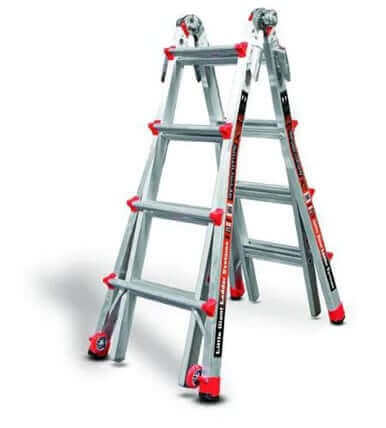 Ladder Model 17 Little Giant SKU: 71-02 | 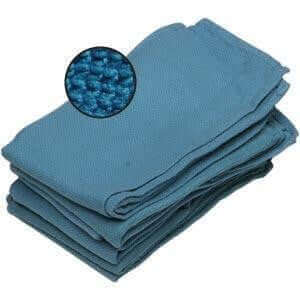 ProTool Towel Surgical New per LB SKU: 24-33 |
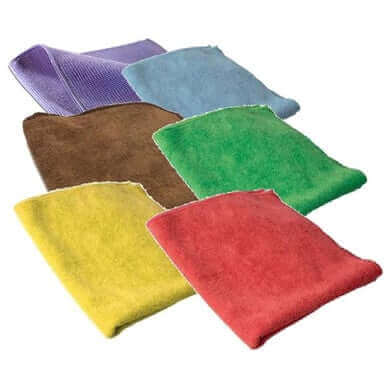 ProTool Microfiber Towel SKU: 24-5M |