ProTool Apex Carbon Fiber Water Fed Pole: Setup, Specs & System Compatibility
Table of Contents
The ProTool Apex is one of the few poles built specifically for the professional who needs stiffness, light weight, and anti-spin geometry in a single package. But buying a water fed pole without checking how it connects to your brush, hose, and RODI system is how you end up with expensive gear that doesn't work together. This guide walks through the Apex line — what each model actually delivers, which specs matter on the job, and how to verify system compatibility before you order.
What Is the ProTool Apex Carbon Fiber Water Fed Pole?
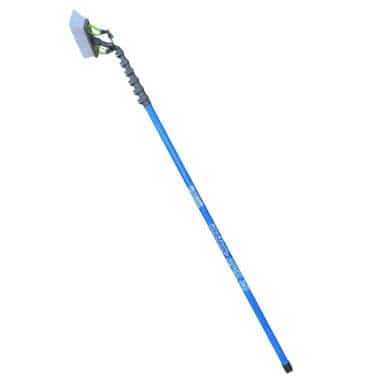
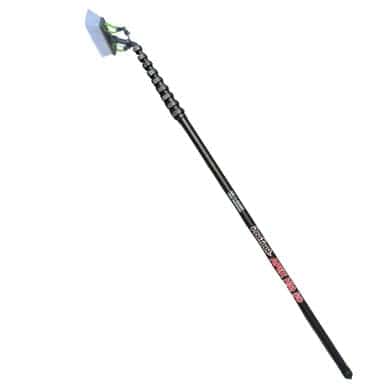
ProTool makes two Apex lines: the standard Apex (available in 20,30, and 40ft) and the Apex Hi-Mod (50ft). Both use an oval cross-section that resists rotation under load — a real advantage when you're pushing a brush against glass three stories up and need the jets aimed at the frame, not the sky.
The Hi-Mod uses a higher-modulus carbon layup. It's stiffer at full extension, which matters once you're past 35 feet where flex in a standard carbon pole starts fighting you. The trade-off is cost. If most of your residential work tops out at 30 feet, the standard Apex handles it without the Hi-Mod premium.
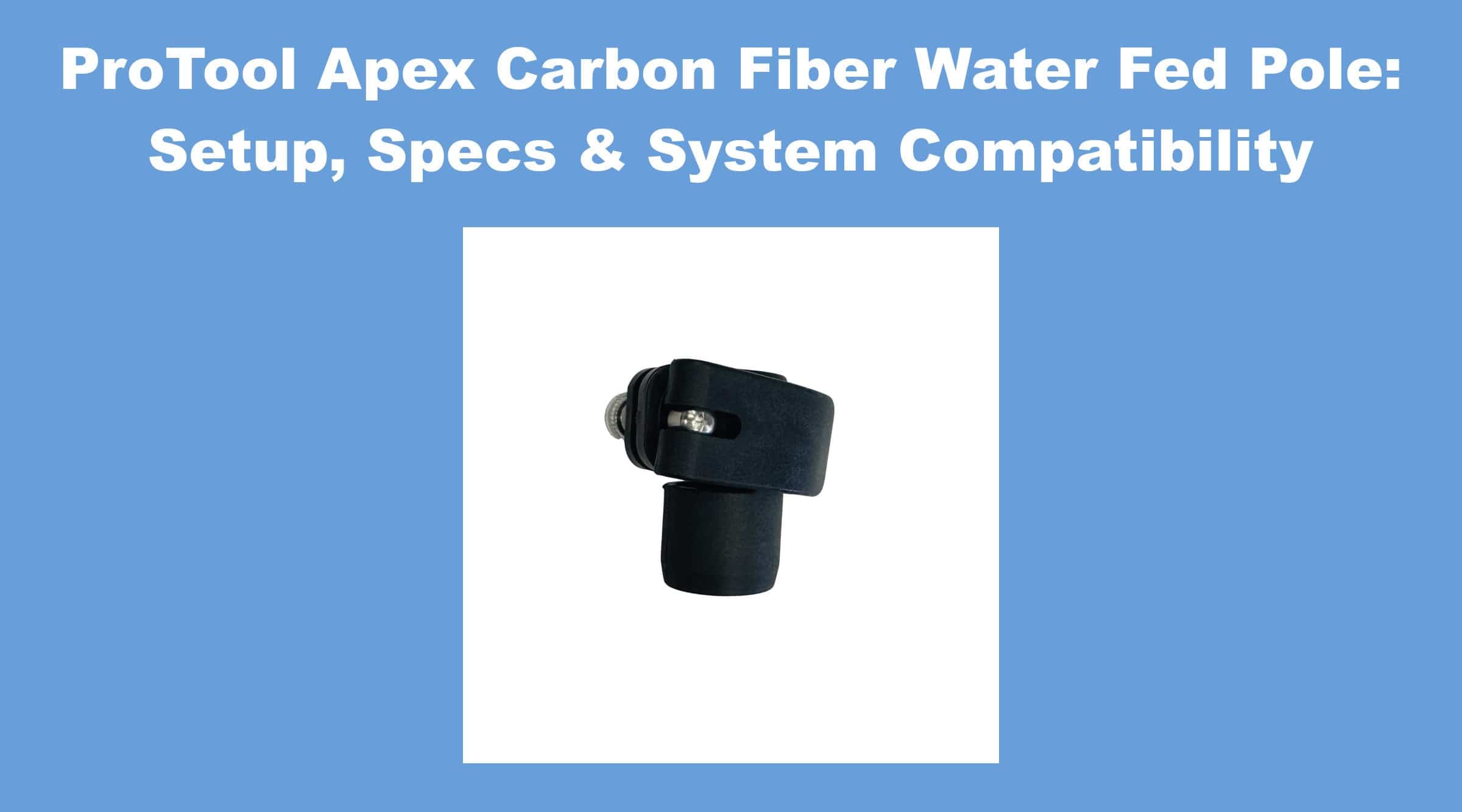
Both lines use a square socket quick connect and ProTool's lever-clamp system. The hose runs externally along the pole. Brushes, hose, and clamps comes with the pole as a complete set up.
Which Specs Actually Matter on the Job?
Pole marketing loves to lead with maximum reach. That number matters less than how the pole feels at your actual working height. A 40ft pole extended to 38 feet handles differently than the same pole at 25 feet. Match the pole to the work you do most, not the tallest building you might someday bid.
Reach vs. Usable Reach
Stated reach assumes ideal conditions — flat ground, perpendicular approach, no setback. Real jobs rarely cooperate. Bushes, awnings, and sloped ground eat into effective reach. If your typical residential work is 25–30 feet of glass, a 30ft or 40ft pole gives you margin without the weight penalty of a 50ft unit you'll rarely extend fully.
Weight and Handling
Carbon fiber poles are light, but weight at full extension is a different animal than weight collapsed. The Apex anti-spin technology helps — it resists twist better than standard poles, so you spend less effort fighting the brush orientation. That adds up over an eight-hour day. The Hi-Mod's additional stiffness reduces tip deflection at longer extensions, which means less wasted motion correcting brush position.
Collapsed Length and Transport
Check collapsed length against your vehicle. A 50ft Hi-Mod Apex collapses to roughly 6 feet — manageable for most vans and truck racks, but worth measuring. The 20ft standard Apex collapses short enough for an SUV.
Clamps and Sections
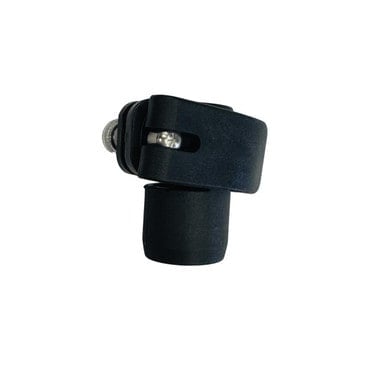
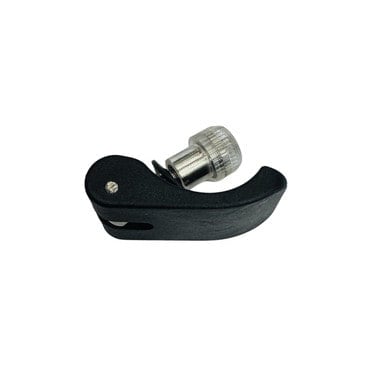
ProTool's lever clamps lock positively and can be replaced individually if one wears. The levers are also available separately. This is a practical advantage — a broken clamp on a competitor's pole can sideline the entire unit until you source a proprietary part. With the Apex, you carry a spare clamp in your tool bag and swap it in the field.
System Compatibility: Brush, Hose, and RODI
A pole is one piece of a system. The Apex uses a square socket quick connect attachment, which accepts any square socket brush directly. If you're running a euro thread brush, you'll need a euro tip adaptor.
Brushes
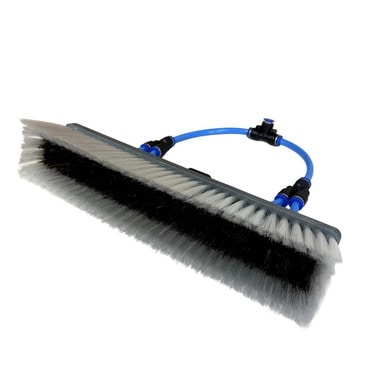
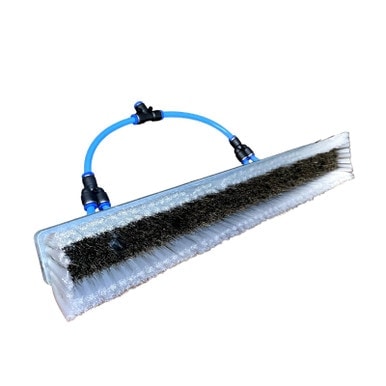
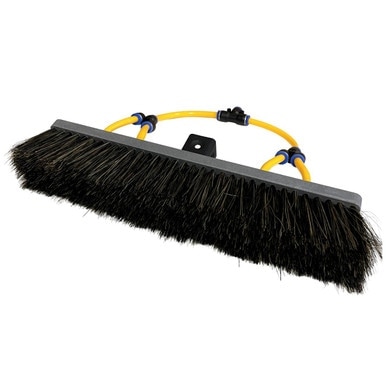
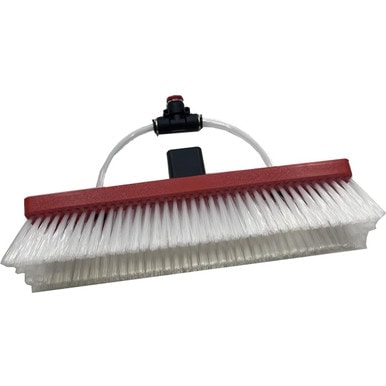
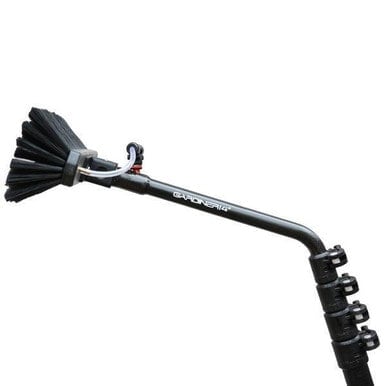
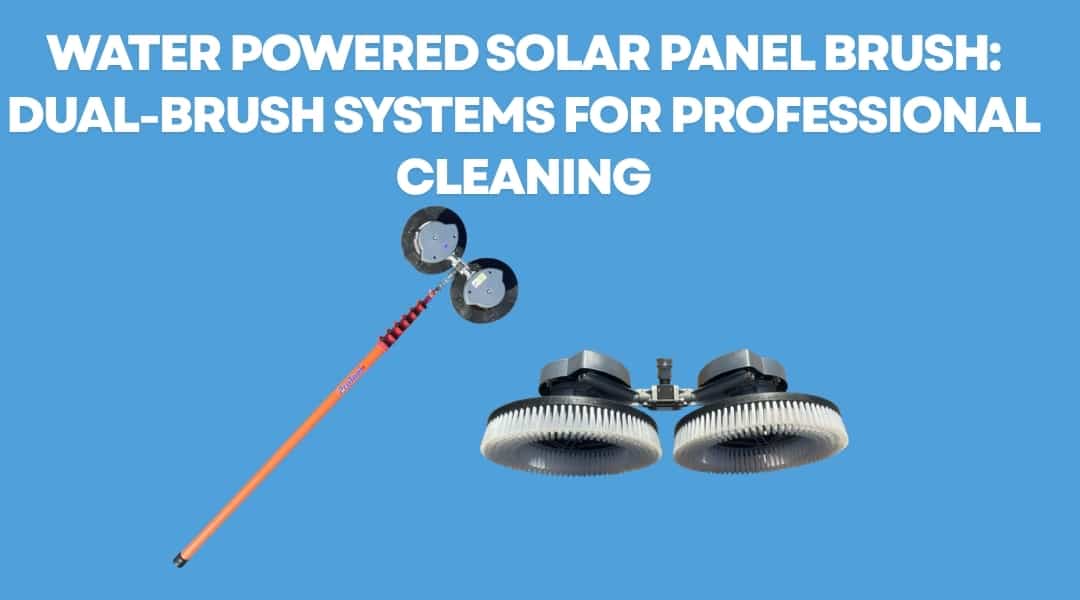
ProTool's own brushes are designed to pair with the Apex. The 4 Pencil-Jet Hybrid 12in and the 18in version use Euro threads and pencil jets tuned for the flow rates typical in residential and light commercial work. The Boar's Hair 12in is a good option for solar panels or delicate surfaces. Gardiner brushes with square lock — like the TaperTec 10in Ultimate — also mount directly.
For angle work around dormers or recessed windows, a Gardiner gooseneck with a Quick-LoQ adapter lets you reach frames that a straight approach misses.
Hose
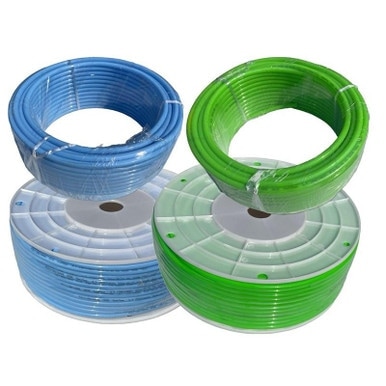
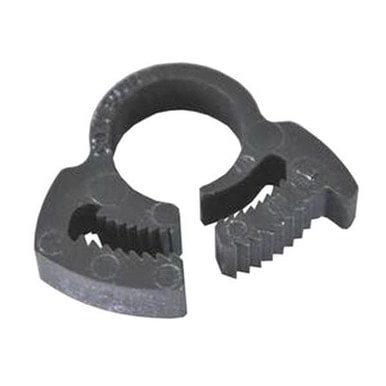
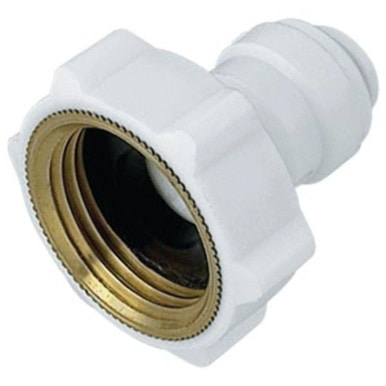
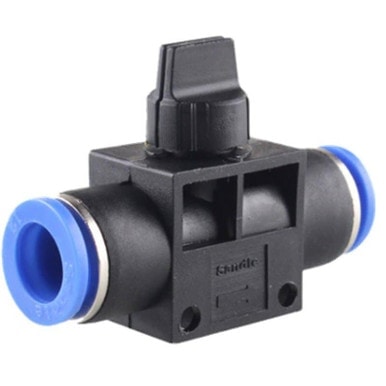
The Apex routes hose externally. ProTool's Water Fed Hose in microbore (5/16in OD) is the standard pairing — light, flexible, and sized for the flow rates residential RODI systems deliver. Secure the hose to the pole with plastic hose clamps at each section. At the supply end, connect to your cart or skid with a 5/16in-to-garden-hose adapter or a quick-connect ball valve for tool-free hookup and shutoff.
Pure Water Systems
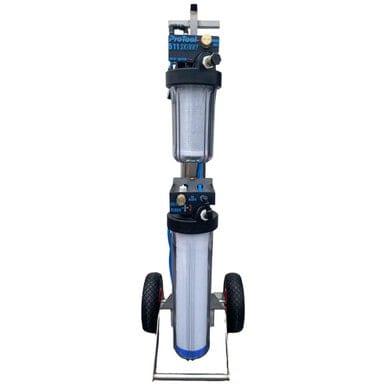
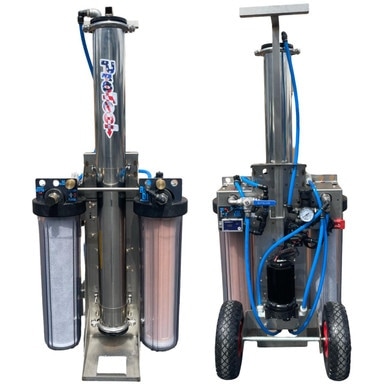
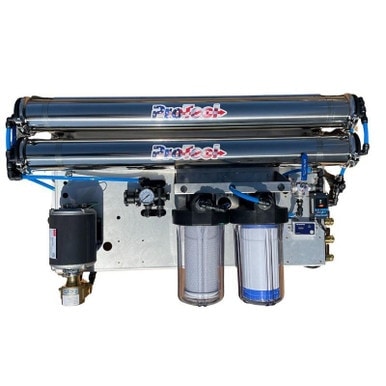
The Apex works with any RODI system that delivers adequate flow and low TDS. ProTool's carts are the natural pairing: the 511 Pure Water Cart is a compact entry point for solo operators, while the HiFlo Ultra Cart handles higher flow for commercial work or multi-pole setups. Wall-mount systems like the HydroPanel feed the pole from a fixed install in your shop or garage.
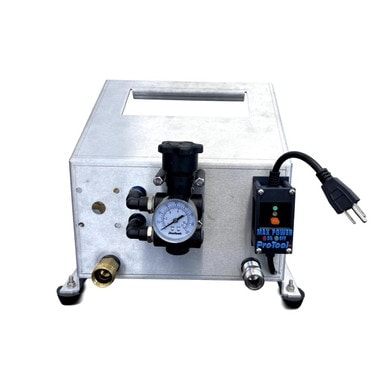
If your incoming water pressure is marginal, a HydroBoost portable pump adds the pressure your RO membranes need to produce water efficiently.
Pre-Order Checklist
Before you add the Apex to your cart, run through this list:
- Working height: What's the tallest glass you clean regularly? Size the pole to that, not to a once-a-year outlier.
- Standard vs. Hi-Mod: If you're mostly under 35 feet, the standard Apex saves money without sacrificing performance. Above 35 feet, the Hi-Mod's stiffness is worth it.
- Brush thread: Square socket? You're set. Euro thread? Order the euro adapter.
- Hose diameter: 5/16in microbore is standard for the Apex. Confirm your fittings match.
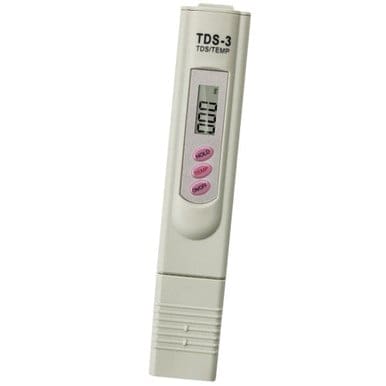
- RODI output: Verify your system delivers enough flow at 0 TDS. If you're unsure, check your TDS meter readings at the pole.
- Transport: Measure your vehicle against the collapsed length of the pole you're considering.
Setup, Inspection, and Maintenance
First use: extend each section and confirm the lever clamps engage fully. Attach the brush, run the hose, and flow water through the system before you touch glass. Check for leaks at every connection.
Before Every Job
- Inspect pole sections for cracks, chips, or delamination — carbon fiber doesn't bend before it breaks.
- Check each lever clamp for positive lock. A clamp that slips under load is a safety issue, not a nuisance.
- Confirm the brush is seated and the jets are clear.
- Run water and verify flow before climbing the first window.
After Every Job
- Flush the hose and brush with clean water. Residual minerals from impure water will clog jets over time.
- Collapse the pole and wipe down the sections. Grit trapped between sections accelerates wear on the clamp surfaces.
- Store the pole horizontally or vertically in a protected space — UV and impact are carbon fiber's enemies.
Carry a spare clamp and lever in your van. A field replacement takes two minutes. Waiting for a part takes a day.
How the Apex Fits Into a Complete Setup
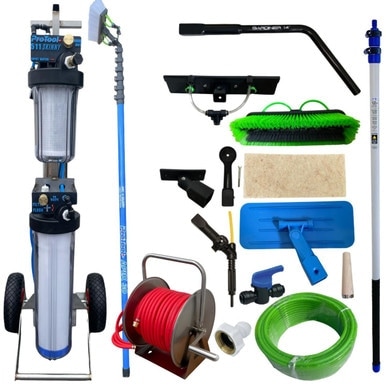
The pole is the most visible part of a water fed system, but it's the filtration, delivery, and brush that determine cleaning quality. A well-matched system — Apex pole, ProTool brush, microbore hose, and a properly sized RODI cart — eliminates the variables that cause streaks, slow production, or premature equipment failure.
If you're building a system from scratch, the ProTool Ultimate Residential Kit bundles a cart with pole, hose, and brush into a tested combination. For operators who already own a cart and want to upgrade their pole, the Apex drops into any Euro-thread-compatible system with the right hose and fittings.