Water Powered Solar Panel Brush: Dual-Brush Systems for Professional Cleaning
Table of Contents
A single rotary brush on a pitched roof fights you all day. The lateral drift is relentless — it wears out shoulders, slows production, and on steep arrays it becomes a genuine safety problem. A water powered solar panel brush with counter-rotating heads changes the equation entirely: two brush heads spinning opposite directions cancel out directional force, creating a neutral "hovering" feel on the glass. Dirty panels lose up to 25% of energy output (NREL data), so a thorough, fast clean isn't optional — it's the whole value proposition you're selling.
This guide covers why dual-brush systems have become the standard for commercial solar maintenance, the specific PSI and GPM thresholds that keep turbines spinning without damaging panel glass, how these tools integrate with pure water filtration, and the maintenance protocols that keep your gear running job after job.
Why Dual-Brush Systems Replaced Single Rotary Heads
Single-head rotary brushes generate persistent side-pull. The brush drifts across the panel, and you spend the entire shift fighting it back into position. Over an 8-hour day, that constant resistance destroys your back and shoulders. Productivity drops steadily after lunch because the operator is spent — not because the panels got harder to clean.
On steep commercial rooftops, it gets worse. A single brush can "walk" or skip across the glass, creating safety hazards and risking damage to panel frames or the anti-reflective coating. The rotational energy has nowhere to go but into the operator or off the edge of the panel.
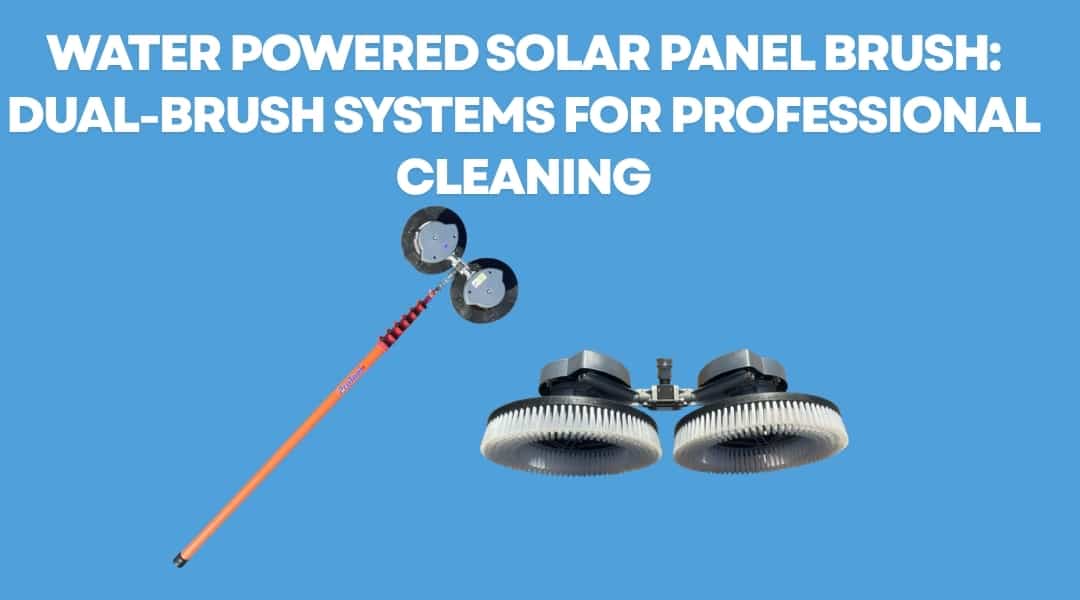
Counter-rotating dual heads solve this mechanically. Two heads spinning opposite directions cancel each other's lateral force, so the brush sits neutral on the glass. The operator guides rather than fights. The ProTool DualForce 25 uses this principle with a 25-inch pass width — wide enough for serious coverage, light enough for standard carbon fiber poles. A trained operator can clean up to 200 panels per hour, a rate that's physically impossible with manual poles or single-brush setups.
- Reduced fatigue: Counter-rotation creates a neutral balance — the tool hovers rather than pulls.
- Higher throughput: A 25-inch path means fewer walks up and down the array.
- Better safety on pitch: Eliminating side-pull makes cleaning on steep roofs predictable.
How Water-Powered Rotation Works
A water powered solar panel brush converts hydraulic energy into mechanical torque. Water from a pressure washer enters the brush manifold, passes through internal geared turbines, and the gears translate high-velocity flow into rotational force that spins the brush heads. No motors, no batteries, no electrical cables on a wet roof.
That simplicity is the point. Electric alternatives add weight (lithium batteries), logistics (charging stations, spares for long shifts), and risk (electrical shorts in a wet environment). A water-powered system uses equipment already on most service trucks and eliminates an entire category of job-site problems.
For optimal performance, professional units need water pressure between 600 and 700 PSI — high enough to drive the turbines, low enough to stay within the safety limits of solar glass. Flow rate matters even more than pressure: most systems require 2.5 to 3.0 GPM for consistent rotation under load. Drop below 2.5 GPM and the brushes stall when they hit resistance, forcing you back to manual scrubbing.
Torque Cancellation at Extension
Torque cancellation matters most at full extension. At the end of a 40-foot carbon fiber pole, even modest lateral force becomes nearly uncontrollable. Counter-rotating heads neutralize that force at the source. The balanced movement also reduces bounce and skip on the glass surface, giving you uniform contact across the entire panel.
Water Distribution and Spot-Free Rinsing
These brushes distribute water directly through the bristle blocks — scrubbing and rinsing happen simultaneously. The constant flow flushes abrasive particulates before they can scratch the panel surface. But the water quality determines the final result. Raw tap water leaves mineral deposits and spotting as panels dry, which defeats the purpose of the clean.
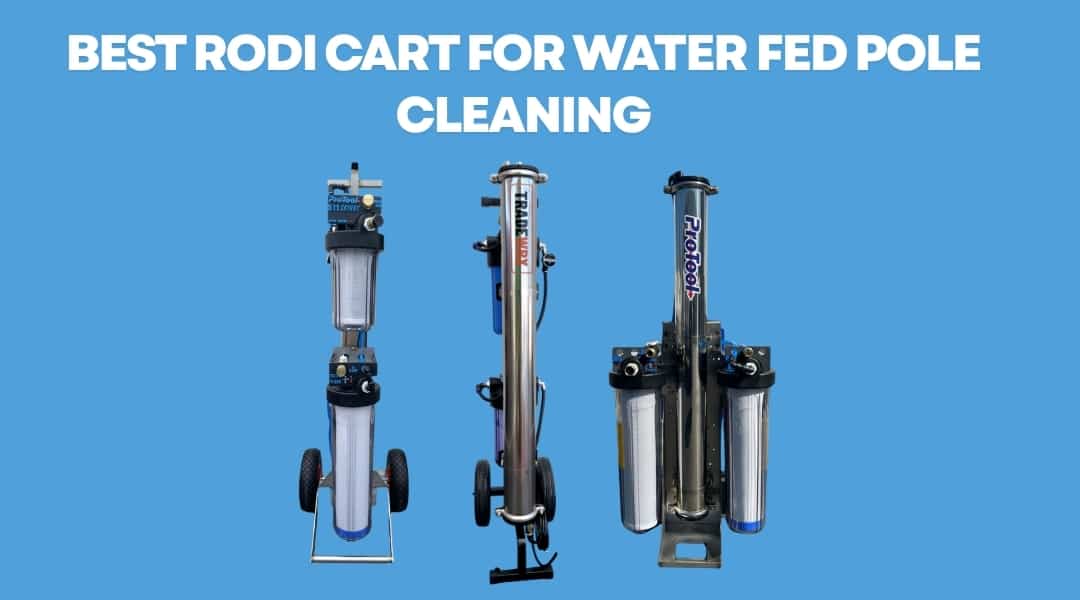
You need deionized (DI) or reverse osmosis (RO) water. A ProTool HiFlo Pure Water Cart or a ProTool HydroPanel wall mount handles this — pair your brush system with proper filtration and every panel dries spot-free without hand-drying.
Single vs. Dual Brush: The Real Differences
Single brushes are lighter on paper, but heavier in practice. Because they spin in one direction, every stroke requires the operator to resist lateral pull. A dual-brush unit weighs more as a physical object, but the counter-rotating action creates neutral balance on the glass — it actually feels lighter during the cleaning stroke because you're not burning energy keeping it on track.
The learning curve differs too. A new operator on a single brush must master the "torque fight" immediately or risk damaging panel frames. A dual-brush operator learns to manage a 25-inch cleaning path and maintain correct water flow — both learnable in a morning rather than a week.
Single brushes also jump when they hit a panel frame because the rotational energy has nowhere to go but up. Dual brushes remain stable at the edges, delivering a thorough clean right up to the bezel. In tight spaces between rows, the predictable movement prevents accidental impact with neighboring panels.
The initial investment is higher for dual-brush systems. The payback math is straightforward: cleaning up to 200 panels per hour means a small crew completes large commercial contracts in a fraction of the time manual setups require. The equipment pays for itself through reduced labor hours and increased contract capacity.
Operational Requirements: PSI, GPM, and Poles
Pressure and Flow
The optimal operating range for a water powered solar panel brush like the ProTool DualForce 25 is 600–700 PSI. Exceeding 725 PSI risks premature wear on the gear assembly. Staying below 600 PSI means the turbines can't generate enough RPM for effective agitation.
Flow rate is the more critical metric. GPM is what actually generates rotational speed — as volume increases, brush RPM rises, providing more scrubbing actions per second. The minimum is 2.5 GPM; the maximum consumption is 3.0 GPM. Below that range, the brushes stall under load.
A ProTool Solar Brush Pressure Washer (3 GPM, 3200 PSI) is purpose-built for this application. Use an unloader valve or bypass system to manage pressure spikes when the trigger is released — this protects the turbine gears from hydraulic shock.
Pole Selection
Standard window cleaning poles don't have the rigidity for a dual-head system. You need high-modulus carbon fiber to maintain rigid control, especially beyond 30 feet of extension. Fiberglass or hybrid poles flex under the weight of a water-filled brush, causing bounce and poor glass contact.
Anti-spin technology is essential. Specialized clamps prevent pole sections from twisting, keeping the 25-inch head square to the panel array. The ProTool Apex Hi-Mod Carbon Fiber Pole is built for this workload — rigid enough for the torque, light enough for full-day use. Sectional poles give maximum rigidity on ground mounts; telescopic poles offer the fast deployment needed for rooftop work.
Maintenance That Prevents Downtime
Daily inspection before the first panel of the day takes five minutes and prevents mid-job failures that cost hours.
- Turbine check: Verify both counter-rotating heads spin freely without grinding. Clear any debris from the manifold.
- Jet inspection: Check water jets for mineral buildup that restricts flow and starves the turbines.
- Seal verification: Confirm all seals are seated correctly. Small particulates bypass filtration through failed seals and jam the gear assembly.
- Bristle condition: Replace brushes when tips show significant splaying or loss of rigidity. Worn bristles skip on glass and reduce cleaning effectiveness.
- Storage: Never store the brush head resting on its bristles — permanent deformation causes uneven cleaning and skipping.
Keep replacement brushes and spare jets on the truck. A stalled brush on a 500-panel commercial job is a day-killing problem if you don't have parts on hand.
Building a Solar Maintenance Operation
If you're already running pure water systems for window cleaning, you have the filtration infrastructure. The gap is mechanical: manual poles and standard brushes can't handle the heavy soiling and sheer panel count of commercial solar contracts. A water powered solar panel brush with counter-rotating heads bridges that gap.
The equipment stack for commercial solar work: a ProTool DualForce 25 brush, a pressure washer in the 600–700 PSI / 2.5–3.0 GPM range, a high-modulus carbon fiber pole, and a pure water system. That combination lets a two-person crew handle arrays that would require four or five people with manual poles. The math on labor savings alone pays for the equipment within the first few commercial contracts.
For a turnkey setup, the ProTool Solar Skid + Rotary Brush packages the pressure washer, brush, and hose into a single skid-mounted system ready for deployment.
Products Mentioned
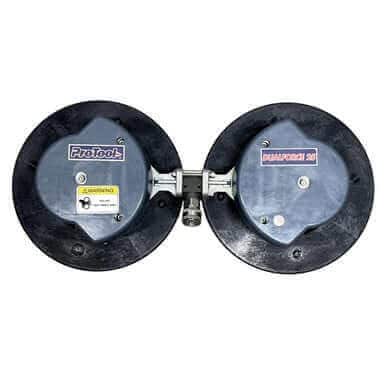 ProTool Dual Force 25 Brush Only SKU: 159-227 | 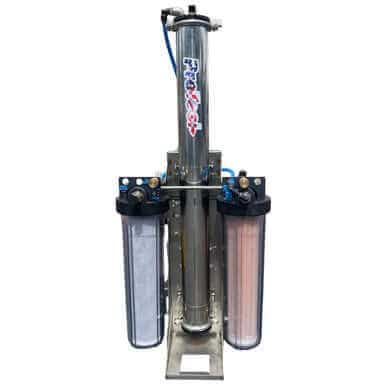 ProTool HiFlo Pure Water Cart Stainless Steel SKU: 150-0521 | 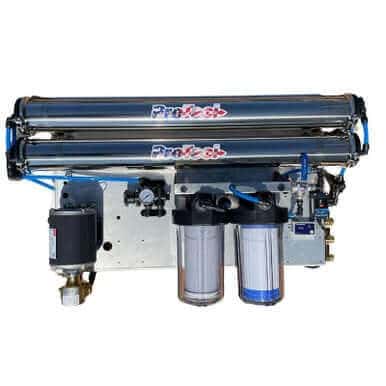 ProTool HydroPanel RODI Wall Mount SKU: 150-05346M |
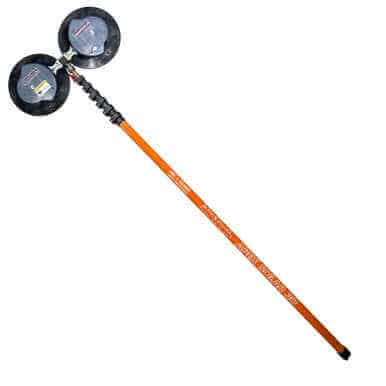 ProTool DualForce 25 Solar Brush SKU: 159-206 | 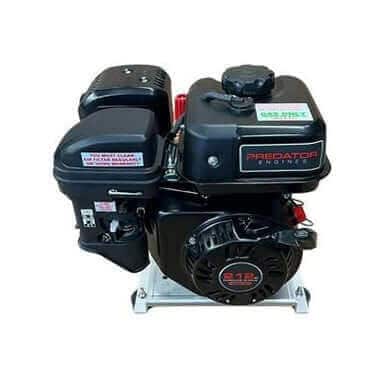 ProTool Solar Brush Pressure Washer 3gpm 3200 PSI SKU: 74-725m | 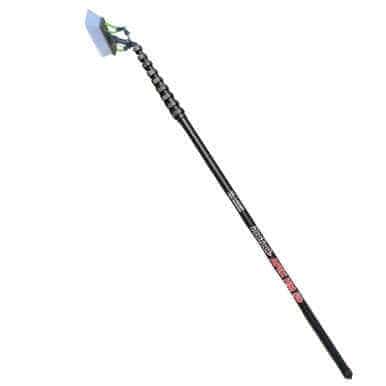 ProTool Apex Hi-Mod Carbon Fiber Pole SKU: 151-3502 |
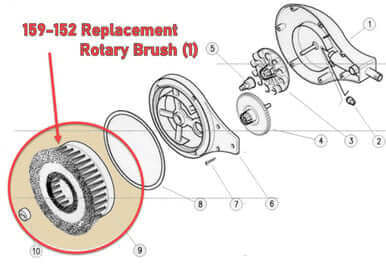 ProTool Brush Replacement Counter Rotating Brush (1 each) Nylon Bristles SKU: 159-152 | 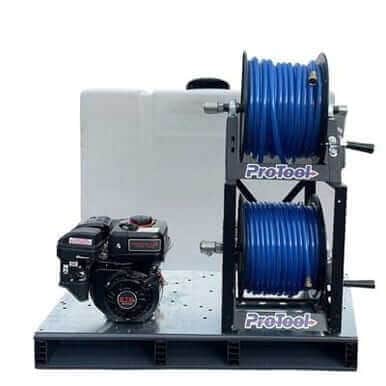 Solar Skid + Rotary Brush Water Powered SKU: 159-601 |