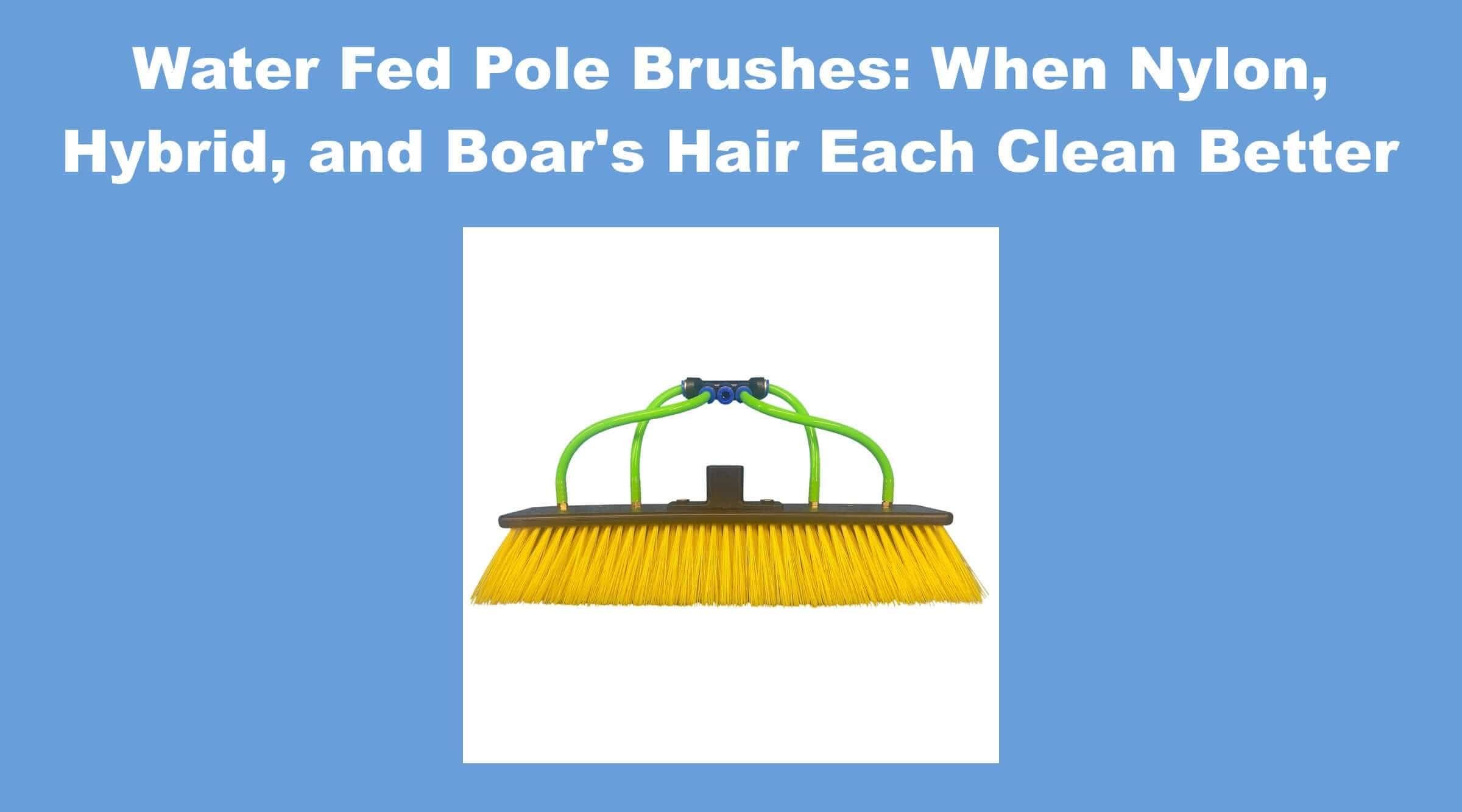
Water Fed Pole Brushes: When Nylon, Hybrid, and Boar's Hair Each Clean Better
Table of Contents
Your water fed pole brushes determine whether a residential pane takes two passes or ten minutes of scrubbing. Nylon, hybrid, and boar's hair each solve a different mechanical problem — and if you're running one brush for every job, you're burning time on half of them.
This guide breaks down exactly when each filament type earns its keep, how to match bristle material to glass condition and soil load, and which configurations deliver the best cost-per-window on a working route.
How Brush Material Changes Everything
The brush is where your pure water system meets the glass. Filtration produces the solvent; the brush provides the agitation that breaks the bond between contaminants and the surface. Different filaments create different friction profiles, and friction is the variable that controls your speed, your fatigue, and your callback rate.
Glide vs. Scrub: The Core Trade-Off
High-friction bristles (boar's hair) deliver aggressive agitation but demand more force to move across the glass — a problem that compounds above 40 feet where leverage drops. Low-friction filaments (nylon) glide fast but can't break stubborn bonds. Every brush choice sits somewhere on this axis.
Bristle memory — the ability of a filament to snap back to its original orientation after compression — is the single best predictor of long-term performance. A brush with poor memory splays within weeks and loses consistent glass contact.
Surface Energy Dictates Brush Selection
Before you choose a filament, test the glass. Hit it with a small stream of pure water:
- Hydrophilic glass — water sheets evenly. Nylon maintains that sheeting action and rinses clean.
- Hydrophobic glass — water beads and hides dirt underneath. You need the microscopic texture of boar's hair to physically break surface tension and lift contaminants.
Skipping this step is the most common reason for callbacks on first-time cleans.
Nylon Brushes: The Maintenance Workhorse
Nylon is the daily driver for routine residential and commercial routes. It's light, it glides, and quality monofilament nylon holds its bristle memory over hundreds of jobs.
The distinction that matters: monofilament vs. flagged-tip. Monofilament nylon has smooth, single strands that release dirt instantly during the rinse. Flagged-tip bristles have split ends designed to trap fine dust — useful for dry sweeping, terrible for pure water work. Those split ends hold contaminants and streak during the final rinse. For WFP applications, monofilament is the only correct choice.
Temperature affects nylon more than most operators realize. Cold weather stiffens the filaments, adding scrubbing power but reducing flexibility. Extreme summer heat softens them, cutting their ability to move heavy debris. Neither condition is disqualifying, but both change the brush's behavior enough that you should account for it on seasonal routes.
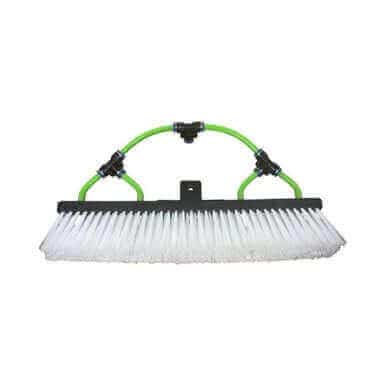
The ProTool White Nylon Brush 14in is a solid baseline for residential maintenance — monofilament, good bristle density, and light enough for extended pole work. Pair nylon brushes with fan jets rather than pencil jets: the wide horizontal spray complements nylon's high-glide nature and speeds the rinse.
Where Nylon Fails
Nylon cannot remove bird droppings, heavy pollen, snail trails, or frame oxidation in a reasonable number of passes. If a property hasn't been serviced in years, a nylon brush will waste your water and your time. When you hit these conditions, you need more friction — which means boar's hair or a hybrid.
Boar's Hair Brushes: The Restoration Tool
Natural boar's hair has a microscopic surface texture that creates significantly more friction than any synthetic strand. That makes it the first choice for construction cleans, post-renovation work, and any glass carrying heavy environmental grime.
The trade-off is weight. Natural fibers absorb water, increasing the mass of the brush head during operation. Above 40 feet, that wet-weight shifts the pole's center of gravity enough to change your ergonomics. Boar's hair also requires a break-in period — expect minor bristle shedding and extra stiffness on the first few jobs before the fibers settle into the brush block.
The ProTool 4 Pencil-Jet Boar's Hair Brush 12in concentrates agitation where it counts. Pencil jets are the correct pairing here: they drive water through the dense filaments and flush debris directly off the glass.
Technique for Heavy Soil
Use short strokes — rapid 4-to-6-inch vertical movements — rather than long sweeps. This concentrates friction on stubborn deposits. Because boar's hair traps a larger volume of suspended solids than nylon, you need higher flow rates to keep the bristles flushed. If your flow is too low, the brush recirculates dirt across the glass.
Boar's hair is technically superior for organic biofilms because the natural fibers physically disrupt the protein-based adhesion layer. No synthetic filament replicates this effectively.
Maintenance and Lifespan
Natural bristles degrade faster than synthetics. UV exposure and contact with aggressive chemicals make the hair brittle. Always rinse with pure water after use. Watch for "bleeding" — natural tannins or trapped dirt can stain light-colored frames if your final rinse is insufficient. Replace the brush when bristle tips curl permanently or the fibers lose structural rigidity.
Hybrid Brushes: The Route Worker's Best Option
Hybrids solve the efficiency gap. The standard configuration places nylon rows on the outer perimeter and boar's hair rows in the center. This isn't arbitrary — it's the best layout for commercial route work.
The nylon outer rows do two things: they provide the glide that keeps your rhythm fast, and they act as a protective buffer that prevents stiff natural fibers from contacting painted or delicate frames. The boar's hair inner rows concentrate your downward force on the center of the glass, where soil load is typically highest.
Dual-bristle height is the other key feature. Longer nylon filaments reach into window recesses and corners; shorter, stiffer boar's hair engages the flat center pane. This eliminates the second pass that a single-material brush often requires.
The ProTool 4 Pencil-Jet Hybrid Brush 12in handles about 90% of commercial and residential soil loads without the weight penalty of a full natural brush. For larger commercial glass, the ProTool Brush 14in Dual Trim covers more surface area while keeping the hybrid bristle layout.
Choosing the Right Blend Ratio
A 50/50 hybrid offers balanced performance. A 70/30 nylon-heavy blend optimizes for speed on relatively clean glass. The right ratio depends on your typical soil load and how much physical resistance you're willing to manage across a full day.
On poles over 30 feet, where manual scrubbing force drops off, the inner boar's hair compensates for lost leverage. This makes hybrids the most versatile choice for mid-to-high-rise residential and commercial work.
The Professional Decision Matrix
Before you extend the pole, run through four steps:
- Test the glass. Water sheets = hydrophilic = nylon for speed. Water beads = hydrophobic = boar's hair or hybrid for friction.
- Assess soil level. Light dust on a maintenance route = nylon. Bird droppings, pollen, oxidation, or first-time cleans = boar's hair or hybrid.
- Factor pole height. Above 40 feet, wet-weight matters. A soaked boar's hair brush is significantly heavier than nylon. Choose hybrid or nylon to reduce flex and fatigue.
- Match jet configuration. Dense bristles (boar's hair) need pencil jets and higher flow. Open-face nylon performs better with fan jets that flood the surface for a fast rinse.
The Two-Brush Truck Setup
A professional truck should carry at minimum a dedicated nylon brush and a hybrid. Quick-connect systems like the Gardiner square brush socket let you swap brush heads in seconds without tools. This prevents the temptation to force a nylon brush through a restoration job — which always costs more time than the swap would have.
The cost-per-window math is straightforward: a quality brush that holds its bristle memory over thousands of panes is cheaper than a budget brush that splays in weeks and adds passes to every job.
Pre-Job Inspection Checklist
Before starting any job: verify jets are aligned and unclogged, check the brush block for cracks, and confirm the quick-connect is locked. A two-minute inspection prevents the kind of mid-job failures that destroy your schedule.
If you're building or upgrading a complete water fed system, the Residential Water Fed Cleaning Guide walks through pole, filtration, and brush selection as a matched system — because the brush only performs to spec when the rest of the setup supports it.
Products Mentioned
 ProTool White Nylon Brush 14 in SKU: 151-20M | 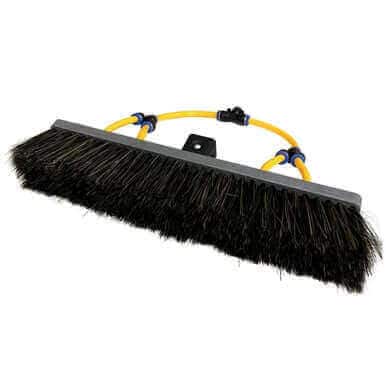 ProTool 4 Pencil-Jet Boar's Hair Brush 12in SKU: 151-221 | 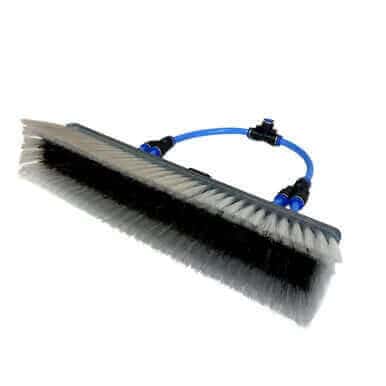 ProTool 4 Pencil-Jet Hybrid Brush 12in SKU: 151-211 |
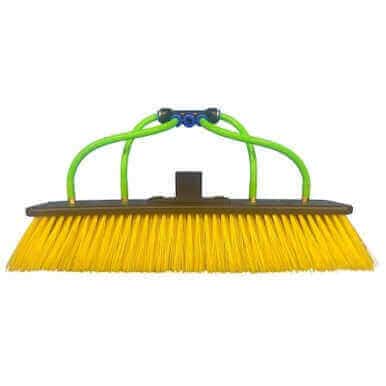 Brush 14in Dual Trim ProTool SKU: 151-201 |