ProTool DualForce 25 Solar Brush: The Professional's Field Guide

Table of Contents
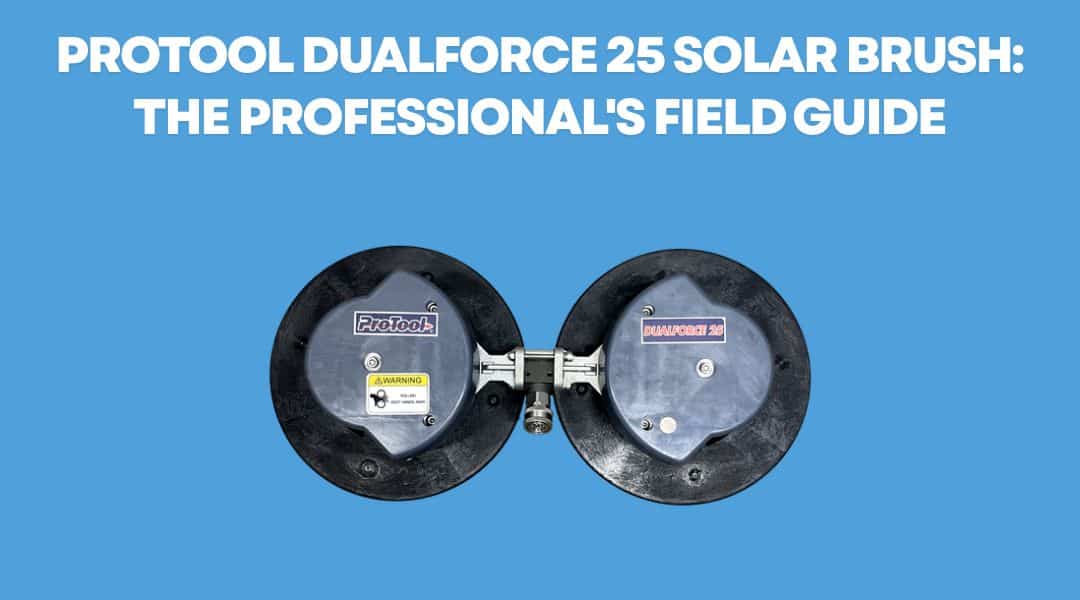
The ProTool DualForce 25 solar brush changes the math on commercial solar cleaning. Two counter-rotating heads, 100% water-powered, 25 inches of cleaning width — no batteries, no cables, no lateral torque fighting your arms all day. If you're bidding solar farm work with a standard water-fed brush and manual effort, you're leaving money and panels on the table.
This guide covers the mechanics, the system requirements, the operational workflow, and the ROI case for building your rig around the DualForce. If you've already cleaned residential solar and you're ready to scale, this is the equipment knowledge that gets you there.
How the DualForce Counter-Rotating Mechanism Works
Standard single-head rotary brushes "walk." The spinning head creates lateral pull, and the operator spends the entire shift fighting the pole to hold a straight line. That's wasted energy, inconsistent surface contact, and a crew that's burned out by lunch.
The ProTool DualForce 25 eliminates this. Two brush heads spin in opposite directions, canceling rotational forces against each other. The operator guides — the brush cleans. Surface contact time goes up, fatigue goes down, and the last panel of the day gets the same scrubbing action as the first.
Internal Turbine and Gear Design
Water enters the brush head between 2,800 and 3,300 PSI, strikes internal turbines, and a gear assembly converts that high-velocity flow into high-torque rotation. No external power source. The gear housing is built for daily commercial abuse.
The catch: water-driven internals demand clean, filtered water. Mineral scaling or nozzle blockages will slow a head. If one side drops RPM, the included pin tool clears the internal jets in minutes. Straightforward maintenance, but non-negotiable if you want the tool to last multiple seasons.
Technical Specifications and System Requirements
The DualForce is only as good as the pressure washer feeding it. This is a 100% water-powered unit — your pump is the engine.
Pressure and Flow Rate
- Required flow: 3.0–3.2 GPM
- Operating PSI range: 2,800–3,300 PSI at the pump
- Surface pressure after gear reduction: 600–800 PSI at the bristles
- Brush head weight: ~11 lbs, evenly distributed across dual heads
That 600–800 PSI surface pressure is the number that matters for panel safety. Enough torque to break the bond on baked-on bird droppings and industrial fallout, low enough to protect anti-reflective coatings and silicone seals. If you're working multi-story arrays at 40-foot elevations, run the pump at the higher end of the PSI range to compensate for line loss.
The ProTool 3.0 GPM / 3,200 PSI pressure washer was purpose-built for this brush. It sits right in the sweet spot without over-pressuring the turbines.
Pole Compatibility
An 11 lb powered brush head on a round telescopic pole is a recipe for twist and fatigue. The ProTool Apex carbon fiber pole has an oval profile that locks sections against rotation. That anti-spin geometry matters more here than on any other water-fed application — you're fighting real rotational resistance, not just gravity.
Use a heavy-duty angle adapter (anti-spin washing adaptor) to pitch the brush to match panel tilt. Let the 11 lb head rest its weight on the bristles instead of pushing down with your arms. That's the difference between cleaning all day and being done by noon.
For fluid delivery: standard 5/16-inch or 3/8-inch high-pressure lines with quick connects and a ball valve shut-off at the pole base. Keep water temperature below 104°F to protect gear housing seals.
DualForce vs. Standard Water-Fed Brushes
A standard water-fed brush handles light residential dust. It cannot handle a 5-megawatt farm in an agricultural corridor where every panel is caked in pollen, bird droppings, and pesticide drift. That's a different job requiring different equipment.
| Metric | Manual WFP Brush | DualForce 25 |
|---|---|---|
| Panels per hour | 20–30 | ~200 |
| Sq ft per hour | 1,000–1,500 | 5,000–8,000 |
| Panels per day (single operator) | 200–300 | Up to 2,000 |
| Baked-on soiling removal | Multiple passes, heavy effort | First-pass removal |
| Operator fatigue over 8 hrs | High — quality drops | Low — RPM is constant |
The quality argument is as strong as the speed argument. Manual brushes leave "holidays" because applied pressure varies with every stroke. The DualForce's 11 lb head delivers consistent downward force across the full 25-inch width — edge-to-edge, framed or frameless. No rework.
Operational Best Practices
Pre-Cleaning Inspection
Before the water is on, walk the array. Identify cracked cells, delamination, hot spots, broken frames. Document everything with photos. Mechanical agitation on a cracked cell makes a bad situation worse and puts liability on you. This step is non-negotiable on every job.
Pure Water Integration
Minerals in tap water leave a film that reflects sunlight and reduces energy output — which defeats the entire purpose of cleaning. You need water with near-zero TDS.
The critical sizing constraint: the DualForce needs 3.0–3.2 GPM to spin. Your RO/DI system must deliver that flow rate or the brush heads stall. A residential-scale ProTool HiFlo Pure Water Cart handles this, but verify your membrane and pump output before committing to a commercial bid. An inline ProTool TDS meter lets you verify water quality throughout the day — not just at startup.
Site Safety and Timing
Solar arrays are energized. Insulated poles, fall protection, non-slip footwear — no exceptions.
Timing matters for a technical reason most new solar cleaners miss: applying cold water to glass at 150°F causes thermal shock, which can micro-fracture the panel. Clean early morning or late afternoon. This also slows pure water evaporation, giving you a cleaner spot-free dry.
Building the Complete DualForce Rig
The brush is the centerpiece, but it needs a system around it. Here's the core build list:
- ProTool DualForce 25 Solar Brush — the water-powered counter-rotating brush head
- ProTool Apex Carbon Fiber Pole — anti-spin oval profile, 30 ft reach
- ProTool 3.0 GPM / 3,200 PSI Pressure Washer — matched to brush operating range
- ProTool HiFlo Pure Water Cart SS — high-flow RO/DI for 3+ GPM delivery
- ProTool 50ft Solar Brush Hose — 1/4" to 3/8" quick-connect high-pressure line
- Anti-Spin Washing Adaptor — locks brush angle, eliminates pole twist
For contractors already running solar skids, the ProTool Ultimate Solar Skid integrates the pressure washer, pure water system, hose reels, and delivery pump into a single vehicle-mounted unit. One deployment, no separate pieces to set up.
Maximizing ROI on Commercial Solar Contracts
Asset owners hiring solar cleaning contractors understand soiling loss. They're comparing your bid against the energy revenue they're losing to dirty panels. When you can demonstrate 200 panels per hour with mechanical agitation and pure water — versus the 30 panels per hour a manual crew delivers — you're not competing on price. You're competing on throughput, consistency, and panel warranty compliance.
The numbers that matter for your bids:
- Single operator, DualForce rig: ~2,000 panels/day
- Labor reduction vs. manual: ~75%
- First-pass removal on heavy soiling eliminates rework
- Pure water + soft nylon bristles = manufacturer-warranty-compliant cleaning
A dedicated solar cleaning skid keeps your rig deployment-ready. If you're in a cold climate, winterize the skid — frozen water inside the turbine housing or RO membranes will destroy components that aren't cheap to replace.
Maintenance Schedule
The DualForce is a workhorse, but water-driven moving parts fail when neglected. Keep this schedule tight:
- Bristles: Replace when splayed or when agitation visibly drops.
- Internal nozzles: Clear with the pin tool if one head slows. Mineral buildup is the usual culprit.
- Gear housing: Inspect for leaks. Tighten housing screws. A leaking housing means lost pressure and inconsistent RPM.
- Seals: Lubricate per manufacturer specs.
- Water quality: Always run filtered water. Unfiltered water is the fastest path to scaling, blockages, and early turbine death.
Stock replacement parts before peak season. Downtime during a contract window costs more than any component on this list.
Products Mentioned
 ProTool Dual Force 25 Brush Only SKU: 159-227 | 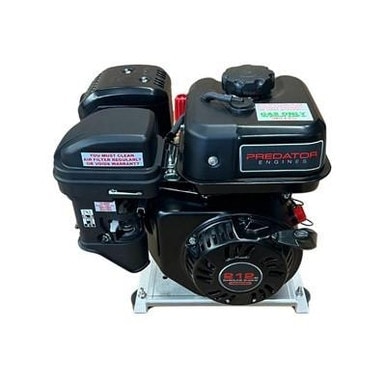 ProTool Solar Brush Pressure Washer 3gpm 3200 PSI SKU: 74-725m | 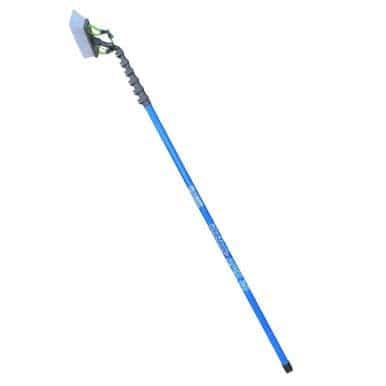 ProTool Apex Carbon Fiber Water Fed Pole SKU: 151-32M |
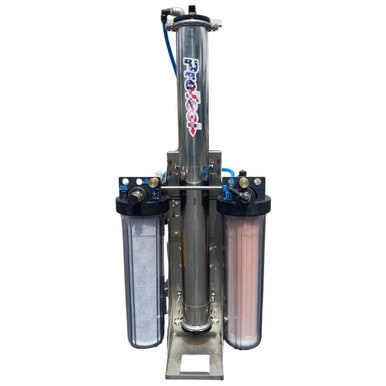 ProTool HiFlo Pure Water Cart Stainless Steel SKU: 150-0521 | 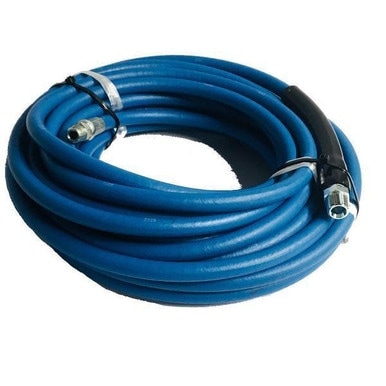 ProTool Hose for Solar Brush 1/4in 50ft with 1/4in one end 3/8in on other SKU: 74-3540 | 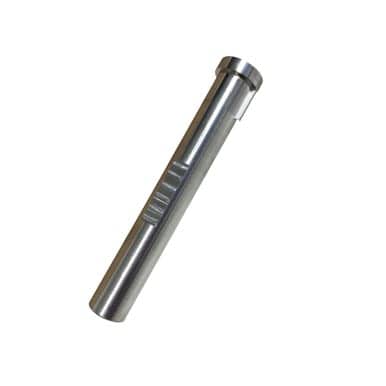 Washing Adaptor Anti-Spin 3/8 in to 1/4 in SKU: 893-521 |
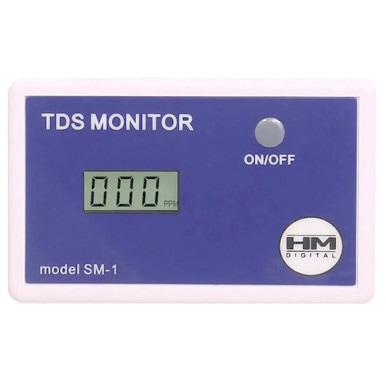 TDS Inline Meter - includes a 1/4 Tee SKU: 150-019 | ||
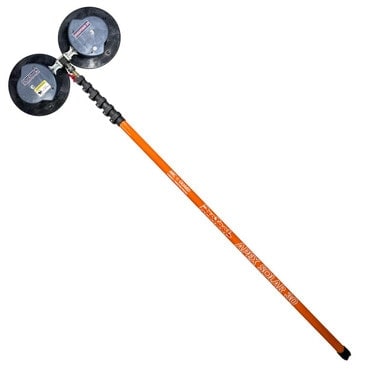 ProTool DualForce 25 Solar Brush SKU: 159-206 | 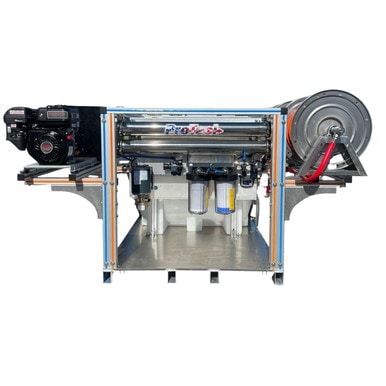 ProTool Ultimate Solar Skid SKU: 150-0494 |