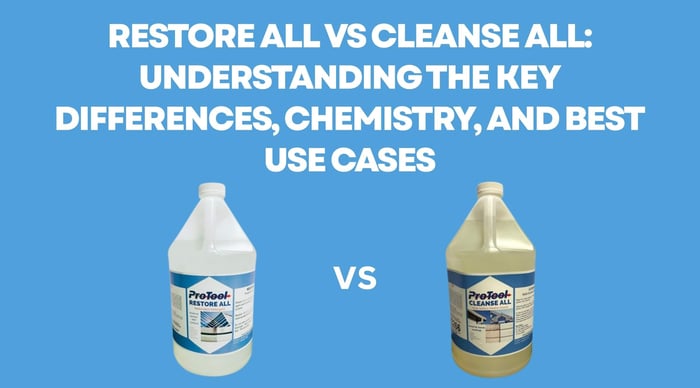
Restore All vs Cleanse All: Understanding the Key Differences, Chemistry, and Best Use Cases

Table of Contents
- What Is Cleanse All? (Restore All vs Cleanse All Explained)
- The Role of EDTA Tetrasodium (CAS 64-02-8)
- What Does “Chelation” Mean?
- How Chelation Works on Building Surfaces
- Chelation vs Acid Cleaning: The Core Difference
- What Is Restore All? (How It Differs from Cleanse All)
- How Restore All Works
- Advantages of Cleanse All
- Disadvantages of Cleanse All
- Advantages of Restore All
- Disadvantages of Restore All
- Why Cleanse All Is Better for Drone Cleaning
- Restore All vs Cleanse All: Side-by-Side Comparison
- Final Verdict
- Conclusion
- FAQs
In exterior cleaning and building restoration, not all chemicals work the same way—even when the results may look similar at first glance. Two products frequently compared by contractors, restoration professionals, and drone-cleaning operators are Restore All vs Cleanse All.
When comparing exterior restoration chemicals, few topics generate more questions than Restore All vs Cleanse All. While both products are designed to remove oxidation and surface contamination, they rely on very different chemistry and carry very different levels of risk.
While both are designed to remove oxidation, staining, and surface contamination, they rely on fundamentally different chemistry. Understanding that chemistry—especially the role of chelation and compounds like Ethylenediaminetetraacetic acid, tetrasodium salt, tetrahydrate (CAS 64-02-8)—is critical for choosing the right product, avoiding surface damage, and reducing liability.
This article breaks down:
What Restore All and Cleanse All are
How their chemistry differs
What chelation means and why it matters
Advantages and disadvantages of each
Which product is best for oxidation, restoration, and drone-based cleaning
What Is Cleanse All? (Restore All vs Cleanse All Explained)
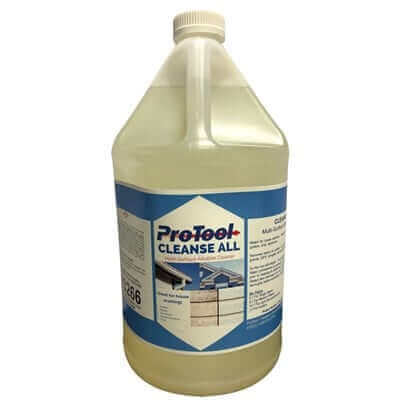
Restore All vs Cleanse All: What’s the Real Difference?
Cleanse All is best categorized as a non-acidic, alkaline restoration cleaner. Instead of using aggressive acids to dissolve contamination, Cleanse All relies on chelating agents, wetting agents, and surfactants to safely lift and remove oxidation and mineral residue.
Its performance comes from chemistry that targets contaminants, not the surface itself.
The Role of EDTA Tetrasodium (CAS 64-02-8)
A key component commonly associated with Cleanse All–type formulations is EDTA tetrasodium, a powerful chelating agent.
EDTA tetrasodium characteristics:
CAS Number: 64-02-8
Highly water soluble
Alkaline (typically pH 10–11 in solution)
Strong affinity for metal ions such as:
Calcium
Magnesium
Iron
Aluminum
Rather than attacking surfaces, EDTA works by binding metal ions and keeping them dissolved in the cleaning solution.
What Does “Chelation” Mean?
To understand why Cleanse All behaves so differently from Restore All, it’s important to understand chelation.
Plain-English Definition of Chelation
Chelation means chemically grabbing and holding a metal ion so it stays dissolved in water instead of bonding to a surface.
A chelating agent acts like a molecular claw or cage. Once it captures a metal ion, that metal can no longer:
Stick to a surface
Form scale
Create stains
React with other chemicals
Instead, it remains suspended in the solution and rinses away safely.
How Chelation Works on Building Surfaces
Many common exterior issues—oxidation, chalking, discoloration, and hard-water staining—are caused by metal ions embedded in or bonded to the surface.
Common examples include:
Calcium and magnesium from hard water
Iron from rust and atmospheric fallout
Aluminum oxides causing white oxidation on panels
Trace metals from pollution and runoff
Chelating agents like EDTA tetrasodium bind to these metal ions and pull them into solution without dissolving or damaging the underlying surface.
This is why Cleanse All is considered a non-etching restoration cleaner.
Chelation vs Acid Cleaning: The Core Difference
This distinction is the most important difference between Cleanse All and Restore All.
Chelation (Cleanse All)
Targets metal-based contaminants
Does not eat or dissolve the surface
Continues working as long as metal ions are present
Allows longer dwell times
Leaves coatings, paint, and substrates intact
Acid Dissolution (Restore All)
Removes contamination by chemical attack
Dissolves minerals and oxides aggressively
Can etch concrete, glass, aluminum, and paint
Stops working once neutralized
Requires strict dwell-time control
In simple terms:
Chelation removes the problem
Acids remove material
What Is Restore All? (How It Differs from Cleanse All)
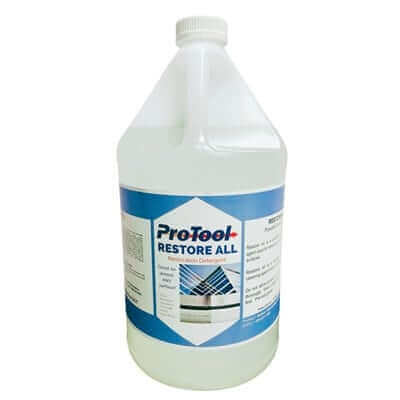
Restore All is typically an acid-based restoration cleaner. While specific formulas vary, Restore All products usually rely on strong acids (mineral or organic acid blends) to dissolve mineral buildup and oxidation rapidly.
How Restore All Works
Restore All removes oxidation through acid reaction.
Acids:
React with calcium carbonate and mineral scale
Dissolve metal oxides and rust
Produce fast, visible results
However, acids do not differentiate between contamination and the surface. If allowed to dwell too long or applied to sensitive materials, they will damage the substrate itself.
Advantages of Cleanse All
1. Superior Surface Safety
Because Cleanse All is non-acidic, it is significantly safer on:
Painted metal panels
Aluminum cladding
Powder-coated finishes
Glass trim
Architectural coatings
This makes it ideal for commercial, residential, and high-value properties.
2. No Fumes or Corrosion
Cleanse All:
Produces no corrosive vapors
Will not attack fasteners, wiring, or equipment
Is safer for operators and bystanders
This is especially important in urban environments and aerial applications.
3. Wide Dwell-Time Window
Chelation-based cleaners can dwell for several minutes without etching or damage, making them well suited for:
Soft washing
Low-pressure systems
Drone-based exterior cleaning
4. Cleaner, More Uniform Results
Because chelated metals remain in solution:
Streaking is reduced
Spotting is minimized
Rinsing is more consistent
Disadvantages of Cleanse All
Cleanse All is not designed for every scenario.
Limitations include:
Slower action on heavy mineral scale
Less effective on thick calcium buildup
Not intended for aggressive concrete etching
Advantages of Restore All
1. Speed
Acids work extremely fast. Heavy mineral deposits can be removed in seconds.
2. Effectiveness on Acid-Safe Surfaces
Restore All can be effective on:
Bare concrete (where etching is acceptable)
Certain stone surfaces
Industrial steel in controlled environments
Disadvantages of Restore All
1. High Risk of Surface Damage
Restore All can:
Etch glass
Burn paint and coatings
Pit aluminum
Permanently alter surfaces
Requires proper dwell time and thorough rinsing
2. Equipment and Corrosion Risk
Acid fumes and overspray can corrode:
Pumps and hoses
Drone motors and electronics
Fasteners and fittings
3. Safety and Liability Concerns
Restore All:
Requires full PPE
Can generate hazardous fumes
Often needs neutralization
Carries higher liability in public or residential settings
Why Cleanse All Is Better for Drone Cleaning
Drone-based cleaning introduces strict constraints:
No mechanical agitation
Limited water volume
Overspray exposure
High public visibility
Chelation-based cleaners like Cleanse All excel in this environment because they:
Allow safe dwell times
Produce no fumes
Do not corrode drone components
Reduce overspray damage risk
Minimize liability
Acid-based cleaners like Restore All are generally not recommended for aerial use.
Restore All vs Cleanse All: Side-by-Side Comparison
| Feature | Cleanse All | Restore All |
|---|---|---|
| Cleaning Method | Chelation | Acid dissolution |
| pH | Alkaline | Highly acidic |
| Surface Safety | Excellent | High risk |
| Oxidation Removal | Controlled, even | Aggressive |
| Fumes | None | Severe |
| Equipment Safety | High | Low |
| Drone Compatibility | Excellent | Poor |
| Dwell-Time Tolerance | Minutes | Seconds |
Final Verdict
Choose Cleanse All when:
Surface safety is critical
Oxidation removal must be controlled
You are cleaning painted or coated materials
You are using low pressure or drones
Choose Restore All only when:
The surface is acid-safe
Heavy mineral scale must be removed quickly
The application is tightly controlled
Risk is understood and managed
Conclusion
The debate between Restore All vs Cleanse All ultimately comes down to surface safety, chemistry, and risk tolerance. While Restore All and Cleanse All may appear similar on the surface, their chemistry—and their risk profiles—are dramatically different. Cleanse All represents a modern, chelation-based approach that prioritizes surface safety, consistency, and liability reduction. Restore All remains a high-risk, high-speed acid solution suitable only for specific conditions.
As exterior cleaning continues to evolve—especially with the rise of drone technology—chelating agents like EDTA tetrasodium (CAS 64-02-8) are becoming the preferred solution for professional restoration without damage.
FAQs
What is the difference between Restore All and Cleanse All?
Restore All is an acid-based restoration cleaner that removes oxidation and mineral buildup through chemical reaction, while Cleanse All is a non-acidic, chelation-based cleaner that targets metal ions without damaging surfaces. Restore All dissolves contaminants aggressively; Cleanse All lifts and binds them safely for rinsing.
What does “chelation” mean in exterior cleaning?
Chelation is a chemical process where special agents, such as EDTA tetrasodium, bind to metal ions (like calcium, magnesium, or iron) so they stay dissolved in water instead of sticking to surfaces. This prevents staining, scale, and oxidation without etching or damaging materials.
When should I use Cleanse All instead of Restore All?
Use Cleanse All when surface protection and safety are priorities—especially on painted metal, coated panels, glass, or architectural finishes. It’s ideal for drone cleaning, soft washing, and general restoration where acid cleaners would be too aggressive.
Is Restore All safe on all surfaces?
No. Restore All can etch or damage surfaces like glass, aluminum, painted finishes, and powder-coated panels if misused or left to dwell too long. It should only be used on acid-safe materials such as bare concrete or stone under controlled conditions.
Why is Cleanse All better for drone cleaning?
Drone cleaning requires non-corrosive, safe, and consistent chemistry. Because Cleanse All produces no fumes, won’t attack metals or electronics, and allows longer dwell times without surface damage, it’s the preferred choice for aerial and remote cleaning.
How do I choose between Restore All and Cleanse All?
Choose Cleanse All for painted, coated, or sensitive surfaces, and when using drones or soft washing.
Choose Restore All for heavy mineral scale on acid-safe materials like raw concrete, and only when proper safety controls are in place.