Soft Wash Proportioner Explained: How Metering Manifolds Replace Batch Mixing

Table of Contents
Every gallon of sodium hypochlorite wasted through imprecise batch mixing hits your chemical budget directly — most contractors lose 15% or more in annual chemical overhead before they realize the problem is the process, not the product. A soft wash proportioner explained in practical terms is simply a manifold that meters water, SH, and surfactant from separate containers in real time, so the pump only ever sees the diluted mix you actually need for the surface in front of you.
This guide covers the internal mechanics of chemical metering manifolds, how to match port sizes to your pump's GPM, and the real dollars-and-cents case for retiring the batch tank.
What Is a Soft Wash Proportioner?
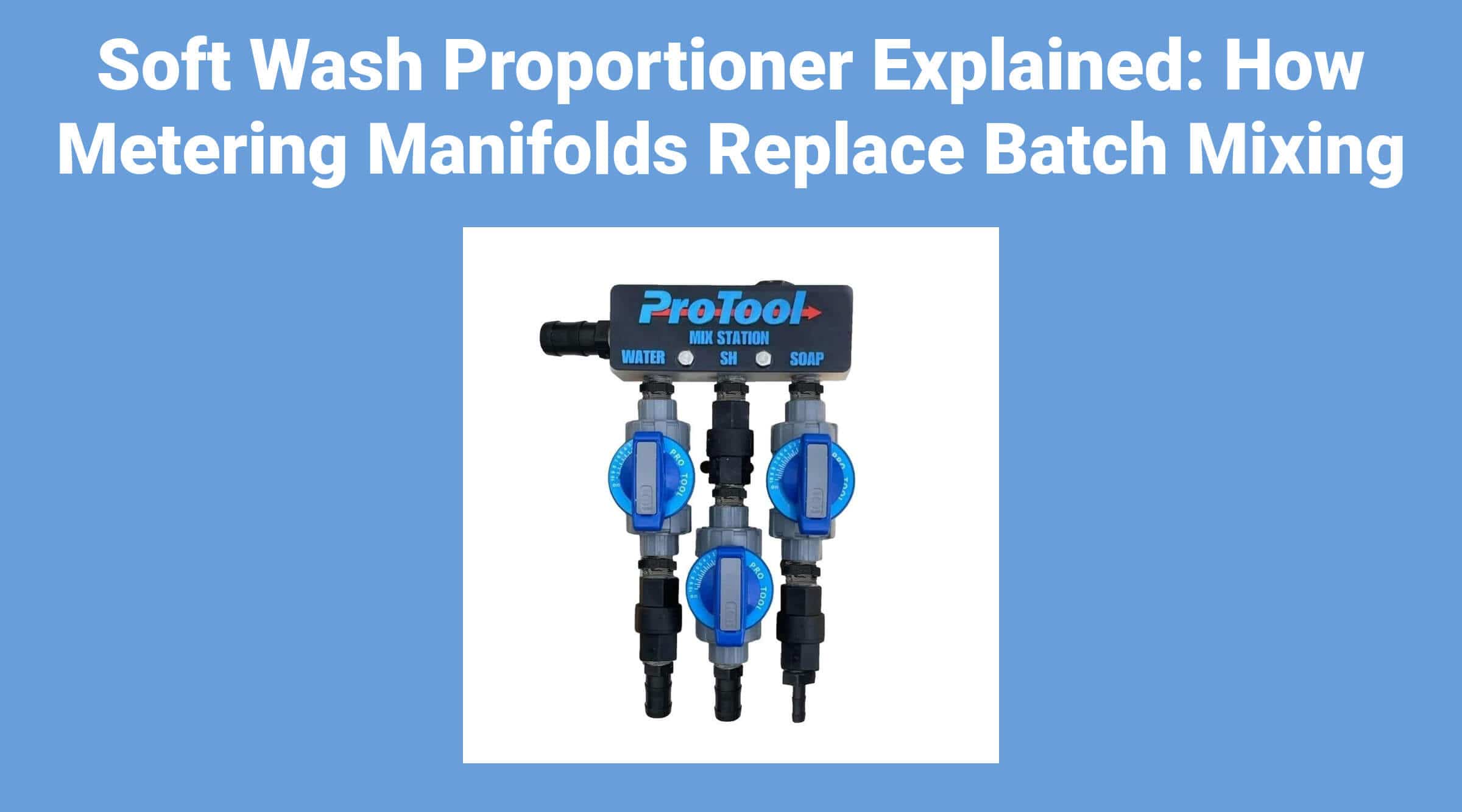
A proportioner is a manifold with dedicated metering valves on three inlets — water, SH, and surfactant — that converge in a central mixing chamber upstream of the pump. You adjust dials instead of measuring gallons. The pump's suction draws from all three lines simultaneously, so the ratio stays locked in as long as the valves stay put.
The practical payoff: you can run a 1% solution on vinyl siding, bump to 3–4% for a roof loaded with Gloeocapsa magma, and drop back down for the next wall — all without touching a tank. On a multi-surface commercial job, that flexibility eliminates 30–45 minutes of dead time per site.
Each inlet is sized to its job:
- Water inlet — typically 3/4″, the largest port, ensuring the pump never starves.
- SH inlet — 1/2″ with a chemical-resistant valve rated for 12.5% sodium hypochlorite.
- Surfactant inlet — a smaller precision valve for soaps that control dwell time and surface tension.
Proportioning vs. Downstreaming
A downstream injector pulls chemical into the high-pressure stream via venturi — typically maxing out around a 20% draw rate. With 12.5% SH, that delivers roughly 1.25% to the wall. Fine for light house washes, but nowhere near the 3–6% you need for heavy roof growth.
A proportioner gives you 100% control over concentration independent of pressure. You dial the mix, and it stays there. No guessing whether the venturi is pulling hard enough, no dependence on nozzle size or hose length to hold a ratio.
Why Batch Mixing Costs You Money
Batch mixing locks you into a single concentration per tank. Mix 100 gallons at 4% for a roof, use 60, and the remaining 40 gallons degrade — SH stored in a translucent tank in direct sun can lose half its potency in two weeks. You also can't pivot to a 0.5% siding mix without draining or diluting the entire batch. A manifold lets you switch concentrations in seconds and only consume the chemical you actually spray.
How a Soft Wash Proportioner Works
The pump's suction side is the engine. Whether you're running a 12V diaphragm or an air-diaphragm unit, the pump creates vacuum that draws from all three tanks through the manifold. The chemical only converges at the mixing chamber — which means your pump seals only contact the final diluted solution, not straight bleach. That alone extends pump life significantly compared to running concentrated SH through a batch rig.
Suction-Side Plumbing
Your pump's GPM rating defines the ceiling. A 5.5 GPM pump needs enough fluid volume to avoid cavitation. Most professional rigs use 3/4″ plumbing on the water supply and 1/2″ on chemical lines — water makes up 80–95% of the final mix, so it needs the bigger pipe.
Keep suction hoses short. A 10-foot run creates far less friction than 25 feet. And keep the plumbing paths balanced — if your bleach line has three 90° elbows while the water line is a straight shot, uneven resistance throws off your ratios. A centralized manifold block machined from a single piece of polypropylene or heavy-duty PVC eliminates most air-leak issues that cause surging.
Metering Valve Precision
Standard 180° valves give you basic range. High-performance systems use 270° precision needle valves, which allow micro-adjustments — especially useful for surfactant, where a fraction of an ounce per gallon separates good dwell time from wasted product.
Material matters. SH destroys the wrong valve in 30 days. Valves must be PVC, polypropylene, or Viton-sealed. The ProTool Soft Wash Metering Block uses stainless steel barbs and chemical-resistant construction rated for daily SH exposure.
Anatomy of a Professional Proportioner System
Needle Valves vs. Ball Valves
Ball valves are on/off devices. Using them for metering produces inconsistent chemical "slugs" — surges of concentrated SH followed by near-water. Needle valves feature a long tapered point in a conical seat, giving you incremental flow control. That's the difference between hitting a repeatable 3% mix and guessing.
Manifold Body
Material choice determines lifespan. Aluminum reacts with bleach and pits within 6–8 months. Polypropylene resists SH and handles the internal pressures of a 5–10 GPM system without cracking. ProTool's metering manifold blocks are available in both translucent polypropylene and clear acrylic — the translucent version lets you visually confirm flow. Mount with stainless steel hardware and nylon-insert lock nuts; truck vibration will rattle standard fasteners loose within weeks.
Check Valves
Check valves prevent backflow from contaminating your water tank when the pump cycles off. This is the number-one cause of "mysterious" tank contamination. For any line handling SH, the check valve spring must be Hastelloy or ceramic — standard 304 or 316 stainless corrodes and snaps in concentrated bleach in as little as two weeks. The ProTool Check Valve uses a Hastelloy spring and PVC body rated for SH service.
2-Way vs. 3-Way Inlet Configurations
A 2-way system (water + SH) covers most residential house washes. A 3-way adds a dedicated surfactant line, so you don't pre-mix soap into your bleach tank — preserving SH shelf life and giving you independent control over surfactant concentration. With a 3-way manifold you can switch from a heavy roof mix to a light siding wash in under 45 seconds by adjusting dials.
For a complete soft wash proportioner setup, the ProTool Soft Wash Metering System Reel Stand integrates dual 12V pumps, precision metering valves, and a hose reel into a single portable unit.
Batch Mixing vs. Proportioning: ROI
The financial case is straightforward.
Labor. Three batch mixes per day at 20 minutes each burns an hour of spray time. At a $150/hour shop rate, that's $750/week in lost revenue during peak season.
Chemical savings. Batch mixing typically defaults to a "hot" 3–4% concentration so the mix handles any surface. But vinyl siding only needs 1%. Dialing down with a proportioner saves roughly $12 in raw SH per 100 gallons sprayed. Over a month, that's $400+ for a busy truck.
Equipment life. Running fresh water through the pump at the end of each job — a single dial turn on a proportioner — flushes SH residue and extends pump life by roughly 50%.
Break-even. A quality proportioner system runs around $1,000. Between chemical savings, recovered labor, and reduced pump replacement, most contractors break even within 14–18 operating days.
Commercial Flexibility
Multi-substrate commercial jobs — brick, dryvit, metal panels on the same building — expose the limits of batch mixing. A proportioner lets you switch from a 4% brick mix to a 0.5% metal-safe mix in seconds without walking back to the trailer. It also simplifies crew training: new operators follow a standardized dial chart instead of memorizing mixing math.
Selecting and Maintaining Your Proportioner
Match Port Size to Pump GPM
A 5 GPM 12V pump runs efficiently with 1/2″ porting. Step up to a 7–10 GPM air-diaphragm pump and you need 3/4″ or 1″ manifold ports. Undersized valves on a high-flow pump create backpressure that can cut actual output by 25% or more.
The ProTool Soft Wash Metering Plates are designed for 7.4 GPM systems with 3/4″ metering and come in configurations for both single and dual pump setups.
Pre-Built vs. DIY
DIY setups let you customize spacing on your truck bed, but they accumulate leak points — every threaded joint is a potential failure. Pre-built manifolds from ProTool are pressure-tested with precision-machined blocks that reduce leak points from 12+ down to 4. That reliability is worth far more than the $100 you save sourcing parts individually.
Daily Maintenance
SH is salt-based. As water evaporates, it leaves abrasive crystals that seize metering needles and degrade pump seals. At the end of every shift, close the chemical valves, open the fresh water valve, and run clean water through the system for 60 seconds. This single habit prevents most proportioner failures.
Troubleshooting Air Leaks
If your pump is hunting or cycling rapidly with the trigger closed, you have a suction-side air leak. Check every barb fitting and hose clamp between tanks and manifold. Even a pinhole gap causes cavitation — tiny air bubbles that implode against the pump diaphragm and accelerate wear.
Installation Best Practices
- Mount the proportioner at or slightly below pump level — pumps push fluid far better than they pull it.
- Use weighted drop tubes in chemical tanks to keep the intake at the bottom.
- Add a 40-mesh filter to drop tubes to protect metering valves from debris.
- Seal all fittings with chemical-resistant thread sealant, not standard plumber's tape — tape shreds and clogs valves.
Seasonal Maintenance and Winterization
Every six months, pull the metering valves and soak internals in a mild acid cleaner to dissolve calcium buildup from SH residue. In freezing climates, blow out lines with compressed air or pump RV-grade antifreeze through the manifold before storage. A cracked manifold block is a $300+ replacement you can avoid with 15 minutes of prep.
For replacement components, check valves, metering blocks, and complete starter kits, browse the full Metering Manifolds category.
Products Mentioned
 Soft Wash Metering Block SKU: 150-0454M | Soft Wash Metering Block SKU: 150-0454M | 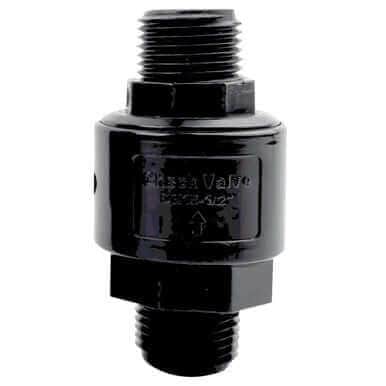 ProTool Check Valve 1/2in Male NPT SKU: 74-8199 |
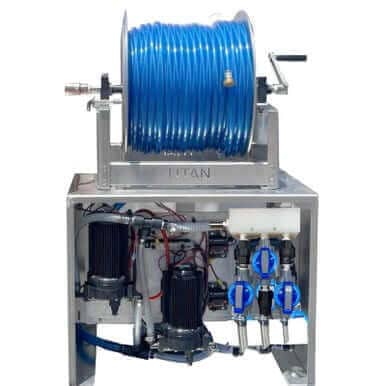 Soft Wash Metering System Reel Stand SKU: 150-0459 | 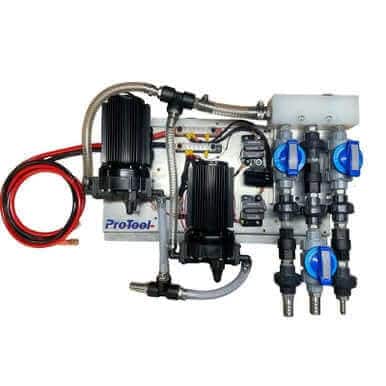 ProTool Soft Wash Metering Plates SKU: 150-045M |