
Solar Panel Cleaning Equipment: The 2026 Pro Buyer's Guide
Table of Contents
Accumulated grime cuts photovoltaic output by up to 25%. For contractors, that's the core pitch: solar panel cleaning equipment turns a dirty array into a measurable energy gain. The wrong tools — household mops, garden hoses, tap water — leave micro-scratches, hard water deposits, and warranty-voiding residue. The right ones protect anti-reflective coatings, eliminate mineral spotting, and let you move through a job fast enough to stay profitable.
This guide covers the gear decisions that matter: pole material and reach, pure water filtration staging, brush selection for different soiling types, powered brush systems for commercial scale, and the fall protection setup that keeps you compliant on pitched roofs.
Why Equipment Quality Drives ROI
Dust, pollen, and bird waste form a physical barrier between sunlight and silicon cells. On a commercial array, a 20–25% output loss represents real revenue the asset owner is missing. Professional solar cleaning restores that capacity — but only if the process itself doesn't degrade the panel.
Consumer-grade sponges and abrasive pads leave microscopic scratches that trap future dirt. Standard detergents deposit films that attract dust faster than the panel was soiling before you touched it. Professional-grade brushes with flagged (split-tip) bristles agitate debris without marring anti-reflective coatings. Pure water rinses clean without residue. That combination — safe agitation plus mineral-free water — is what separates a maintenance service from a liability.
Micro-Cracks and Thermal Shock
Heavy, non-specialized poles or uneven pressure can fracture silicon cells beneath the glass. These micro-cracks aren't visible, but they create hot spots that permanently degrade output. Thermal shock is the other risk: cold water on panels that have been baking at 150°F+ can shatter tempered glass instantly. Schedule cleaning for early morning or late evening when surface temperatures are low, and use brushes weighted specifically for solar glass loads.
Residential vs. Commercial Scale
Residential roof-mounts need lightweight, maneuverable poles and compact filtration — often a portable DI tank is enough. Commercial carports and ground-mount arrays demand multi-stage RO/DI systems that handle higher flow rates and harder source water without burning through resin. Match the equipment to the job scale, or your cost-per-panel kills the margin.
Water-Fed Poles and Solar Brushes
Pole Material: Carbon Fiber vs. Hybrid
Carbon fiber is the standard for commercial solar work. It delivers maximum rigidity at minimum weight — critical when you're running a brush head at the end of 30–50 feet of pole. The ProTool Apex Hi-Mod Carbon Fiber Pole is built for this: high-modulus carbon, anti-spin oval profile, and enough stiffness to control a rotary brush head at full extension without excessive pole whip.
Hybrid (carbon/fiberglass) poles cost less and work fine for residential arrays under 30 feet of reach. Beyond that, the flex becomes a problem — the brush head bounces, pressure distribution gets uneven, and you're back to risking micro-cracks.
Telescopic poles allow rapid height adjustment between panel rows. Sectional poles maintain a consistent diameter that some operators prefer for grip. Either way, minimizing pole whip is the goal.
Brush Selection
Solar brushes differ from window cleaning tools in one critical way: flagged bristles. The split tips create softer contact that won't scratch anti-reflective coatings. Dual-trim designs use longer, softer outer bristles for safe surface contact and shorter inner bristles for agitation on stubborn deposits.
- Nylon brushes — general maintenance, light dust. The ProTool White Nylon Brush 14in is the workhorse for routine residential and commercial cleaning.
- Boar's hair brushes — heavy organic soiling, bird droppings. The ProTool 4 Pencil-Jet Boar's Hair Brush 12in delivers natural scrubbing power with integrated rinse jets.
Integrated rinse bars above the brush head flush loosened dirt before it resettles. Use high-volume, low-pressure nozzles — forcing water past the panel's edge seals leads to internal corrosion.
Pure Water: DI and RO Filtration
Pure water is the non-negotiable. Tap water minerals — calcium, magnesium — leave white spots when they evaporate on glass. On photovoltaic surfaces with textured anti-reflective coatings, mineral buildup is nearly impossible to remove once it hardens. The target is 000 TDS (Total Dissolved Solids) at the brush head.
DI-Only for Soft Water Areas
Deionization tanks use ion-exchange resin to strip minerals from water. They're portable, simple, and effective — if your source water TDS is low. The ProTool DI Tank with Virgin Resin is a solid entry point for residential work in soft-water regions.
The catch: resin has finite capacity. Monitor output with a ProTool Inline TDS Meter constantly. Once you're reading above 005–010 TDS, the resin is spent. Running exhausted resin means callbacks, mineral damage, and lost credibility.
RO/DI Multi-Stage for Hard Water and Volume
For commercial arrays or hard-water regions, a multi-stage Reverse Osmosis system removes ~95% of minerals before water reaches the DI stage. This dramatically extends resin life and drops your cost per gallon of pure water. The ProTool HydroPanel RODI Wall Mount handles high daily output for truck- or trailer-based operations, while the ProTool HiFlo Pure Water Ultra Cart gives you a mobile stainless steel system with pump options for varying source pressure.
Sediment and carbon pre-filters protect the RO membrane from chlorine and particulates — replace them on schedule, or you'll kill a membrane that costs more than a season's worth of resin.
Rotary Brushes for Commercial and Utility Scale
Manual scrubbing works for light dust. Heavy organic buildup or widespread bird soiling demands mechanical agitation. Rotary brushes cut labor time by roughly 50% on heavily soiled arrays and reduce pure water consumption per panel.
Electric vs. Water-Powered
The ProTool DualForce 25 Solar Brush is a 24V electric counter-rotating brush with a floating head system that self-adjusts to uneven panel surfaces. Consistent torque regardless of water pressure, and the counter-rotation cancels the pole-twist that single-direction brushes create.
Water-powered units like the 24in Water-Powered Rotary Brush use your filtration system's flow to spin the turbine. Lighter and simpler — no cables, no batteries — but they need specific flow rates (typically 2+ GPM) to maintain effective RPM. If your source pressure is marginal, an electric system is the safer bet.
At the end of a 30–50 foot pole, a spinning brush head creates significant torque. Counter-rotating designs mitigate this. If you're running a single-direction brush, expect forearm fatigue and invest in ergonomic pole grips.
Robotic Systems for Utility-Scale
For massive ground-mount farms, robotic cleaners eliminate the fatigue bottleneck. Semi-automated units traverse arrays while a technician monitors. The capital cost is high, but the throughput on contiguous arrays is unmatched. These are increasingly viable for contractors servicing utility-scale accounts where manual cleaning can't keep pace with acreage.
Safety and Field Implementation
Fall Protection on Solar Arrays
OSHA mandates fall protection at 4 feet for maintenance work (6 feet for construction-level tasks). Cal/OSHA requires guardrails or personal fall arrest systems (PFAS) within 6 feet of a roof edge. Your kit needs:
- Full-body harness — inspect daily for webbing wear and hardware corrosion. The ProTool Harness with Front, Back and Side D-Rings covers positioning and arrest.
- Roof anchors — 5,000 lbs per worker capacity, installed without compromising waterproofing. The RidgePro Roof Anchor handles pitched ridge-top work; the Reusable Roof Anchor covers standard setups.
- Self-retracting lifelines (SRLs) — better mobility than fixed lanyards with instant lock on a slip.
- Non-slip footwear — wet solar glass and roof tiles are exceptionally slick.
Route hoses and cables away from walking paths. Carbon fiber poles act as lightning conductors — stop work immediately if lightning is within 10 miles. Wind above 20 mph makes long poles dangerous and inefficient.
Pre-Cleaning and Workflow
Before water touches glass, inspect for broken panels, exposed wiring, and compromised junction boxes. Grid-connected systems fall under OSHA 1910.269 — if damage is found, de-energize using lockout/tagout before proceeding. Most panel manufacturers prohibit detergents. Pure water is the warranty-compliant cleaning method.
Schedule cleanings for early morning or late evening. Cooler panels mean no thermal shock risk, slower evaporation for better rinsing, and no interruption to peak production hours.
Building Your Kit for 2026
The residential starter setup: a ProTool Apex Carbon Fiber Pole, a DI tank, an inline TDS meter, a 14in nylon brush, and a harness with anchor. That handles most residential roof-mount work.
The commercial upgrade: swap to a multi-stage RO/DI system like the ProTool HiFlo Pure Water Cart, add a counter-rotating electric brush, and build out your fall protection for larger roof footprints.
Utility-scale operators add robotic systems, dedicated solar skids with integrated filtration and delivery, and crew-level safety programs.
The line between a professional solar cleaning operation and a liability is the equipment. The right solar panel cleaning equipment protects the asset, protects the operator, and protects the margin.
Products Mentioned
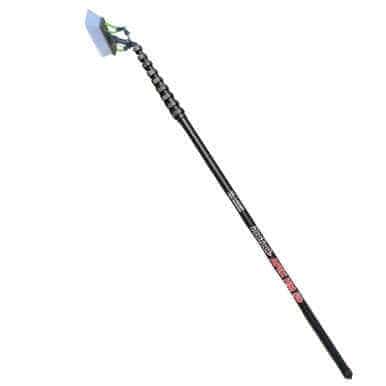 ProTool Apex Hi-Mod Carbon Fiber Pole SKU: 151-3502 | 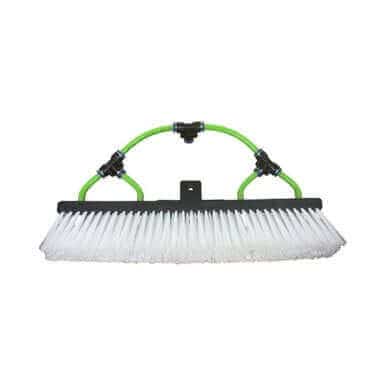 ProTool White Nylon Brush 14 in SKU: 151-20M | 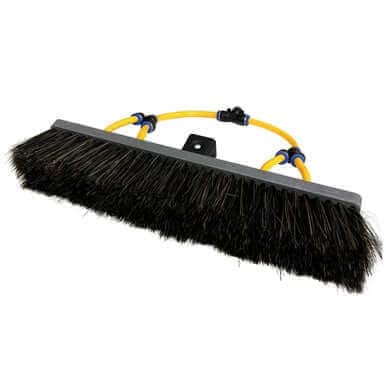 ProTool 4 Pencil-Jet Boar's Hair Brush 12in SKU: 151-221 |
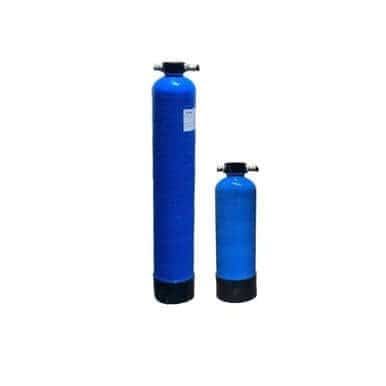 ProTool DI Tank with Virgin Resin SKU: 150-011M | 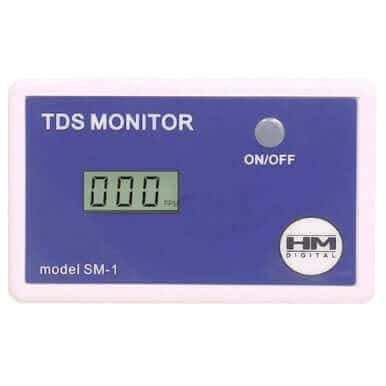 TDS Inline Meter - includes a 1/4 Tee SKU: 150-019 | 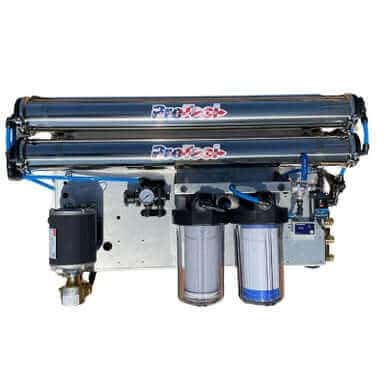 ProTool HydroPanel RODI Wall Mount SKU: 150-05346M |
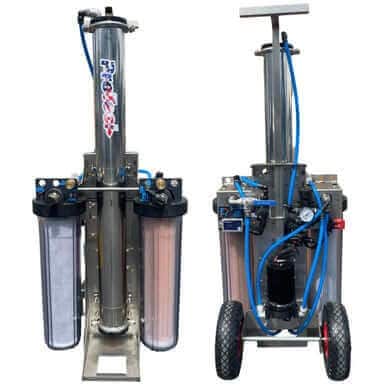 ProTool HiFlo Pure Water Ultra Cart SS 12V or 110V SKU: 150-0522 | 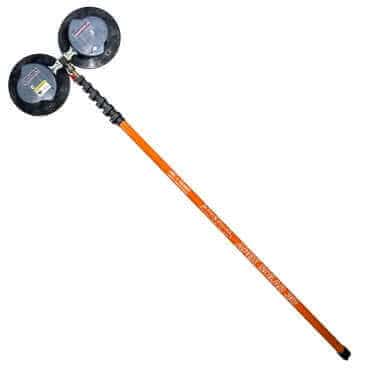 ProTool DualForce 25 Solar Brush SKU: 159-206 | 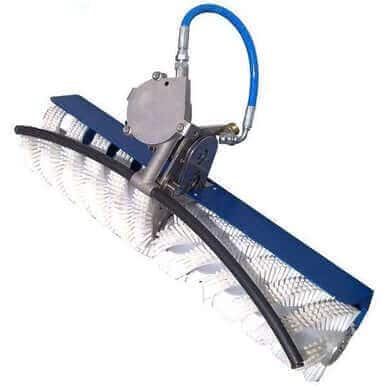 Rotary Brush 24 in (60cm) Water Powered SKU: Z159-134 |
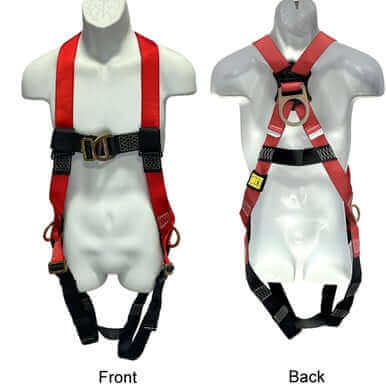 ProTool Harness with Front, Back and Side 2 Side D-Rings SKU: 96-10 | 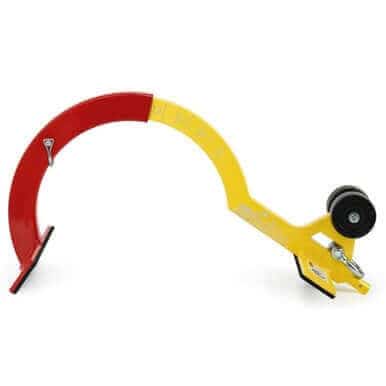 The RidgePro Roof Anchor SKU: 99-304 |  Roof Anchor Reusable SKU: 99-302 |
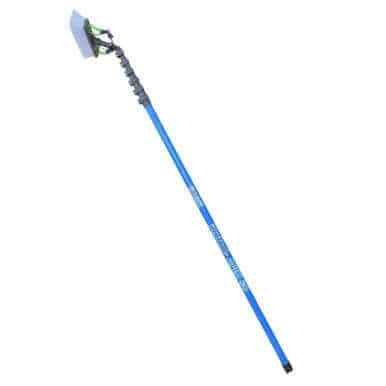 ProTool Apex Carbon Fiber Water Fed Pole SKU: 151-32M | 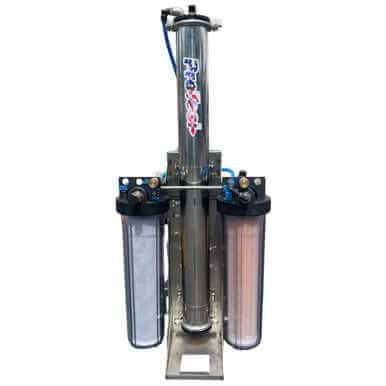 ProTool HiFlo Pure Water Cart Stainless Steel SKU: 150-0521 |