Solar Panel Cleaning Equipment: What Contractors Actually Need in 2026
Table of Contents
Standard window cleaning gear won't cut it on photovoltaic arrays. Anti-reflective coatings scratch easily, unfiltered tap water leaves mineral deposits that create micro-shading on silicon cells, and a slip on wet solar glass at pitch is a different animal than a slip on a storefront. The National Renewable Energy Laboratory puts soiling losses at 15–25% of energy output — which means the demand for contractors who know how to do this correctly is climbing fast. Here's what solar panel cleaning equipment actually matters, how to configure it, and where the money traps are.
Why Solar Glass Isn't Window Glass
Solar panels are engineered for maximum light transmission. Many feature porous surfaces or specialized coatings that react badly to standard detergents — residue attracts particulates and accelerates re-soiling. Tap water contains calcium, magnesium, and silica. When it evaporates on a hot module, you get hard water spots that act as tiny umbrellas over the cells, directly cutting power output. That's micro-shading, and it's the core reason every serious solar cleaning operation runs pure water.
The other critical difference: walking on modules causes micro-cracks in the silicon cells. A "no-walk" policy enforced by long-reach carbon fiber poles isn't optional — it protects the asset and keeps you off the panel surface entirely.
Pure Water Filtration: DI-Only vs. RO/DI
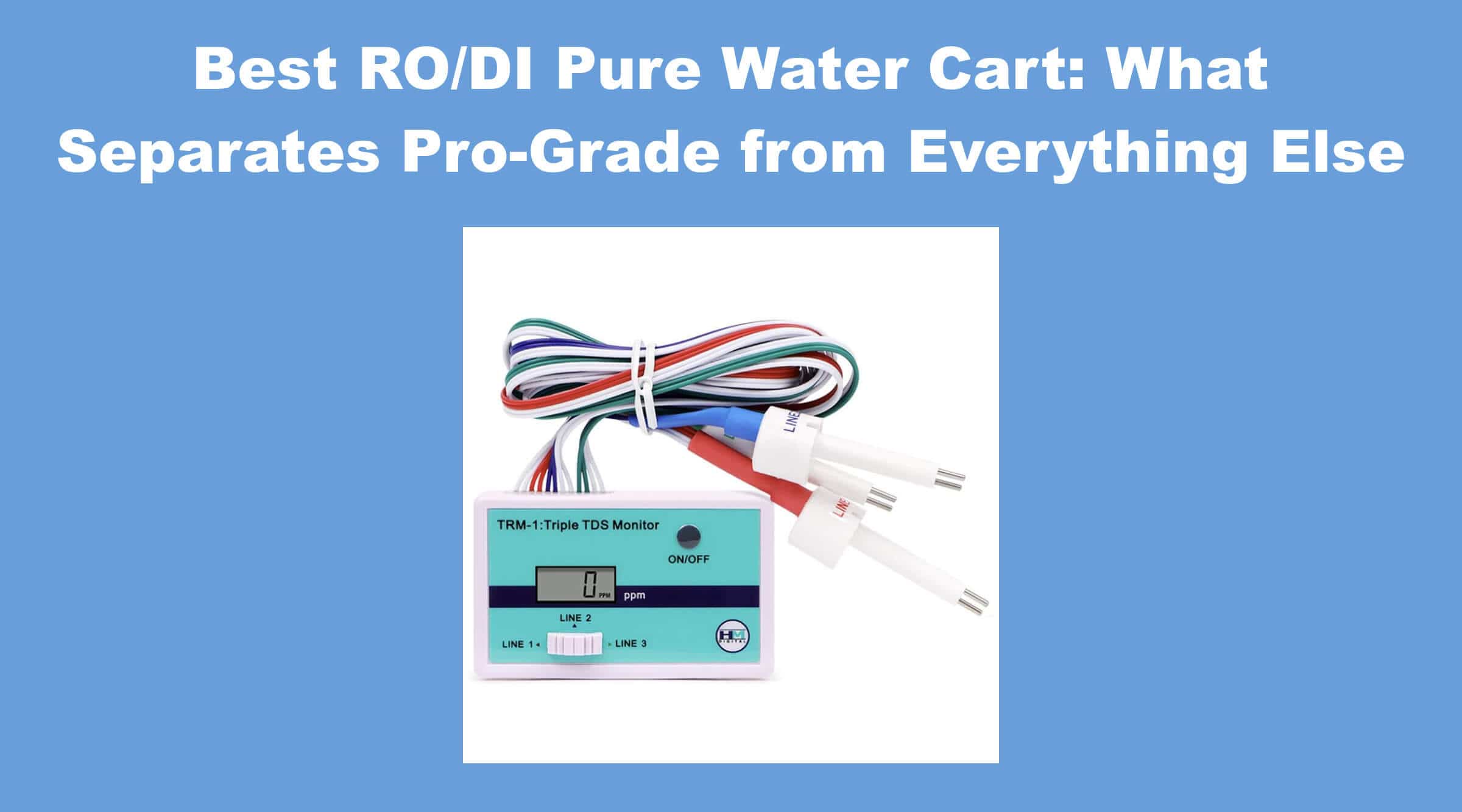
"Pure water" in this context means 0 parts per million Total Dissolved Solids (TDS). Anything above zero leaves mineral residue that bakes onto hot glass. Your TDS meter is your quality-control instrument — test input water at the start of every job and monitor output continuously.
DI-Only Systems
Portable, low upfront cost, and fine for soft-water areas with small residential jobs. The problem: resin exhausts fast in hard water, and resin is your biggest consumable cost. If your input TDS is above 150 ppm, a DI-only setup will eat your margins.
Multi-Stage RO/DI Systems
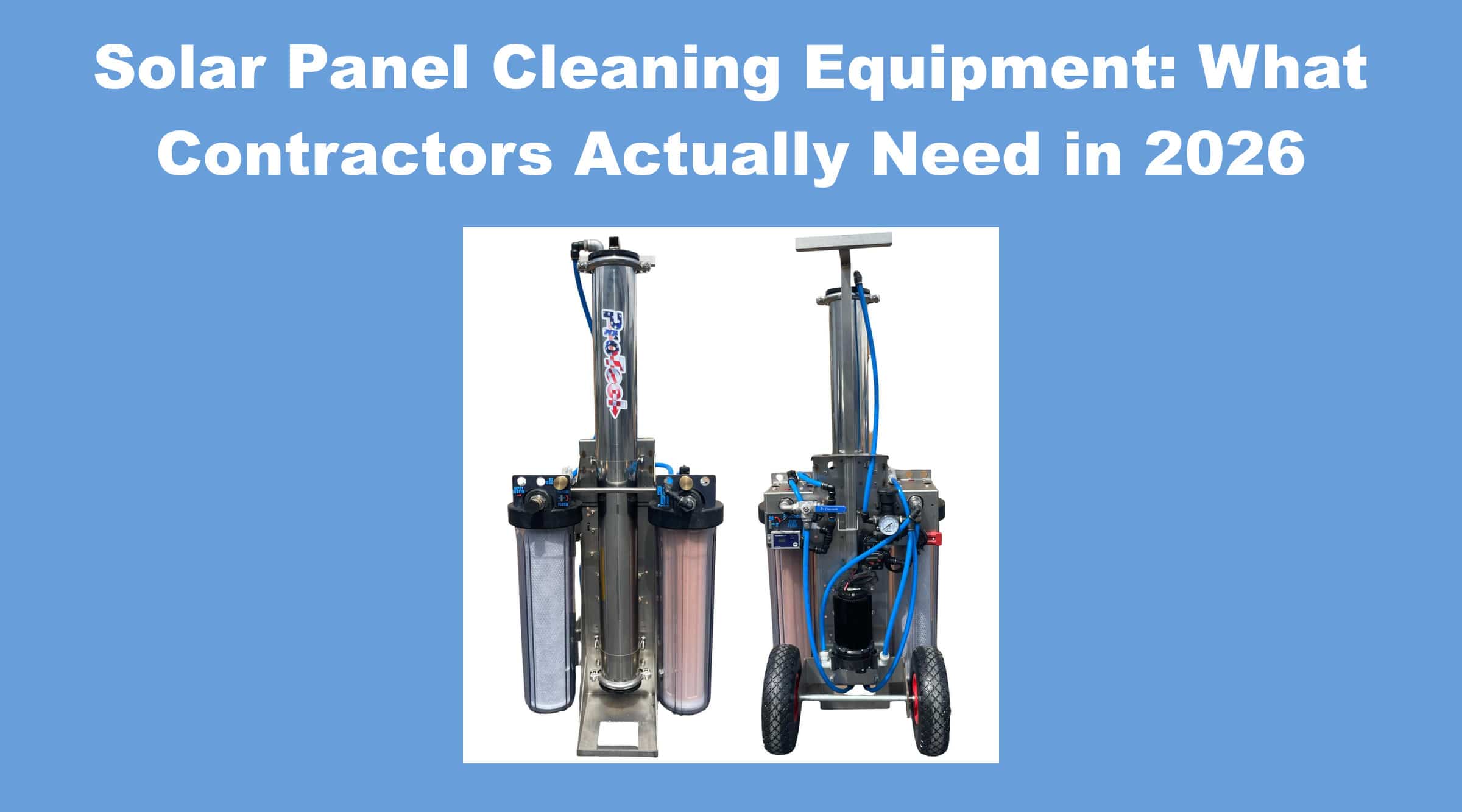
The industry standard for commercial solar work. A carbon pre-filter strips chlorine, the RO membrane removes 90–98% of dissolved solids, and a final DI stage polishes to 0 ppm. The RO membrane does the heavy lifting, so your expensive DI resin lasts dramatically longer. For contractors scaling into commercial solar, the ProTool HiFlo Pure Water Ultra Cart handles the volume — it's built for sustained high-output production with 12V or 110V pump options.
If you're running a wall- or truck-mounted operation, the ProTool HydroPanel RODI Wall Mount gives you fixed-install filtration without eating floor space in a van or trailer.
Flow and Pressure at Height
Gravity kills flow rate as you extend poles upward. Integrated 12V booster pumps compensate, keeping water moving through the brush head at a usable rate. High-flow nozzles handle heavy soiling; low-flow options conserve water on large arrays where supply is limited. Maintain your system — flush membranes regularly and swap pre-filters on schedule — or expect performance to degrade mid-job.
Brush Selection: Filament Actually Matters
The brush filament determines whether you're cleaning effectively or just pushing dirt around. Solar modules get hotter than architectural glass, and the soiling profiles differ — desert dust, coastal salt, bird droppings, pollen, and industrial fallout each demand different agitation.
Filament Types
- Nylon — Soft, good water retention. Best for light dust and regular maintenance contracts where soiling hasn't baked on.
- Boar's hair — Higher friction, better agitation. The right choice for bird droppings, heavy pollen, and industrial pollutants that nylon can't shift.
- Hybrid — Boar's hair core for scrubbing, nylon outer for glide. A versatile middle ground for mixed residential portfolios.
The ProTool 4 Pencil-Jet Boar's Hair Brush is purpose-built for this — integrated jets rinse debris as you scrub, preventing dislodged particles from scratching the coating.
Manual Poles vs. Rotary Systems
For residential rooftops, a high-modulus carbon fiber pole with a manual brush is the safest, most precise approach. The ProTool Apex Hi-Mod Carbon Fiber Pole stays rigid at 40–60 feet of extension without the added weight of mechanical components — critical for reducing operator fatigue during full-extension work.
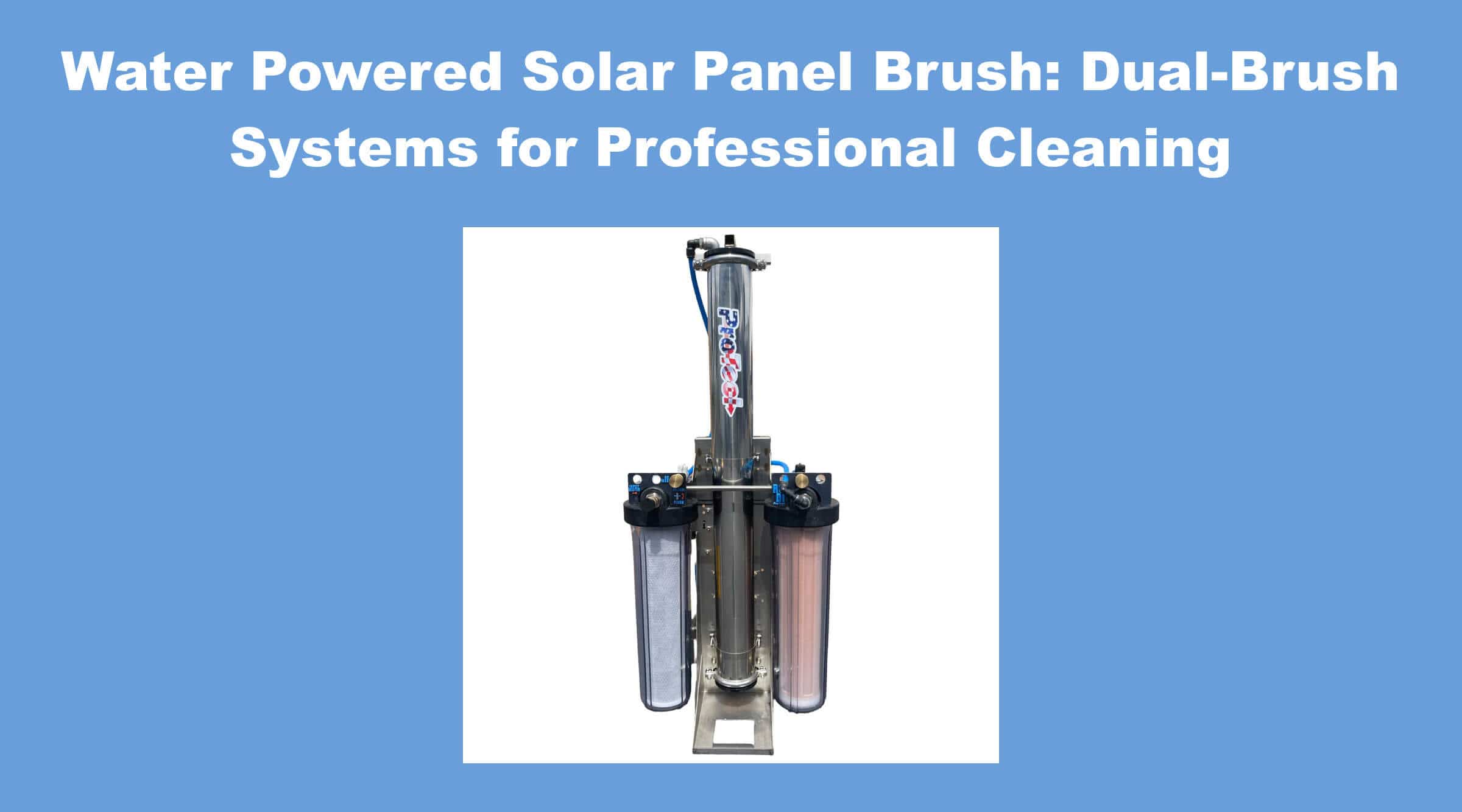
Utility-scale ground-mount arrays are a different calculation. Water-powered rotary brushes use your RO/DI system's pressure to spin dual brush heads, increasing cleaning speed by roughly 50% over manual scrubbing. The ProTool DualForce 25 Solar Brush is the current benchmark — counter-rotating heads, floating brush system, and no external power source needed beyond water pressure. For stubborn spots like lichen or tree sap, walnut scrub pads let you apply targeted pressure without swapping the entire brush head.
Fall Protection for Solar Work
No specific OSHA standard exists for solar cleaning, but 29 CFR 1926.501 (fall protection) and 29 CFR 1910.269 (electrical hazards) apply. A single lapse can end a career or a business. Your safety system needs to integrate with the cleaning workflow — lateral movement across large arrays, no trip hazards from excess rope, and gear rated for the sustained demands of exterior maintenance.
Essential Gear
- Full-body harness with multiple D-rings — Allows positioning and fall arrest while maintaining the mobility needed for long-duration pole work. The Petzl Avao Bod Harness is built for exactly this kind of sustained technical access work.
- Temporary roof anchors — Matched to the roofing material (shingle, tile, or metal). The RidgePro Roof Anchor provides a secure ridge-top tie-off point without penetrating the roof.
- Self-retracting lifelines (SRLs) — Minimize slack and reduce potential fall distance. Preferred over standard lanyards for rooftop solar work because they keep the work area clear of excess rope.
Inspect every harness, lanyard, and anchor — tactile and visual — before every ascent. No exceptions.
Building a Scalable Setup
A one-size-fits-all approach fails in solar maintenance. Your RO/DI filtration system should be matched to local water hardness (measured in grains per gallon). High-GPG regions need larger RO membranes to protect DI resin and control consumable costs. Pole length should match your typical job profile — residential pitches versus expansive commercial arrays.
The modular approach works: start with a portable ProTool pure water cart for residential work, then scale to a ProTool Ultimate Solar Skid as commercial contracts grow. The skid integrates filtration, delivery pumps, hose reels, and brush connections into a single truck-mountable unit — one setup that covers pure water cleaning, soft wash capability, and rotary brush support.
Keep replacement parts in stock. An O-ring failure or exhausted filter shouldn't cost you a full day's revenue. J.Racenstein maintains inventory on every consumable and wear part for the systems above — browse the full solar cleaning category to see what's available.
Products Mentioned
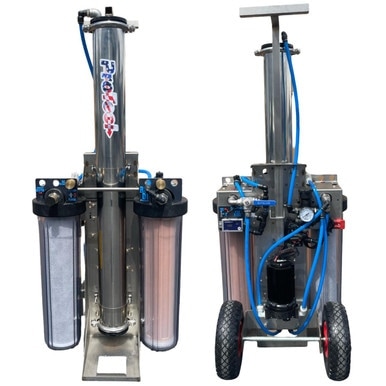 ProTool HiFlo Pure Water Ultra Cart SS 12V or 110V SKU: 150-0522 | 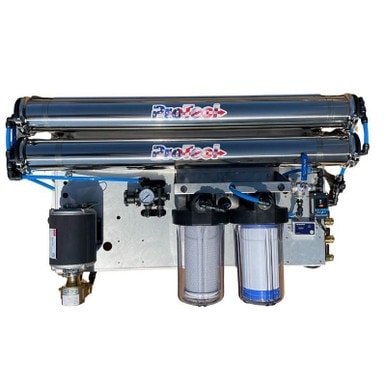 ProTool HydroPanel RODI Wall Mount SKU: 150-05346M | 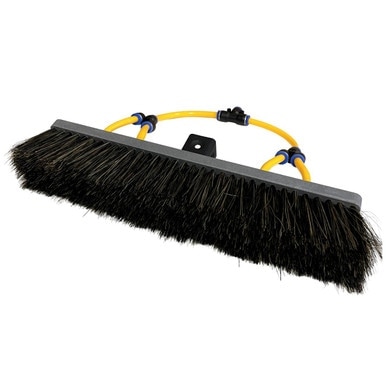 ProTool 4 Pencil-Jet Boar's Hair Brush 12in SKU: 151-221 |
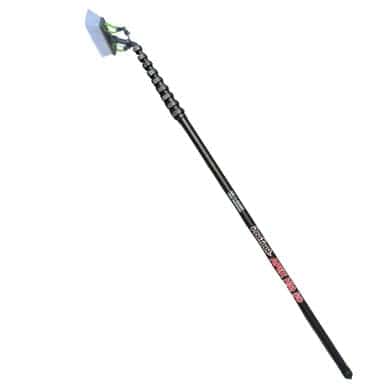 ProTool Apex Hi-Mod Carbon Fiber Pole SKU: 151-3502 | 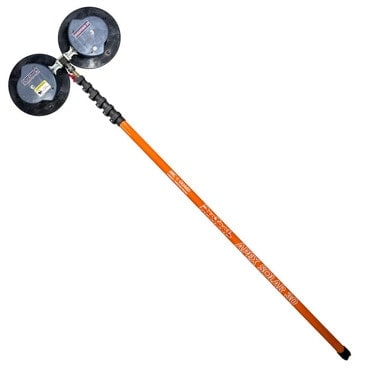 ProTool DualForce 25 Solar Brush SKU: 159-206 | 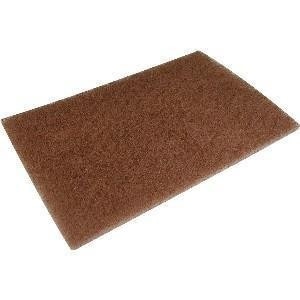 ProTool Pad Scrub Walnut 6x9 (1) SKU: 26-11 |
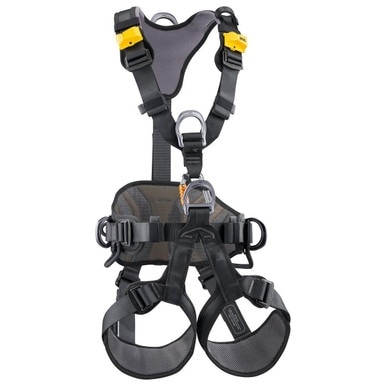 Petzl Avao Bod Harness SKU: 96-41M | 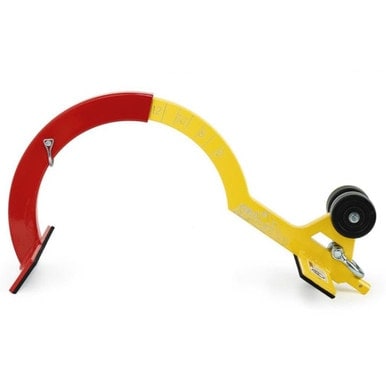 The RidgePro Roof Anchor SKU: 99-304 | 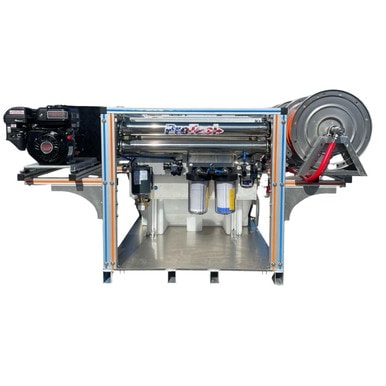 ProTool Ultimate Solar Skid SKU: 150-0494 |